• TalkBass has been independent since 1998. Add your voice.
    Create a free account to reply to discussions, view embedded media, and browse with fewer display ads.
    Join freeLog in
    Want zero display ads or expanded classifieds tools? Compare plans.

"Lawsuit " basses....... cite your references

It seems to me that most individuals using that phrase in their Craigslist ads don't have the slightest clue about any of it. This rates up there with Squiers listed as a Fender, the same with Epi/Gibson, GC Acoustic amps sales pitched with lines like "get the sound of Jaco and JPJ", and similarly, Leslie West being referenced in an listing for a Fender made Sunn Model T, and the like. If all of these 'lawsuits' were so effective, would we have Greco, Burny, Tokai, Dillion, and so on? Granted, a lot of these instruments make their way into the US via Canada, Europe, or direct sales from Asia by Ebay, but they're still there. What about all the cease and desist grief that Rondo Music has gotten over certain Agile, SX, and Douglas designs?
 
  • Like
Reactions: wmhill
It seems like more myth than fact. The thread wasn't as much concerned with copyrights and modern counterfeits as I was to see what actual instruments/company really did have actual lawsuits. I'm sure the "lawsuit" label will still get thrown around as badge of endorsement for some time to come- even if it's mostly myth.
 
How about this one: I have a Jackson JBP9. It's a 100% cosmetic ripoff of a Marleaux Consat. Every body contour, knob placement, inlay, even the wood colors.

Marleaux is a tiny boutique builder in Germany.

Jackson got a letter from Marleaux's lawyers telling them to cease and decist production. They were also informed separately that they wouldn't be welcome at Musicmesse in the future if they didn't comply.

The whole JPB line was ended immediately. They only made 200 or so of the JPB9s.

Does that count as a "lawsuit" bass?

I think it does since a threat of legal action led to the premature ending of production of a design.
 
  • Like
Reactions: wmhill
Jackson got a letter from Marleaux's lawyers telling them to cease and decist production. They were also informed separately that they wouldn't be welcome at Musicmesse in the future if they didn't comply.

The whole JPB line was ended immediately. They only made 200 or so of the JPB9s.

Does that count as a "lawsuit" bass?

As far as I am aware (TB lawyers please correct me if I'm wrong), a C&D letter is a warning that serves to avoid a lawsuit.
 
  • Like
Reactions: wmhill
Even if one allegedly infringes on anothers trade-mark/trade-dress protections, the bigger party can bury the smaller party with legal fees, even in claims of dubious nature. The little guy usually caves.

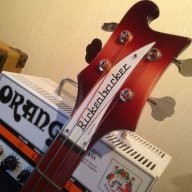
One recent noteworthy case involves Jason Lollar and Rickenbacker. Ric claimed that Lollar's horseshoe pickup infringed on Rickenbacker's trade-dress protection because it looked similar. The case was eventually settled out of court for undisclosed terms with Jason Lollar continuing to produce his horseshoe pickup. (Perhaps the settlement included a license fee paid to Ric per each pickup made. Perhaps the settlement included Ric covering Lollar's legal defense fees. No one knows as it is a confidential out of court settlement.)

Ric was the party that eventually offered the out of court settlement, and for two reasons. Based on court records, it appeared that Ric could loose, it wasn't an obvious slam dunk case for them.
Secondly, a private settlement keeps any precedents for a judgement for the defendant off the books, so to speak, so Ric and their lawyers can continue to brag, boast and intimidate potential infringers/defendants with statements like 'we have never lost an infringement case'.

So every situation is unique, and one never really knows what goes on behind the scenes.
 
Last edited:
Not a "lawsuit era", but didn't Fender muscle Rondo a few years ago into changing some of their headstocks so they wouldn't match Fender's trademarked designs? I bought a SX "Vintage Jazz" before the headstock change. Great body, decent neck, and terrible pickups. Played it once at a show and it's been sitting ever since, waiting for new pickups.
 
  • Like
Reactions: wmhill
I have an "immediately post-lawsuit" '77 Ibanez guitar, an ES-175 copy (FA-100). I went through 3 different Gibsons looking for a great one and once I got the Ibby I stopped looking :)

But I am one of those people who immediately discounts any instrument described as a "lawsuit" model if it isn't a mid 70's Ibanez Gibson copy.

FA100.jpg
 
The term lawsuit bass/guitar get's thrown around a ton, but how true is it? It's pretty easy to find articles concerning Gibson VS Elger (Ibanez) lawsuit- not over an exact quality reproduction, but over the headstock design. But then did Fender really sue Epiphone over a P-bass copy? Did Ric sue Univox over the 4001 copy? Did everybody really sue Hondo? We have all heard the stories, and seen the basses-but I'd love to see some actually referenced articles (not the "it said so in the E-Bay add" things). I wonder how much can be substantiated and how much is just urban myth? Thanks for your indulgence!
*please - haters/trollers just keep cruising......*

WHAT IS UP WITH THAT LAWSUIT?
There was an era in the late 70s/early 80s that saw a number of the large and well established American companies successfully asserted their trademarks in court, especially re: headstock shape. Thus Tokai/Ibanez/El Degas/Hondo et al were forced to stop making their Fender copies with Fender style headstocks, Gibson did the same, so did Charvel a little later (to like EVERYONE with a droopy or pointy headstock). Yamaha put Yamaki out of business - even though it was Martin whose designs they were ripping off.
It has certainly become something of a mythology and the term gets applied to LOTS of things that had little to do with those lawsuits - ie you see the crummy only vague copies on the 'bay and the 'list with the term "lawsuit era" when they were never part of that, because the term has now come to connote a certain quality of MIJ copies that scared the American companies into doing something about their blatant rip-off instruments.
The same thing has happened with lot of terms - JV which is a specific series of (vintage reissue style) MIJ Fenders gets tacked onto adds for all kinds of Japanese instruments, often not even Fender products!
It's a pet peeve for me too, but I try not to notice so much as I've got WAY too many (pet peeves that is).
 
  • Like
Reactions: wmhill and One Drop
Even if one allegedly infringes on anothers trade-mark/trade-dress protections, the bigger party can bury the smaller party with legal fees, even in claims of dubious nature. The little guy usually caves.

One recent noteworthy case involves Jason Lollar and Rickenbacker. Ric claimed that Lollar's horseshoe pickup infringed on Rickenbacker's trade-dress protection because it looked similar. The case was eventually settled out of court for undisclosed terms with Jason Lollar continuing to produce his horseshoe pickup. (Perhaps the settlement included a license fee paid to Ric per each pickup made. Perhaps the settlement included Ric covering Lollar's legal defense fees. No one knows as it is a confidential out of court settlement.)

Ric was the party that eventually offered the out of court settlement, and for two reasons. Based on court records, it appeared that Ric could loose, it wasn't an obvious slam dunk case for them.
Secondly, a private settlement keeps any precedents for a judgement for the defendant off the books, so to speak, so Ric and their lawyers can continue to brag, boast and intimidate potential infringers/defendants with statements like 'we have never lost an infringement case'.

So every situation is unique, and one never really knows what goes on behind the scenes.
Yeah, a lot of it is indeed what one calls "nuisance" lawsuits to make life difficult for smaller players that the larger ones see as threatening them.
RIC is notorious for this - which is why I have asserted elsewhere the ONLY copies that are available in North America are outright counterfeits instead of copies/inspired by/similar design instruments - like the million "strat-like" instruments and Len Pals out there.
Similarly, Gibson's lawsuit over the PRS's singlecut - as though Gibson invented the single cutaway guitar. It was a TRUE nuisance suit (and the judge called them on it) since the PRS single-cut is one of the more un-Gibson-ish LP style guitars. That is to say: only the true crooks who think they can get around the law bother brining Ric-ish instruments in.
Another is the one I referenced earlier in this thread - Yamaha/Yamaki - Yamaha is/was an industry behemoth, Yamaki was a little start-up. Yamaha is known for it's F Series guitars which are some of the only non-Martin copy dreadnought guitars out there and Yamaki was making extremely accurate Martin copies, but Yamaha felt they were infringing on the cheap-but-good MIJ Acoustic market and killed them by saiying their name created a conflict in people's minds - this drove Yamaki to try to RE-start under a new name (forget what it was now) and it ultimately did them in - start-ups just can't afford to spend the money etting established twice.
 
  • Like
Reactions: wmhill
If you have a Status that's branded 'Strata' on the bridge, it could be worth a bit.

From the Invalid Link Removed

A brief history of the Strata

The Strata bass was Rob Green's first approach to creating the ultimate bass. It was though that Rob made only 16 instruments in his original first ever batch of basses and he named them the "Strata". After having found Strata N° 20 (below) we are no longer sure of how many were actually made before ... Fender stepped in issuing law proceedings claiming that the Strata name was too close to the Stratocaster and put an end to that. Rob Green was forced to change the name of the instruments to "Status" and rename the instruments by fitting another bridge with the new name on. A very small number of the instruments had sold by this time and Rob was unable to trace them for the re-branding ...

Quite how you'd confuse a headless through-neck graphite active bass with a Strat™ is a mystery to me to this day.
 
The Fender Tele was first called the 'Broadcaster'. A New Jersey drum manufacturer made a drum kit called Broadcaster, and complained. Fender changed it to Telecaster. Yeah, same thing, how could anyone confuse a drum with a guitar, but both are musical instruments, hence the possible confusion.

Imagine if it hadn't been changed.
Q: "What axe do you play?".
A: "I love shredding my broad!"
A: "I love the sweet licks I can get from my broad!"
A: "I love getting my broad to sing!"
etc., etc......
 
The Fender Tele was first called the 'Broadcaster'. A New Jersey drum manufacturer made a drum kit called Broadcaster, and complained. Fender changed it to Telecaster. Yeah, same thing, how could anyone confuse a drum with a guitar, but both are musical instruments, hence the possible confusion.

Imagine if it hadn't been changed.
Q: "What axe do you play?".
A: "I love shredding my broad!"
A: "I love the sweet licks I can get from my broad!"
A: "I love getting my broad to sing!"
etc., etc......

Actually, "broadcaster" was a Korean War-era euphemism for "chick magnet." :D
 
Lexis or Westlaw could get this info quickly. I wish I had it at my disposal.

I am confident that at least one University campus in Richmond subscribes to either Lexis or Westlaw and allows the non-campus community on-site access. Most state education departments a package of subscription databases have targeted at every demographic from K through doctoral, including public library and home. Check your state's DOE site. Amazing stuff can be found. I am in process of doing database reviews now, and one of them has a LOT of full text articles on double bass published in the Strad.

NOTE: These are not full-text available on the web and they are not open access. They only may be obtained through professionally vended subscription databases.
 
The Fender Tele was first called the 'Broadcaster'. A New Jersey drum manufacturer made a drum kit called Broadcaster, and complained. Fender changed it to Telecaster. Yeah, same thing, how could anyone confuse a drum with a guitar, but both are musical instruments, hence the possible confusion.

Imagine if it hadn't been changed.
Q: "What axe do you play?".
A: "I love shredding my broad!"
A: "I love the sweet licks I can get from my broad!"
A: "I love getting my broad to sing!"
etc., etc......

That drum maker was Gretsch. Recently owned by Fender.
 
  • Like
Reactions: Michedelic
As has been said, the Gibson 77-78 headstock issue is the only one I've seen conclusively documented.

It's really moot now, as "Lawsuit" has just become internet shorthand for any older guitar that has a feature (usually a headstock shape) that would be the subject of a legal action if sold today. It's seen as a positive thing because of the perception (right or wrong depending on situation) that such guitars are an affordable way to get an instrument as good or better than the guitars they were copying.

It's so widely used (I would say overused) now though that savvy shoppers know that you can swap out the word "Lawsuit" for "copy" and not change the meaning one little bit.
 
  • Like
Reactions: wmhill
As has been said, the Gibson 77-78 headstock issue is the only one I've seen conclusively documented.

It's really moot now, as "Lawsuit" has just become internet shorthand for any older guitar that has a feature (usually a headstock shape) that would be the subject of a legal action if sold today. It's seen as a positive thing because of the perception (right or wrong depending on situation) that such guitars are an affordable way to get an instrument as good or better than the guitars they were copying.

It's so widely used (I would say overused) now though that savvy shoppers know that you can swap out the word "Lawsuit" for "copy" and not change the meaning one little bit.

Eilif, you beat me to it. That's exactly how I was going to put it, and that's exactly how I use it. Not to refer to any copy, clone or wanna be, but an exact Japanese copy from the mid'70s. Most people who are knowledgeable about guitars understand its colloquial use. Only the most anal retentive will try to start an argument with you over the lack of actual lawsuits.