I play in a band and always enjoy adding new songs to our set list. At first I would listen to the original recording (blues,rock) and learn the bass line note for note. That process has gotten pretty tedious. (Am I getting lazy?) I have started to steal a bit of the original and then introducing my own bass line. I often question that approach and feel insecure deviating from the “as recorded” version. We are not a tribute band so I justify my approach that way. Curious how others deal with it. A three hour gig requires 30-40 songs and we avoid music stands on stage . Best, Jeff

Enjoy the benefits of a premium membership!
Upgrade Account
-
TalkBass has been independent since 1998. Add your voice.
Create a free account to reply to discussions, view embedded media, and browse with fewer display ads.
Join free Log in
Want zero display ads or expanded classifieds tools? Compare plans.
You are using an out of date browser. It may not display this or other websites correctly.
You should upgrade or use an alternative browser.
You should upgrade or use an alternative browser.
Learning new tunes -need input
- Thread starter JeffG47
- Start date
More options
Who Replied?

I listen to songs quite a bit before even picking up the bass. Play it in your car, while doing the dishes, etc. When I have to learn 30+ songs for a gig I make a play list and it becomes the background to my life. Once I've listened to those songs several times it's much easier to map out the form and start learning the actual bass part. If you learn the part fully you can always make adjustments based on how the other musicians are performing it (especially if they aren't playing it exactly like the record, or if some elements are on the recording but not on your stage) but if you just skim it and then make something up you may miss crucial elements.
The next question is: Why not use music stands? If it makes the band sound better and helps you play your part and do your job, why the hell wouldn't you use it?
The next question is: Why not use music stands? If it makes the band sound better and helps you play your part and do your job, why the hell wouldn't you use it?

You're playing covers, not a carbon copy of the song as it was originally recorded. Note for note for every song sounds like way too much work, especially without written music.
If a song has distinctly memorable bass sections, I focus on those, but for a lot of songs the chord changes, rhythm, and general dynamics are enough of a guide. For example, Hit Me With Your Best Shot is pretty locked down with unison bass & guitar parts so I play that pretty faithful to the original, but for something like Wagon Wheel I feel free to improvise.
If a song has distinctly memorable bass sections, I focus on those, but for a lot of songs the chord changes, rhythm, and general dynamics are enough of a guide. For example, Hit Me With Your Best Shot is pretty locked down with unison bass & guitar parts so I play that pretty faithful to the original, but for something like Wagon Wheel I feel free to improvise.

Distinct, iconic bass lines need to be played like the original. From there, adapt the rest of the line to fit your particular band dynamics, instrumentation, and feel.

buldog5151bass
Kibble, milkbones, and P Basses. And redheads.
I try to cover any distinctive links, but don't generally worry unless the bass line is very prominent.
Also, the band probably not covering every track on the original, so likely there will be room to fill.
Also, the band probably not covering every track on the original, so likely there will be room to fill.

Should you play covers "Just like the record" vs "your own spin on it" has been a frequent topic on TB.
Context drives the best decision: It varies by song, style, and how recognizable the original bass line is.
If it's Brick House You will want to get that bass line correct. (I have witnessed the opposite, it was annoying)
If its a jazz or country or classic rock standard you can probably get away with your own approach.
I'll say this though: if you aren't nailing the original part, you had better be nailing the style you are playing.
Also: the drummer better be using the same approach as you.
Context drives the best decision: It varies by song, style, and how recognizable the original bass line is.
If it's Brick House You will want to get that bass line correct. (I have witnessed the opposite, it was annoying)
If its a jazz or country or classic rock standard you can probably get away with your own approach.
I'll say this though: if you aren't nailing the original part, you had better be nailing the style you are playing.
Also: the drummer better be using the same approach as you.
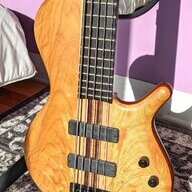
For years I will get the basics and add what I want from there. Not a bunch of "add" but enough to make it less boring. Especially after playing some covers for a while. Note for note, all the way through a song after all these years, doesn't happen much anymore unless,, a specific bass line is necessary for a certain song. I will ask my band at the end of a new song if what I did was too much? They will tell me one way or the other.
Last edited:
Yep, no reason to play all the tunes note for note unless you're in a "wig band", but if the bass part is hooky enough you'll know it, so play those parts more verbatim. Doesn't always mean it's a melodic or fancy part--take something like "Dreams" by Fleetwood Mac--super simple but ya gotta do that like McVie or people will feel something's off (even if they don't know what it is).You're playing covers, not a carbon copy of the song as it was originally recorded. Note for note for every song sounds like way too much work, especially without written music.
If a song has distinctly memorable bass sections, I focus on those...
I need to be able to play around 100 tunes currently between a couple different bands and they keep throwing new ones at us every gig--originals and covers--and nobody wants to see full-size music stands onstage (unless you're in the horn section!
 ). All my set lists and charts are in PDF format, and I use an 11" iPad on a little folding iPad stand that I set somewhere discreet (in my case right next to the drummer--it just looks like some other hardware up there. From the audience you don't even notice it.
i agree with these comments. if you're a "tribute" band, then yes, the bass needs to be pretty much exact. if you are playing covers, as i do, get the distinctive/signature parts down and then i feel like i can take a bit of creative liberty with it to some degree.
i know others will disagree and that's fine. this is my approach, they are welcome to theirs. ymmv.
kgb
i know others will disagree and that's fine. this is my approach, they are welcome to theirs. ymmv.
kgb
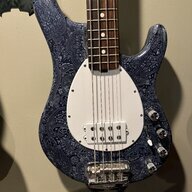
I modify parts as needed but try to stay as close to original as possible. I’m in a working country/classic rock cover band and we do 4 hour gigs with 45ish songs. I don’t use a music stand. I’ve some how been able to memorize all the songs. But we’ve been playing the same set for the last 2 years.
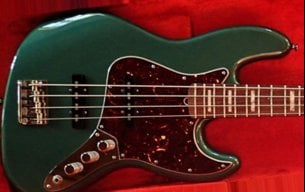
I have never seen any famous band play their own stuff note for note from the recording live. Would be boring if they did.

IMHO, the answer depends on the group's goals. If the group doesn't really have any defined goals, you can do whatever you want...at least until other band members start to complain. Even if the group goal is to get as close to the recording as possible, you usually still have some wiggle room in your interpretation. IME it's usually acceptable to vary the bass part a bit as long as you capture the feel and style of the original bass line. How much freedom you have can vary from song to song.
An important part of the process is how you build and maintain repertoire. I typically have the original recordings to learn new cover band material. The groups I worked in usually chose songs, scratched out a lead sheet, and provided reference recordings. Band members were expected to get the songs under their fingers before rehearsal, but memorization was not required at this point.
Something I did when I ran groups is record the band's interpretation of each song. Basically at the first rehearsal we played a song in till it was good enough for a scratch recording. This scratch recording could be used as a practice aid to memorize the song. We also recorded our concerts, so that we had higher-quality reference recordings of the final interpretation of each song.
If we needed to bring in a sub, we gave them copies of the lead sheets and reference recordings. These resources could be also used continuously by regular band members to maintain proficiency. This was especially useful if we decide to recycle material we hadn't played for a while.
A bit more perspective For someone who plays mostly for fun in one group, it should be reasonable to play all of the material fairly close to the recording, assuming that is consistent with the group's goal. 30-40 songs is not a lot of material for a decent bassist. However for a full-time professional who relies on gigs as significant part of total income, playing everything strictly note for note is not reasonable. A full-time pro may play in all sorts of different musical situations and need to know hundreds, if not thousands of songs. At some point, it becomes unrealistic to play every song strictly note for note. However a player at this level should have the skills and experience to play freely while honoring the original style and feel. They should also have the skill and experience to play the song totally different.
You don't generally learn 30-40 new songs for every gig. My goal was generally to have about 6 hours (minimum) of material memorized. Also there are common, simple head charts beyond the 6-hours of material that competent musicians are expected to know well enough to fake your way through.A three hour gig requires 30-40 songs and we avoid music stands on stage .
An important part of the process is how you build and maintain repertoire. I typically have the original recordings to learn new cover band material. The groups I worked in usually chose songs, scratched out a lead sheet, and provided reference recordings. Band members were expected to get the songs under their fingers before rehearsal, but memorization was not required at this point.
Something I did when I ran groups is record the band's interpretation of each song. Basically at the first rehearsal we played a song in till it was good enough for a scratch recording. This scratch recording could be used as a practice aid to memorize the song. We also recorded our concerts, so that we had higher-quality reference recordings of the final interpretation of each song.
If we needed to bring in a sub, we gave them copies of the lead sheets and reference recordings. These resources could be also used continuously by regular band members to maintain proficiency. This was especially useful if we decide to recycle material we hadn't played for a while.
A bit more perspective For someone who plays mostly for fun in one group, it should be reasonable to play all of the material fairly close to the recording, assuming that is consistent with the group's goal. 30-40 songs is not a lot of material for a decent bassist. However for a full-time professional who relies on gigs as significant part of total income, playing everything strictly note for note is not reasonable. A full-time pro may play in all sorts of different musical situations and need to know hundreds, if not thousands of songs. At some point, it becomes unrealistic to play every song strictly note for note. However a player at this level should have the skills and experience to play freely while honoring the original style and feel. They should also have the skill and experience to play the song totally different.

To play note for note means that, at the very least, drummer is playing beat for beat. But more so that the rest of the band is following suit.
It's about the vibe and feel of the song, as well as being in sync with the rest of the band.
It's about the vibe and feel of the song, as well as being in sync with the rest of the band.

"Note for note" is only necessary if everyone in the group is doing the same for that particular performance. If one person deviates they all can. When it turns out well, playing in a band where everyone puts their own spin on it is where the magic lies for cover gigs. Doing sub work can be very gratifying for this reason as you get a taste of how others spinning the same material. I can't remember the last time I played a piece where everyone wanted a recreation of a piece.
Last edited:

Learning signature riffs and adding your own is common practice. My only caution is don't avoid learning a part just because you think it's too difficult. Even if you can't work it out perfectly, you're playing and knowledge will improve significantly in time.

I find the specific song dictates how much needs to be replicated. Especially riff based tunes. Theres no avoiding having to do them like the original. When you get into songs that only have the bass playing notes and the rest of the band is copping chords, then theres usually some room for artistic license. Songs with straight 8’s, theres no option but to chug along with the band. Lastly, if its tunes where the bass plays distinctive and well known parts, you’re gonna need to nail em. Its obvious when the basslines are not being covered properly, in those tunes, and you may get thru it, but its lack of authenticity will make the band appear lackluster. And dont get me started on drummers.
This is very often because the way music is created in the studio, things don't necessarily follow a linear path from the first session to finished version--it's very often done in fits and starts, arrangements and instrumentation gets changed and tweaked over and over, overdubs are done very often without even the whole band being there, just the producer and one member or even just a session player. It's piece meal. Then bands need to then re-learn the tune the way it was finally produced to take it out live, but they often don't go to that length, or in some cases, it just works better live a different way. I've never felt that re-creating a recording live down to every little detail was necessary. It's kinda like the discussion about covering bass parts--you'll know the elements that have to be there.I have never seen any famous band play their own stuff note for note from the recording live. Would be boring if they did.


IMHO, it gets tedious when it's a song you hate!! Been there done that. I get past it though. I'm a note for note (the best I can) guy and I add a bit of myself to the bassline. If it's a song where the bassline is identifiable and integral like Motown and most of R&B music, there's no room to change things. A lot of rock is different since the bass is more buried in the mix, you can get away with not playing things exactly. Make it your own while keeping the integrity of the original.
Not being a good reader, and kind of OK with tabs, new songs require a bit of work, particularly if I don't know the song. I rarely learn the song exactly like the record with a few exceptions... If the there is a signature lick I'll put some time in there... The band I play with keeps pretty close to the original versions and I like to think that being a little outside the box with my bass lines adds a little "je ne c'cest quoi" to the mix. I've got a gig coming up in a week or so supporting a friend with a 2 hour set of mostly cover songs I'm not familiar with, and to add to the difficulty most of them are transposed to a different key from the original. I do have a recording of a short practice we did to go over the set list, so it's not a black box... but knowing the effort it will take to create my own "charts" (more like cliff notes) I keep putting in on the back burner. With a little over a week to prep, got to get on it.
The process will be...
It is tedious, but at 69, just not sure if I have the dedication to learn to read sheet music well. Using the above method provides the foundation should it become a regular tune to convert to ChordPro and import to a Setlist app (Tablet). But any time dedicated to improving skills, actually maintaining these days, is time well spent.
Cheers
As I type this, I realize how spoiled we are by the internet, back in the day you had to buy the record (or borrow it and make a recording on cassette). Now we can go online and basically find any song, plus different versions, possibly in a different key (even lessons on how to play it).
The process will be...
- Download the lyrics & music and copy to a Word Doc - Ultimate Guitar Tabs or similar (that's almost done)
- Compare basic tabs with the original recording and update as needed (usually guitar chords with lyrics)
- Work out simple bass lines with the original and make notes (maybe check on a YouTube for specific riffs)
- Update the Word Doc
- Transpose to the new key and compare
- Copy the original Word Doc and update in the new key
- Practice it until OK with it (work out any bass lines as needed)
- Repeat for next song
Cheers
As I type this, I realize how spoiled we are by the internet, back in the day you had to buy the record (or borrow it and make a recording on cassette). Now we can go online and basically find any song, plus different versions, possibly in a different key (even lessons on how to play it).
Last edited:
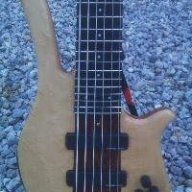
I try to learn the bass line as originally recorded and then try to make it my own. If you listen to live recordings of the same songs, the artists always stray from the original studio version. So as long as the song sounds like the song, you're good to go IMHO. I will say that there are some songs that the bass IS the song (Another one Bites the Dust and One of These Nights for example). So those should be played as close as possible.


