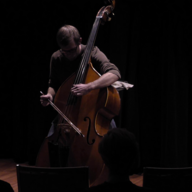
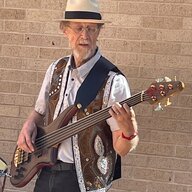
@groooooove tell us a bit about your transition process, adjusting to the gut frets, etc. I’d love to hear what that was like.
how this started is sort of funny,
I was in the workshop of edward maday, who made my double bass. I believe it was in for a soundpost adjustment or something. He also makes viols. I was aware of the instrument, and always thought it'd be cool to try one. He had one in-progress on the bench and I started asking questions - what they cost, how they're tuned, etc. He told me what I just shared here - the gamba society will help you get started. So i made a call or two, paid a rental fee, met a wonderful teacher, and learned my basics.
the frets are an almost zero-adjustment. for me, at least. I grew up playing bass guitar and guitar. Actual gut frets can be rather fussy. they come loose and need to have some paper or toothpick wedged in there to keep it snug. I own instruments with gut as well as nylon, and i personally prefer nylon. they last longer and stay tight throughout the year. The negative is that they do wear on the strings a bit faster, but it's not that bad.
Either fret material is very easy to adjust tuning when needed. just push it up or down.
The bow...
the grip seems insane at first. It's not a german grip at all. There are some historical records of viol players playing an overhanded baroque bow, but this would've been weird exceptions only. I always assumed i'd mess about with the correct grip but just play like a french bow since that's what I know. Now that i'm a few years in, no way. The proper grip is the right way for a reason. The weirdest part is that your up bow is the louder stroke, so imagine playing an 8th note pickup (down bow) - then up bow on beat one. It feels weird at first - but you
do get used to it with time!!
String crossings are a huge flex in gamba world. one must practice separating the push-pull bow stroke with the in-out motion required to cross strings. it's not like a bass, when you are negotiating around 7 strings, it takes a specific technique, without which you'll be damaging your shoulder most likely. You'll notice virtuosic repertoire often featuring leaps of major and minor 10ths, for this reason.
the tuning..
honestly? I thought learning a whole new fingerboard would be a disaster. a few months of daily practice and I was good enough to start playing some repertoire.
the clef...
alto and bass clef, with many changes on the page typically. if you don't already read alto clef, you must learn it. An annoyance, but worth it. P.S. you'll be reading a lot of chords so you need to *really* know the clef.
the payoff...
the repertoire, sound, and versatility of this instrument is beyond reproach. Some of histories finest performers and composers knew this instrument well. J.S. Bach's mentor, D. Buxtehude, is holding a viol in his only confirmed portrait. G.P. Telemann was a virtuoso on this instrument. G.F. Abel, a renowned viol player, was such a skilled composer than some of his symphonies were wrongly attributed to Mozart for many years.
the catch..
I'm in a unique position. I teach orchestra in a public school. I don't need to play gigs for money anymore. I bring my instrument to my day job and play with my students for most of the day, and during my lunch. I have a lot of practice time built into my day job. So, for practical reasons my lifestyle has allowed me to fall in love with this instrument and pursue it to the extent that I have.
Something else I love about this instrument is how easy it is to arrange for. Large range, frets make intonation a non-issue for the most part. This video was recorded around 14 months after the first time i'd ever touched one. Note- I am actually playing with pretty poor right hand technique here, but I think this is a good example of a bass player learning the viol. This instrument is a charlie ogle (similar to Shen in the bass community) and was my rental from the gamba society - not a bad sound at all!
This post is getting long, as you can tell I can go on all day. Any specific questions I'm happy to discuss!