
Enjoy the benefits of a premium membership!
Upgrade Account
-
TalkBass has been independent since 1998. Add your voice.
Create a free account to reply to discussions, view embedded media, and browse with fewer display ads.
Join free Log in
Want zero display ads or expanded classifieds tools? Compare plans.
You are using an out of date browser. It may not display this or other websites correctly.
You should upgrade or use an alternative browser.
You should upgrade or use an alternative browser.
Leo Fender did it best....
- Thread starter Gbonus Uralias
- Start date
-
- Tags
- fender leo leo fender
More options
Who Replied?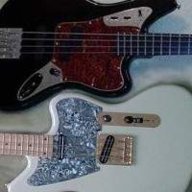


Look closer. An SG is not symmetrical.
Glad I could help.
Glad I could help.
A couple of notes...
1) The Stratocaster shape was derived from the original Precision body. The original P-basses had the double horn body but in a "slab" body shape - no arm or belly contouring. As a kid, I remember being somewhat bothered by the strat's blobby, asymmetrical shape. To my eye, symmetrical guitars like the SG and ES-335 look much better, but a stratocaster is much more comfortable to actually hold and play.
2) The "Fender" headstock shape was actually copied from another guitar, machinist Paul Bigsby made a "one off" solid body electric for country guitarist Merle Travis.
View attachment 2759392

Aesthetics and comfort speak to personal preference. Fun for everyone to have and state their opinion.
Here is what Leo did - he designed the most recognizable and iconic electric guitars in basses on the planet. If you include Musicman, G&L and all the amplifiers, lap steels and acoustic guitars he designed and produced, he is arguably the most prolific designer and builder of musical instruments to ever walk the earth. Don't forget about the Rhodes Electric Piano. Every improvement to Leo's designs have been incremental and nobody has come with any design for electric bass or guitar that has made his original designs, some of them 70 years old, dated or obsolete. A PBass, Jbass, Strat or Tele... they endure. Look at the trend in boutique bass building, almost every builder has their "JBass on Steroids" model. Leo Fender, he was either very lucky or a genius. Judging by the string of success and length of his run, no one is that lucky.
Here is what Leo did - he designed the most recognizable and iconic electric guitars in basses on the planet. If you include Musicman, G&L and all the amplifiers, lap steels and acoustic guitars he designed and produced, he is arguably the most prolific designer and builder of musical instruments to ever walk the earth. Don't forget about the Rhodes Electric Piano. Every improvement to Leo's designs have been incremental and nobody has come with any design for electric bass or guitar that has made his original designs, some of them 70 years old, dated or obsolete. A PBass, Jbass, Strat or Tele... they endure. Look at the trend in boutique bass building, almost every builder has their "JBass on Steroids" model. Leo Fender, he was either very lucky or a genius. Judging by the string of success and length of his run, no one is that lucky.

Ah, more Fender cup holding.
Just because they were they first doesn't mean they were the best.
There are dozens of bodies, necks, and pickups out there. All have their merits, all have their draw backs. The only reason the "Fender" style body is so popular is because the weight distribution is right, so it became a template.
Just because they were they first doesn't mean they were the best.
There are dozens of bodies, necks, and pickups out there. All have their merits, all have their draw backs. The only reason the "Fender" style body is so popular is because the weight distribution is right, so it became a template.

Don't forget about the Rhodes Electric Piano
Which was invented and designed by Harold Rhodes (the clue is in the name). Fender only manufactured them under a joint venture with Mr Rhodes.

songwriter21
I have an obsession for wood. The musical kind.
Ah, more Fender cup holding.
Just because they were they first doesn't mean they were the best.
There are dozens of bodies, necks, and pickups out there. All have their merits, all have their draw backs. The only reason the "Fender" style body is so popular is because the weight distribution is right, so it became a template.
 I would argue that body shape was one of, and not the most important of his design achievements. He created many instruments, each with a unique voice. You hear a strat, or pbass, or jazz, stringray or tele and can identify it in one or two notes. Can you tell a Fodera from a Dingwall from an Elrich Bass in two notes? Most can not. Can you identify a Duncan from an Aguilar, from a Loller pickup in two notes? I doubt it. While all of the elements of the design where groundbreaking, it was the sum of the parts that are remarkable.
Last edited:
Your ears are better than mine. I normally require at minimum 4 notes to identify a bass; 16 to identify a brand of pickup. Point is it is 4 times harder to identify a pickup brand than a bass for me.

My comment was in reference to Leo's influence, and dominance on modern musical instruments and the ubiquitous reach to guitars, amps and keys. All due respect to Mr. Rhodes, his piano design was a game changer, it was Leo that brought it to the world. Sorry if was not clear on the point of that comment.Which was invented and designed by Harold Rhodes (the clue is in the name). Fender only manufactured them under a joint venture with Mr Rhodes.
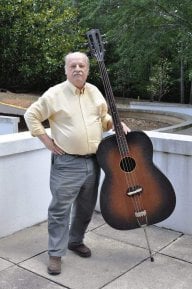
At their inception, Fender products were never designed to be the best by any objective, absolute scale. They were designed to be the best at a certain price point that made them accessible to the average working stiff musician. But IMO they are far more industrial than they are artisanal. This accounts for the decades long efforts to "improve" the Precision and Jazz -- with varying degrees of success, commercial and otherwise.
But visually, Fender's standard-bearer designs are iconic, even if one sees only the headstock. And some of the body shapes are quite graceful. But from 2017, in terms of playability and ergonomics, they may leave something to be desired. Which is no different from any other brand, since in that realm of subjectivity everyone's "Goldilocks zone" is different.
But visually, Fender's standard-bearer designs are iconic, even if one sees only the headstock. And some of the body shapes are quite graceful. But from 2017, in terms of playability and ergonomics, they may leave something to be desired. Which is no different from any other brand, since in that realm of subjectivity everyone's "Goldilocks zone" is different.
There are tons of bass manufactures out there and models at that however the Precision will always be one of the first classics and one that many others based theirs off of and later came the Jazz. Fender truly had what you could say was the right idea back then.
A jazz is a jazz is a jazz.
A P is P is a P.
The body doesn't mean anything in these cases, it is the pickup arrangement that defines these characteristics.
The difference is style and evolution. The other brands you mentioned are superior in ergonomics, innovation, and versatility.
You can probably tell a Dingwall because the longer scale gives the low notes a crispness. To my ear the most easily identifiable bass is a Warwick Thumb because no one has a bass that sounds like that.

When Fender decided to produce the Precision Bass most of his peers thought he was crazy. First, he launched a solid body guitar, something that in the 40s was unthinkable. Now, he wanted to produce an electric bass????
Leo designed the bass for mass consumption, period. The objective was to have a functional instrument, his choice of ash for the body didn't have any tone wood or weight considerations, ash looked good when clear coated yellow. Neck was bolt on because it will save a lot of material and time to produce and would be easily replaceable if twisted. It had frets so guitar players could use it without having intonation problems, ergo the Precision name. Tuners were not available, so he had to adapt double bass hardware. All the comments about the design being iconic are correct, due to the popularity of the instrument but not due to Leo's dedication to design, ergonomics or wood tone development. He was more interested in selling his new electric bass to the masses.
Leo designed the bass for mass consumption, period. The objective was to have a functional instrument, his choice of ash for the body didn't have any tone wood or weight considerations, ash looked good when clear coated yellow. Neck was bolt on because it will save a lot of material and time to produce and would be easily replaceable if twisted. It had frets so guitar players could use it without having intonation problems, ergo the Precision name. Tuners were not available, so he had to adapt double bass hardware. All the comments about the design being iconic are correct, due to the popularity of the instrument but not due to Leo's dedication to design, ergonomics or wood tone development. He was more interested in selling his new electric bass to the masses.

The only thing funnier than constant Fender praise is constant Fender condemnation.
My comment was in reference to Leo's influence, and dominance on modern musical instruments and the ubiquitous reach to guitars, amps and keys. All due respect to Mr. Rhodes, his piano design was a game changer, it was Leo that brought it to the world. Sorry if was not clear on the point of that comment.
Except between 1943 and 1959 when they were manufactured by the Rhodes Corporation. You could even say that Leo's decision to reduce the Rhodes to a 32 keys bass keyboard between 1959 and 1965 was one of his biggest missteps
Fender Rhodes: The Piano That Changed the History of Music

There's a pot for every lid, and there are new lids born everyday.
Summing-up (or trying to arrive at consensus of) the aesthetic and functional appeal of all the iconic body shapes of the electric guitars is impossible because of the infinite and personal tastes, experience and knowledge.
Us musicians celebrate these differences and nuances in the same way we discuss and describe our music itself.
I'm fascinated by the association and affect of design. Sometimes it's just the vibe, sometimes the function and it is incredible when they're represented and crafted to perfection. When someone's design innovates and stands the test of time or propegates mimicry even in the form of improvements you just gotta honor it.
In a certain way, Leo Fender didn't write one hit song. He created 4 "genres"... Tele, Strat, the P and the J. but he never gave up. Stingray, G&L.... I'm wondering if grade school students should study and examine him along with other famous inventors. Thoughts?!?
Oh yeah, Leo along with Ben Franklin, Edison, Tesla, Ford and SO MANY more.
These Visionaries should be studied by all students of design.
No matter what year they did there best work, the principals still apply to today's technologies and markets.
Just the fact that most, if not all of these people, were laughed at - at one point, and they persevered on with their ideas and dreams. A good thing to teach, learn and honor.
Thank you all for your input.
Positive or negative, it's all good.
PS - this was not a bash against all other manufactures, nor a Fender vs. the rest.
Just me on my soap box in front of other Instrument lovers, saying I really like Fenders and giving Kudos to Mr. Fender (AND HIS TEAM) for theirwonderful contribution to us musicians, who use his stuff directly, or indirectly.
Peace to all! and here's to all of us who make music - no matter what instrument you use....Keep it alive!!
Positive or negative, it's all good.
PS - this was not a bash against all other manufactures, nor a Fender vs. the rest.
Just me on my soap box in front of other Instrument lovers, saying I really like Fenders and giving Kudos to Mr. Fender (AND HIS TEAM) for theirwonderful contribution to us musicians, who use his stuff directly, or indirectly.
Peace to all! and here's to all of us who make music - no matter what instrument you use....Keep it alive!!
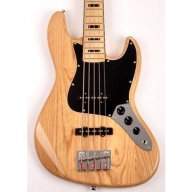
Ah, more Fender cup holding.
Just because they were they first doesn't mean they were the best.
There are dozens of bodies, necks, and pickups out there. All have their merits, all have their draw backs. The only reason the "Fender" style body is so popular is because the weight distribution is right, so it became a template.
No small matter. Beyond that, the P Bass, J Bass, Telecaster, and Stratocaster were so well conceived and gave such useful sounds that they can still be found today on stages and in studios all across the world. Whether anyone thinks they're "best" or not is a matter of personal preference, but they've sure as hell proven to be damn good!

It sounds like you don't understand how familiarity bias works.No small matter. Beyond that, the P Bass, J Bass, Telecaster, and Stratocaster were so well conceived and gave such useful sounds that they can still be found today on stages and in studios all across the world. Whether anyone thinks they're "best" or not is a matter of personal preference, but they've sure as hell proven to be damn good!
Also, popularity doesn't equal good. Pop music is the most obvious example of this.
I understand how familiarity bias works. I also understand how musicians often like to choose the tools that work best for them ... which often turn out to be the instruments I mentioned. Also, the point I made still holds - it's not a minor thing that, as you said, "the 'Fender' style body is so popular is because the weight distribution is right". Those bodies were radical designs when introduced, yet very utilitarian. Leo Fender listened to the musicians he spoke with, and did his best to fit their needs. That he was phenomenally successful in doing so is self evident.It sounds like you don't understand how familiarity bias works.
Also, popularity doesn't equal good. Pop music is the most obvious example of this.
Last edited:


