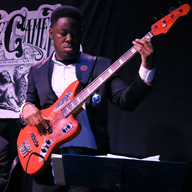
Im having trouble structuring my practice time, I haven’t been practicing scales as of late and I mainly practice songs and try to incorporate the metronome as much as possible now than in the past. Give me a breakdown on how long you spend on each subject you practice too. Subjects I’m primarily focusing on include rhythm and music theory. You can include extended techniques too like chords/double stops, harmonics, slap etc…

Enjoy the benefits of a premium membership!
Upgrade Account
-
TalkBass has been independent since 1998. Add your voice.
Create a free account to reply to discussions, view embedded media, and browse with fewer display ads.
Join free Log in
Want zero display ads or expanded classifieds tools? Compare plans.
You are using an out of date browser. It may not display this or other websites correctly.
You should upgrade or use an alternative browser.
You should upgrade or use an alternative browser.
Let me copy your bass practice routine
- Thread starter Kgn294
- Start date
More options
Who Replied?
I only really do ear training, I'll flip the TV on and play with whatever the music on the show/commercials is


Mostly do the same. I learned theory and modes years ago, but now I just jam to a drum loop or pre recorded track and do ear training. IMO always practice to a metronome or drum track so you can lock into a tempo when playing with others.I only really do ear training, I'll flip the TV on and play with whatever the music on the show/commercials is
I'm usually just busy leaning/brushing up on whatever songs are on the set list for my next gig.
TV w/ reruns playing on mute, headphone jamming along to whatever band setlist/playlist off my phone, on random so I never know what's next.
I also like to grab different basses and hot-swap pedals on my board just to mix things up, so I can keep on top of my signal chain and learn to be flexible and dial in workable sounds with whatever I've got in front of me.
Scales? Where we're going, we don't need scales...
TV w/ reruns playing on mute, headphone jamming along to whatever band setlist/playlist off my phone, on random so I never know what's next.
I also like to grab different basses and hot-swap pedals on my board just to mix things up, so I can keep on top of my signal chain and learn to be flexible and dial in workable sounds with whatever I've got in front of me.
Scales? Where we're going, we don't need scales...
Last edited:
OP should also check out the Technique and General Instruction forums.
Yeah I’m new here I’m just learning how to use talkbass had it for only a few hoursOP should also check out the Technique and General Instruction forums.

As a developing player, I think it's important to learn a constant stream of new information. However it's also important as a developing player to have opportunities to apply what you learn. In other words you need opportunities to play and be challenged by other musicians. IMHO the process is basically learn, study, apply, review/maintain, learn, study, apply, review/maintain, etc. Over a life time, there are things you will learn, forget, and relearn...that's partly what the review is for.
Ideally you would be surrounded by others who are really interested in exploring music in depth, rather than just copying/playing covers.
What do I do? I typically play over changes while watching TV. I am a retired pro with no intent of ever gigging again...but can't give up bass.
I have been mostly focusing on some of the fast swing standards I used to hate playing. I have been alternating between Oleo and Giant Steps. A few days ago I decide to add Cherokee. The reason I am digging into these now is it gets boring to play less challenging jazz standards by myself .
.
Some learning goes along with practicing these songs. I never really learned much beyond major and minor scales and the common modes. While working these songs I have been exploring the altered scale, whole tone scale, and Lydian dominant mode. I don't have enough discipline or interest to really hammer the scales, although that would be a good idea if I were hoping to be an actual jazzer.
Something else that goes with practicing these songs is reacquainting myself with upright bass fingering. I recently bought an NS Design EU6, which is about 42" scale. My #1 bass guitar is a Yamaha TRB6P, and I use primarily one finger per fret on bass guitar. So it's two distinctly different fingering systems. I am also exploring thumb posting on the EU6, which is something I never really got around to on upright.
I worked up the melody for Oleo on 6-string bass guitar and play it high on the neck. This involves reading treble cleff and transposing. Also the melody is fast and technically challenging.
I'll probably wind up buying a carved upright and working on my classical technique. Unfortunately there are not a lot of options locally to buy a carved upright, so I will have do do some road trips.
Everyone follows there own path. I majored in music but never dreamed I would be a pro. I had no interest in being a teacher. But I found a path where my unique mix of talents and capabilities was an assett. I am a generalist who prefers playing a wide variety of different music rather than specializing. This made me well suite for a career as a military musician. I played jazz trio, big band, concert band, pop covers, etc. I wasn't exceptional at any of it, but I was competent at all, which made me a valuable asset to the career field.
Ideally you would be surrounded by others who are really interested in exploring music in depth, rather than just copying/playing covers.
What do I do? I typically play over changes while watching TV. I am a retired pro with no intent of ever gigging again...but can't give up bass.
I have been mostly focusing on some of the fast swing standards I used to hate playing. I have been alternating between Oleo and Giant Steps. A few days ago I decide to add Cherokee. The reason I am digging into these now is it gets boring to play less challenging jazz standards by myself
.Some learning goes along with practicing these songs. I never really learned much beyond major and minor scales and the common modes. While working these songs I have been exploring the altered scale, whole tone scale, and Lydian dominant mode. I don't have enough discipline or interest to really hammer the scales, although that would be a good idea if I were hoping to be an actual jazzer.
Something else that goes with practicing these songs is reacquainting myself with upright bass fingering. I recently bought an NS Design EU6, which is about 42" scale. My #1 bass guitar is a Yamaha TRB6P, and I use primarily one finger per fret on bass guitar. So it's two distinctly different fingering systems. I am also exploring thumb posting on the EU6, which is something I never really got around to on upright.
I worked up the melody for Oleo on 6-string bass guitar and play it high on the neck. This involves reading treble cleff and transposing. Also the melody is fast and technically challenging.
I'll probably wind up buying a carved upright and working on my classical technique. Unfortunately there are not a lot of options locally to buy a carved upright, so I will have do do some road trips.
Everyone follows there own path. I majored in music but never dreamed I would be a pro. I had no interest in being a teacher. But I found a path where my unique mix of talents and capabilities was an assett. I am a generalist who prefers playing a wide variety of different music rather than specializing. This made me well suite for a career as a military musician. I played jazz trio, big band, concert band, pop covers, etc. I wasn't exceptional at any of it, but I was competent at all, which made me a valuable asset to the career field.

This response was amazing better than me posting this same question on reddit, I thank you a lot my man I’ll remember these words.As a developing player, I think it's important to learn a constant stream of new information. However it's also important as a developing player to have opportunities to apply what you learn. In other words you need opportunities to play and be challenged by other musicians. IMHO the process is basically learn, study, apply, review/maintain, learn, study, apply, review/maintain, etc. Over a life time, there are things you will learn, forget, and relearn...that's partly what the review is for.
Ideally you would be surrounded by others who are really interested in exploring music in depth, rather than just copying/playing covers.
What do I do? I typically play over changes while watching TV. I am a retired pro with no intent of ever gigging again...but can't give up bass.
I have been mostly focusing on some of the fast swing standards I used to hate playing. I have been alternating between Oleo and Giant Steps. A few days ago I decide to add Cherokee. The reason I am digging into these now is it gets boring to play less challenging jazz standards by myself
Some learning goes along with practicing these songs. I never really learned much beyond major and minor scales and the common modes. While working these songs I have been exploring the altered scale, whole tone scale, and Lydian dominant mode. I don't have enough discipline or interest to really hammer the scales, although that would be a good idea if I were hoping to be an actual jazzer.
Something else that goes with practicing these songs is reacquainting myself with upright bass fingering. I recently bought an NS Design EU6, which is about 42" scale. My #1 bass guitar is a Yamaha TRB6P, and I use primarily one finger per fret on bass guitar. So it's two distinctly different fingering systems. I am also exploring thumb posting on the EU6, which is something I never really got around to on upright.
I worked up the melody for Oleo on 6-string bass guitar and play it high on the neck. This involves reading treble cleff and transposing. Also the melody is fast and technically challenging.
I'll probably wind up buying a carved upright and working on my classical technique. Unfortunately there are not a lot of options locally to buy a carved upright, so I will have do do some road trips.
Everyone follows there own path. I majored in music but never dreamed I would be a pro. I had no interest in being a teacher. But I found a path where my unique mix of talents and capabilities was an assett. I am a generalist who prefers playing a wide variety of different music rather than specializing. This made me well suite for a career as a military musician. I played jazz trio, big band, concert band, pop covers, etc. I wasn't exceptional at any of it, but I was competent at all, which made me a valuable asset to the career field.
+1. the best advice I ever got was "man, you don't need lessons, you already know how to play. Just get out there and do it! Play with as many people as possible. Make mistakes. Get fired. Then get up and keep going!"As a developing player, I think it's important to learn a constant stream of new information. However it's also important as a developing player to have opportunities to apply what you learn. In other words you need opportunities to play and be challenged by other musicians. IMHO the process is basically learn, study, apply, review/maintain, learn, study, apply, review/maintain, etc. Over a life time, there are things you will learn, forget, and relearn...that's partly what the review is for.
Ideally you would be surrounded by others who are really interested in exploring music in depth, rather than just copying/playing covers.
Same. My practice time is as much about learning the right notes as it is about ear training and developing musical intuition, feel, and flexibility as it relates to picking up new material quickly and then jumping on stage to play it. It's essentially an 80/20 approach to learning what I need to know for the next gig. 20% of your effort will get you 80% of the way there... and vice versa... Learn the changes. Learn the structure of the song. Learn any key riffs, bass lines, or signature melodies that really make the song what it is. Get the general vibe and feel down and figure out how you're going to approach playing it... then fill in the blanks with the background knowledge you have been working on (i.e. scales, music theory, and practice practice practice). If you have more time, put in more work until you can play it blindfolded and drunk at 3 am, vibing with a drummer you've never met beforeI am a generalist who prefers playing a wide variety of different music rather than specializing.
 .
.Ear training and being present in the moment, i.e. listening to what's happening around you while you're in it, is a skill all on it's own. In my experience as a weekend warrior hobby musician, there's no greater sign of an inexperienced player than one who keeps steaming straight ahead playing the song note-for note the way they know it, rather than listening and reacting to what's happening on stage in the moment. Head's up! Eye contact.
Don't get me wrong... this is hard and it takes practice, just like anything else. I still get caught zoning out staring off into space, head up my ass in my own world playing all the wrong notes while the guitar player and drummer are shooting me dirty looks... oops! Tuck and roll, recover, keep moving! Don't make the same mistake again on the next pass through the chorus
 .
.So yes, learn some scales. Major and Minor will get you most of the way there.
Work on the songs you need to know or want to learn, of course. Repetition is good. If it's cover songs, even listening to them on repeat when you're not practicing can be beneficial.
But also try to develop a sense of flexibility and spontaneity in how you approach whatever it is that you're trying to play. Don't get locked into "well the Ultimate Guitar tabs says to play it this way" mindset.... find the vibe and bring it to life. This comes with experience.
Don't just play the song... make music.
Oh! And take a break every now and then! Sometimes a song just kicks your ass. Put it down for a couple days and let your subconscious process what you've worked on. Come back to it once you've caught your breath and keep going.
Last edited:

I think a big mistake some new players make is either calling everything practice or nothing practice, but not all time spent on the instrument is equal to your development. And doing only "developmental" playing is not always good to spark creativity and foster joy and exploration in music.
When I was young and early in my career (20 years as a full-time working musician) I'd set aside specific time to work on scales, modes, theory exercises, technique, etc. That was hard work productive time, which wasn't intended to always be musical. It's developing muscle memory and internalizing concepts that one can recall and use later. The next step is putting those to work, which may be finding songs that use those same scales or modes, playing over changes, and utilizing techniques to perform actual songs and compositions.
The third branch is just playing. Jam along to records or drum loops or commercials. Turn on the radio and learn to play whatever comes on, even when you've never heard it before. That can expand to writing charts and learning how to map out arrangements from a single listen to a new song.
The key is balance. If you only jam along to records you are not going to develop a full understanding of music without doing some deeper analysis. But if you only practice scales and mapping out theory exercises on paper you won't learn how to apply those when you play actual songs.
If you only practice making noise with no regard for how you use your hands you are likely to develop bad habits and poor technique which will ultimately slow you down or hinder your development when you injure yourself or try to learn things that require better technique. But if you only practice technical exercises your techniques are going to sound robotic and unmusical because you haven't applied them in musical situations.
Nothing will ever beat a teacher, whether it's in person or virtual. There is no substitute for an experienced musician analyzing your skillset and finding areas to help you develop.
When I was young and early in my career (20 years as a full-time working musician) I'd set aside specific time to work on scales, modes, theory exercises, technique, etc. That was hard work productive time, which wasn't intended to always be musical. It's developing muscle memory and internalizing concepts that one can recall and use later. The next step is putting those to work, which may be finding songs that use those same scales or modes, playing over changes, and utilizing techniques to perform actual songs and compositions.
The third branch is just playing. Jam along to records or drum loops or commercials. Turn on the radio and learn to play whatever comes on, even when you've never heard it before. That can expand to writing charts and learning how to map out arrangements from a single listen to a new song.
The key is balance. If you only jam along to records you are not going to develop a full understanding of music without doing some deeper analysis. But if you only practice scales and mapping out theory exercises on paper you won't learn how to apply those when you play actual songs.
If you only practice making noise with no regard for how you use your hands you are likely to develop bad habits and poor technique which will ultimately slow you down or hinder your development when you injure yourself or try to learn things that require better technique. But if you only practice technical exercises your techniques are going to sound robotic and unmusical because you haven't applied them in musical situations.
Nothing will ever beat a teacher, whether it's in person or virtual. There is no substitute for an experienced musician analyzing your skillset and finding areas to help you develop.

I am not doing it right. I end up making grooves from mimicking the sounds of neighborhood kids... Sometimes it works 
I like playing along with a song or a bass-less backing track version of a song. I like to get the general feel as recorded, but then add my own elements. That's where the real practice begins I find.
7 days of the week - 7 notes. Each day I start with beating up the note of the day..... Call out the flats/sharps of the key. Run thru the maj/min/pentatonic scales. Arpegio.... Just spend some time running the neck. Calling out your notes or singing them is fun to try too. I'll give it about 15 min and then go on to whatever I came there for....... Don't forget ya gotta do the SHARP version of the note of the day too..... each day has its own MODE too.
I spent forty years copying songs and playing scales. I never learned as much as these last ten years playing with a pianist. I get him to record me snippets of piano music. I don't even care what style of music it is. I sit at home and play the snippets through headphones and find a myriad of patterns in his keys. It has turned me very much into the melodic player I always dreamed of being.

Lol. Dont follow mine. I dont practice. Play my gig and put the bass in my gigbag. Take it out next gig
So Anyway, I'm with ya. Sometimes I'll play a bass that's not getting much gig time just to make sure it's still in working order.Lol. Dont follow mine. I dont practice. Play my gig and put the bass in my gigbag. Take it out next gig
If I have to sing a song with my band or learn a new song, I'll download a chord sheet and go through it. Once.
I like to live in the moment.

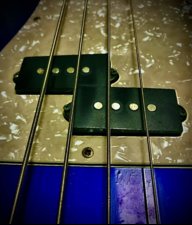
I’ll set goals every 3 months or so, and pick out skills that work towards those goals. Some of my frequent categories:
-singing while playing.
-sight reading
-ear training
-learning new covers
-walking bass
So in an hour session that’s ~10 minutes per category/per day. Or maybe 20 minutes alternating between every other day
-singing while playing.
-sight reading
-ear training
-learning new covers
-walking bass
So in an hour session that’s ~10 minutes per category/per day. Or maybe 20 minutes alternating between every other day
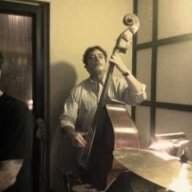
In addition to all of the good suggestions above, I would add, find some music that you can really sink your teeth in to, and do a deep, deep dive. I take a cue from the cello master Pablo Casals. Now, I will never come close to being one quadrillionth the musician that he was, but I read about one of his practice regimens that I have somewhat incorporated into my practice routine.
Casals is credited with having rediscovered the Bach Suites for Unaccompanied Cello, when he was a young man rummaging through some old music in a shop in Barcelona in the early 20th Century. He became the master of them. His routine was to play one of the six suites (all five parts, preludes and dances) in rotation, everyday of his long life.
The cello suites are magnificent pieces of music. There is more than a lifetime’s worth of musical, intellectual and emotional exploration to be had.
I don’t play a full suite each day, but I do play parts of them pretty much every day. I play them on electric fretted or fretless, or on upright depending on which instrument I’m focusing on at the time. There is a joy (as well as frustration then joy) in learning and living with such pieces. Each time you play them you will learn something new, either about them or about yourself. It is only one part of my practice, but a part that I think I benefit from greatly. Most of the pieces have a few double and some triple stops, but mostly the musical lines are linear with the harmonies, counterpoint and polyphony being implied. Bach can teach us a lot about bass playing. I think it was John Entwhistle who said that Bach was the governor for all bassists.
I would recommend the cello suites to anyone, but it doesn’t have to be your muse. Just find some music in which you can find deep meaning, and live with it and really explore all of its nuances.
Good luck, and have fun!
Casals is credited with having rediscovered the Bach Suites for Unaccompanied Cello, when he was a young man rummaging through some old music in a shop in Barcelona in the early 20th Century. He became the master of them. His routine was to play one of the six suites (all five parts, preludes and dances) in rotation, everyday of his long life.
The cello suites are magnificent pieces of music. There is more than a lifetime’s worth of musical, intellectual and emotional exploration to be had.
I don’t play a full suite each day, but I do play parts of them pretty much every day. I play them on electric fretted or fretless, or on upright depending on which instrument I’m focusing on at the time. There is a joy (as well as frustration then joy) in learning and living with such pieces. Each time you play them you will learn something new, either about them or about yourself. It is only one part of my practice, but a part that I think I benefit from greatly. Most of the pieces have a few double and some triple stops, but mostly the musical lines are linear with the harmonies, counterpoint and polyphony being implied. Bach can teach us a lot about bass playing. I think it was John Entwhistle who said that Bach was the governor for all bassists.
I would recommend the cello suites to anyone, but it doesn’t have to be your muse. Just find some music in which you can find deep meaning, and live with it and really explore all of its nuances.
Good luck, and have fun!
Last edited:


