This isn't exactly about sound, but I've always wondered how the lighting works at the concerts I go to. Is it an expensive computer program that keeps them synced with the music, or is there a light tech that practices with the band beforehand? Or is it just your mind that makes it seem in sync with the music, when in reality it's random?

Enjoy the benefits of a premium membership!
Upgrade Account
-
TalkBass has been independent since 1998. Add your voice.
Create a free account to reply to discussions, view embedded media, and browse with fewer display ads.
Join free Log in
Want zero display ads or expanded classifieds tools? Compare plans.
You are using an out of date browser. It may not display this or other websites correctly.
You should upgrade or use an alternative browser.
You should upgrade or use an alternative browser.
Lights
- Thread starter Shroom
- Start date
More options
Who Replied?
The range of lighting systems is just as vast as the range of audio systems. You can get a Behringer powered mixer and some cheap speakers, or you can put together a muti-million dollar PA. Same with lights, you can buy a cheap DJ set up, or spend millions of dollars.
So to answer you question, yes it can be an expensive computer program all planned and timed out, syncs with the music, has 'scenes' etc. Yes there could be a light tech that (most often doesn't practice with the band) but is back there pressing buttons, making it up as you he goes, and yes sometimes it might be random. And there are some cheap lights you can buy that 'react' to music, sort of the way the little dancing plants do. It all depends on the level of show your at.
So to answer you question, yes it can be an expensive computer program all planned and timed out, syncs with the music, has 'scenes' etc. Yes there could be a light tech that (most often doesn't practice with the band) but is back there pressing buttons, making it up as you he goes, and yes sometimes it might be random. And there are some cheap lights you can buy that 'react' to music, sort of the way the little dancing plants do. It all depends on the level of show your at.
Hi.
+1 for everything walker rosewood said.
The simplest of usable setups may be a T-bar and four PAR-cans.
Most of T-bars have multiple programs and also a "music to sound" function via internal mic. That "handles" the sync'ing.
If You're in the market for a light rig and the sales person pushes a LED system, try it in a gig setting before making the desicion. You'll be glad you did .
.
Regards
Sam
+1 for everything walker rosewood said.
The simplest of usable setups may be a T-bar and four PAR-cans.
Most of T-bars have multiple programs and also a "music to sound" function via internal mic. That "handles" the sync'ing.
If You're in the market for a light rig and the sales person pushes a LED system, try it in a gig setting before making the desicion. You'll be glad you did
.Regards
Sam
This isn't exactly about sound, but I've always wondered how the lighting works at the concerts I go to. Is it an expensive computer program that keeps them synced with the music, or is there a light tech that practices with the band beforehand? Or is it just your mind that makes it seem in sync with the music, when in reality it's random?
Depends on where you see a band. A big club (or "road house" in the industry vernacular) with a house system installed there will always be house tech. If the act isn't traveling with a lighting tech (and quite a few don't) the house guy will do lights. He often isn't familiar with the material and most of the good ones are VERY musical and can catch intros, stops, endings and mood really effectively without having heard the songs. Because this is what he does regularly the tech will have a lot of lighting "looks" pre-programed into the lighting console which these days has a ton of computing power. Doing a show like this is referred to in the biz as "busking" it. If there is a tech traveling with the band he knows the material and will focus the house lights and then spend two or three hours programing the cues into the console. It's still going to be a little less structured than a big arena show.
Concerts you see in an arena are the result of the lighting designer doing his homework in terms of listening to the material, meeting with the band and/or management, designing a lighting system and in most cases roughing in cues or "looks" on a computer program (VectorWorks is a heavily used one) all in advance. From there the band goes into production rehearsals in a venue similar to the ones they'll be touring for several days or in the case of the really big tours like U2 several weeks. At this point the lighting designer (most often he'll be running the console for shows on the tour) starts fine tuning his rough cues and not sleeping much. Everything you see a light do is an artistic decision and on very few big tours is there any "busking" involved. The designer will typically break a song down into quite a few parts though so he has control of making the cues sync with the band. Even though it's all pre-programed making it fit with the music is still a matter of a human being with a great sense of timing pushing the GO button to fire the cues. Many of the best lighting console operators are also good musicians. In theory you could build a show that you hit GO once, sat back and everything just ran by itself. This NEVER happens though...too much could (and would) go wrong in a live situation. Most acts are heavily rehearsed but if the band likes to jam and or not follow the set list the lighting designer/board op will have "bail out" looks to cover his butt for when they throw him a curveball.
Here's one of the more popular lighting consoles being used these days to give you an idea of the tools designers are using to run the shows.
About $50K to $90K depending on options for this GrandMA and that's typical for a top of the line lighting console.
Invalid Link Removed

led's not quite getting it done yet?If You're in the market for a light rig and the sales person pushes a LED system, try it in a gig setting before making the desicion. You'll be glad you did
led's not quite getting it done yet?
They're getting there fast. I still don't see them completely replacing gas filled lamps any time in the next few years especially for less saturated color situations...for white light on faces they're still not warm or punchy enough. A good long throw LED follow spot is till a ways away.
Hi.
IME/IMHO no.
The first consideration is the maintenance cost of operation.
While a quality PAR sealed beam lasts about 200 hours of small scale touring/gigging for a 10 a pop and even though that can sound like much, a RGB LED can of the same quality (?180) has already lost up to 15% of its brightness and the brightness continues to drop throughout the cans life.
The second for me is the beam width/coherence which is somewhat erratic with LEDs, but as sharp as needed with PARs.
Last but not least there is the question about white.
That's impossible with budget RGB LED cans, and really expensive with special white LEDs.
That said LEDs will be the main source of lighting in the future and the only way to get there is to keep on developing better and better fixtures. Some peope have to take the plunge and use these development stage units and help to pay the research.
The LEDs have way too many plus sides to ignore, about zero heat and power consumption compared with conventional filament light systems for example.
The best way to use LEDs IME is to use 'em side by side with filament technology, using the best features from both systems.
Regards
Sam
led's not quite getting it done yet?
IME/IMHO no.
The first consideration is the maintenance cost of operation.
While a quality PAR sealed beam lasts about 200 hours of small scale touring/gigging for a 10 a pop and even though that can sound like much, a RGB LED can of the same quality (?180) has already lost up to 15% of its brightness and the brightness continues to drop throughout the cans life.
The second for me is the beam width/coherence which is somewhat erratic with LEDs, but as sharp as needed with PARs.
Last but not least there is the question about white.
That's impossible with budget RGB LED cans, and really expensive with special white LEDs.
That said LEDs will be the main source of lighting in the future and the only way to get there is to keep on developing better and better fixtures. Some peope have to take the plunge and use these development stage units and help to pay the research.
The LEDs have way too many plus sides to ignore, about zero heat and power consumption compared with conventional filament light systems for example.
The best way to use LEDs IME is to use 'em side by side with filament technology, using the best features from both systems.
Regards
Sam
Aren't LED's also filled with gas? Arsenic specifically.
Yes. I meant glass globe HMI, halogen and zenon lamps you see in traditional fixtures like PARS, lekos, Mac 2Ks, Varilight 3500, follow spots etc., etc., etc.
I was lying in bed thinking I should make this correction but I was tired and figured I'd do it now instead.
well you guys just saved me some frustration. led's have an attractive side but i don't want to look like a dj light rig.
well you guys just saved me some frustration. led's have an attractive side but i don't want to look like a dj light rig.
Hey that's only one opinion. Stage lighting is one thing I do to pay the bills and my opinion is for fill light LEDs have a real lot going for them. If you position the lights so the audience can't see the source (the face of the light) it won't look at all like a "DJ rig". Use PARS for your front light and you'll be rockin'.
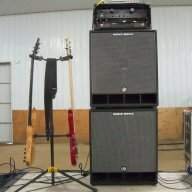
As already mentioned the big advantage of LEDs is power consumption. For bands playing bars or venues without alot of circuits available they are a great choice.

I recently bought some Chauvet Colorbars for my cover band. They weight nothing throw no heat and look pretty good. So far I haven't programmed them, just using the features built in. Do thery throw as much light as 8 seperate cans...no but they are fitting the bill.
Right now MF has them for $169 each....
Right now MF has them for $169 each....
hey "troy," that's pretty interesting, those color bars. might take a spin to gc tomorrow or monday to check them out. my lighting needs are few. most of our gigs have lights, but occasionally we need them, and we always have to rent. i'd rather get that money, you know?
Hey thanks guys!  So let's say I'm in a band and I'm trying to build a large following in my town/area so that I can eventually move on to tour the state and then who knows. To do so I want to put on the best possible live show. What's my best option for lighting on a modest but reasonable budget?
If hiring a light tech turns out to be it, does anyone know how to go about finding one? Especially a younger one that can fit in with the band well, considering I'm more or less a young guy.
So let's say I'm in a band and I'm trying to build a large following in my town/area so that I can eventually move on to tour the state and then who knows. To do so I want to put on the best possible live show. What's my best option for lighting on a modest but reasonable budget?If hiring a light tech turns out to be it, does anyone know how to go about finding one? Especially a younger one that can fit in with the band well, considering I'm more or less a young guy.
just train one of your dopey friends to do it.
Good call
Youse guys are real funny

How does a tech shut a musician up?
Asks if he wants to compare tax returns...
how does a musician shut up a tech?Youse guys are real funny
How does a tech shut a musician up?
Asks if he wants to compare tax returns...
he fires them...
BWAHAHAHAHAHAHA!!!
but seriously, i am bummed you guys make way more than i do