• TalkBass has been independent since 1998. Add your voice.
    Create a free account to reply to discussions, view embedded media, and browse with fewer display ads.
    Join freeLog in
    Want zero display ads or expanded classifieds tools? Compare plans.

Line Isolators

monkeyfinger

Moderator
Staff member
Gold Supporting Member
Oct 29, 2001
5,796
5,892
62
Warwick, Rhode Island, USA
Has anyone had a chance to try out these new line isolator boxes? They are similar to DIs but don't have the reduction in level of normal DIs. These are meant to use after a device with low output impedance. I like the concept. There are two on the market now that have my attention:

The Walrus Audio Canvas Mono:

What I like about this pedal is that it can be switched between Line Isolation and Direct Insert modes. That could be very useful for connecting to mixing consoles in different environments. The down side is that they don't say what transformer they use.

Canvas-Mono-front_1800x.jpg


and the Pinstripe Pedals MISO:

This one is LI only, but they state they use a Jensen transformer.
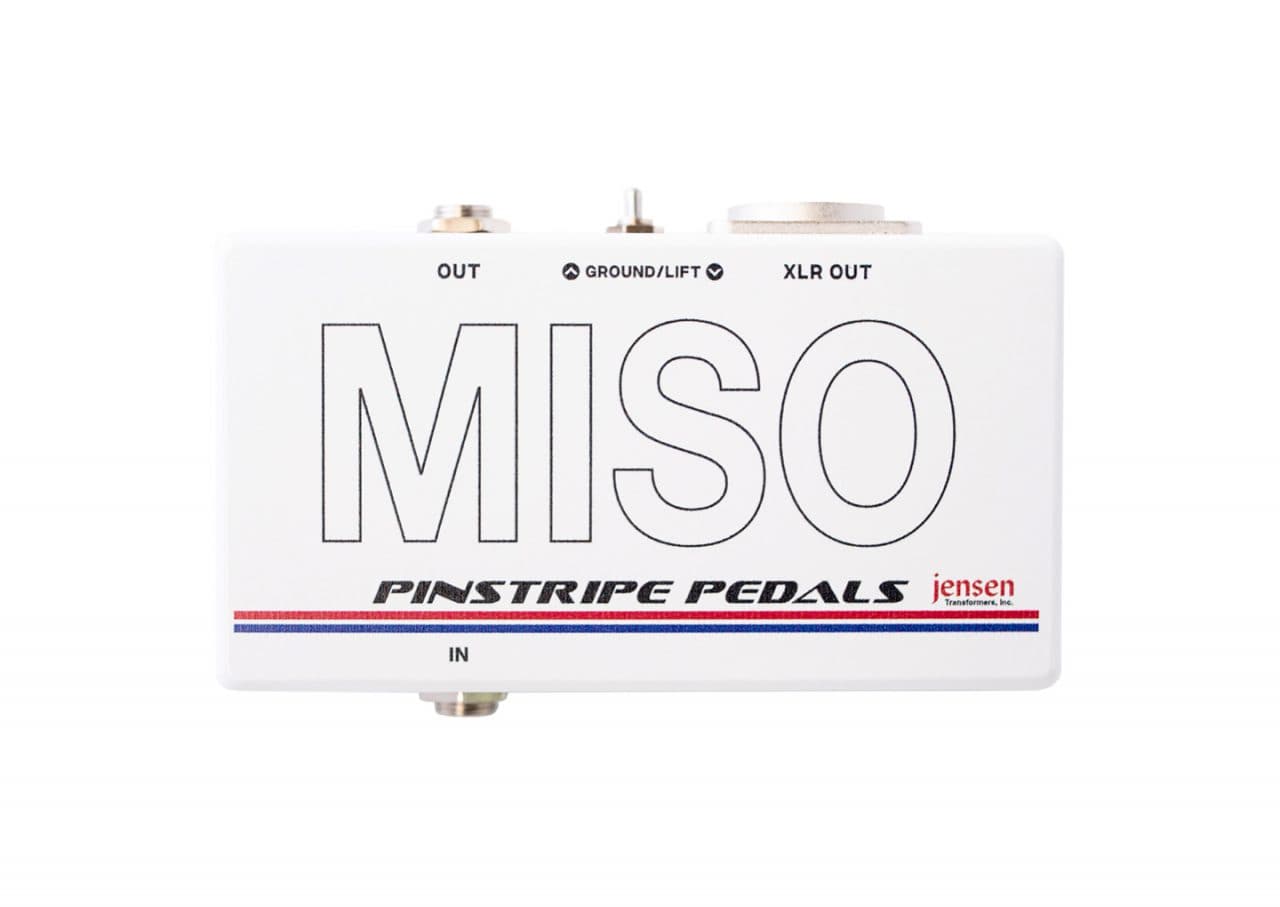
product-miso-4-1280x907.jpg
 
The closest thing in my toolbox is an Ebtech HE-2. This is a stereo device with a pair of 1:1 isolation transformers. The version I have uses 1/4 TRS inputs and outputs. So it will provide isolation for two channels of either balanced or unbalance signals. It does not have a parallel thru, so it does not function as a DI.

The current version is even better as it has both 1/4" TRS and XLR.
upload_2022-8-20_4-54-47.jpeg

These are now branded as Morley.
 
The closest thing in my toolbox is an Ebtech HE-2. This is a stereo device with a pair of 1:1 isolation transformers. The version I have uses 1/4 TRS inputs and outputs. So it will provide isolation for two channels of either balanced or unbalance signals. It does not have a parallel thru, so it does not function as a DI.

The current version is even better as it has both 1/4" TRS and XLR.
View attachment 4787234
These are now branded as Morley.
Does it do unbalanced to balanced?
 
H

What I like about this pedal is that it can be switched between Line Isolation and Direct Insert modes....
The canvas seems like a genuine support as it has a DI mode. All in all, I feel like the concept is a solution without a problem. No flame to Walrus, but even low output impedance devices, not having access to proper gain staging is not an issue players are running into with modern audio interfaces or the output from direct recording devices. DIs are abundant, both built in and as a separate flavor. Even an entry level Focusrite interface has over 50 db of usable gain. Being a gear head I will certainly like to check it out at some point (plus I dig the look). Seems like a possible gig bag companion.
 
  • Like
Reactions: PollyDahl
Has anyone had a chance to try out these new line isolator boxes? They are similar to DIs but don't have the reduction in level of normal DIs. These are meant to use after a device with low output impedance. I like the concept. There are two on the market now that have my attention:

The Walrus Audio Canvas Mono:

What I like about this pedal is that it can be switched between Line Isolation and Direct Insert modes. That could be very useful for connecting to mixing consoles in different environments. The down side is that they don't say what transformer they use.

Canvas-Mono-front_1800x.jpg


and the Pinstripe Pedals MISO:

This one is LI only, but they state they use a Jensen transformer.

I'd suspect the other transformer is also Jensen. Jensen makes good stuff and they likely get a better price that way.

They say the D.I. transformer is custom wound. They can spec what they want and Jensen, or any reputable manufacturer can build to that spec. All it takes is a slight change in how many winds are on one side or the other. That doesn't necessarily add any magic that isn't already in the stock Jensen, (or whatever) the custom one is based on.

I'd be a little leery about the claim of placing no resistance between you and the audience. They do a real good job with their marketing. And that may be all that's happening here, with that statement. That being said, this does not translate to not having a reduction in signals like a normal D.I. I didn't see them make that claim in the literature or the video. If I missed that, please point it out.

It is impossible for a transformer itself to not have losses or to affect the signal in other ways. That's not to say the entire box can't also provide a boost with the right impedance transformation but it does so at the expense of other parameters. It's just a matter of if those tradeoffs affect what you hear. I'm just saying, there is no free lunch, especially with passive devices.

At the end of the day it is a transformer based D.I. just like many others. On the surface, it seems to be a quality piece of gear. And the line isolator, if I understand how they employ it, would certainly double your pleasure. There are instances where you need to transformer isolate a line out signal, like from an amp's D.I. to a mixing console. This helps mitigate hum from ground loops, and is how I prefer to do it, over just having a ground lift switch.

Having built D.I boxes and line isolators myself for use in broadcasting and recording, In can say that these are not complicated devices. Cheap transformers give you cheap results. Usually loss of bottom end among other possibly less audible artifacts. Anyone that uses Jenson's in their devices, more than passes my quality test.
 
Last edited:
I think the marketing depts are just doing what they typically do, which is twist facts into nearly unrecognizable BS. I'll be honest when I looked at the websites for the examples linked in the OP, I was totally clueless what a Line Isolator is intended for.

IMHO the primary role is breaking ground loops and converting the signal from unbalanced to balanced. Both tasks are achieved with an isolation transformer. The point the companies are failing to make clear about not dropping the signal level, is DIs often pad down a line-level signal to mic level. A line isolator lets the full signal strength pass. There are certain applications where this is valuable if not essential.

For example, I bought my Ebtech for the monitor sends of my A&H mix wizard.

upload_2022-8-20_21-59-19.png


As you see the Aux Sends are unbalanced and -2dBu unless you install the optional balanced out. The Ebtech converts the unbalanced signal to balanced using a transformer. With the newer Ebtech it even converts from 1/4" to XLR. The signal level remains at line-level.
 
I have the Art line isolator in my gig bag that goes to every show. 2 each trs, xlr and rca on both the front and back, we use it to break ground loops or to tie our mixer (which only has xlr outputs) into house systems.

The Art was really cheap, stereo, and has multiple IO, I don't see what's special or novel about the products above. I get the feeling that they're a well known and quite boring piece of pa gear being marketed to musicians as the next big thing you absolutely need, even if you don't.
 
  • Like
Reactions: Bonafide and Wasnex
Has anyone had a chance to try out these new line isolator boxes? They are similar to DIs but don't have the reduction in level of normal DIs. These are meant to use after a device with low output impedance. I like the concept. There are two on the market now that have my attention:

The Walrus Audio Canvas Mono:

What I like about this pedal is that it can be switched between Line Isolation and Direct Insert modes. That could be very useful for connecting to mixing consoles in different environments. The down side is that they don't say what transformer they use.

Canvas-Mono-front_1800x.jpg


and the Pinstripe Pedals MISO:

This one is LI only, but they state they use a Jensen transformer.

product-miso-4-1280x907.jpg

While I haven't used the MISO, I do have the LWDI and the quality and performance is top notch! If you do get it, let me know how you like the output.
 
I'd suspect the other transformer is also Jensen. Jensen makes good stuff and they likely get a better price that way.

They say the D.I. transformer is custom wound. They can spec what they want and Jensen, or any reputable manufacturer can build to that spec. All it takes is a slight change in how many winds are on one side or the other. That doesn't necessarily add any magic that isn't already in the stock Jensen, (or whatever) the custom one is based on.

I'd be a little leery about the claim of placing no resistance between you and the audience. They do a real good job with their marketing. And that may be all that's happening here, with that statement. That being said, this does not translate to not having a reduction in signals like a normal D.I. I didn't see them make that claim in the literature or the video. If I missed that, please point it out.

It is impossible for a transformer itself to not have losses or to affect the signal in other ways. That's not to say the entire box can't also provide a boost with the right impedance transformation but it does so at the expense of other parameters. It's just a matter of if those tradeoffs affect what you hear. I'm just saying, there is no free lunch, especially with passive devices.

At the end of the day it is a transformer based D.I. just like many others. On the surface, it seems to be a quality piece of gear. And the line isolator, if I understand how they employ it, would certainly double your pleasure. There are instances where you need to transformer isolate a line out signal, like from an amp's D.I. to a mixing console. This helps mitigate hum from ground loops, and is how I prefer to do it, over just having a ground lift switch.

Having built D.I boxes and line isolators myself for use in broadcasting and recording, In can say that these are not complicated devices. Cheap transformers give you cheap results. Usually loss of bottom end among other possibly less audible artifacts. Anyone that uses Jenson's in their devices, more than passes my quality test.

"Hey,

Thanks for reaching out! Walrus actually developed the transformers, so they are our own model. Though they are very similar to the Jensen transformers used in Di boxes.

Thanks!

Alex Skaggs
Customer Service and Repairs - Walrus Audio
(405)295-7847"
 
I'm looking for a pedalboard-friendly solution... What do you advise on bass, please ?

- Pinstripe Pedals MISO – Mono Line Isolator
MISO - Mono Line Isolator | Pinstripe Pedals
or
- Pinstripe Pedals LWDI – Little White DI Box
LWDI - Little White DI Box | Pinstripe Pedals
or
- Walrus Canvas Line Isolator / D.I.
Canvas Line Isolator / D.I.


DI = the instrument is directly connected to the DI box and a high input impedance is required to avoid loading the pickups and making the instrument very dark. If you still have a buffer enabled, you will have a high impedance load connected to the instrument. The high frequencies will sound a little more "laid back" and the bass will sound a little "warmer". A DI will reduce the signal by 20dB (PAD switch: -15dB more for active bass).

Line Isolator = the mids and highs will be a little brighter and more present, give a much louder signal to the mixer and protect from accidental phantom power damage.


Balanced signal, unbalanced signal, high impedance, low impedance... What would be the best solution to put at the end of a pedalboard after a few pedals (true bypass and buffered) to plug into audio interfaces, mixers, PA / FAH, please ?

Thanks.

May the Groove be with you.
 
Last edited:
I'm looking for a pedalboard-friendly solution... What do you advise on bass, please ?

- Pinstripe Pedals MISO – Mono Line Isolator
MISO - Mono Line Isolator | Pinstripe Pedals
or
- Pinstripe Pedals LWDI – Little White DI Box
LWDI - Little White DI Box | Pinstripe Pedals
or
- Walrus Canvas Line Isolator / D.I.
Canvas Line Isolator / D.I.


DI = the instrument is directly connected to the DI box and a high input impedance is required to avoid loading the pickups and making the instrument very dark. If you still have a buffer enabled, you will have a high impedance load connected to the instrument. The high frequencies will sound a little more "laid back" and the bass will sound a little "warmer". A DI will reduce the signal by 20dB (PAD switch: -15dB more for active bass).

Line Isolator = the mids and highs will be a little brighter and more present, give a much louder signal to the mixer and protect from accidental phantom power damage.


Balanced signal, unbalanced signal, high impedance, low impedance... What would be the best solution to put at the end of a pedalboard after a few pedals (true bypass and buffered) to plug into audio interfaces, mixers, PA / FAH, please ?

Thanks.

May the Groove be with you.

I run a LWDI at the end of my signal chain to FOH with a passive bass up front. They do have to gain it up fairly high, but they say it sounds great!
 
Other than ground switch, does an HX Stomp benefit from a line isolator over a TRS to XLR cable? Will there be any improvements to tone, volume, etc?


AFAIK line isolators are not intended to color or enhance your tone or change your signal level. However, in some circumstances they will increase the signal a bit.

My understanding is using a wired adapter to go from balanced to unbalanced typically results in a -6dB loss. With a line isolator, the signal is not boosted but the loss is eliminated.

Why does the wired adapter result in -6dB? One side of the balanced output is typically shunted to ground. This cuts the voltage in half.

Here is the relevant formula:
upload_2022-10-31_13-19-34.png


Lets assume V=2 and Z=1
P = (2^2)/1 = 4W​

Note: Z = 1 is not representative of the impedance value you would see in an actual circuit. However, these numbers were chosen to make it easy to see the
relationship between a Voltage change and the resulting Power and dB change. These relationships will be the same with real world impedance values.

Now let's calculate with 1/2 the voltage. I.E. V = 1 and Z = 1

P = (1^2)/1 = 1W​

As you see, by cutting the voltage in half, the power is cut in four, which results in a -6dB change. The power formula for dB change:
upload_2022-10-31_13-33-44.png


Decibel change = 10 x [Log(1/4)] = -6.02dB.​
 
Last edited:
  • Like
Reactions: Justin Keoni
Other than ground switch, does an HX Stomp benefit from a line isolator over a TRS to XLR cable? Will there be any improvements to tone, volume, etc?
As a precaution, yes. The Stomp should be protected from phantom power and so whenever we use a supplied pa system and engineer I always place a di box after the Stomp. I use a ts cable from the Stomp to either a LBP or a Radial.
 

Latest posts