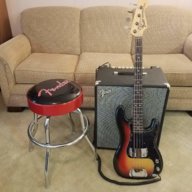
Tuned, low-action, stored upright in a case, out of the sun, in a climate controlled space.
I think the lack of consensus on how to leave the strings and truss rod come from everybody's individual experiences involving so many variables, and are the result of not monitoring the condition of their instruments over a long period of time.
Why don't we worry about a bass's condition leaving it tuned if we're playing it every day? Well, because we are evaluating its condition very regularly and making adjustments accordingly. Little problems related to tuning, tension, and other factors don't have time to accumulate to the point of hurting the instrument. But stored for long periods of time, any set of initial conditions and compounding effects of environmental changes will take their toll. That's why it's a pretty big risk to store instruments like this in any configuration. And that's also why taking a shot in the dark as to what detuning and truss-rod tension might be best to store a bass may be even worse.
So, in addition to what I wrote above... no matter how you set up your bass storage, you have to check on your instrument every once in awhile to make sure things haven't taken a bad turn, and to correct problem before they accumulate.
To not do so is most likely setting yourself for a pretty nasty surprise when you crack the case later. Yes, I know there are going to be people who guessed it right and/or didn't have a problem after storing their bass for decades on the floor under a bed in their open-air rain-forest vacation home. But I wouldn't risk it.
I think the lack of consensus on how to leave the strings and truss rod come from everybody's individual experiences involving so many variables, and are the result of not monitoring the condition of their instruments over a long period of time.
Why don't we worry about a bass's condition leaving it tuned if we're playing it every day? Well, because we are evaluating its condition very regularly and making adjustments accordingly. Little problems related to tuning, tension, and other factors don't have time to accumulate to the point of hurting the instrument. But stored for long periods of time, any set of initial conditions and compounding effects of environmental changes will take their toll. That's why it's a pretty big risk to store instruments like this in any configuration. And that's also why taking a shot in the dark as to what detuning and truss-rod tension might be best to store a bass may be even worse.
So, in addition to what I wrote above... no matter how you set up your bass storage, you have to check on your instrument every once in awhile to make sure things haven't taken a bad turn, and to correct problem before they accumulate.
To not do so is most likely setting yourself for a pretty nasty surprise when you crack the case later. Yes, I know there are going to be people who guessed it right and/or didn't have a problem after storing their bass for decades on the floor under a bed in their open-air rain-forest vacation home. But I wouldn't risk it.