• TalkBass has been independent since 1998. Add your voice.
    Create a free account to reply to discussions, view embedded media, and browse with fewer display ads.
    Join freeLog in
    Want zero display ads or expanded classifieds tools? Compare plans.

Lower action, advice needed.

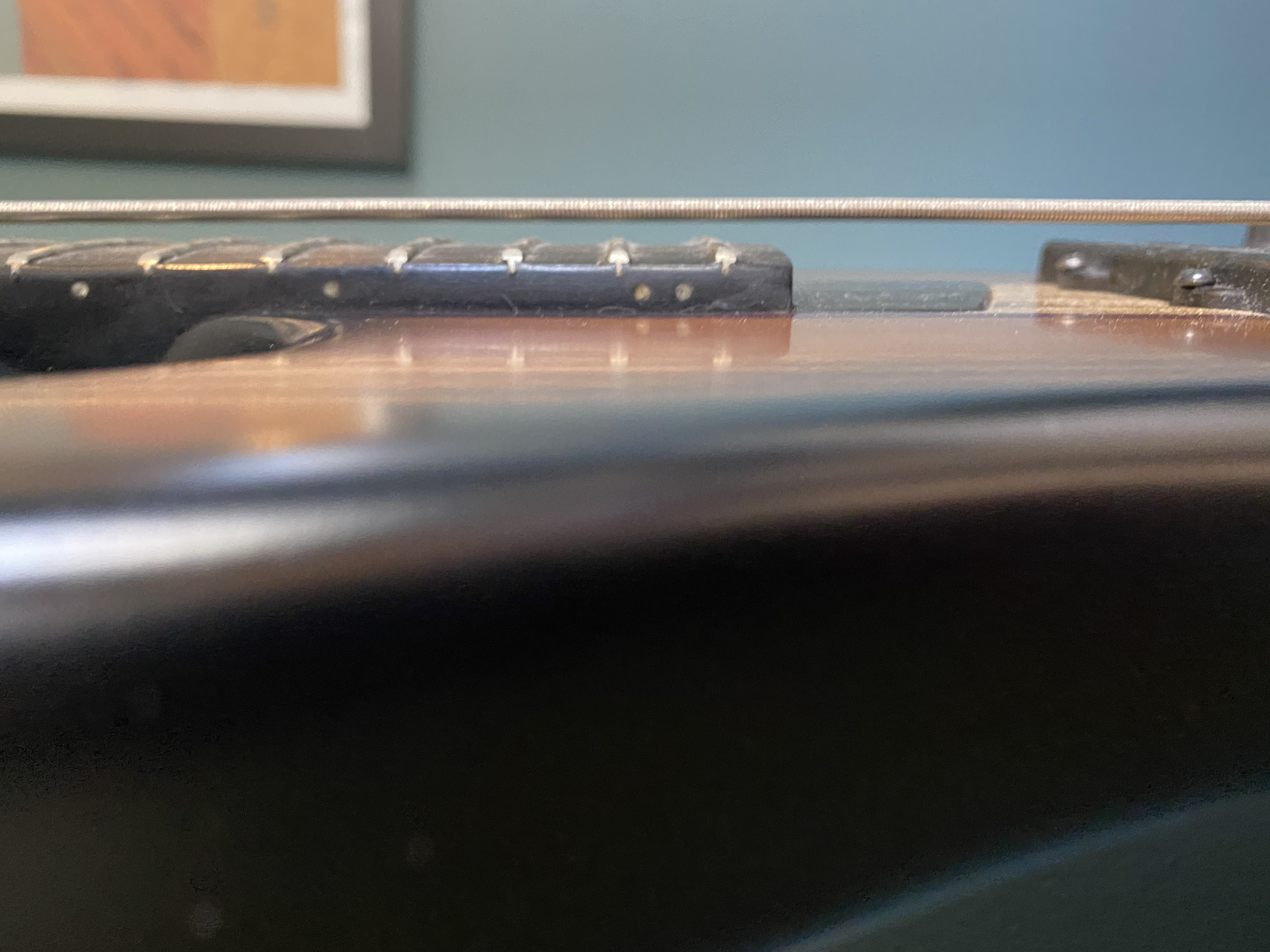
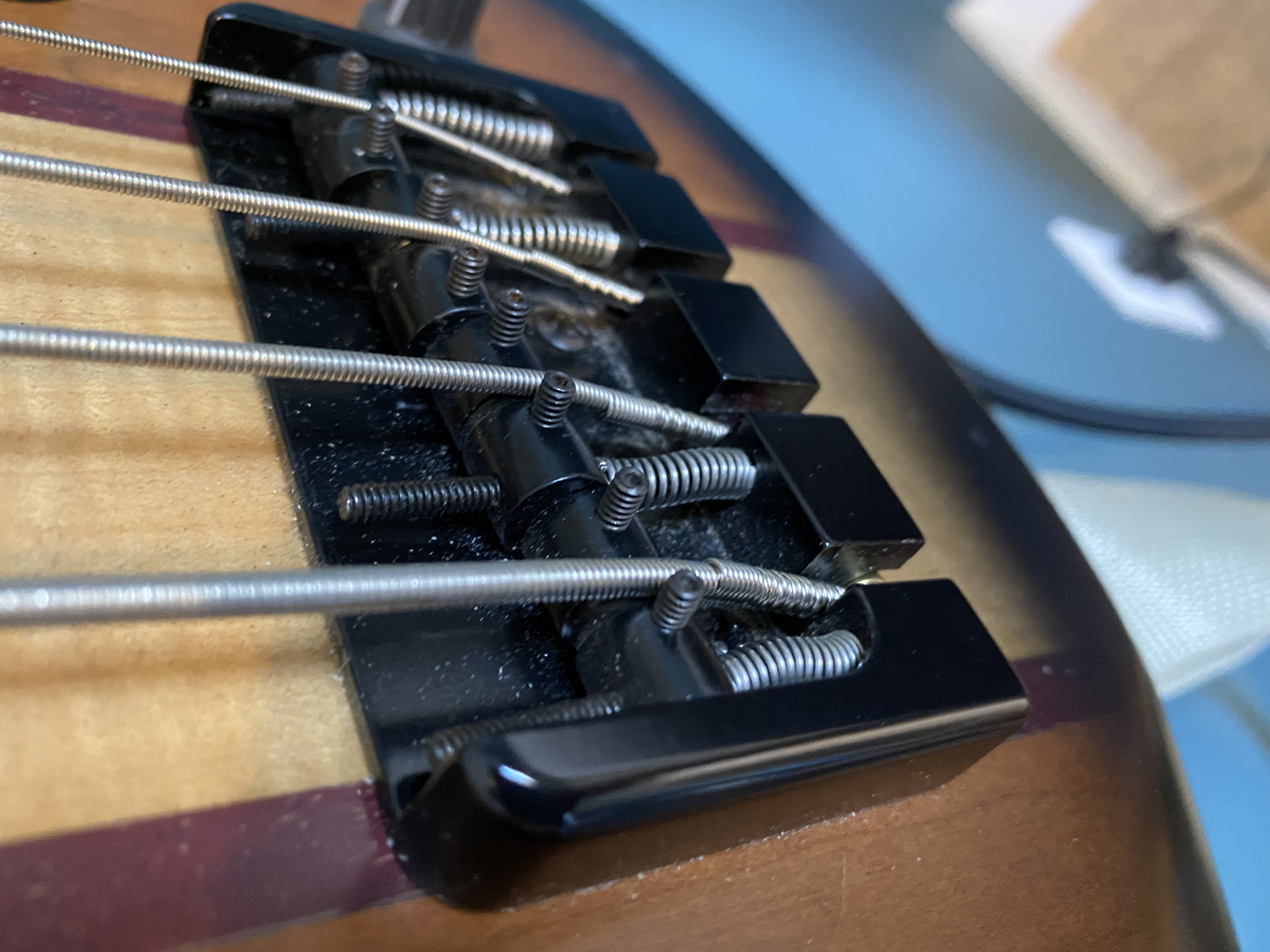
As you can see from the pictures the saddles are bottomed.:rollno:

Does this need a neck shim? If so, flat or tapered?

Or is there any other option to achieve lower action on this bass?


tempImageHEz81C.png
tempImageO746Dm.png
 
Last edited:
Sure seems like a shim is in order. It doesn't have to be much, a sliver of playing card should work. In the pocket up against the body.

I know there are varying thoughts on shims and if it makes you feel better to buy the expensive full contact shim you can. I've always used a small strip (like fender does) and never had a problem.
 
Sure seems like a shim is in order. It doesn't have to be much, a sliver of playing card should work. In the pocket up against the body.

I know there are varying thoughts on shims and if it makes you feel better to buy the expensive full contact shim you can. I've always used a small strip (like fender does) and never had a problem.
So the sliver of playing card would act like a taper?

Edit: I love the tones of this bass with half rounds on it. I may just take it all apart and refinish it while I'm at it.
 
  • Like
Reactions: Reedt2000
Before you go adding a shim, what is the relief like now? If it is too much, adding a shim is going to introduce a whole new set of problems.

You beat me to it. More information is required. What is the relief measurement and what does the rest of the neck look like against a long straight-edge? Is this a new problem or something that has been developing over time? Is the bass new to you or the bridge new to the bass?
 
  • Like
Reactions: 41Hz To Go
I bought the bass used from Guitar Center. The action has been high the whole time.

I didn't measure with a flat edge but i'd say between 1/16" to 1/8".

Edit: The flat edge is from first to last fret. Picture taken from the 12th fret.
tempImagePd5Cqo.png

Before you go adding a shim, what is the relief like now? If it is too much, adding a shim is going to introduce a whole new set of problems.
 
You beat me to it. More information is required. What is the relief measurement and what does the rest of the neck look like against a long straight-edge? Is this a new problem or something that has been developing over time? Is the bass new to you or the bridge new to the bass?

Purchased it used from GC maybe 2 years ago? No new hardware introduced. The only thing I've done is change strings and lower saddles.
 
I bought the bass used from Guitar Center. The action has been high the whole time.

I didn't measure with a flat edge but i'd say between 1/16" to 1/8".

Edit: The flat edge is from first to last fret. Picture taken from the 12th fret.
View attachment 4618866

I would consider anything under 0.015" to be in the range of "normal" relief. Personally, I prefer mine no more than 0.010". An eight of an inch is 0.125". One sixteenth is 0.0625". Both of those are extraordinarily high. I would not trust a random piece of wood as a straight-edge. It is not the right tool for the job and shouldn't be trusted to yield accurate results. If you do not have a proper metal straight-edge, you can use the installed strings as a substitute if you capo on the 1st fret and press down with you finger on top of the 12th or somewhere near the neck to body joint and use a feeler gauge to get an idea of what is going on, measuring at the widest point between the string and fret, noting where that is. If you bought this bass two years ago, there is little recourse other than trying to make some adjustments or taking it to be serviced by someone who can. Chances are your instrument needed a setup when you purchased it and even more now. A competent technician would be looking everything over pretty carefully before installing a neck pocket shim.
 
Last edited:
  • Like
Reactions: Reedt2000
I would consider anything under 0.015" to be in the range of "normal" relief. Personally, I prefer mine no more than 0.010". An eight of an inch is 0.125". One sixteenth is 0.0625". Both of those are extraordinarily high. I would not trust a random piece of wood as a straight-edge. It is not the right tool for the job and shouldn't be trusted to yield accurate results. If you do not have a proper metal straight-edge, you can use the installed strings as a substitute if you capo on the 1st fret and press down with you finger on top of the 12th or somewhere near the neck to body joint and use a feeler gauge to get an idea of what is going on, measuring at the widest point between the string and fret, noting where that is. If you bought this bass two years ago, there is little recourse other than trying to make some adjustments or taking it to be serviced by someone who can. Chances are your instrument needed a setup when you purchased it and even more now.

So If I take out some relief to your measurements it should lower the action?
 
  • Like
Reactions: DrThumpenstein
That is my presumption based on what information I have been given. Setting the neck relief is one of the first steps of a setup. Adjusting the nut can make a big difference in string height. Both of these steps occur before fiddling with the saddles in a setup. When everything else is adjusted, then its time to intonate the instrument. If you plan on changing the neck relief, use the proper tools and procedure. Don't just crank on the truss rod. Ideally, you would be using a clamp jig to manually set the relief and then tightening the truss rod at that position to retain it. It sounds like you might want to do some reading or viewing of some setup videos before you dig in. There are plenty of resources available.
 
That is my presumption based on what information I have been given. Setting the neck relief is one of the first steps of a setup. Adjusting the nut can make a big difference in string height. Both of these steps occur before fiddling with the saddles in a setup. When everything else is adjusted, then its time to intonate the instrument. If you plan on changing the neck relief, use the proper tools and procedure. Don't just crank on the truss rod. Ideally, you would be using a clamp jig to manually set the relief and then tightening the truss rod at that position to retain it. It sounds like you might want to do some reading or viewing of some setup videos before you dig in. There are plenty of resources available.
thanks for the info!

Much appreciated
 
  • Like
Reactions: Discount Bassy
Straight edge method

Tools: Straight edge ground to .001" or less, feeler gauges.

Straight edge should rest on the first fret and end on the fret at the neck body joint. Usually around F14. The truss rod has no effect above that point. Relief ends at that point. Use feeler gauges at F7 (or F8, for those who like that point) to get a good reading in thousandths.

TL;dr: Data skewed reading from F1 to F24.

Respectfully submitted.
 
  • Like
Reactions: 41Hz To Go
When you apply the straight edge to the board, is the bass laying down flat or in a playing position? Because you will likely get a different read when the bass is laying down on its back vs. in a playing position on a strap or sitting in your lap. Relief needs to be measured with the bass in a playing position, always.
 
  • Like
Reactions: 41Hz To Go
I'll be sure to do some studying before I start wrenching.

The worst part about this is the saddle screws dig into my palm at times while playing. :bored:

If the truss rod adjustment or a shim solve your problem, you can get smaller screws for those. Just need to get an accurate measurement. I did that on a few basses for comfort.

However, if can at least guess whether they are metric or whatever that stupid system is, a whole box is cheap and I have found a number of repairs on intruments around the house with a set like

https://www.amazon.com/gp/product/B08Z7WZ6XY/ref=ppx_yo_dt_b_asin_title_o01_s00?ie=UTF8&psc=1
 
As an Amazon Associate, TalkBass may receive commissions from qualifying purchases made via links on this site.
  • Like
Reactions: 41Hz To Go
You may be getting a false reading on the amount of relief. Fret the E string at the first and the 17th frets and see if the gap at the 6th or 7th fret is about the thickness of a business card - that's business card, NOT credit card. The problem with using the first and last frets to measure against is that if there is a ski jump it will give you false relief measurements.