• TalkBass has been independent since 1998. Add your voice.
    Create a free account to reply to discussions, view embedded media, and browse with fewer display ads.
    Join freeLog in
    Want zero display ads or expanded classifieds tools? Compare plans.

Magnets & Copper Wire: A Pickup Building Thread

This is a beautiful conversation we've got here. Not much to contribute atm as I'm still absorbing all of this. :D

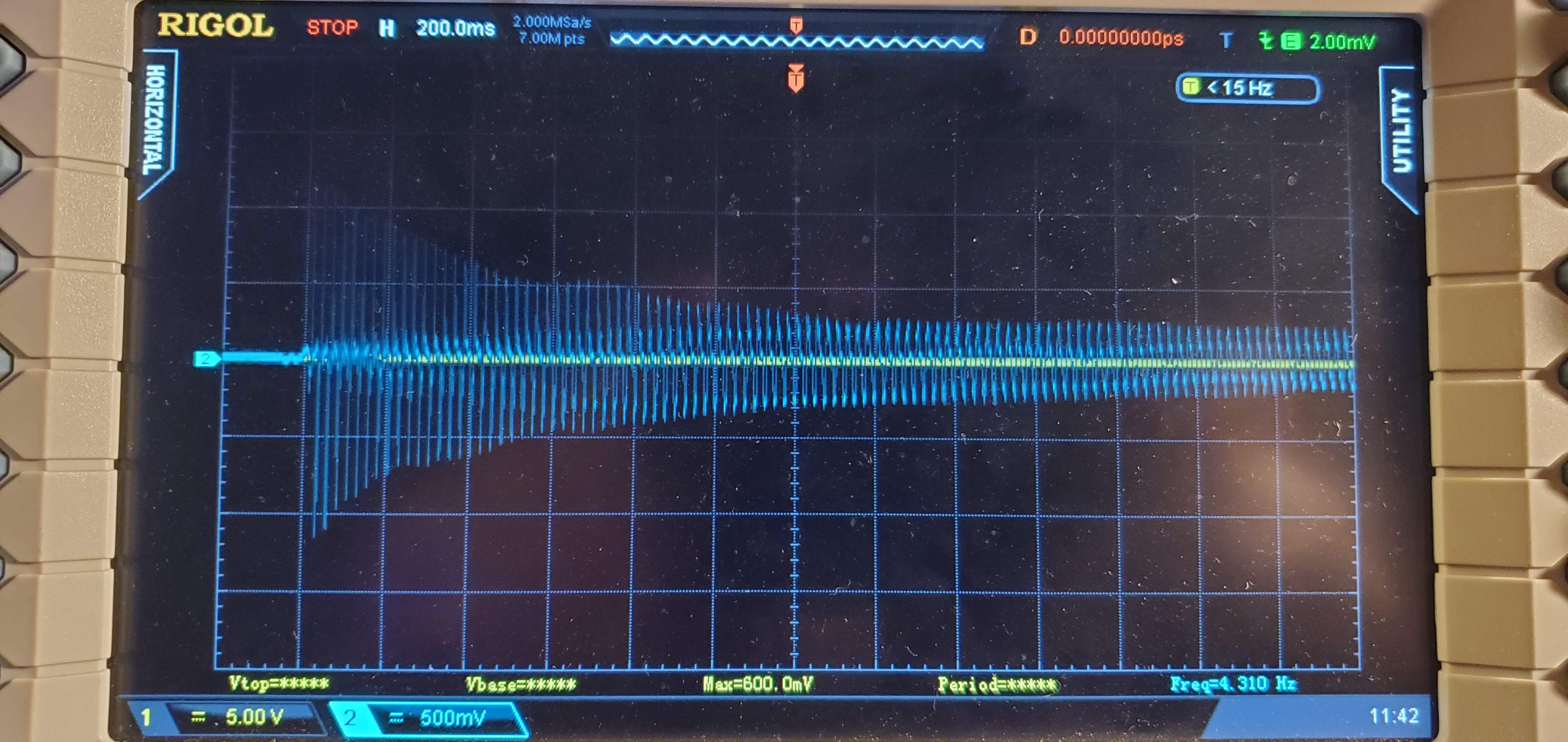
Fwiw here's a look at our traditional means of just playing into a scope. This is my E with a moderate pluck using my newest mudbucker.
20220927_215109.jpg

Here's a zoomed out view. Notice the frequency or rather don't, it will only average something like this and is not relevant here.
20220927_220026.jpg

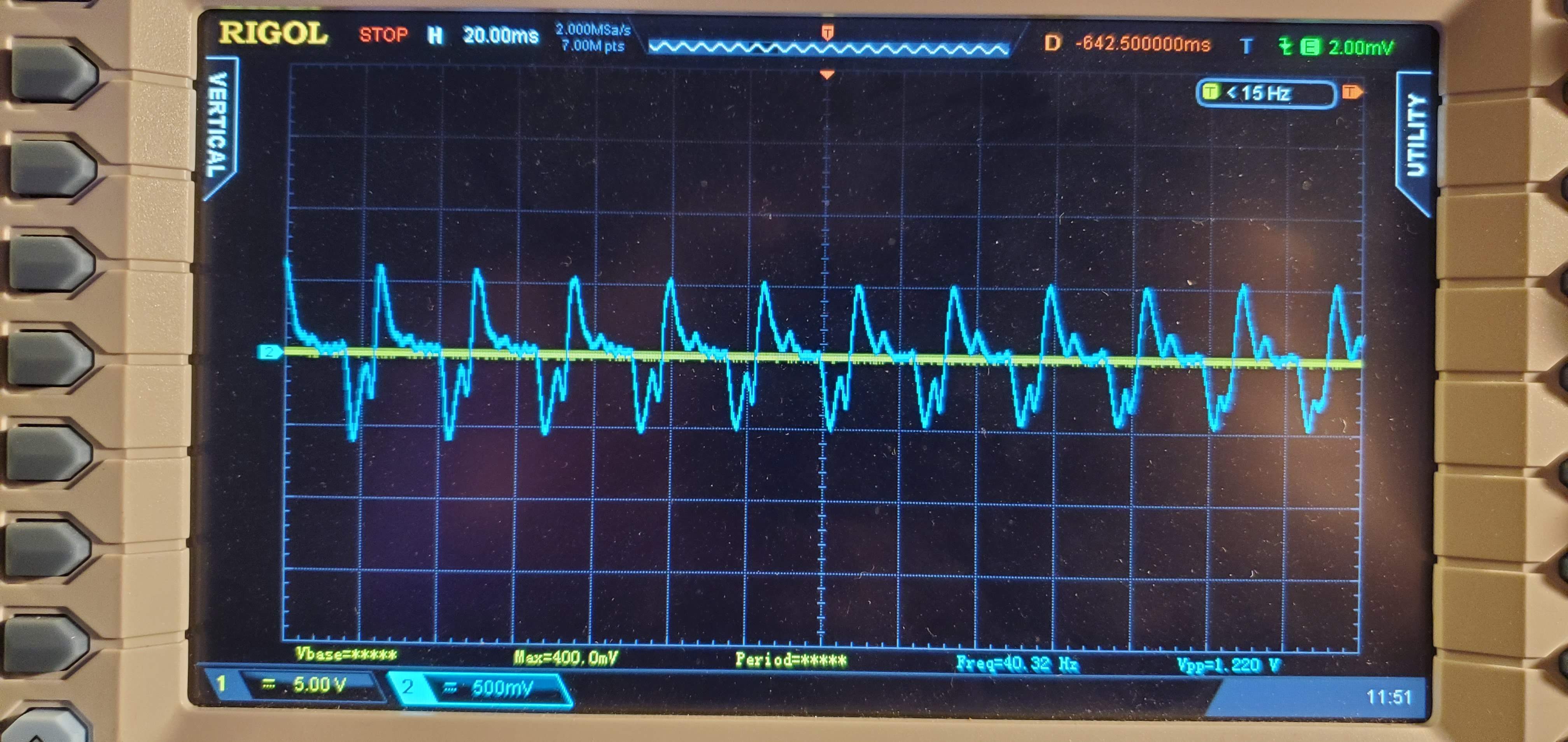
K, now the frequency is more or less accurate because we've zoomed in on a section it likes.
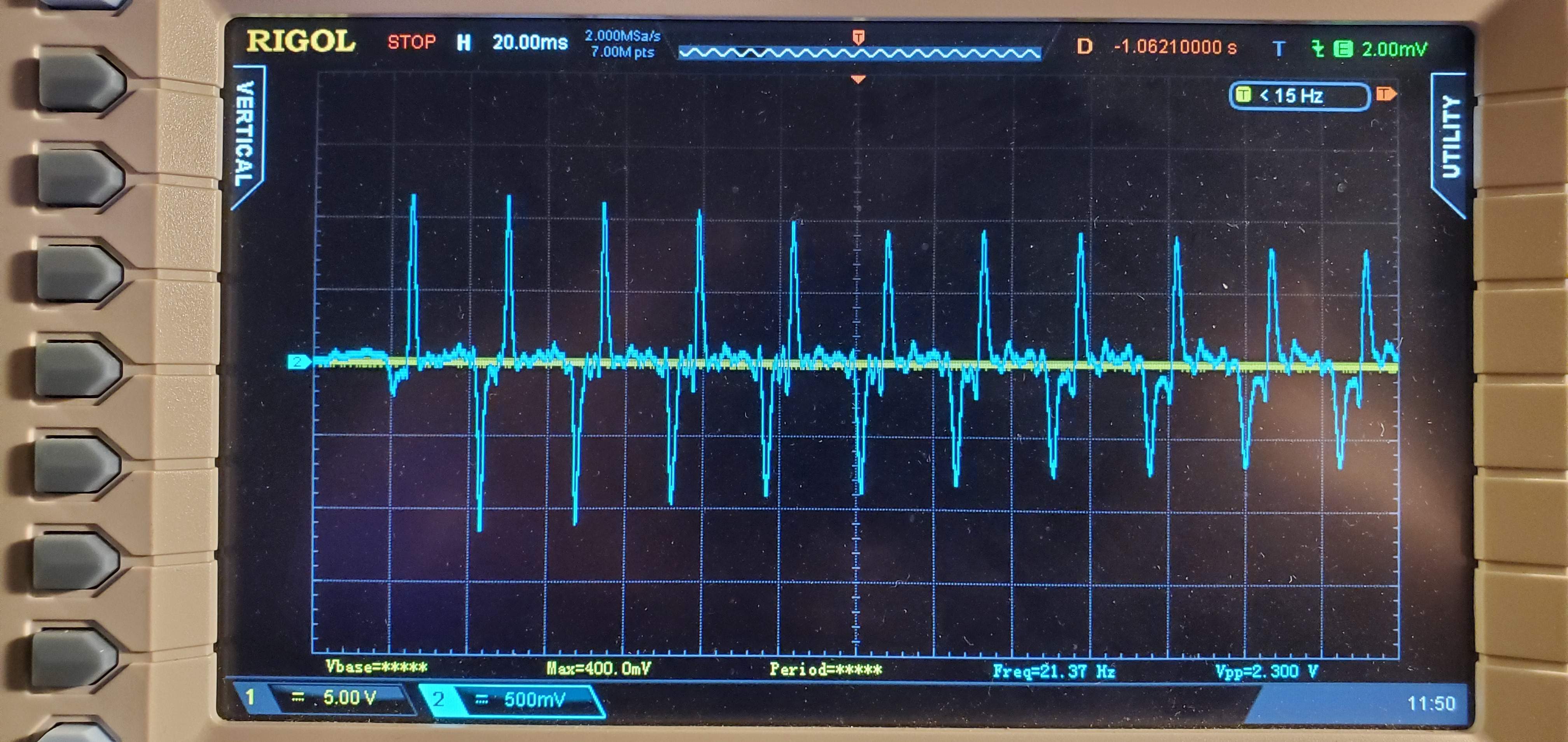
20220927_215932.jpg

Beginning of the wave, check out that vpp!
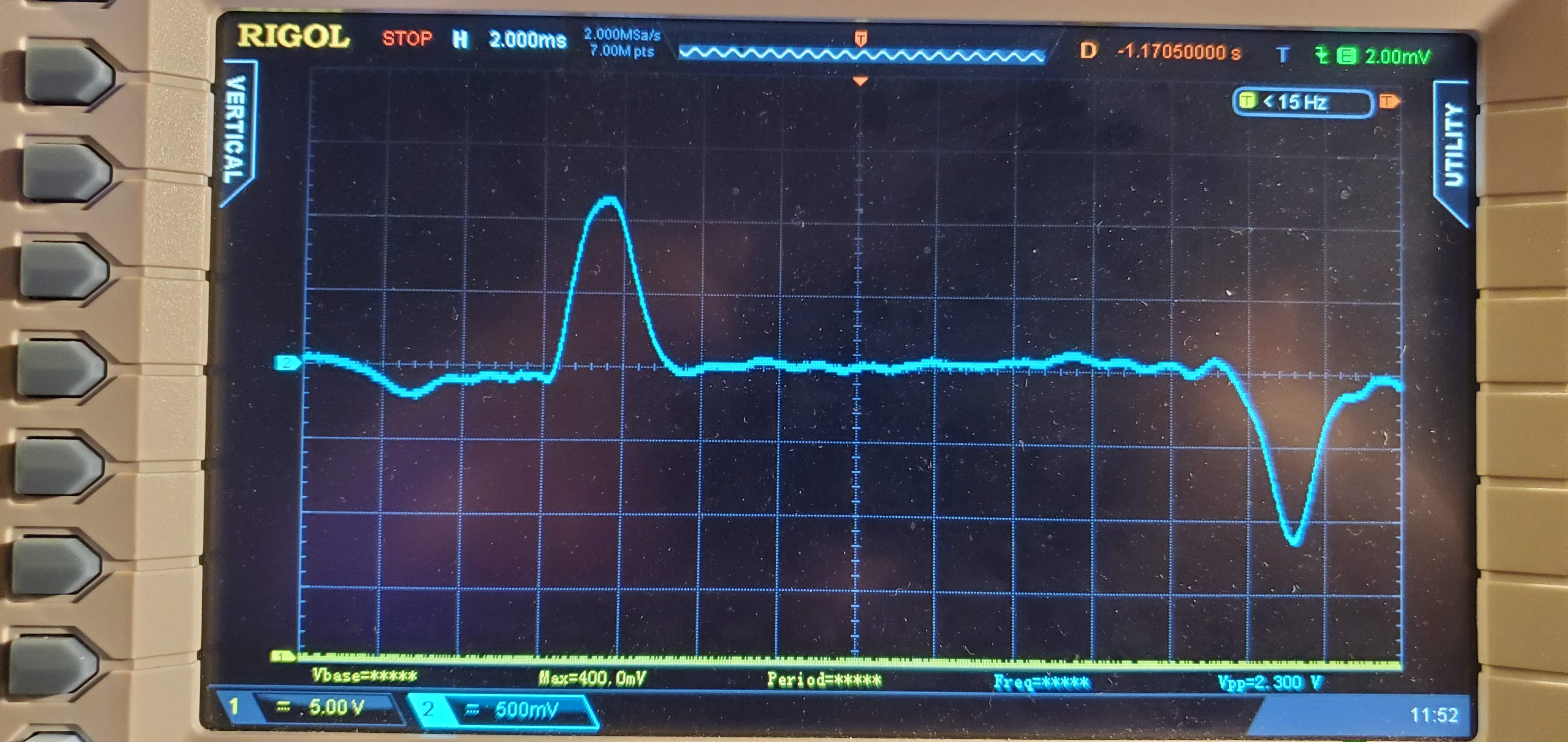
20220927_220119.jpg

Zoomed in on the first two peaks.

Anyway Im tired and feeling kinda brain dead so I have no idea what to make of all this, but I'm sure my morning coffee brain will enjoy it.

And sorry these are phone pictures, I can't find a thumb drive atm.
 
I get that to take scientific accurate measurements you'd need a calibrated system; but with any inductor you can take comparative measures which would be the most useful side of this. As long as you keep the inductor and input signal the same, you can use it to compare a coil you wound to the coil in a pickup that you know well and from there infere how your coil will work.


Oh yea, most definitely! For comparative results, the setup can be way more flexible.

That's what I used did to calculate the required gain of an onboard preamp I was building - just put a random coil on my pickup, and on a known stock one. Compared the results, and adjusted the the gain to match the overall level I'd get with the stick pickup.
 
  • Like
Reactions: KidAmnesia
What makes a pickup sound nasal? I've tested my new pickup in a bass today. It is fitted to the neck position and it sounds very nasal, not unlike the passive mini humbucker I've got in the bridge position on another bass.

My pickup has 2 coils in series with 1000 turns each of 42AWG wire. There is a preamp in the pickup with a gain of 5. The result is an output level equivalent to a passive pickup with 10,000 turns. Such small coils will have very little inductance and capacitance. Resistance is about 0.95k per coil, or 1.9k for the pair.

I've done no calculations and have no measurement equipment so I don't know what the resonant frequency of the coil is. I'd guess it is above 20kHz so I was expecting a very clean tone. The plan was to load the coils with a resistor or capacitor to bring the resonant frequency down and tune the tone that way.

So if the result is 'nasal' and 'bridgy' sounding, what is the likely cause?
 
In my experience, adding turns increases output and also drops the resonant peak, along with the treble roll off that naturally happens above the peak. Pickups with typical turn counts have such a low resonant peak and such a high output that the bass and mids end up feeling heavily boosted relative to the highs.

On the other hand, if you take a very low turn count coil and give it a straight boost, the result will be that the high end feels much more prominent. It's probably a more accurate picture of "the instrument's natural voice" in the sense of you expecting a "clean tone" but I think the problem is we've been trained to consider heavily colored pickups to sound "normal." I am not at all surprised that a coil with only 1,000 turns of wire sounds super nasally when boosted with a straight boost. When I was working on one of my prior designs, I attempted a similar path to what you're doing. I did a really low turn count pickup and then boosted it with a clean boost. It sounded terrible. I added turns until it sounded somewhat acceptable, then put some EQ in the gain stage to get it perfect. I really had a hard time getting anything under about 4-5,000 turns to sound OK with a straight boost, regardless of magnet strength, wire gauge, etc.
 
I’m with @dwizum - 1000 turns of 42 is going sound pretty nasally, and you’re just going to be boosting that nasal sound. I’d add a few thousand more turns and see what happens. If you’re determined go with a low wind count, I’d go with a thicker gauge wire. Some of those low impedance pickups are wound with gauges as low as 38AWG or lower!
 
I checked the phase during construction. Out of phase there is almost no signal.

The aim of this pickup us to load the coil to adjust the sound. I like a bright tone but there are times when a humbucker tone is needed. I've also wondered if you can replicate bridge, neck and combined sounds from one pickup. I asked an open question so as not to lead the answer.
 
  • Like
Reactions: dwizum
Sounds like a cool project. You may need way more boost and more loading than you have to get it in range, or more turns, but I really like the idea of an "adjustable" pickup where you can change capacitance or resistance to get different tones, in a way that's different from standard EQ or passive tone controls.
 
  • Like
Reactions: Kinkh and smart51
I checked the phase during construction. Out of phase there is almost no signal.

The aim of this pickup us to load the coil to adjust the sound. I like a bright tone but there are times when a humbucker tone is needed. I've also wondered if you can replicate bridge, neck and combined sounds from one pickup. I asked an open question so as not to lead the answer.

One of the methods to achieve a pickup with a high enough resonant frequency to be able to "replicate" single coil or humbucker sounds, is to make a multi coil pickup. Each coil can have enough wounds to produce a reasonable output level, and at the same time the configuration allows for a really high resonant peak.
Just for the sake of science, I'll measure some coils I made that way to give out some info on what to expect.

Replicating bridge, neck or combined sounds is not that easy - a big part the sound you get is the physical position of the pickup(s) on the bass, and how the string vibration picked up at different places interacts when combined. That part of the sound is more than just electrical signal processing.
 
One of the methods to achieve a pickup with a high enough resonant frequency to be able to "replicate" single coil or humbucker sounds, is to make a multi coil pickup. Each coil can have enough wounds to produce a reasonable output level, and at the same time the configuration allows for a really high resonant peak.
Just for the sake of science, I'll measure some coils I made that way to give out some info on what to expect.
That could be interesting.

Replicating bridge, neck or combined sounds is not that easy - a big part the sound you get is the physical position of the pickup(s) on the bass, and how the string vibration picked up at different places interacts when combined. That part of the sound is more than just electrical signal processing.
Sure, you can only do what's possible. A 5 way selector switch is probably the most number of options that you can give to the player without making the controls too complex. I'd be pleased with that much flexibility.
 
  • Like
Reactions: Kinkh
A little update, I potted the pickup in a case and have tried it built up. It doesn't sound nearly so nasal. Loaded with a tiny cap (2.2pF) and it sounds good. Loading with bigger caps just makes it sound like the tone is turned down, rather than making it 'sound like a humbucker'.

It isn't as loud as I expected either. Pickup 2 will have 2000 turns per coil, which should make it 6dB louder.

A question on rail pickups. How does the large steel plate affect the tone compared with small round pole pieces?
 
Today I've learned something. I've made two pickups as far as the wax potting stage. Both have 2 coils of 2000 turns of 42AGW wire, connected in series. One has tall thin coils side by side with a bar magnet between them and steel rails through the coils. The other has two short fat coils stacked one above the other. They're wound on the same type of bobbin but I split the bobbin on the stacked coil by gluing a cardboard ring around the middle. It has the same type of bar magnet but through the middle of the bobbin.

Foiled again by children's bed times, I just managed to plug them into my amp without a preamp and test them by holding a bass just above them. The stacked coils sound somewhat more snappy, like a Jazz bridge pickup. The side by side has a slightly more muted top end though still bright. I feel like I've found something out, even though it is probably well known by those in the know.
 
  • Like
Reactions: rufus.K and dwizum
This isn't totally on topic, but figured you all might be able to explain it better. Why is it that a P Pickup in Series has more bass and output then the same pickup in parallel?

Pickups are basically voltage sources and sinks. Voltage sources in series are summed (1+1=2), meaning higher output, but in parallel they are effectively averaged ((1+1)/2=1), meaning lower output.

However, it's even worse for P-pickups as they are two separate coils each covering half the strings so they will never both sense the same note (more like (1+0)/2=0.5).

On most other pickup designs both pickups sense all the strings so you don't get the same reduction in output ((1+1)/2=1).

I have glossed over a lot of things there so if you want more explanation just let me know and I can go deeper.
 
A big factor is the inductance (L) of the circuit: inductors such as pickup coils tend to act as low-pass devices; when the coils are in series, the inductance of the coils are added as L + L = 2L, in parallel however, the inductances are combined as (L * L) / (L + L) = 0.5 L . There are other effects as well as the inductance of the coils will interact with the tone capacitor to form a resonant peak. The higher the inductance or capacitance, the lower the frequency of the resonant peak.
 
Has anyone here used PCB as flatwork for winding bobbins? I note that it is reasonably cheap, can be quite thin (down to 0.4mm) and can have plated through holes that serve as ferrules. With accurately cut outlines and magnet holes, it seems like a reasonable plan. Are there any pitfalls?
 
Has anyone here used PCB as flatwork for winding bobbins? I note that it is reasonably cheap, can be quite thin (down to 0.4mm) and can have plated through holes that serve as ferrules. With accurately cut outlines and magnet holes, it seems like a reasonable plan. Are there any pitfalls?

PCBs are all I use now.

The only real drawback, I suppose, is if you absolutely need to be able to press fit your magnets…. PCBs have no give, so you’ll likely need to be okay with using some sort of adhesive instead.