Notice your chart gave two very different specs for hard and soft maple.
Hard maple is used for necks/fretboards.
Soft or hard maple may be used for bodies or decorative tops.

TalkBass has been independent since 1998. Add your voice.
Create a free account to reply to discussions, view embedded media, and browse with fewer display ads.
Join free Log in
Want zero display ads or expanded classifieds tools? Compare plans.
Notice your chart gave two very different specs for hard and soft maple.
I think this is an important point. I can make any RW boarded bass sound brighter than maple simply by turning the knobs on my amp.
I would also suggest that anyone who claims to be able to tell the tonal difference between woods and discuses them using the trade names like maple and rosewood is completely lost. Real wood experts use the latin names since many species with widely varying qualities will fall under the same trade name. If someone talks about the difference between acer rubrum and dalbergia latifolia then it might be time to consider listening. But until then these comparisons are like judging cars based on the paint color. Red cars are faster.

 .. I finally heard clips of Nino playing (VERY nice, by the way... but as different in tone and technique as could be from my playing style, tone, etc.). He uses an Aguilar DB359, pushed through a vintage sounding cab... lot's of mid growl, overdrive, etc. So, duh!... the upper treble roll-off of that control would be totally useless for him, since his rig doesn't really reproduce those frequencies anyway. In that sense, we were both correct, but just coming from different 'tone goal populations'!

Repeats mantra: "I will not be the search nazi, I will not be the search nazi........"

60% is only a little better than a coin flip and depending on the sample size that 10% diff may be in the noise. That tells me that no one could tell which was which.

In response to a few here that say t he fingerboard makes no difference. I have been talking with Kevin at Sadowsly about ordering another bass and he told me that in thier opinion, the fingerboard makes up most of the tone. Far more than the body wood.


I'm more of a double bass player, so i've never had this explained to me. What kind of differences do different woods make when used as fingerboards? Do rosewood and maple fingerboards produce different tones?
In response to a few here that say t he fingerboard makes no difference. I have been talking with Kevin at Sadowsly about ordering another bass and he told me that in thier opinion, the fingerboard makes up most of the tone. Far more than the body wood.

tastes like a canadians undershorts.

...and you would know this, how??????????

...and you would know this, how??????????
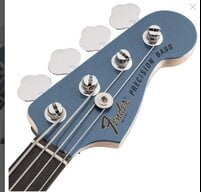


Just got back from GC, well, a few hours ago, and A/B'ed IDENTICAL 2008 Fender American Standard Jazz basses. Identical, that is, except one rosewood and one maple fingerboard.
Played through same rig, GK1001RB-II and GK's 410GLX cab (the cab was not my first, second or even third choice, but pickens were small)
I will never listen to anyone who says that the fingerboard wood makes no difference in the tone ever again!!!
The difference was significant.
I played the same lick, same settings on the basses: both pups and tone up full, and sames settings on the amp: flat, no boost, no contour or presence.
The Maple was brighter, more articulate. The rosewood was warmer, somewhat darker. Hands down I, and everyone listening, preferred sound of the Maple neck. (Including two very good bass players that happened to be shopping at the same time)
Now, I'm not saying the rosewood fingerboard sounded bad. Not in any way, it was a very nice sound if you are looking for that darker warmer bass tone.
However, with just a small roll-off of the tone on the maple, I got a warmer bass sound that still was more articulate than the rosewood.
Soooo... I'm ordering a new white Jazz V with a maple fingerboard. What am I playing now. you ask? A 2 year old American Jazz V with rosewood.
Exactly. In the past I've tried in stores "identical" basses that played and sounded worlds apart. The fact that the two basses described above were very different doesn't necessarily mean the difference was anything at all to do with the fingerboard wood - but it might have been.same exact strings? If there strings were even a week or two older, or if one had been played more can make a ton of tonal difference.




