
After being out for a few years now, what is your general consensus on the Marvin tailpiece? I was thinking of giving it a go. Did it cause any problems for anyone?
Thanks
Thanks
Last edited:

TalkBass has been independent since 1998. Add your voice.
Create a free account to reply to discussions, view embedded media, and browse with fewer display ads.
Join free Log in
Want zero display ads or expanded classifieds tools? Compare plans.

After being out for a few years now, what is your general consensus on the Marvin tailpiece? I was thinking of giving it a go. Did it cause any problems for anyone?
Thanks

Hi Fritz,
I've never owned a Marvin, but I recently took one off of a bass and put on a traditional tailpiece. It wasn't a case of the owner disliking the sound: the E string holder had failed (i.e, pulled apart from the pressure).

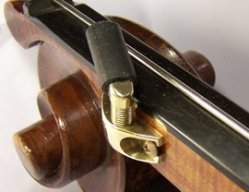
It seems like the Marvin will make most basses a little louder in the low end, and a little darker on the top end. Some people also find that the Marvin can help reduce string tension on a tighter feeling bass...
Not in my experience.

Bravo! Although there are many who simply cannot accept this as fact. I would also add that the elasticity of the Marvin - compared to that of a wood tailpiece - probably does appreciably affect the "perceived stiffness".String tension would not be changed by a different tailpiece. The same for pressure on the top.
Bravo! Although there are many who simply cannot accept this as fact. I would also add that the elasticity of the Marvin - compared to that of a wood tailpiece - probably does appreciably affect the "perceived stiffness".
But since the Marvin is kind of a longer underlength it changes the response of the underlength to vibration of the main part of the string and that can influence the perceived stiffness of the strings and wolf notes.
I would also add that the elasticity of the Marvin - compared to that of a wood tailpiece - probably does appreciably affect the "perceived stiffness".
But since the Marvin is kind of a longer underlength it changes the response of the underlength to vibration of the main part of the string and that can influence the perceived stiffness of the strings and wolf notes.Thanks for your support, but there wasn't a real need to _add_ that, since it was already in the second sentence.
No, it's not (at least in this case). It's just me not reading or differentiating correctly. Sorry.Perhaps it's a translation thing, but I was not referring to the resonance properties of the "afterlength", but to its elasticity, which is somewhat different.