My D-800+ mostly sits at home these days. Which is saying alot.I keep mine in an SKB i-Series case with photo kit partitions. Same thing - super light and a joy to travel with!

TalkBass has been independent since 1998. Add your voice.
Create a free account to reply to discussions, view embedded media, and browse with fewer display ads.
Join free Log in
Want zero display ads or expanded classifieds tools? Compare plans.
My D-800+ mostly sits at home these days. Which is saying alot.I keep mine in an SKB i-Series case with photo kit partitions. Same thing - super light and a joy to travel with!

Yes, I was using my Line 6 HX Effects, which I always use, but I can try it without. I suspect it's the bass simply because it was the only variable in the equation that changed.Try it with another bass if this happens again. It’s very unlikely to be the amp.
Were you using any pedals?
I get that, but only one item actually changed, so my bet is on the bass. Will keep you posted.All of the variables can change. It could easily be either.
Yeah but…in the middle of a song? Either way, yes, I will try without the processor.Check to be sure a parameter in the fx processor didn’t get changed by accident.
Happens often enough that it needs to be ruled out.
Yup, intermittent problems can occur in the digital world too.Yeah but…in the middle of a song? Either way, yes, I will try without the processor.
As I said, I get it but my point stands. While I will check that, it’s a pretty unlikely suspect IMO. Same rig for almost a year and played it with a bass I hadn’t used in a couple years. All I am saying is my bet is on the bass, not that it *couldn’t* be something else. I am aware that anything can fail.Yup, intermittent problems can occur in the digital world too.

Which is why maintenance logs are so incredibly important. On big boy industrial controls stuff that I worked on (past life), the first thing that I would do is review the maintenance logs to see if this is a reoccurring problem, or if it might be related to a previous repair of defective replacement part/assembly.The other difficult thing for many people to understand is why methodical troubleshooting doesn't automatically assume that a brand new/recently replaced part couldn't possibly be the problem. I have also seen just as many inadvertent maintenance induced problems as those that were genuine out-of-the-blue failures.
Ok, but for the very last time, I said I would look at everything in the chain and I am aware it could be anything. I literally agree with you. All I am talking about is what I think it might be, not how I am going to troubleshoot. But that should have been clear since I said it three times.It could very well be the bass, but structured troubleshooting does not dismiss out of hand other possible causes without further investigation.
Most intermittent problems in equipment starts out with the equipment that originally functioned properly. This includes digital equipment.


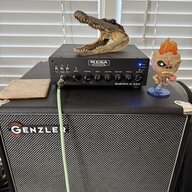
Awesome!