
I would suggest dialing in just the darkglass first. Then usr the eq to dial in just what you need to cut through.

TalkBass has been independent since 1998. Add your voice.
Create a free account to reply to discussions, view embedded media, and browse with fewer display ads.
Join free Log in
Want zero display ads or expanded classifieds tools? Compare plans.
I totally disagree (but then that was expected LoL). ANY of the SR series, even the 300, can be setup to sound great with bright strings on it and an actual understanding of how it's EQ works, and putting the pickups close enough to the strings to sound great without being too close.
Most cheaper soundgears are TERRIBLY setup from the factory.

I think Epitaph from Necrophagist is a great example of how to do bass in tech death... tuned standard mind you with no extra frills thrown in regarding effectsThis is true. Low-end build up will make a mess. Which is the reason you hear very clicky kick drums in Tech Death,
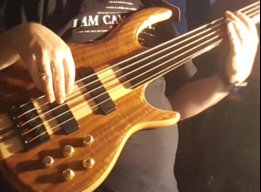
AH! Gotcha. damn, I hate when I grasp onto the wrong tangent. sorry for being confused! cheersThe overall point was that you could get close with decking out the SR405 but it doesn't really make sense to put all that money into a more inexpensive bass if you can get to that next level for around $750.

There is no guidebook or pointers that will be of any real use without having some kind of audio, and in a mix with the other players. Saying to cut one range or boost another isn't going to work for you if you are already over enhanced or weak in those areas as it is. Doing that without hearing it could just as easily make already problematic eq worse. Without hearing it, there isn't much that can be done. The most important thing is to get your sound in a mix context. Solo sounds tend to go right down the toilet the second the guitar players fire up.
You never know how it may work out for you. The guitar tone may be weak at 2k, and you can punch through there. It may need to be more 1k. You never know until you hear it together. I did a video on how radically your perception of the bass can change based on the eq of metal guitars, I think it may help you a bit.
Yeah man a standard setup for that bass doesn't sound half bad at all honestly- I built a 5 string J bass from a kit and tried to use that before realizing that the neck is all warped, pickups are too narrow for the B and the body is made out of like plywood and more or less useless. The SR is a huge improvement over that, I'm just hesitant to put equipment in it worth more than the bass itself.AH! Gotcha. damn, I hate when I grasp onto the wrong tangent. sorry for being confused! cheers
Everyone says the MM Bongo is the secret there but I literally cannot think of an uglier looking bass than that one... even if it sounds that goodI was just listening to some Dream Theater - OMG on this one song the bass is just the fundamental coming through (dull low end only audible in the mix), but when you listen carefully you can hear he has a ton of fuzz going on with it, but with treble rolled off. Then on their live album I was listening too he has only a little overdrive going on and a TON of high end cranked up so you hear attack like metallic attack all the time. They both sound good but I personally would never go to Myung for tone suggestions - great though he is!
Thank you Dan! That's some really useful advice. I've thought about getting a Tech 21 Q Strip for the 2 band semi parametric function to address something like this, but I'm trying to reduce my pedalboard right now and not add to it. I like the technique of going too far with one frequency then backing it off, I'll do this with a Metal Zone and find the nastiest mid frequency with the mids all the way up and then cut it to just get it out of the mix.Hey Nick, bear in mind that what sounds good with you playing alone may not, in fact usually won't, sound good in a group whether live or recorded. I have a couple of suggestions for you that might help.
There's two spots that you can adjust to both give definition and presence to your playing and put a little edge on it. One is the low-mids anywhere from 250Hz to 500Hz. I personally use 250Hz with my passive Jazz bass with my Eden amps, but 500Hz when I'm going through my WTDI (DI with built-in Eden WT preamp plus an adjustable compressor) into a sound board without going through one of my amps. Usually just a little boost will do it. With a semi-parametric control that will cut/boost 15db, I run my low-mid boost usually between 1 o'clock and 1:30. Trick is to boost it slowly until your sound honks at you (you'll know it when you hear it), and then back it off until it stops or just a little below that. That's usually a decent sound when playing by yourself, but a great sound when playing in a group or recording for mixing with other instruments.
The second spot you can try adjusting a bit is at 2Khz to 2.2Khz. That's considered high-mids and will add a little "edge" to your sound. That is also very often the lower limit on a treble EQ shelving control where it boosts or cuts everything frequency above that too. If you use a shelving EQ to adjust that frequency you often end up with a lot of string and fret noise that you don't really want. But a semi-parametric centers on whatever frequency you set it to and then adjusts frequencies around it in sort of a tent shape ^. A "real" parametric adjusts in a needle shape. The "semi" one is a smoother, more musical adjustment, without getting to be a shelving EQ. So as you turn this up you can get some nice edge to your sound. If you hear it start to make a clanking sound, you've boosted too much, so back it off a bit (unless you want it to clank, then just go for it!).
Now all of this is with a passive Jazz Bass with volumes and tone maxed. So you may not need as much or you may need more for your bass. Listening to the sound will tell you what should work best with your bass. I have three Eden amps and I have one semi-parametric on one of them, two on another one, and three on my big Eden amp. If you can only boost one frequency, do the low-mids and then try boosting the treble just slightly for that edge. You won't be able to boost much with a treble control, but you "might" be able to get the edge without the clank with it. With the 2 and 3 semi-parametrics I can easily adjust both if I want to.
So give those two adjustments a shot and see how it goes.
Yeah man a standard setup for that bass doesn't sound half bad at all honestly- I built a 5 string J bass from a kit and tried to use that before realizing that the neck is all warped, pickups are too narrow for the B and the body is made out of like plywood and more or less useless. The SR is a huge improvement over that, I'm just hesitant to put equipment in it worth more than the bass itself.

yea it sure is an acquired taste, the bongo. you either like it or don't. If you could retrofit the bongo with a new body that looks better....Everyone says the MM Bongo is the secret there but I literally cannot think of an uglier looking bass than that one... even if it sounds that good
You can skip to right around 16:00 for when he explains his EQ method. The whole entire thing is pretty legit though IMO.
If you're going to go down that path and you already like Ibby's, I've seen older used Ibanez Premium SR 5 strings selling for very cheap on Reverb lately. I own one of these and nothing cuts like the Nordstrand big singles. Just listen to this dude So you could potentially get a professional level piece ready to go for under $800.
IMO an SR405 with steels and new pups would play and sound better than those two basses you mention. Regardless, you must have top notch pups and electronics to compete and those stock models do not. Don't be fooled, even those coveted $2K+ Dingwalls would be clown without nordstrand designed pups and Darkglass pre.


