So I've searched the forums here to see if anyone has used MOD Devices or MODEP in the past and I only found 1 post with a passing reference from a few years ago. My older Line 6 Bass Pod XT is probably at end of life and I've been searching for a replacement. I've tried and/or listened to a number of devices, including SANSAMP, GK, Eden, Tech 21, etc. They are all great products but they have a specific "sound" and I was wanting something with a bit more flexibility. I stumbled across MOD Devices (Home) and thought it was an interesting device but a bit pricey for something I wasn't sure I was going to like.
After doing some further research I came across MODEP (MODEP - MOD DUO Emulator for Raspberry Pi) which is a MOD Devices emulator built for the popular hobbyist computer Raspberry PI. I have 3 PIs that I use here at home so I turned one into my MODEP box.
The software is basically free to download (download link can be found on the blokas link above) and you just load an OS image on the Raspberry PI. From there you just need a sound capture device. I used an old USB sound capture card and was pleased with the initial results so I bought the "Pisound" capture card from Blokas along with an acrylic case to house the PI and capture card. (Blokas – Online Store)
Here's the "box":

The right jack is input and the left is output (both in stereo). The top left knob is gain and the top right knob is output volume. There is a single button on the top that can switch between pedal boards, activate the Pisound wifi, enable bluetooth discover, etc.
So to build a pedal board all you do is point your computer or tablet to the server built into the Patchbox OS. Here's one that I've been tweaking for a few weeks now:
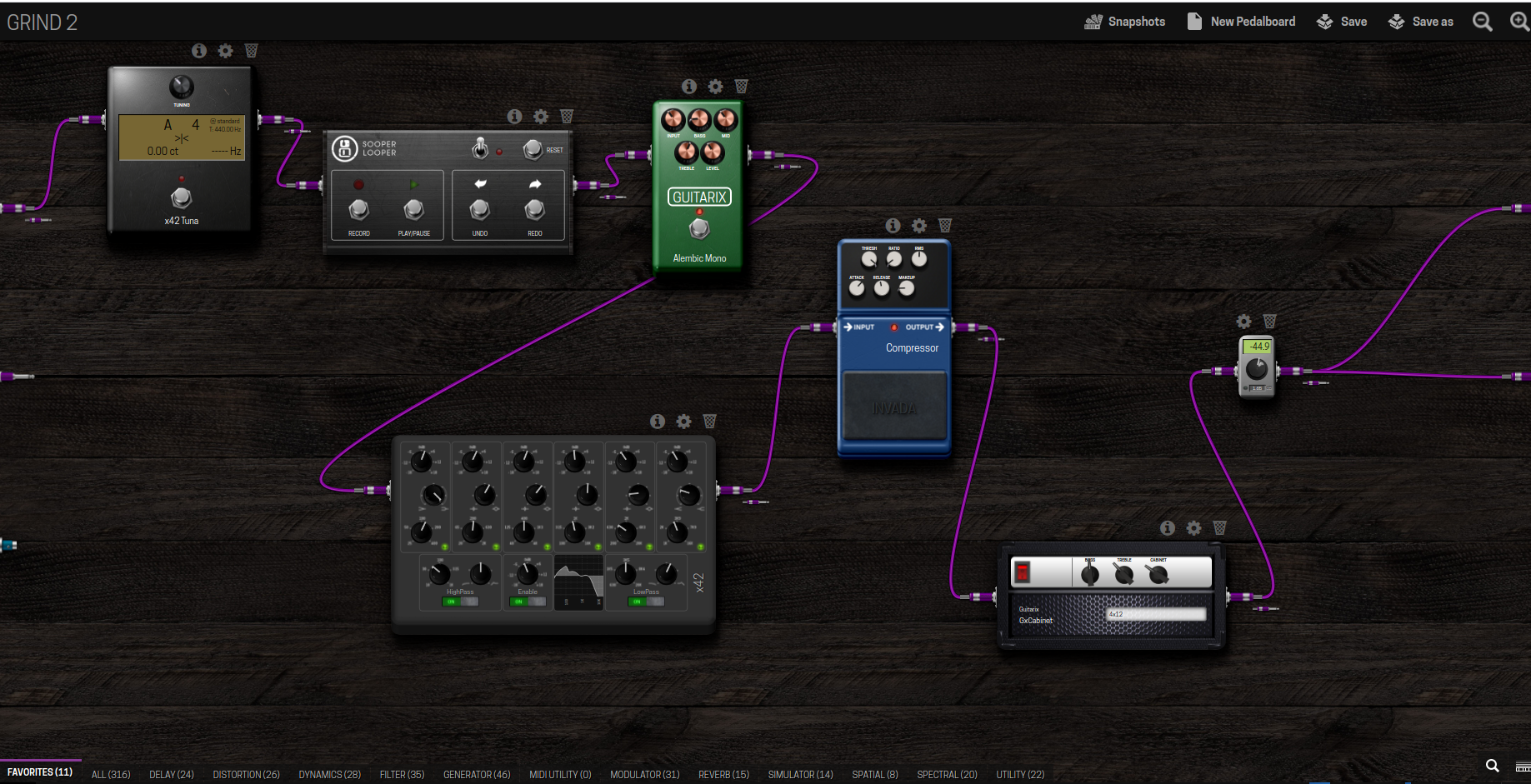
Here's chain:
Tuner > Looper > Preamp > EQ > Compressor > Cabinet Emulator > Gain > Output
Have to say that I am getting some great tones out of this setup and it's super easy to take my "rig" to church on Sunday morning. I will try and record some samples and upload them here at a later time.
So the Raspberry Pi is around $75-$85, then an official power supply is ~$15. The PiSound card was the most expensive component at around $100 and the case $16. You'll also need an SD card too and those are around $10. So for all in it's around $250. Of course you can use any USB sound capture device and skip the case so you're only in it initially for $100.
Now here's some things to keep in mind:
* You are building your pedal boards from scratch. There's no "make my bass sound like it's playing through an Ampeg, GK, Eden, SANSAMP, etc, etc" button. So if you don't like tinkering with your sound settings and just want a "plug-n-play" then this is not for you.
* There is no display in this setup. If you get the Pisound card there is an app that let's you connect via bluetooth to the device and you can select what pedalboard you want. Or you could always bring an iPad to your gigs to control the box. I find that once the pedal board is built I don't need to access the web interface while I'm playing.
* Unless you get a generic USB foot controller (like the Behringer FCB1010 there is no buttons to "stomp" or expression pedal. This works fine for me as I generally pick my pedal board and go. I found that I used very little of the POD XT so I'm not looking for something with a ton of options.
* Yes, the Pisound does have MIDI
* Yes, the Pisound input is stereo so you could split the input and plug 2 basses into this box, each with their own signal chain.
Passing along all of this for informational purposes. I'll try to upload some sound samples soon.
After doing some further research I came across MODEP (MODEP - MOD DUO Emulator for Raspberry Pi) which is a MOD Devices emulator built for the popular hobbyist computer Raspberry PI. I have 3 PIs that I use here at home so I turned one into my MODEP box.
The software is basically free to download (download link can be found on the blokas link above) and you just load an OS image on the Raspberry PI. From there you just need a sound capture device. I used an old USB sound capture card and was pleased with the initial results so I bought the "Pisound" capture card from Blokas along with an acrylic case to house the PI and capture card. (Blokas – Online Store)
Here's the "box":
The right jack is input and the left is output (both in stereo). The top left knob is gain and the top right knob is output volume. There is a single button on the top that can switch between pedal boards, activate the Pisound wifi, enable bluetooth discover, etc.
So to build a pedal board all you do is point your computer or tablet to the server built into the Patchbox OS. Here's one that I've been tweaking for a few weeks now:
Here's chain:
Tuner > Looper > Preamp > EQ > Compressor > Cabinet Emulator > Gain > Output
Have to say that I am getting some great tones out of this setup and it's super easy to take my "rig" to church on Sunday morning. I will try and record some samples and upload them here at a later time.
So the Raspberry Pi is around $75-$85, then an official power supply is ~$15. The PiSound card was the most expensive component at around $100 and the case $16. You'll also need an SD card too and those are around $10. So for all in it's around $250. Of course you can use any USB sound capture device and skip the case so you're only in it initially for $100.
Now here's some things to keep in mind:
* You are building your pedal boards from scratch. There's no "make my bass sound like it's playing through an Ampeg, GK, Eden, SANSAMP, etc, etc" button. So if you don't like tinkering with your sound settings and just want a "plug-n-play" then this is not for you.
* There is no display in this setup. If you get the Pisound card there is an app that let's you connect via bluetooth to the device and you can select what pedalboard you want. Or you could always bring an iPad to your gigs to control the box. I find that once the pedal board is built I don't need to access the web interface while I'm playing.
* Unless you get a generic USB foot controller (like the Behringer FCB1010 there is no buttons to "stomp" or expression pedal. This works fine for me as I generally pick my pedal board and go. I found that I used very little of the POD XT so I'm not looking for something with a ton of options.
* Yes, the Pisound does have MIDI
* Yes, the Pisound input is stereo so you could split the input and plug 2 basses into this box, each with their own signal chain.
Passing along all of this for informational purposes. I'll try to upload some sound samples soon.