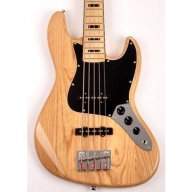
While I believe that the tone of an electric bass guitar is the sum of its' parts, new posts from some of you smart guys like Mr. Baer have forced me to think about body wood differently.
Maybe it's not that maple is brighter or alder is warmer in tone, but rather how the pickup reproduces these vibrations. It's not like bass pickups are designed for super flat response like high end microphones.
I have a 73' J bass that is loud acoustically and resonant. I wouldn't say the unamplified tone is beautiful or that it is made from "tone wood". It does sound VERY good with Fender 55 pups and also did with Model J's. Other J basses with the same pups; not so much.
Is it fair to say that the pickups are reasonably consistent from bass to bass from major builders?
I'm certain that the metal parts like bridges, tuners, truss, rod, etc. all made in the same relative time frame from the same manufacturer are sonically identical. I'd wager a guess that string manufacturing from someone like DR is also very consistent.
This would leave the wood as the main / only variable although one important builder once told me the neck made a bigger difference than the body. Still about the wood but not the body.
But then I see a video of a bass and a piece of 2x6 with the same neck and pups that sound really close.
Is it the video recording or was that particular piece of 2x6 sonically close to that particular piece of alder?
Very confusing and seemingly impossible to predict tone characteristics from specs.
.02
Edit: @R Baer said "and that someone with no audio experience is going to be able to hear the same minute details in the audio spectrum as someone like Rupert Neve? If that's true, then I feel really bad for all those artists who got suckered into paying top dollar to have someone like Bob Ludwig master their recordings."
I used Bob Ludwig at Master Disc and Jack Skinner at Sterling in my recording studio days because we liked how they mastered records better than the other guys. Were we duped? I think not.