
I came across this, here's a chance to win an acme WB-3 Motown DI.
Invalid Link Removed
awesome thanks I signed up with personal and work email. here's to hoping!!

TalkBass has been independent since 1998. Add your voice.
Create a free account to reply to discussions, view embedded media, and browse with fewer display ads.
Join free Log in
Want zero display ads or expanded classifieds tools? Compare plans.
I came across this, here's a chance to win an acme WB-3 Motown DI.
Invalid Link Removed

awesome thanks I signed up with personal and work email. here's to hoping!!


Seems to me they may be a bit late to the DI party though.
how so? who else makes a colored passive transformer DI? no one that I can think of. Jensen is Clean Hifi flat sound, this is not.

The concept of being late to the party just plain doesn't exist. Might be a crowded field, but as we've seen time and time again, there's always room for something good.Seems to me they may be a bit late to the DI party though.

That will get you one of two made in Detroit products, the ACME Motown D.I.... or a house!


It finally turned up today (a day late), and I’ve been messing around with it at my home studio, so here are some initial thoughts. TL / DR: it's subtle but nice, adds definite Motown characteristic.
First, my reasons for buying this box: unless I’m at a rehearsal or gig, I do all my playing through headphones at my home studio, and I really like a clean direct sound, I hate the sound of amp or speaker sims, and I don’t have the desire, nor the room or the patience to mic an amp. So getting a direct sound which fits into a mix and sounds inspiring with as little processing as possible is my main aim. I play jazz 99% of the time using either a Tony Franklin fretted P, a USA Fender P fretless, an 83 USA Fender P, all strung with old tapewounds, or a USA Jazz Dlx strung with a set of very old HiBeams. So I like dead strings and a fairly muted tone, and I don't have to cut through mixes, I just have to fit into them nicely.
My signal path is very simple, it consists of my basses going into Logic via a Focusrite Clarett 2Pre audio interface, and a Seymour Duncan studio bass compressor pedal to keep the signal from clipping, and nothing else. This setup gives me a totally useable tone, but because of the clean digital signal path it can sound a little bit dry at times. So I am always looking for ways to add some analogue ‘magic’ into the chain that would add a bit of life and character without changing the overall tone, which I’m generally very happy with.
With that in mind, here are my first impressions: I added the box to my signal chain (Tony Franklin P - compressor - Motown DI), put my headphones on, started playing and heard a difference in tone straight away. The difference is not massive, it’s not at all like plugging into a new amp or character pedal (like the Tech 21 VT Bass), it’s much more subtle than that, but if you’re listening on good quality monitors or headphones, you’ll hear and feel it for sure. I didn’t suddenly turn into Jamerson, but there was a definite Motown characteristic added to my tone. If you’re expecting a perfect reproduction of those Jamerson recordings, you’ll be disappointed - this box does not ‘magic’ your tone into Jamerson’s, and doing that would require other elements (a Precision with flats, recorded using old tape and the saturation that comes with that, and of course Jamerson’s technique, talent and personality) - but that’s not what I was looking for anyway. By Motown characteristic, I mean the bass sounded more confident, lively and less dry, and the signal suddenly had a bit more analogue warmth and ‘realness’ to it, it felt close to that Jamerson tone. There is definitely more presence in the low mids, and less upper-mid clunk, and that presence is even up and down the bass regardless of where you’re playing (soloing or playing a groove lower down), unlike using an EQ plugin or pedal. But more to the point, the tone sounds more real and it comes to life, it does not feel processed. It’s really well suited to a vintage P-bass tone. To my ears it sounds nicer than the Reddi or the Noble, because it’s less about tubes, and enhanced lows and highs, and more about the whole frequency spectrum and overall character, but I realise this is totally dependant on taste and context. It’s perhaps better at the vintage tone thing than those two DI’s, whereas both the Reddi and Noble work really well in a more modern and contemporary context.
As I said all of this is fairly subtle, it’s not an earth-shattering difference by any means. If you have a good studio setup and record / play direct a lot, you will notice the difference for sure. In terms of fitting into a mix, it certainly sounds good with jazz, but it really depends on what you’re looking for. If you go through 12 pedals and a cranked SVT for your dream tone, this box will not do much for you. It’s a dry signal enhancer rather than an effect.
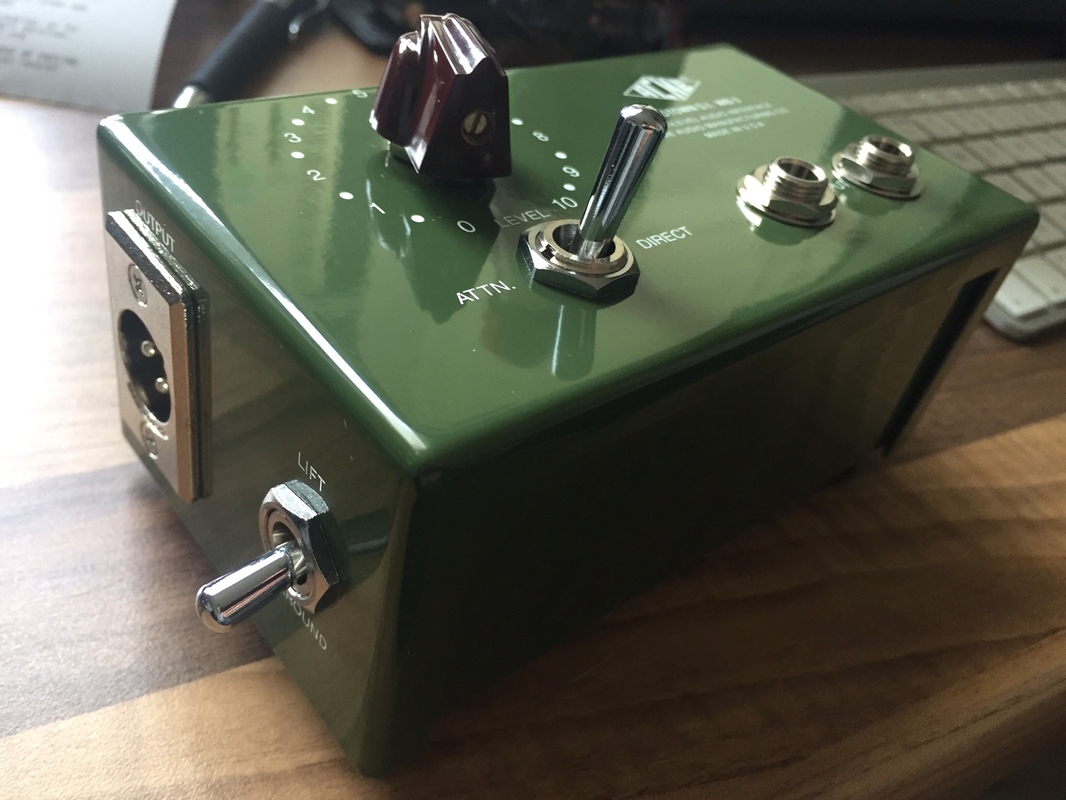
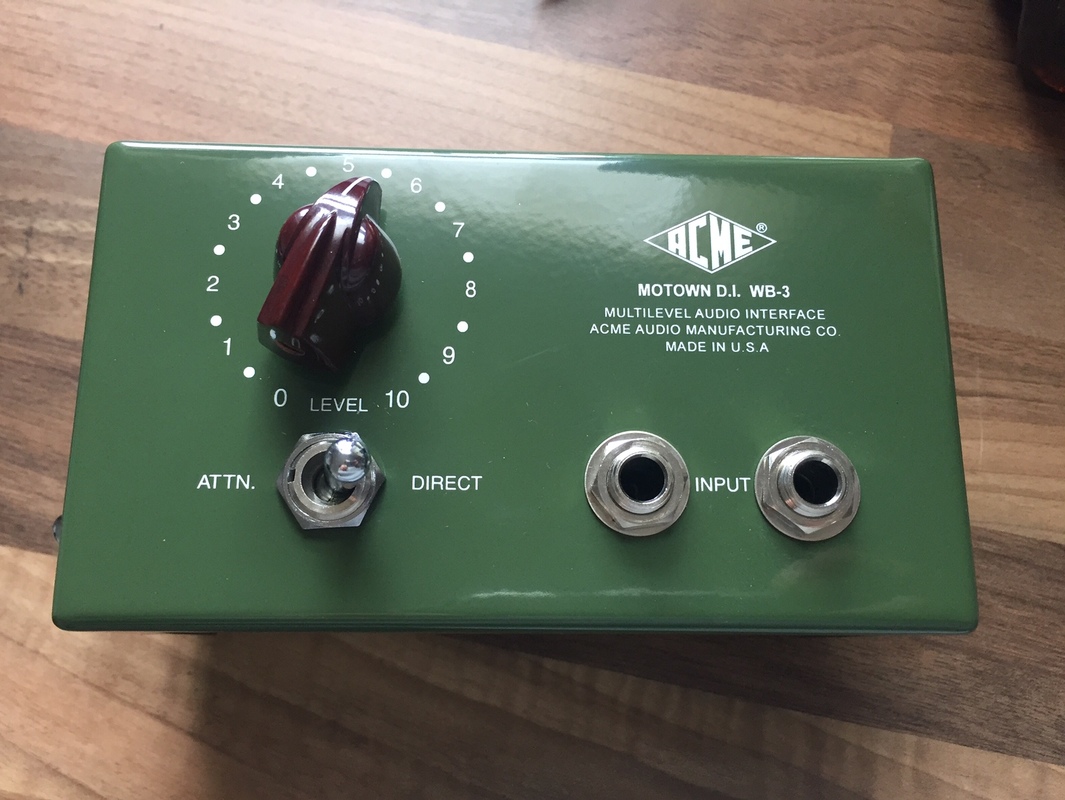
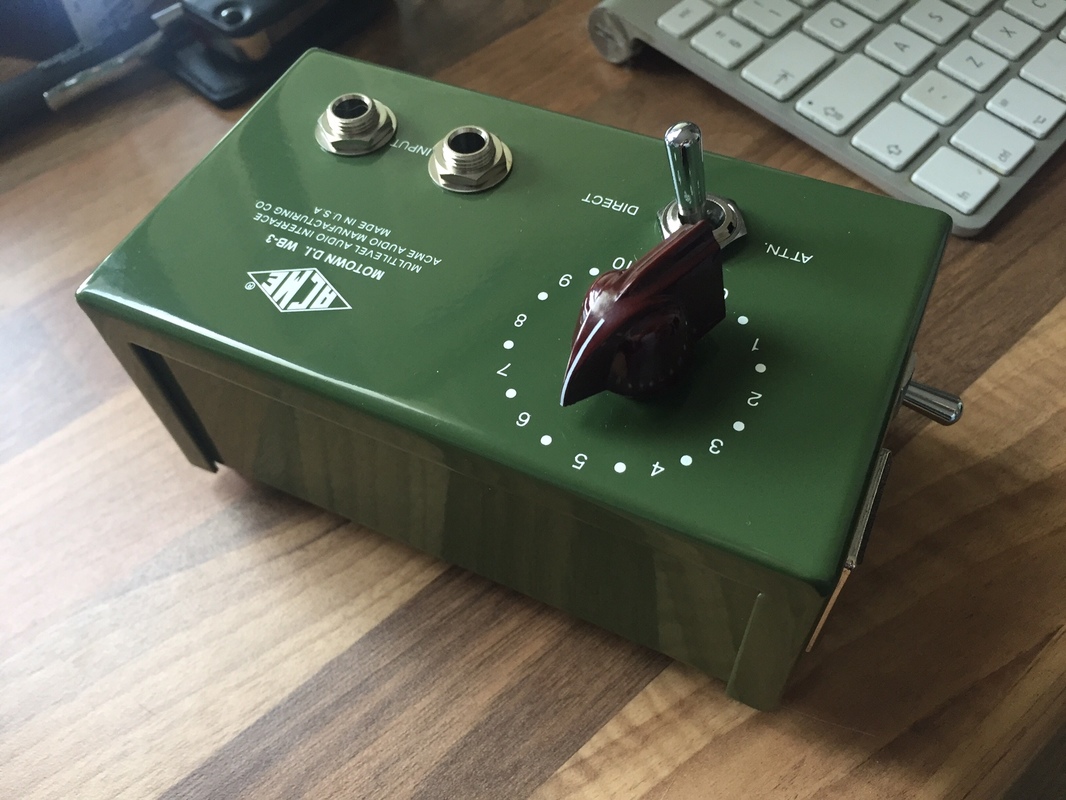
I need more time with it, and still need to test it at rehearsal, and the DI box also gives you the option to go into an amp - the second quarter inch jack works as an instrument level output, which means you can potentially re-amp existing recordings if you like - so I will try that soon (when my neighbours are not at home). But for now, I’m happy with it. The build quality is solid, the switches are nice and chunky, and the design has a nice vintage studio vibe to it. Whether it’s financially worthwhile is a whole other thing, in the UK this thing costs nearly £500, and I could only justify it by selling a bunch of stuff - it’s not cheap. But then again, I'm not a pro, I play purely for enjoyment, and it still costs less than the Reddi and the Noble. In terms of what it achieves, I would put it in the same league as those two. Here are a few pics:
Thanks for the review. It's a cool thing to own. What doesn't cost a lot in London! I think that the attenuation pad has some interesting re-amping possibilities.
thanks @project_c I really appreciate the write up.

Just picked one up and unboxed it. Mildly impressed so far. It's not a Reddi or my Monique but it's better then a JDI or countryman.
Picked up a demo model from vintage king, seems new to me, $379 no shipping. Seems prices about right.
Sorry I prefer small thoughts rather then long edited reviews.
I play two basses both 6 string passive basses with TI flats and I can't say I've played a passive DI that provided such a nice full body. Where most fall short is in the upper register and this things seems to deliver there.


