• TalkBass has been independent since 1998. Add your voice.
    Create a free account to reply to discussions, view embedded media, and browse with fewer display ads.
    Join freeLog in
    Want zero display ads or expanded classifieds tools? Compare plans.

MTD Kingston Super 5 — Neck dive

Sep 18, 2012
40
14
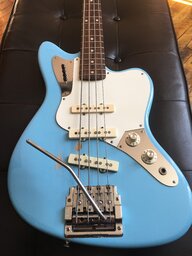
I own a Kingston Super 5 for about two years now.
I never thought of neck dive as I wouldn’t have attributed something like that to any MTD product, and it didn’t feel that way.
But practicing a bit more lately I kept getting that pain in my left arm and right shoulder/neck. So much so that I started looking at my posture and possible corrective measures. Since I started taking lessons again I asked my bass teacher to look at my posture and possible sources for the pain. He didn’t see anything alarming. But he made me balancing the bass on my thigh without holding it with my hands — I couldn’t do it. He owns an MTD Saratoga and we swapped basses for a moment. He couldn’t balance it.
 
I own a Kingston Super 5 for about two years now.
I never thought of neck dive as I wouldn’t have attributed something like that to any MTD product, and it didn’t feel that way.
But practicing a bit more lately I kept getting that pain in my left arm and right shoulder/neck. So much so that I started looking at my posture and possible corrective measures. Since I started taking lessons again I asked my bass teacher to look at my posture and possible sources for the pain. He didn’t see anything alarming. But he made me balancing the bass on my thigh without holding it with my hands — I couldn’t do it. He owns an MTD Saratoga and we swapped basses for a moment. He couldn’t balance it.
Play it with a good strap if you want to keep the bass.
 
I think my strap is pretty good, but I’ll have to re-evaluate now. I often sit for practicing and theory, in which case the strap doesn’t support much anyway.

It’s just hard for me to believe that they sell a product with that obvious a major issue, even if it’s a non-US model and a fifth of what the US boutique custom equivalent would set you back. And I was surprised that I couldn’t find any reviews or other S5 owners mentioning it. Believe me when I say it’s not just a tendency, it really dives!
Or is it that most bass players don’t care about that?

It’s sad, as otherwise it’s a great bass/value.
 
Last edited:
I think my strap is pretty good, but I’ll have to re-evaluate now. I often sit for practicing and theory, in which case the strap doesn’t support much anyway.

It’s just hard for me to believe that they sell a product with that obvious a major issue, even if it’s a non-US model and a fifth of what the US boutique custom equivalent would set you back. And I was surprised that I couldn’t find any reviews or other S5 owners mentioning it. Believe me when I say it’s not just a tendency, it really dives!
Or is it that most bass players don’t care about that?

It’s sad, as otherwise it’s a great bass/value.
I had one for two years and didn’t notice any neck dive, but each bass and each person is different.
 
I own a Super 5 and have also noticed the neck dive issue and shoulder/reach issue. Note that the upper horn only extends up to about the 14th fret. I bought a suede-backed Levys strap which mitigated the neck dive a bit, but still left the reach down to the first fret quite far as compared to my other basses. I took a page from the Dingwall playbook and installed a reach reducing strap button. You can read about how that process went in this post: https://www.talkbass.com/threads/dingwall-owners-club.394482/page-2937#post-28645922

It's been a success in both mitigating neck dive and shortening the reach down to the first position. It moves your picking hand forward a bit, but given how midrange-focused this bass is, that tends to be a good thing to my ears.
 
I own a Super 5 and have also noticed the neck dive issue and shoulder/reach issue. Note that the upper horn only extends up to about the 14th fret. I bought a suede-backed Levys strap which mitigated the neck dive a bit, but still left the reach down to the first fret quite far as compared to my other basses. I took a page from the Dingwall playbook and installed a reach reducing strap button. You can read about how that process went in this post: https://www.talkbass.com/threads/dingwall-owners-club.394482/page-2937#post-28645922

It's been a success in both mitigating neck dive and shortening the reach down to the first position. It moves your picking hand forward a bit, but given how midrange-focused this bass is, that tends to be a good thing to my ears.
Thank you for sharing!
It’s my first 5-er so I haven’t noticed the reach issue yet, I attributed my pain to the dive alone, but the reach may have contributed.
Either way, you suggest this helped with the neck dive issues. That’s great!
Of course that will mainly help when standing, less when sitting. Still. I may consider a luthier to help me with that.
 
  • Like
Reactions: embellisher
Thank you for sharing!
It’s my first 5-er so I haven’t noticed the reach issue yet, I attributed my pain to the dive alone, but the reach may have contributed.
Either way, you suggest this helped with the neck dive issues. That’s great!
Of course that will mainly help when standing, less when sitting. Still. I may consider a luthier to help me with that.
I sure hope the U.S. Super 5s don’t dive as much as the Kingston!
Would be great if someone could share their experience.
 
I don’t remember the brand but it’s a wide leather strap with pretty good grip.
I understand that a good grip can help your shoulder holding up the weight, so your fret hand has to do less neck lifting. Either way seems to work against a good posture.

Maybe I just have to live with the dive and look at strap material and placement, and maybe lighter tuners and such.

Long term I probably would want to get a bass with better balance. Not sure if the U.S. Super 5 basses have less dive or if there are similar basses by other brands with 35 necks and less dive…?
 
Last edited:
I don’t know if it would make a world of difference but maybe replace the tuners with Hipshots? The body is definitely more compact body with less upper horn extension and TBH the wide/flat neck profile might not jive with you in the more horizontal position. It forces you to play a bit differently ( more thumb on back of neck, less thumb over top). If you have issues with wrist mobility it transfers to the elbow then neck and shoulder… Do you have other basses you play more to where it’s a muscle memory thing? I’m used to a more C shaped neck ( Musicman, Fender , G&L) with more radius and thickness front to back. The MTD feels a bit foreign to me.

I had a Warwick Thumb before I got the Super 5 so it definitely feels better in terms of neck dive but I hear where you’re coming from. Thicker strap, lighter tuners or , potentially, you just don’t play well with this bass which is also okay.
 
I had my luthier look into the neck dive issues. He tried a couple things, like placing the lower strap button on the back of the body. That apparently made it worse. As far as lighter tuners, it doesn’t get much lighter than with the tuners the S5 comes with - not worth it.
Experimenting with just the strap now. Hoping that a strap that’s less slippery and adjusting the length will change the angle a bit and help mitigate some of the dive by making the shoulder carrying more of the weight instead of the left arm/hand. We shall see…
 
He tried a couple things, like placing the lower strap button on the back of the body. That apparently made it worse.
This indicates that he didn’t place it in a position to reduce neck dive. I did pretty extensive testing on mine before committing to an installation location and the result was a massive improvement in how the bass hangs relative to neck dive.
 
  • Like
Reactions: HaphAsSard
He tried a couple things, like placing the lower strap button on the back of the body. That apparently made it worse.
This indicates that he didn’t place it in a position to reduce neck dive. I did pretty extensive testing on mine before committing to an installation location and the result was a massive improvement in how the bass hangs relative to neck dive.
^ This. Luthier gentleman is a little physics-challenged, apparently.
Wrap the strap end in adhesive tape, experiment, and pick a spot for him to drill at. You guys were on the right track: don't give up now.
 

Latest posts