@frustum Congratulations and best wishes. I look-forward to reading the next chapter of your story.

Enjoy the benefits of a premium membership!
Upgrade Account
-
TalkBass has been independent since 1998. Add your voice.
Create a free account to reply to discussions, view embedded media, and browse with fewer display ads.
Join free Log in
Want zero display ads or expanded classifieds tools? Compare plans.
You are using an out of date browser. It may not display this or other websites correctly.
You should upgrade or use an alternative browser.
You should upgrade or use an alternative browser.
More options
Who Replied?
Different cabs have different dispersion cones and if you get outside of that cone, you won't hear it at nearly the level you will in front of it. My 210 has a 60° cone of dispersion and inside that cone you can hear everything just fine. As soon as you get outside of that cone though, the sound level is noticeably less and somewhat muffled (lack of highs). When you stand to the side of your amp, you're not within that cone and you won't hear yourself nearly as well defined or as present in the mix.Last night I tried out for a guy putting together a cover band. I started playing bass at 20, but there was a multi-decade hiatus in there, so really I've been playing for about six years, to CDs and backing tracks. Here in Austin, TX, 99% of the craigslist "musicians wanted" posts are looking to be the next big thing. I responded to this one because it expressly said it was for fun and not fame or money, with the hope to play out once or twice a month.
The setup was the organizer singing and playing guitar, a drummer trying out for the drummer slot, and me on bass, in a rental rehearsal room. Both were really nice guys, and the drummer's timing was rock solid -- no complaints at all there.
Getting to the point, I had some questions.
I was playing through my Fender Rumble 500 (10" x 2) combo amp, and because it was a small room and I didn't really think about it, I was standing pretty much right to the side of it. I could more feel the bass than hear it. Is that how it goes? Should I have been standing opposite of my amp? Turned up the bass? Or is that what happens when there are live drums? There was a PA system that the guitarist was running through but I hadn't noticed. Would that project my sound better?
The audition consisted of three songs: Tom Petty "Honeybee", Black Crowes "Hard to Handle", and Aerosmith "Sweet Emotion". The first two were a snap to learn, and the third was just memorizing four or five riffs up to speed then learning to transition between them. I did OK but certainly could have done better. It was hard to emotionally connect to my playing since I couldn't hear myself well. Also, I should have practiced playing standing up; normally I only ever play sitting down. Lesson learned there.
There was a time or two where the singer came in early or late -- should I have kept going with the drummer and let the guitarist/singer figure it out, or should I have tried to adjust my timing to meet the singer? I imagine in a live situation one would want to always make the singer sound good, but what about a rehearsal?
Thanks for any feedback.
I'd suggest you get an amp stand and set your Rumble 500 on it behind you, not to the side of you. You can get a decent one for about $40. I think I paid $39.99 for the one below from Musician's Friend. It has a non-adjustable 45° slant back and is adjustable for height. It will hold 150-lbs. and is rock solid with my 52-lb. DNS-210 cab on it. This will let you hear what you're playing a LOT better.
Typically when my groups rehearse we are in a bit of a circle with the amps behind us and pointing to the middle. That usually works fine unless the PA mains are behind the mics and then you will probably have trouble with feedback. So you adjust your placement so they are firing in towards the middle with one on each side of the circle, which cardiod mics handle just fine without feedback.
The first night I used my DNS-210 cab (by DNA) on a large room, I wasn't sure it would cover it, even though my 210 handles 700-watts rms and has a max SPL of 134db. So I brought along my DNS-410 which I knew would easily cover it because I get told to turn down at outdoor music festivals using my 800-watt amp with my 410. So I started the night with just the 210 plugged in with my Eden amp bridged at 800-watts into it. It was more than loud enough throughout the room, but it was way too close to my ears on our shallow corner stage, and it hurt my ears to stand in front of it.
Took me two songs before I could get it into a spot where it wouldn't hurt my ears. I had to stand back next to the drums during the first and second songs while trying to find a spot where it didn't hurt. I had to move the stage left PA mains down to the floor and move my amp as far to the left as it would go. That still wasn't good enough though and I finally moved it up towards the front of the stage and almost next to me. That move got me out of it's 60° dispersion cone; I could still hear it just fine; and it no longer hurt my ears.
So I had just the opposite problem you ran into. You probably won't need to turn up but just reposition your amp so your ears are in that dispersion cone. Using an amp stand like the one pictured helps a LOT. You'll easily hear the difference when you move in and out of that dispersion cone. If you add another Rumble 210 cabinet to it down the road for large or outdoor venues you just stack them one on top of the other and you won't need a stand because the stacked one will be close enough to your ears to easily hear it. Without it being stacked or on a stand though, most of the sound is going past your knees.
Here's a shot of that set-up before I moved the mains down and my amp over and up. My ears were way too close to the speakers and they were only about three or four feet behind me. I never did plug the 410 in. It just ended up being a $1,000 amp stand and boy could I hear it!

In that situation I might get my amp up off the floor and set it so i'm standing between it and the drummer. That gives us both a better chance of hearing each other.
As for timing, a little rough at first just shows where to focus going forward. If it persists then someone is not doing their homework.
As for timing, a little rough at first just shows where to focus going forward. If it persists then someone is not doing their homework.
Hi!
You are actually in a golden age right now as far as what this is all about, my friend. Cherish it. Be a sponge.
Alright. So. These are some points to ponder.
- Sitting is absolutely not ideal. I try to play standing as much as possible. Try to get comfy with it. It won't take long. It feels good, man.
- Yeah, drums are loud. The 500w Rumble is loud too! You should be fine with that. But it's more about you finding your sonic space in the band. Does the guitarist use a lot of low end? How do you strike a different balance in the mix to stand out, and still make it sound great in your ears and in context?
This could take a little while to work out and a lot of experimenting with your settings. Is the guitar tone set in stone? You probably have some wiggle room here. Don't sweat it right now. You'll find it, and it will make sense when you do!
- Standing opposite of your amp presents a different problem. Ideally, you want to be left of stage. However, not all environments will provide for that. Try to have it off the ground and angled closer to your ear.
- Have fun with it. Often overlooked point.
You are actually in a golden age right now as far as what this is all about, my friend. Cherish it. Be a sponge.
Alright. So. These are some points to ponder.
- Sitting is absolutely not ideal. I try to play standing as much as possible. Try to get comfy with it. It won't take long. It feels good, man.
- Yeah, drums are loud. The 500w Rumble is loud too! You should be fine with that. But it's more about you finding your sonic space in the band. Does the guitarist use a lot of low end? How do you strike a different balance in the mix to stand out, and still make it sound great in your ears and in context?
This could take a little while to work out and a lot of experimenting with your settings. Is the guitar tone set in stone? You probably have some wiggle room here. Don't sweat it right now. You'll find it, and it will make sense when you do!
- Standing opposite of your amp presents a different problem. Ideally, you want to be left of stage. However, not all environments will provide for that. Try to have it off the ground and angled closer to your ear.
- Have fun with it. Often overlooked point.
Didn't read your entire post. But good on yah! Suiting up and showing up is step one. Regardless of what happened I hope you had fun!
A few tips - if you can angle the speaker cabinet back a bit so it is pointing more upward, that can help you hear. Maybe it tilts back, or maybe you can remove the rear casters or slip something under the front. I see that you are going to try an amp stand so that might work for you, but it will cut some of the low frequencies. That might turn out to be a blessing however.
Also, try EQing your sound for more midrange than what sounds good to you when you are playing alone at home. The bedroom sound can tend to be midrange scooped, but that may not work as well for hearing yourself at louder volumes with other instruments.
Also, try EQing your sound for more midrange than what sounds good to you when you are playing alone at home. The bedroom sound can tend to be midrange scooped, but that may not work as well for hearing yourself at louder volumes with other instruments.

For me, I needed to be 'on axis' with my speakers, i.e., right in front of them. One of the tremendous aggravations of bass is that the sound can change A LOT in the space of a few steps, depending on the room. I found that standing right in front of it mimized that for me. If it needs a stand, a table, whatever, I'd get it up where it was blowing right at me.
By all means, IF someone falls off the train, everyone else needs to stay on course and let the lost sheep find their way back in. If everybody jumps everywhere trying to catch them, it's a musical derailment pretty quick.
By all means, IF someone falls off the train, everyone else needs to stay on course and let the lost sheep find their way back in. If everybody jumps everywhere trying to catch them, it's a musical derailment pretty quick.

"Treble types"Stay tight with the drummer. Treble types need to have the two of you working together to provide the roadmap for whenever they get lost.


Go for it... and have fun. I wouldn't worry about the timing, a few practices will iron that out. If your singer is also playing guitar it may take a few runs to tie in with the rhythm section. I know in the past that I've missed my entry point and rather than come in late added an "intro", earning "the look" from my bandmates . As for the amp, there are low amp stands out there that allow you to tilt your amp up a bit. Like others have said, playing next to a drummer I'm all about hearing myself, so I try to stand in front of my amp whenever possible.
Enjoy yourself and rock on... cheers
Enjoy yourself and rock on... cheers

- Jul 7, 2010
- 3,383
- 2,311
- Disclosures
- Endorsing Artist for: Duncan Pickups; Line6, Hipshot, GHS Strings, Somnium Guitars

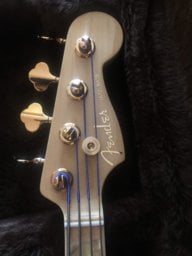
This gave me flashbacks...
Great advice above (congrats, elevate the amp, lock in with the drummer yada yada)
I also had trouble playing standing when I joined a group. Started doing all my practice standing and even removed the chair from my home practice area.
I'd add - keep getting out there - open mics, look for jam partners.
A surprise for me once we started hitting the open mics as a group was the connections.
Other bass players would reach out with: "are you looking for other projects? wanted to know if it was ok to give you name to someone" (surprised - I consider myself a hack)
Hope this works out and keep us posted.
Great advice above (congrats, elevate the amp, lock in with the drummer yada yada)
I also had trouble playing standing when I joined a group. Started doing all my practice standing and even removed the chair from my home practice area.
I'd add - keep getting out there - open mics, look for jam partners.
A surprise for me once we started hitting the open mics as a group was the connections.
Other bass players would reach out with: "are you looking for other projects? wanted to know if it was ok to give you name to someone" (surprised - I consider myself a hack)
Hope this works out and keep us posted.

Ric5
Inactive
- Jan 29, 2008
- 29,772
- 30,452
- Disclosures
- I like 5, 8, 10, and 12 string basses
Last night I tried out for a guy putting together a cover band. I started playing bass at 20, but there was a multi-decade hiatus in there, so really I've been playing for about six years, to CDs and backing tracks. Here in Austin, TX, 99% of the craigslist "musicians wanted" posts are looking to be the next big thing. I responded to this one because it expressly said it was for fun and not fame or money, with the hope to play out once or twice a month.
The setup was the organizer singing and playing guitar, a drummer trying out for the drummer slot, and me on bass, in a rental rehearsal room. Both were really nice guys, and the drummer's timing was rock solid -- no complaints at all there.
Getting to the point, I had some questions.
I was playing through my Fender Rumble 500 (10" x 2) combo amp, and because it was a small room and I didn't really think about it, I was standing pretty much right to the side of it. I could more feel the bass than hear it. Is that how it goes? Should I have been standing opposite of my amp? Turned up the bass? Or is that what happens when there are live drums? There was a PA system that the guitarist was running through but I hadn't noticed. Would that project my sound better?
The audition consisted of three songs: Tom Petty "Honeybee", Black Crowes "Hard to Handle", and Aerosmith "Sweet Emotion". The first two were a snap to learn, and the third was just memorizing four or five riffs up to speed then learning to transition between them. I did OK but certainly could have done better. It was hard to emotionally connect to my playing since I couldn't hear myself well. Also, I should have practiced playing standing up; normally I only ever play sitting down. Lesson learned there.
There was a time or two where the singer came in early or late -- should I have kept going with the drummer and let the guitarist/singer figure it out, or should I have tried to adjust my timing to meet the singer? I imagine in a live situation one would want to always make the singer sound good, but what about a rehearsal?
Thanks for any feedback.
excellent ... it is never too late to pursue your dream ... as long as you are alive.

Congrats on the audition. I started playing bass for real at about 54-55. I'm 60 now.
Them small rehearsal rooms can be difficult, you can't hear yourself and everything else is louder than everything else. Wait til you get on a stage half that size.
At rehearsal, i put my amp next to the drummer then stand back a bit. Can't really do that in those small rehearsal rooms, but hopefully, you'll have a more permanent (and free) place to practice once you're in a band.
Recovering from mistakes takes a little practice. Each member of a band is learning the musical queues of the rest of the band. That can take some time. Like everyone else said, stick with the drummer and keep eye contact with the rest of the band. And have fun!! This ain't work.
Them small rehearsal rooms can be difficult, you can't hear yourself and everything else is louder than everything else. Wait til you get on a stage half that size.
At rehearsal, i put my amp next to the drummer then stand back a bit. Can't really do that in those small rehearsal rooms, but hopefully, you'll have a more permanent (and free) place to practice once you're in a band.
Recovering from mistakes takes a little practice. Each member of a band is learning the musical queues of the rest of the band. That can take some time. Like everyone else said, stick with the drummer and keep eye contact with the rest of the band. And have fun!! This ain't work.
Nice thread. Ty, OP. I recently, at 63, started playing with a drummer and guitarist. It's FUN when it clicks. It doesn't always do so, however. Our first jam session was amazing. The second was a train wreck, the third was good. Still waiting for the fourth session. We're not looking to ever gig, just getting together for some fun. The guitarist and I are old college friends, the drummer and he have played together for years. Playing with a drummer was new for me and I naturally clicked with him and really enjoyed the groove we fell into.
I would imagine that stepping into a rehearsal room with total strangers would add an element of excitement/terror to the experience!
Those amp stands look interesting. How do you use such a thing if you're pairing a cab with a separate head?
I would imagine that stepping into a rehearsal room with total strangers would add an element of excitement/terror to the experience!
Those amp stands look interesting. How do you use such a thing if you're pairing a cab with a separate head?
Love to hear it, OP.
The only thing I'll add to the loads of good advice listed above is that a set of good fitting earplugs actually helps me hear better in the room. It takes the edge off the drum hits and leaves room for the rest of the instruments. It's a bit wierd feeling at first and a poor fit makes for a rough time, but once I found a good fit not having them was very unpleasant.
The only thing I'll add to the loads of good advice listed above is that a set of good fitting earplugs actually helps me hear better in the room. It takes the edge off the drum hits and leaves room for the rest of the instruments. It's a bit wierd feeling at first and a poor fit makes for a rough time, but once I found a good fit not having them was very unpleasant.
I would expand on "earplugs let you hear better" to strongly suggest that you wear them to protect your hearing. I say this while fully being on the side of playing loud sure is fun.
I have a few years on you, and have reached the age where all the body bills have come due. When I got back to playing live (has it been 15 years?) I got fitted for musician earplugs and have so far managed to avoid tinnitus and hearing aids that many of my peers are dealing with.
On a more positive note, like you, I wasn't confident in my skills. Frankly, in my 20s I wasn't very good. Now, I had worked on my bass skills some during my 30s and 40s, when job and raising a family made it impractical to be in a band. Turns out that little bit of work paid off. And your work is paying off now.
I have a few years on you, and have reached the age where all the body bills have come due. When I got back to playing live (has it been 15 years?) I got fitted for musician earplugs and have so far managed to avoid tinnitus and hearing aids that many of my peers are dealing with.
On a more positive note, like you, I wasn't confident in my skills. Frankly, in my 20s I wasn't very good. Now, I had worked on my bass skills some during my 30s and 40s, when job and raising a family made it impractical to be in a band. Turns out that little bit of work paid off. And your work is paying off now.

congratulations on getting out there! I hope you get the gig. I also say that having my amp higher (I put it on top of another amp made a world of difference in being able to hear myself.
As a tinnitus sufferer, PLEASE use hearing protection. I kick myself daily for not protecting my ears.
As a tinnitus sufferer, PLEASE use hearing protection. I kick myself daily for not protecting my ears.
Latest posts
-
 Selling a member that is not new, but only has 1 post?
- Latest: MultiScaleMale
-

-

-

-
