I enjoy working on basses about as much as playing them. I also like buying used basses. As with cars I like letting someone else take the deprecation hit. I have found some great deals and saved a lot of money on some really great basses over the years.
The one problem I have encountered on some of them is severely worn frets or a style of fret that I do not like. I prefer a narrow and tall fret, a "vintage" style. I use flats on all of my basses so fret wear is not a concern for me.
One of my favorite basses I own right now is my USA SUB Ray 4. I picked it up used a few years ago when they were selling dirt cheap. Cosmetically it was very nice but it had been played hard with some hard round wound strings. All the frets from the third to the seventh were gouged up pretty bad on some part of them. I do not like the low/wide frets EBMM used on them so I didn't want to do a level and dress because it would make them even shorter. A refret was needed for me to really love this bass. I checked around with some of the better luthier's around town to get a idea on the cost to get it done. The prices I was quoited were fair for the amount of work being done but I had to think long and hard about spending more money on a fret job than I paid for the bass.
I get the catalogs and e mails from Stew-Mac. I have been intrigued with the Erlewine neck jig from the first time I saw it. I am a mechanic/machinist all my life so I am a real tool junkie. For what you are getting the price isn't bad and if you are a professional I can see how it would be a essential tool to have. I almost had myself talked into buying the jig itself (I have angle vices) for $425. That's about the price for one complete fret job. But then I realized that I would need to buy a lot of specialty tools to get the job done. After filling my shopping carts on Stew-Mac and LMI with all the cool tools I would need to do a accurate and professional fret job and the jig it was much more than I wanted to spend. I am just a hobbyist and have no plans on doing on doing fret work for money. I do not want to step on the toes of the fine craftsmen in my area that work hard to make a living doing this kind of work. So I decided to build my own jig and just buy the necessary tools that I didn't already have.
I studied all the photos I could find of Dan's jig and read the instructions getting a good idea in my head about how it works and ways to make it better for my use. Dan's jig is made to work with about every stringed instrument made. I understand that he works on a lot of acoustic guitars and set neck electrics. That means strapping the body down so you can work on the neck. I see the possibility of damaging a instrument and totally unnecessary with a bass or guitar with a bolt on neck. So I designed mine to work with just the neck. I will add a table later on so I can do set and neck through instruments.
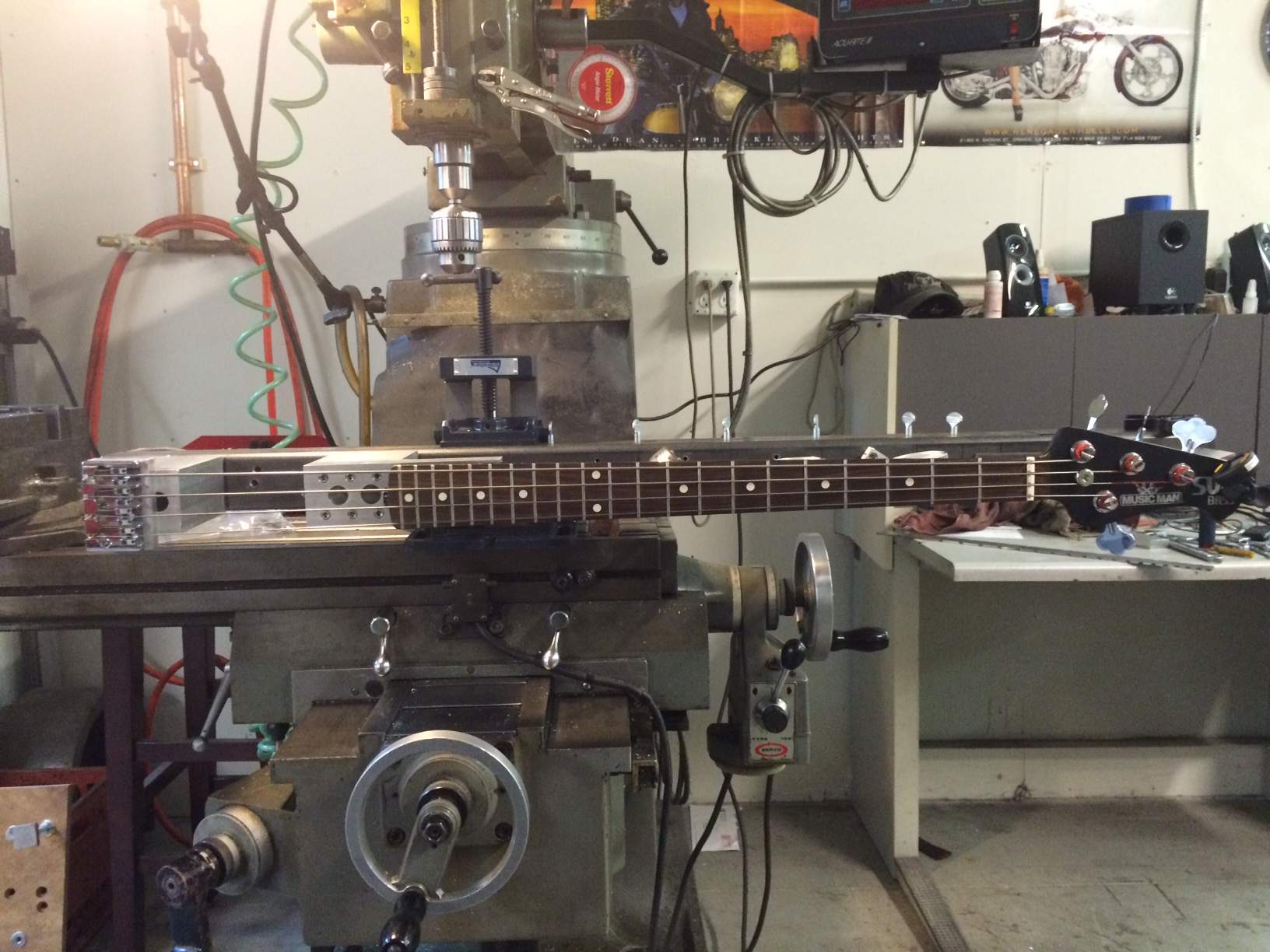
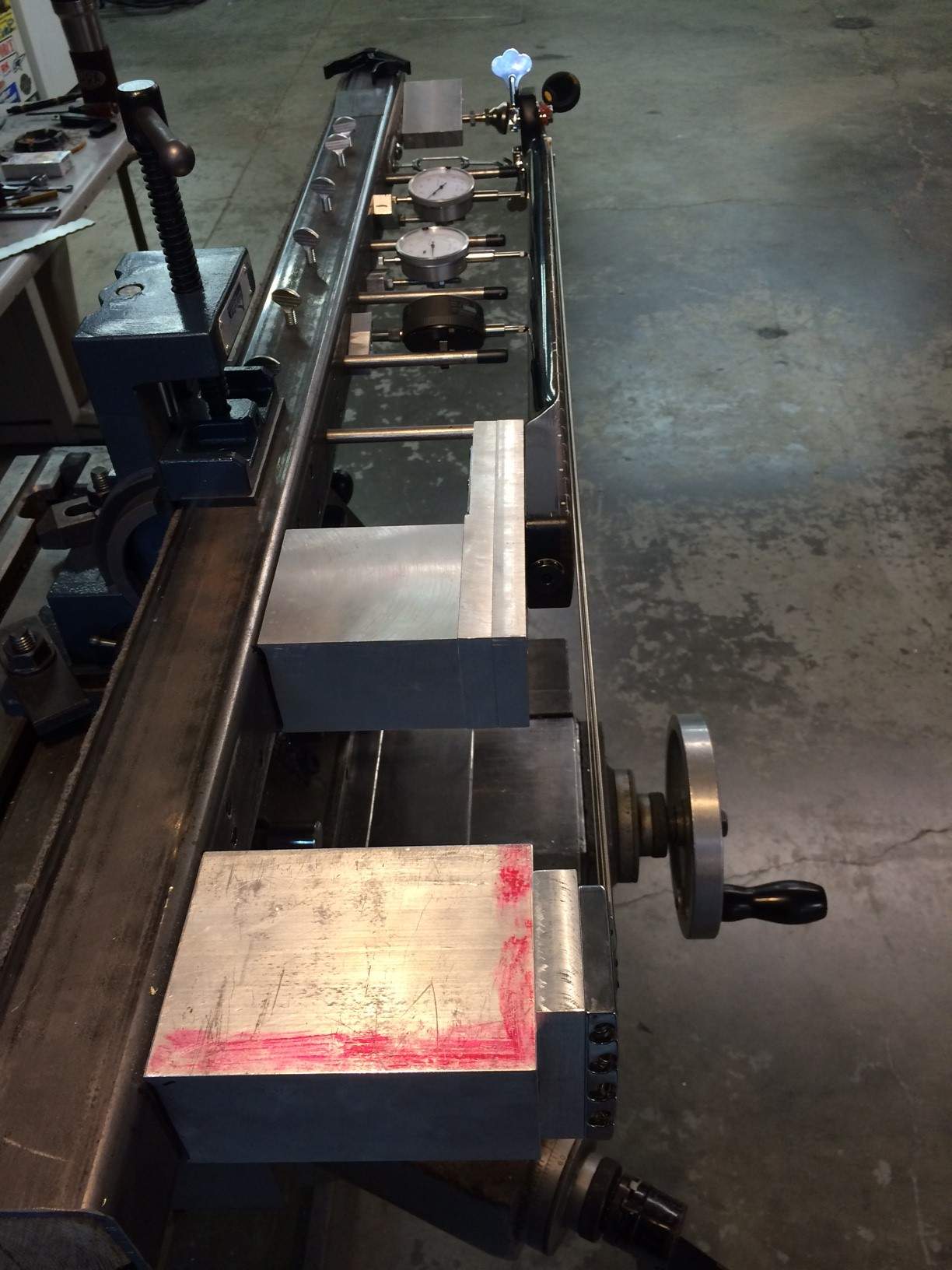
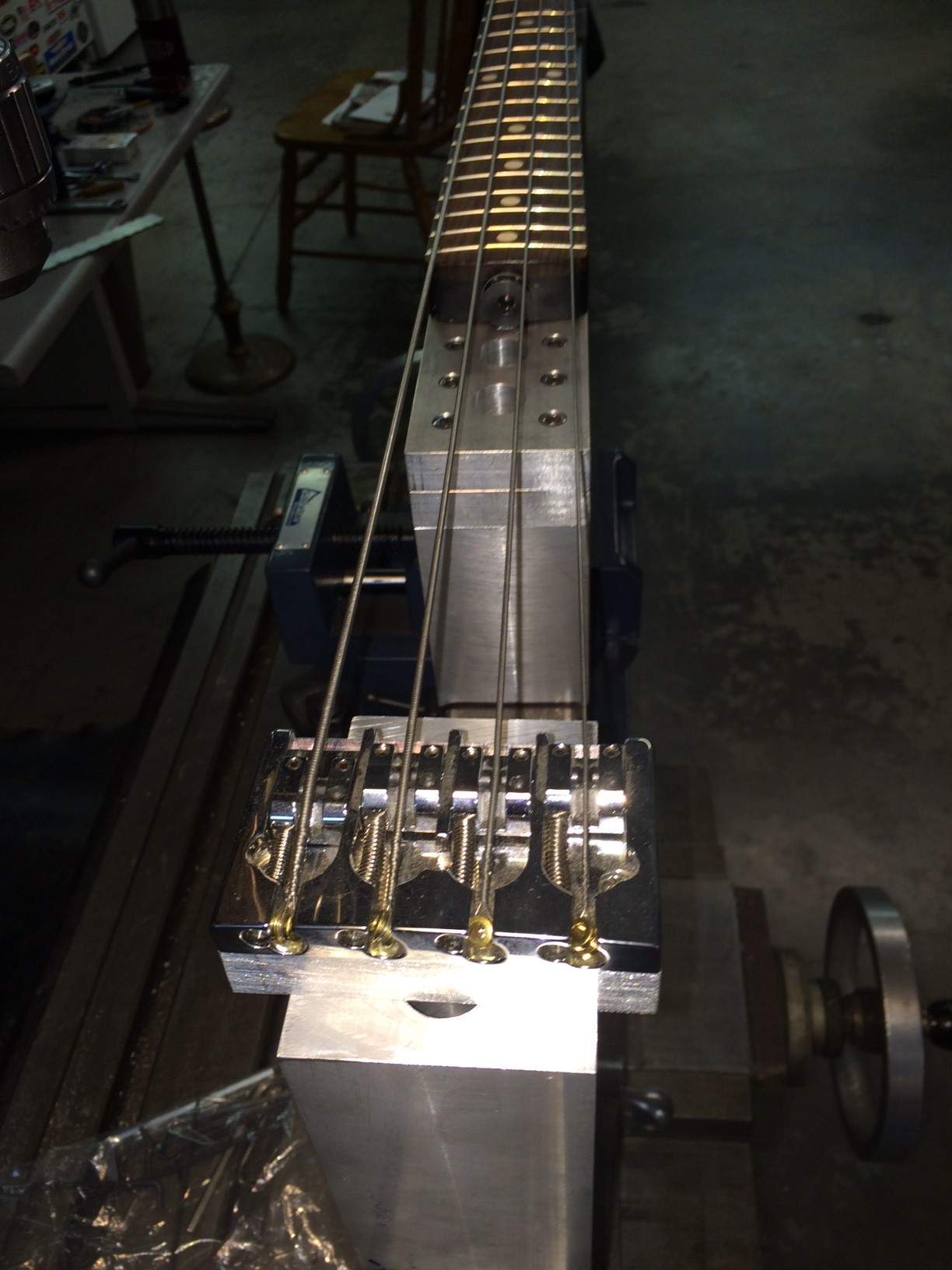
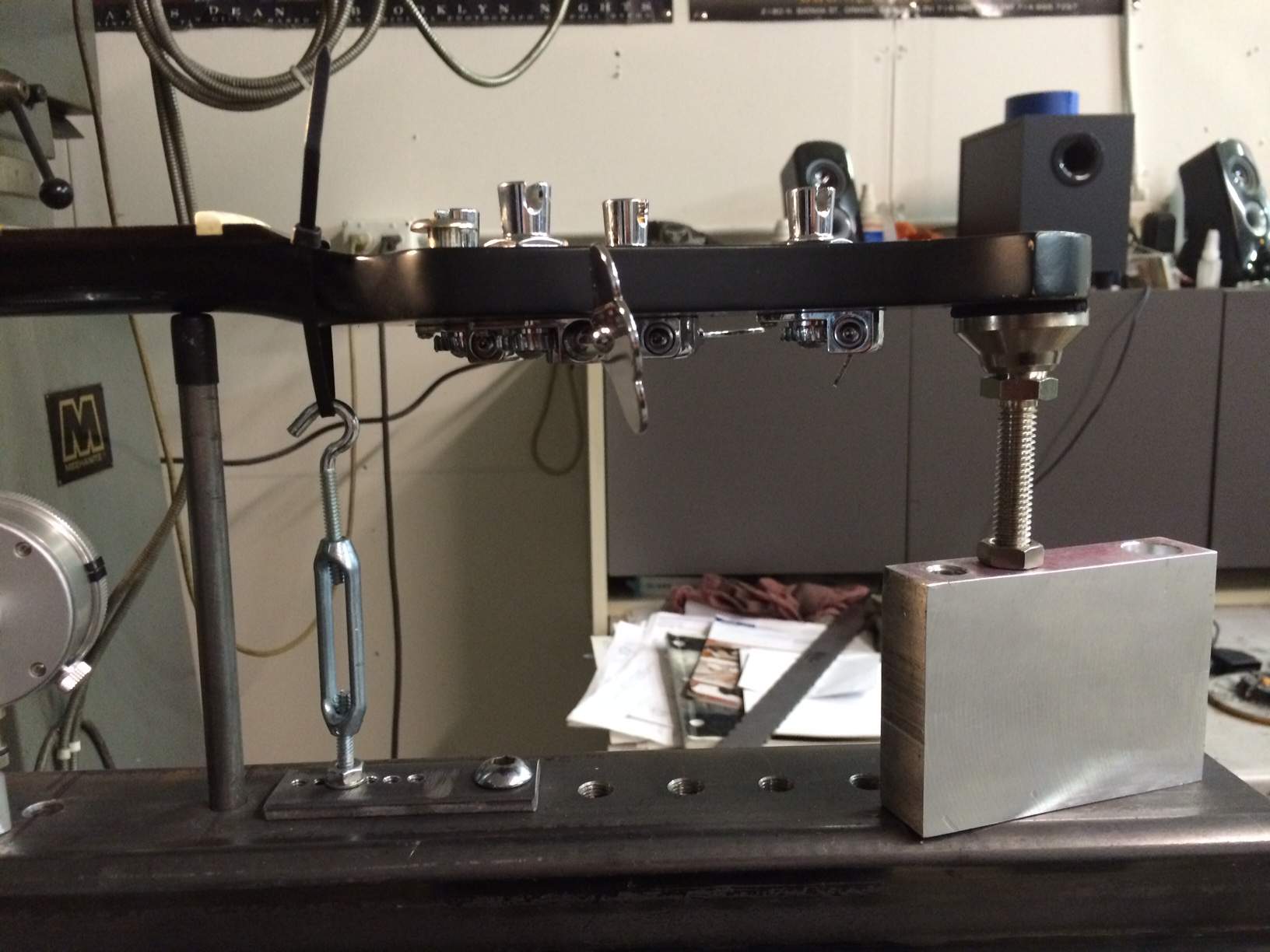
Right now my neck adapter plate is drilled for the four bolt Fender and six bolt EBMM necks. I made the neck and bridge mounts adjustable to accommodate 25.5,30,32,34 and 35 inch scales. I doweled the top neck plate so I can remove the neck from the jig to press the frets and reinstall it so it zeros into the same place I removed it from. I have a Hipshot A bridge mounted that I had in a parts box. I also can mount a Strat style hardtail bridge to it.
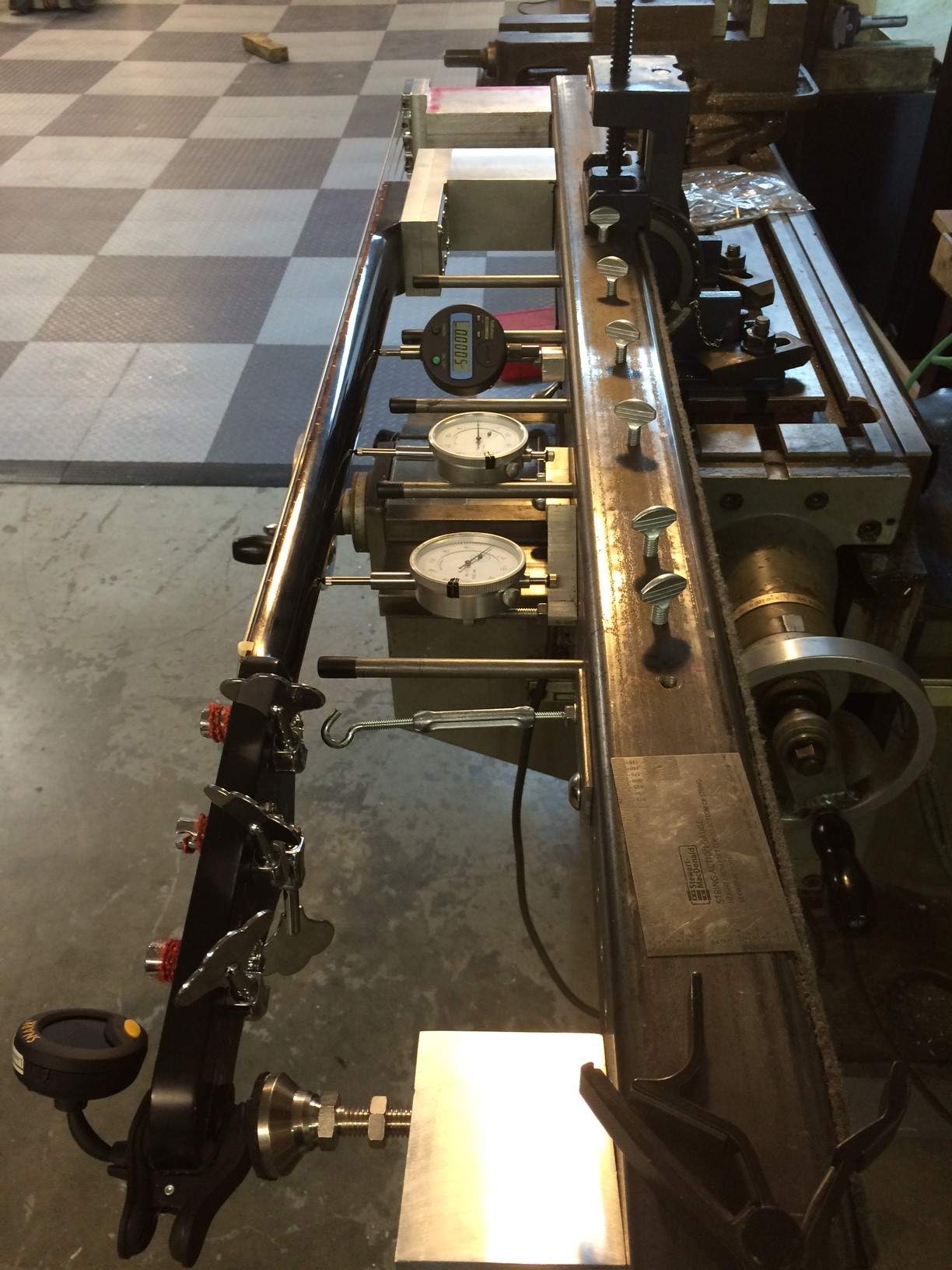
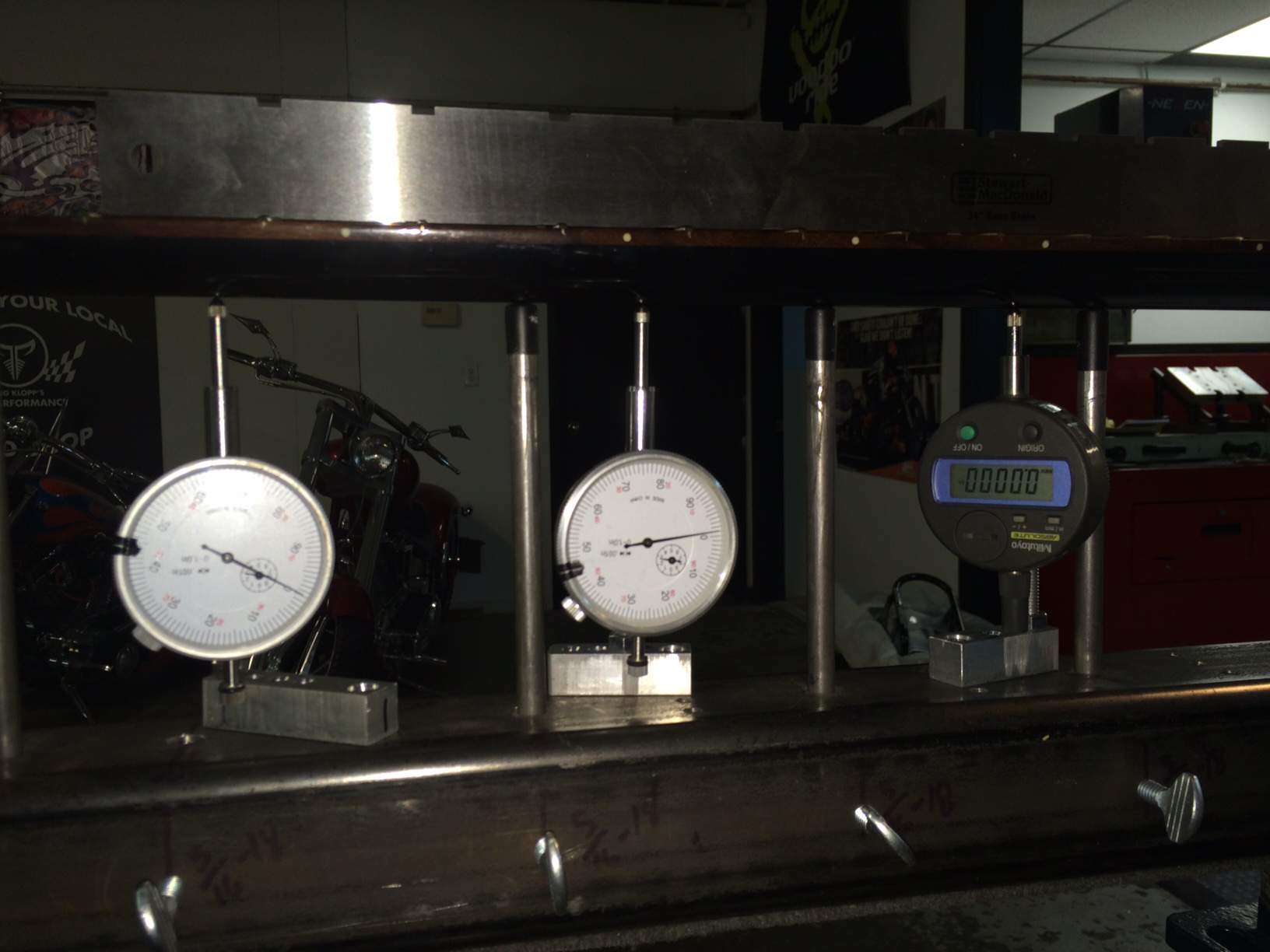
Dan's jig uses two dial indicators witch makes sense for guitars but I felt that with the longer bass necks three would be more accurate. After setting it up for the first time I found it to be a needed addition. I also made it to use more stabilizer rods for more support.
All the aluminum parts are made from 6061 T6 billet that I had on the shelf. The rest is just scrap that I use for fabricating. The only parts that I had to buy were the hooked turnbuckle and the adjustable swivel foot. They came out around $8.00.
I did a couple of test runs of putting the neck in,stringing it up and zeroing everything, then removing the neck and backing off the truss rod nut then reinstalling the neck to the jig and adjusting the neck to zero. I then turned it 90 deg and strung it up just to see if my base setting changed at all. My center indicator showed less than .001 difference and the other two were spot on.
One thing that my jig showed me was the importance of doing your set up work with the neck in the playing position. I have a set of Hipshot ultra lite tuners on the neck but even with them the deflection was astounding. The dial indicators were zeroed with the neck strung to pitch and the neck adjusted flat in the playing position. When I turned it 90 deg the first indicator at about the second fret dropped .018" the one on the 5th fret was .012" and at the 9th fret was .008". I used the strings that I will use on the bass so I had the proper load on the neck, some nice broke in LaBella light .043-.104's.
I removed them and proceeded to rezero the neck using jack and turnbuckle. It took some playing around with the two But I got it to where it just about zeroed. No matter what I tried I could not get the neck to zero at the 5th fret (see photo). Sense it was low I helped it a little with a support rod.
I plan on getting some use out of this jig. I have one cheap bass that needs a fret job and one that can get away with just a level and dress. I also have a really cool 80's Hollywood "Z" bass with a broken trusrod that I picked up a few years ago for next to nothing that I now plan on repairing.
Here are some photos of it. It isn't pretty but it is extremely functional and accurate.
The one problem I have encountered on some of them is severely worn frets or a style of fret that I do not like. I prefer a narrow and tall fret, a "vintage" style. I use flats on all of my basses so fret wear is not a concern for me.
One of my favorite basses I own right now is my USA SUB Ray 4. I picked it up used a few years ago when they were selling dirt cheap. Cosmetically it was very nice but it had been played hard with some hard round wound strings. All the frets from the third to the seventh were gouged up pretty bad on some part of them. I do not like the low/wide frets EBMM used on them so I didn't want to do a level and dress because it would make them even shorter. A refret was needed for me to really love this bass. I checked around with some of the better luthier's around town to get a idea on the cost to get it done. The prices I was quoited were fair for the amount of work being done but I had to think long and hard about spending more money on a fret job than I paid for the bass.
I get the catalogs and e mails from Stew-Mac. I have been intrigued with the Erlewine neck jig from the first time I saw it. I am a mechanic/machinist all my life so I am a real tool junkie. For what you are getting the price isn't bad and if you are a professional I can see how it would be a essential tool to have. I almost had myself talked into buying the jig itself (I have angle vices) for $425. That's about the price for one complete fret job. But then I realized that I would need to buy a lot of specialty tools to get the job done. After filling my shopping carts on Stew-Mac and LMI with all the cool tools I would need to do a accurate and professional fret job and the jig it was much more than I wanted to spend. I am just a hobbyist and have no plans on doing on doing fret work for money. I do not want to step on the toes of the fine craftsmen in my area that work hard to make a living doing this kind of work. So I decided to build my own jig and just buy the necessary tools that I didn't already have.
I studied all the photos I could find of Dan's jig and read the instructions getting a good idea in my head about how it works and ways to make it better for my use. Dan's jig is made to work with about every stringed instrument made. I understand that he works on a lot of acoustic guitars and set neck electrics. That means strapping the body down so you can work on the neck. I see the possibility of damaging a instrument and totally unnecessary with a bass or guitar with a bolt on neck. So I designed mine to work with just the neck. I will add a table later on so I can do set and neck through instruments.
Right now my neck adapter plate is drilled for the four bolt Fender and six bolt EBMM necks. I made the neck and bridge mounts adjustable to accommodate 25.5,30,32,34 and 35 inch scales. I doweled the top neck plate so I can remove the neck from the jig to press the frets and reinstall it so it zeros into the same place I removed it from. I have a Hipshot A bridge mounted that I had in a parts box. I also can mount a Strat style hardtail bridge to it.
Dan's jig uses two dial indicators witch makes sense for guitars but I felt that with the longer bass necks three would be more accurate. After setting it up for the first time I found it to be a needed addition. I also made it to use more stabilizer rods for more support.
All the aluminum parts are made from 6061 T6 billet that I had on the shelf. The rest is just scrap that I use for fabricating. The only parts that I had to buy were the hooked turnbuckle and the adjustable swivel foot. They came out around $8.00.
I did a couple of test runs of putting the neck in,stringing it up and zeroing everything, then removing the neck and backing off the truss rod nut then reinstalling the neck to the jig and adjusting the neck to zero. I then turned it 90 deg and strung it up just to see if my base setting changed at all. My center indicator showed less than .001 difference and the other two were spot on.
One thing that my jig showed me was the importance of doing your set up work with the neck in the playing position. I have a set of Hipshot ultra lite tuners on the neck but even with them the deflection was astounding. The dial indicators were zeroed with the neck strung to pitch and the neck adjusted flat in the playing position. When I turned it 90 deg the first indicator at about the second fret dropped .018" the one on the 5th fret was .012" and at the 9th fret was .008". I used the strings that I will use on the bass so I had the proper load on the neck, some nice broke in LaBella light .043-.104's.
I removed them and proceeded to rezero the neck using jack and turnbuckle. It took some playing around with the two But I got it to where it just about zeroed. No matter what I tried I could not get the neck to zero at the 5th fret (see photo). Sense it was low I helped it a little with a support rod.
I plan on getting some use out of this jig. I have one cheap bass that needs a fret job and one that can get away with just a level and dress. I also have a really cool 80's Hollywood "Z" bass with a broken trusrod that I picked up a few years ago for next to nothing that I now plan on repairing.
Here are some photos of it. It isn't pretty but it is extremely functional and accurate.
Last edited: