• TalkBass has been independent since 1998. Add your voice.
    Create a free account to reply to discussions, view embedded media, and browse with fewer display ads.
    Join freeLog in
    Want zero display ads or expanded classifieds tools? Compare plans.

NAD - '69 Hiwatt DR103

D.M.N.

(O))))
Supporting Member
Oct 6, 2008
4,884
12,281
33
Los Angeles, CA
www.instagram.com
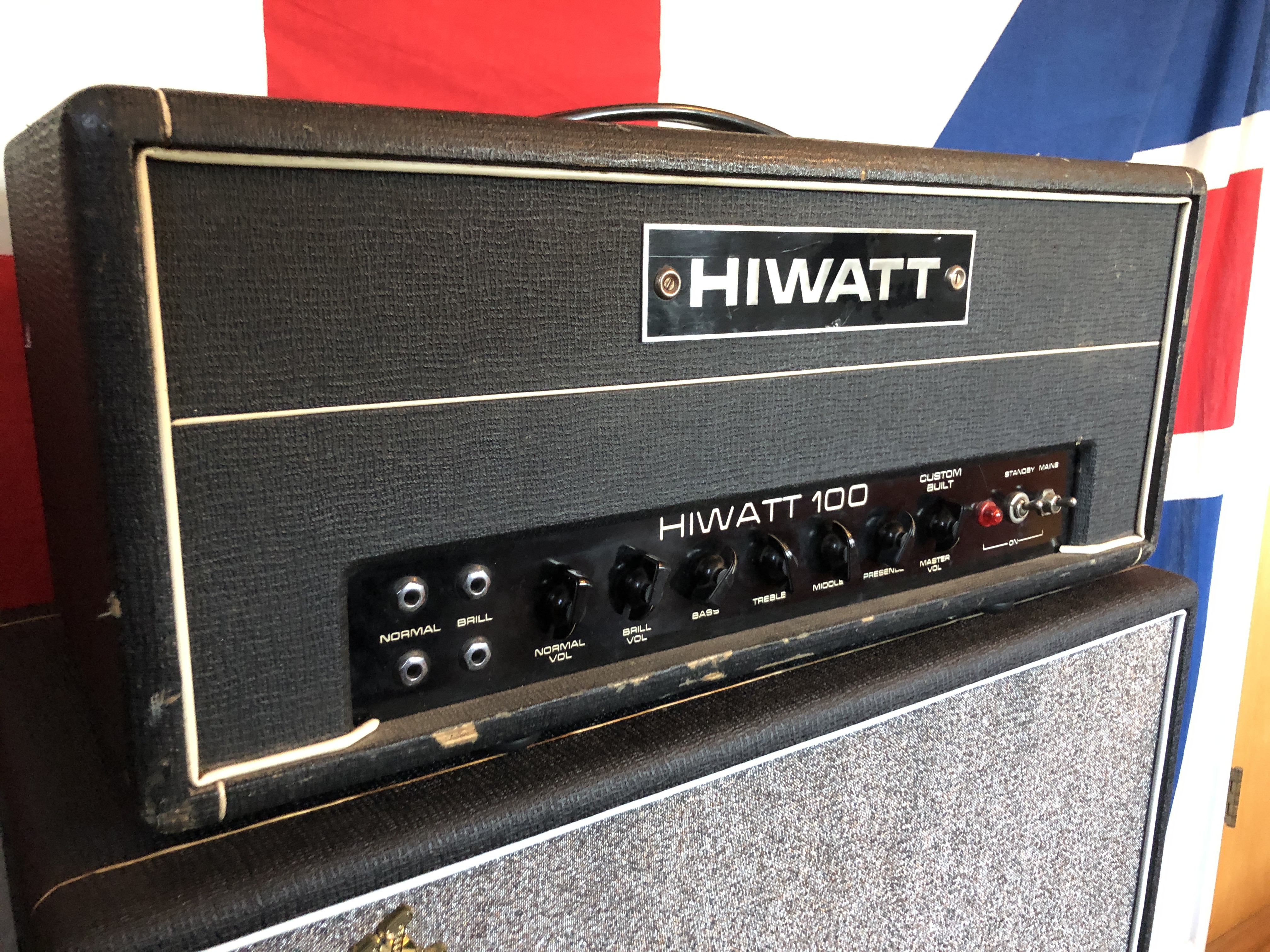
So the UPS dropped this of late yesterday evening. I've been wanting an old Hiwatt for years, and in the last 6 months started more seriously to keep my eye out for one. Saw this one a few months back on eBay, and have been watching ever since. It was listed under Consumer Electronics instead of Musical Instruments, and the seller was unresponsive to my requests for more photos of the internals. No year listed, simply Custom Built Hiwatt. I set about doing my own research based on what I could see in the pictures, and despite the lack of a serial plate, was fairly convinced it was a '68 or '69 DR103, based upon the metal logo plate, and lack of Custom Hiwatt 100 text on the face plate. I could also make out what appeared to be the orange varnish of Partridge transformers, but I was still somewhat apprehensive of bidding without more photos. In the meantime, I missed out on a 1970 DR103 and cab locally, which was a real drag. So after months of watching with no bids on this listing, and jockeying around some other gear and money, I pulled the trigger.

After receiving the billing info, I discovered it was being sold by a Pawn Shop in PA, which might explain the lack of response or particular knowledge of what they had. Their loss is my gain though!

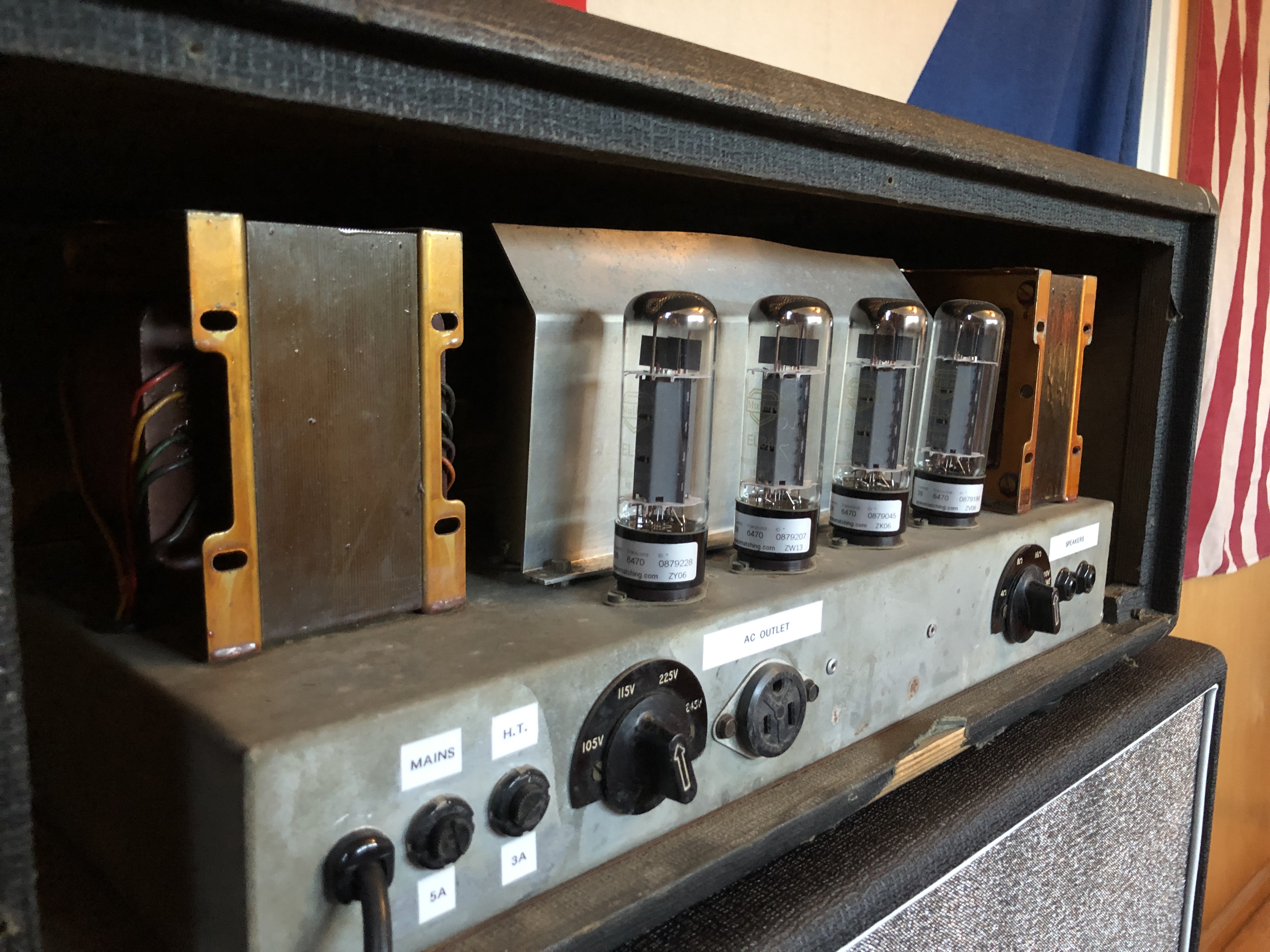
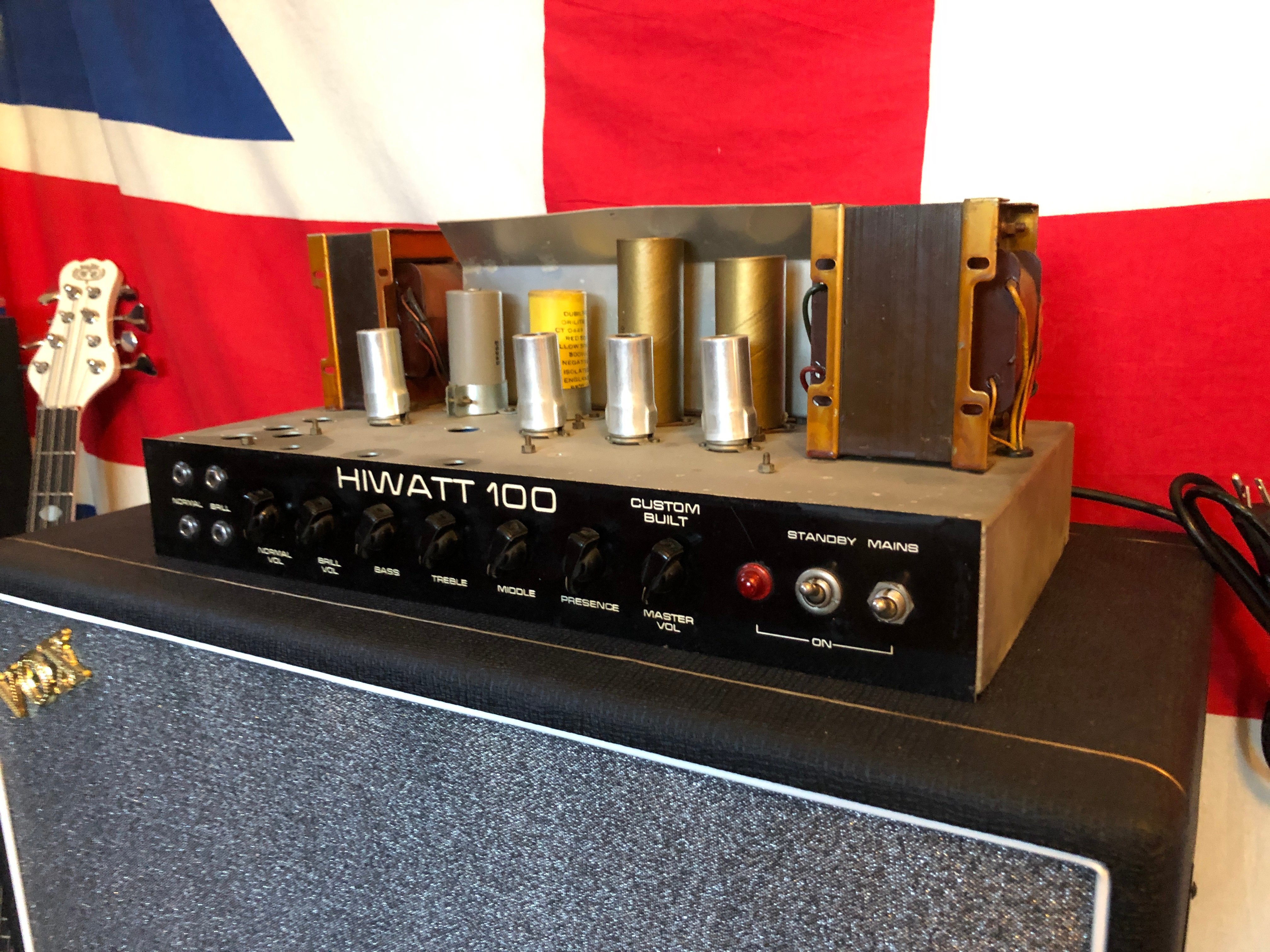
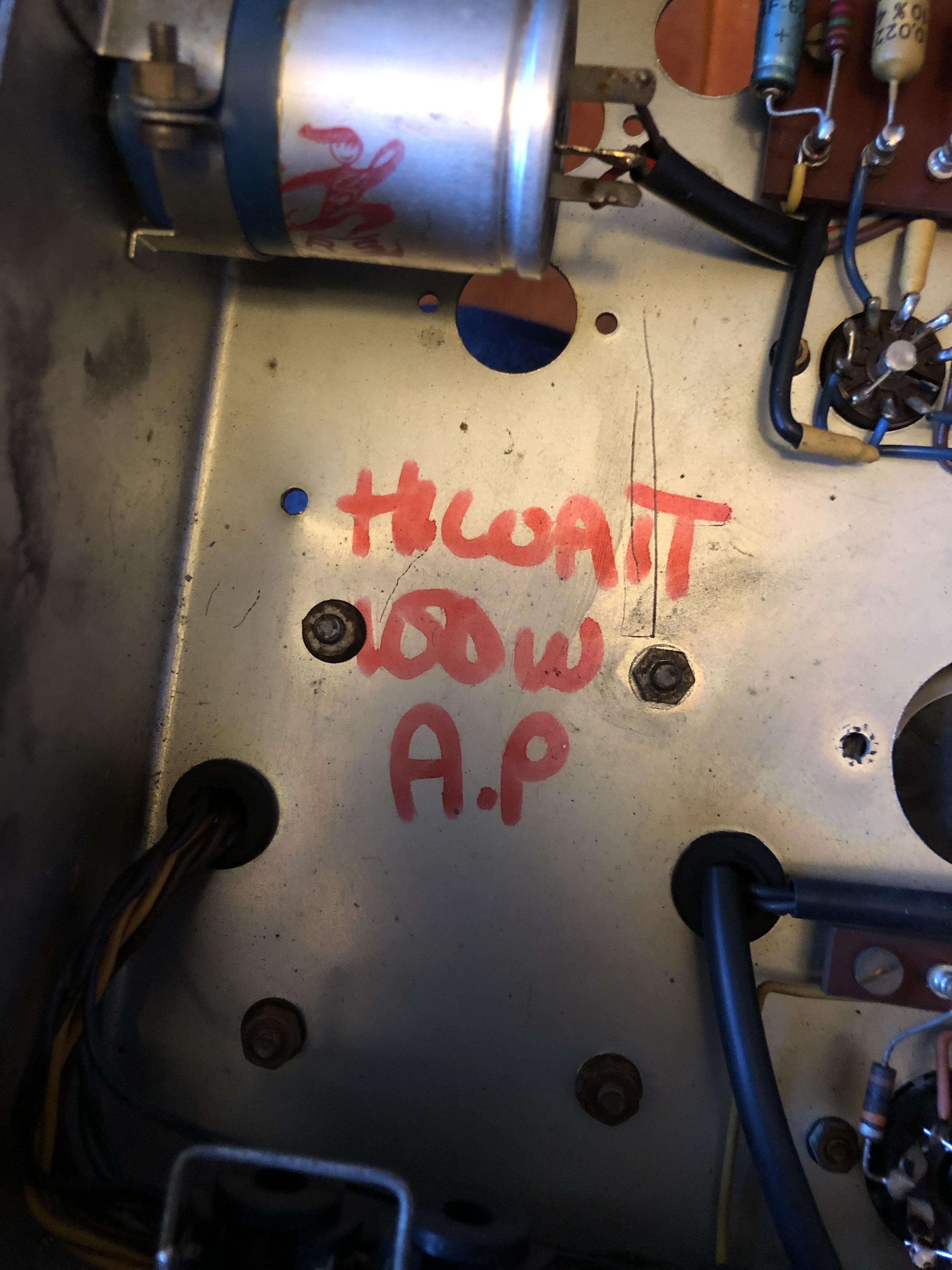
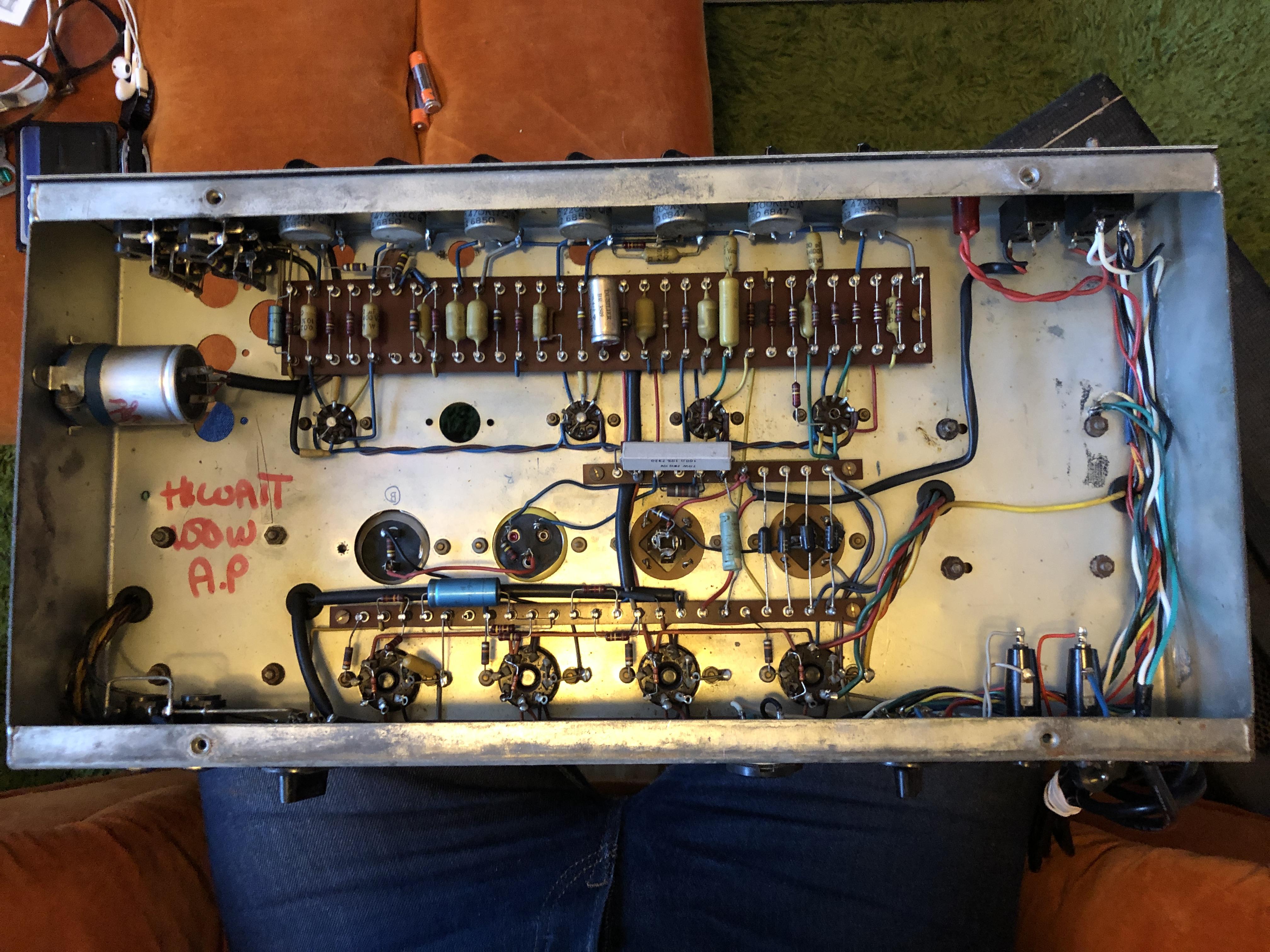
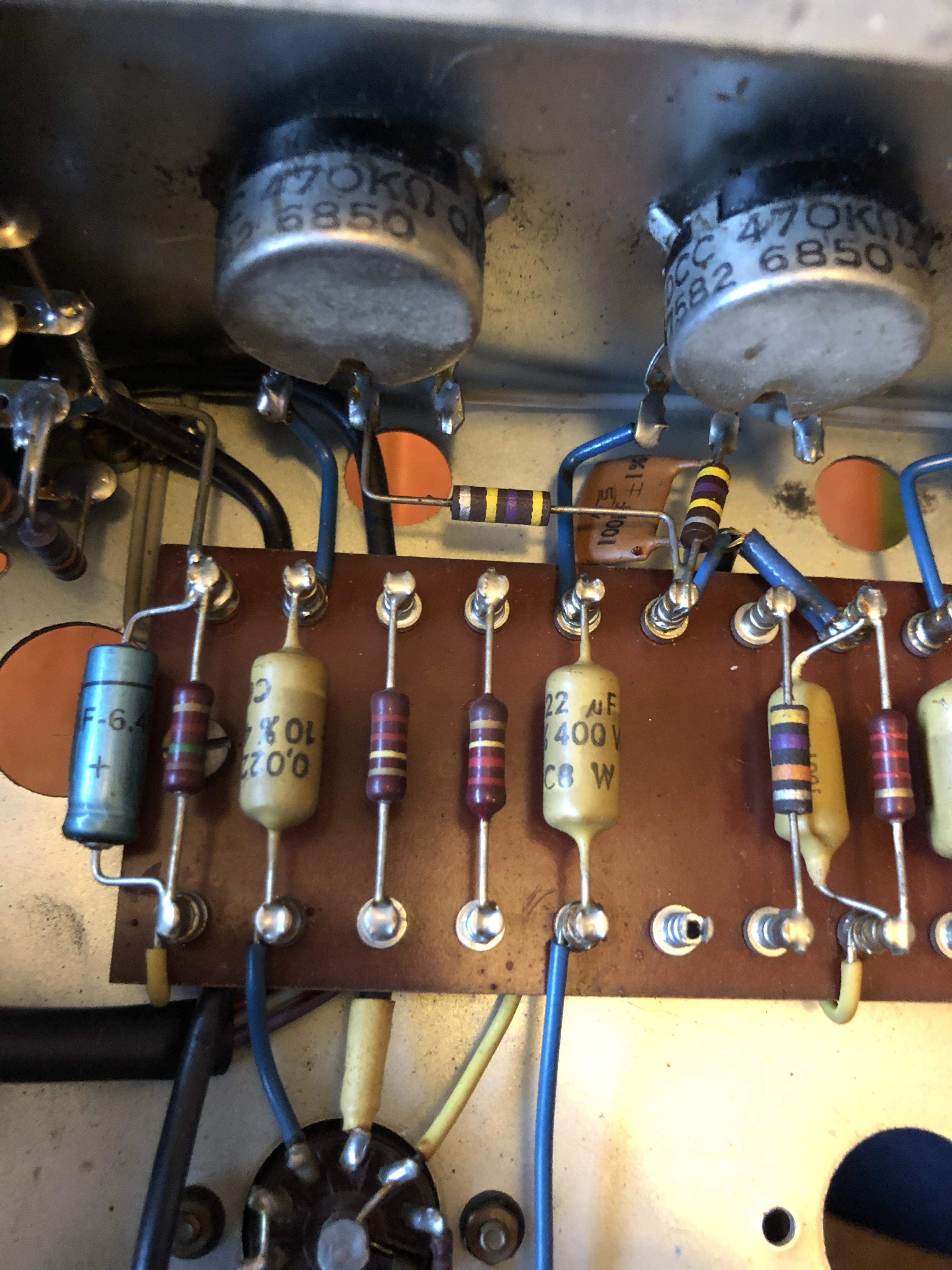
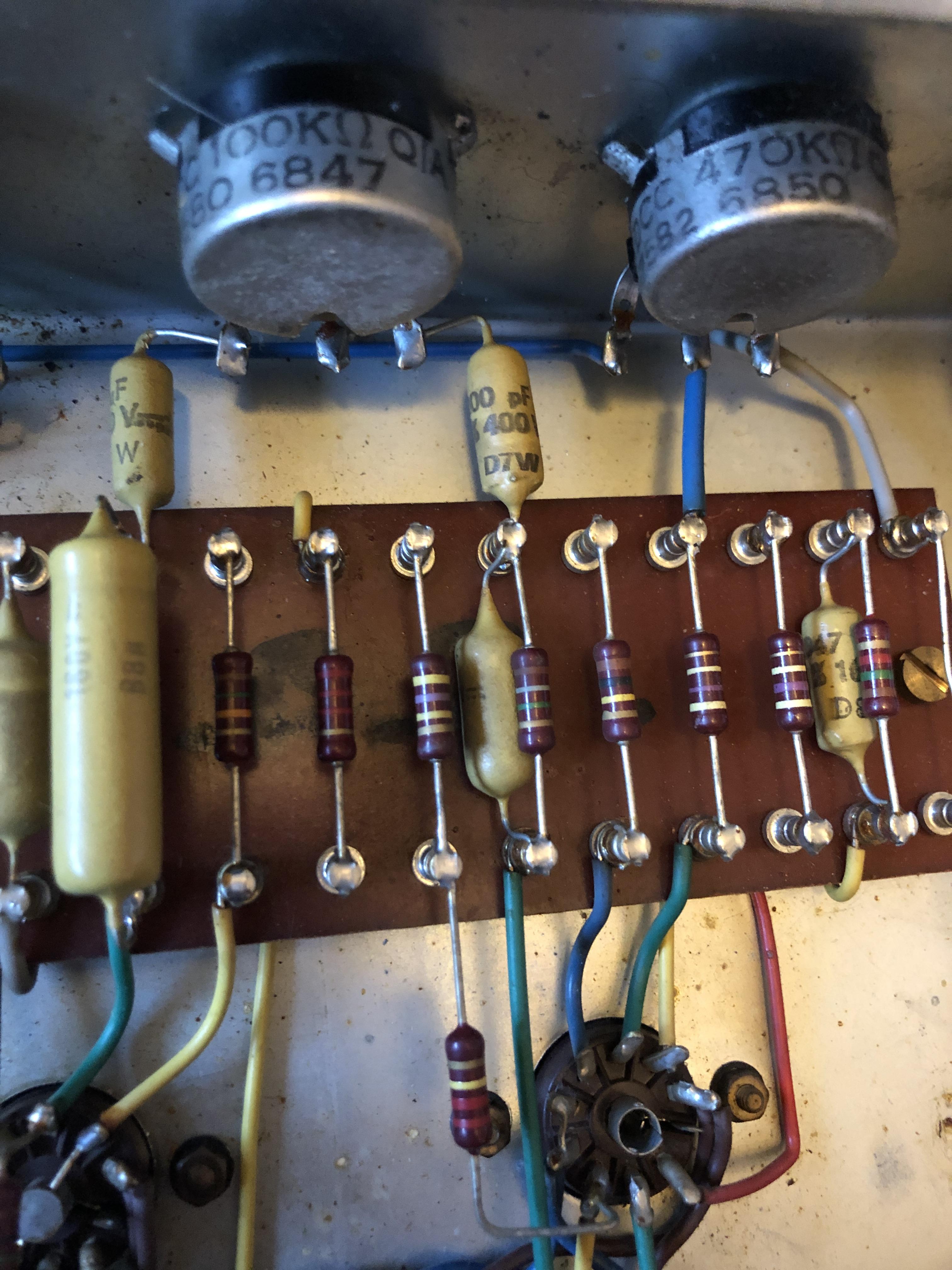
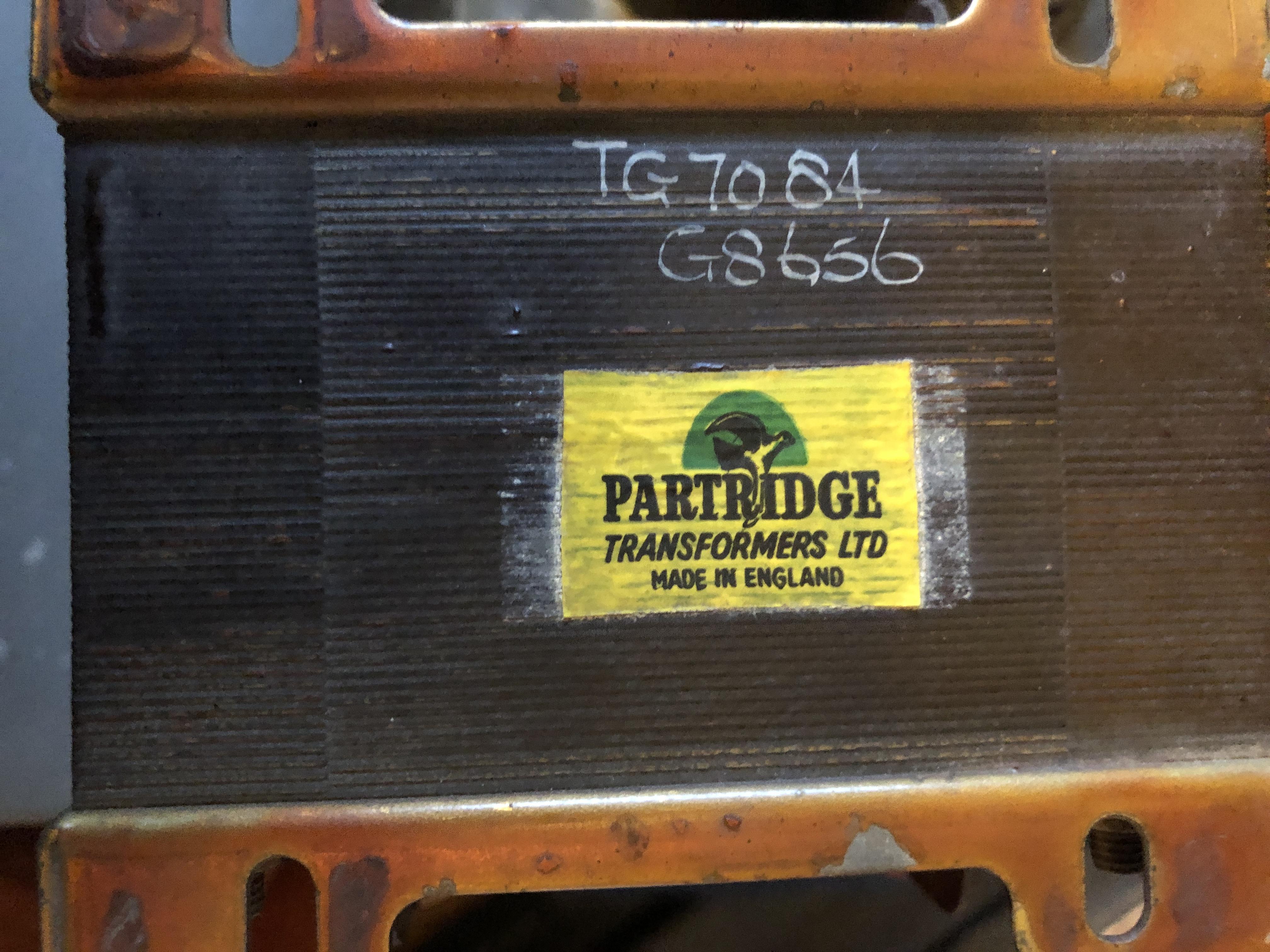
So as soon as it arrived I set about opening it up so do an inspection. Looking everything over, it appears it is an early 1969. Hiwatt 100w A.P. is written inside the chassis, which matches notes written inside other confirmed amps of that period. The pots date from the 47th and 50th week of 1968, and the transformers, consecutively numbered G8655 and G8656, match Partridge dating codes for 1968. So, either a very late '68 or early 1969. The only modifications I can identify thus far are the addition of a power outlet on the back (which resulted in some unwinding of the tidy braided wiring, oh well), and an update of the screen grid resistors. Even the capacitors appear original, with Dubilier's up top and a Radiospares unit under the chassis. So, despite the ad saying it was recently serviced by a tech, I'm going to take it in to have the caps updated when I get the chance. I'll give it a quick test this evening after work, very excited! I knew it was a bit of a risk given the lack of info provided, but I'm very happy that it seems to have paid off, and under the typical going rate of a later 70s model on reverb and eBay!

Anyways, here's the part y'all actually came for, the pictures!

rub7Cnj.jpg

0hpg4mA.jpg

HOOeZdv.jpg

Y7K9uq4.jpg

FgwYajy.jpg

ceqyR3x.jpg

V352eyl.jpg

QWTaS3T.jpg

iaxcfR7.jpg

0VnZeNr.jpg
 
Nice!
I'll be the first to say it: don't replace anything that isn't broken. That includes capacitors.

Absolutely, anything that can stay stock will, but on at least two of the filter caps there's some slight bulging which looks like they may be getting close to needing replacement. But I'll fire it up first and see how it sounds before making a final call.
 
  • Like
Reactions: TN WOODMAN
Nice Score. The only thing that seems odd to me is I am used to seeing ink on all of the solder joints. Maybe this was not done on the early amps or maybe someone touched up all the solder joints.

I would be totally unconcerned if you replaced all the electrolytics (even if unnecessary). It might be a waste of money but I don't think it will hurt anything.

But if you let some idiot throw a bunch of Orange Drops in there I am going to be very severely disappointed :mad::rage:.
 
Nice Score. The only thing that seems odd to me is I am used to seeing ink on all of the solder joints. Maybe this was not done on the early amps or maybe someone touched up all the solder joints.

I would be totally unconcerned if you replaced all the electrolytics (even if unnecessary). It might be a waste of money but I don't think it will hurt anything.

But if you let some idiot throw a bunch of Orange Drops in there I am going to be very severely disappointed :mad::rage:.

I believe the ink on the solder joints was introduced when Harry Joyce began wiring amps, I haven't seen evidence of it on the early amps. I will say taking a closer look, some of the wiring connecting the caps has been redone, you can see the wires were unbent from their right angles and then reattached. Don't plan on touching anything but what is essential to get it up and running and show worthy! May eventually get a repro cab if I can from Hi-Tone just to lessen wear and tear on the original.
 
Nice Score. The only thing that seems odd to me is I am used to seeing ink on all of the solder joints. Maybe this was not done on the early amps or maybe someone touched up all the solder joints.

I would be totally unconcerned if you replaced all the electrolytics (even if unnecessary). It might be a waste of money but I don't think it will hurt anything.

But if you let some idiot throw a bunch of Orange Drops in there I am going to be very severely disappointed :mad::rage:.

Looks like it will need some service. Took into the garage studio and played for about 45 minutes. Instant Entwistle with a Precision into 4x12s. Let my guitar player test it for a bit, and he's now saying I should sell the JTM 45/100 since it's been made redundant and get another Hiwatt so he can use it. Easily some of the best guitar tones I've heard with zero pedals added in. However, it seemed rather quiet, not nearly as loud as aforementioned JTM 45/100 with KT66s, which is only rated about 70w. And around the 50 minute mark it started cutting out when pushed hard. It also seemed a little shy on bass, so I'm thinking it does indeed need a cap job. But as a proof of concept, it was absolutely stellar, cannot wait to get it up to full health.
 
Looks like it will need some service. Took into the garage studio and played for about 45 minutes. Instant Entwistle with a Precision into 4x12s. Let my guitar player test it for a bit, and he's now saying I should sell the JTM 45/100 since it's been made redundant and get another Hiwatt so he can use it. Easily some of the best guitar tones I've heard with zero pedals added in. However, it seemed rather quiet, not nearly as loud as aforementioned JTM 45/100 with KT66s, which is only rated about 70w. And around the 50 minute mark it started cutting out when pushed hard. It also seemed a little shy on bass, so I'm thinking it does indeed need a cap job. But as a proof of concept, it was absolutely stellar, cannot wait to get it up to full health.

:thumbsup: I agree, this is going to be an awesome amp once you get it sorted.

I have a 79 DR103 and it is easily the loudest 100 watter in my collection...and I have a Matamp GT120. If it's low on power, the first thing I would check is the bias and output tubes. I wouldn't be surprised if only two output tubes are running.

I also have a Marshal JMP 2203 and a JCM800 1959. IMHO these amps sound totally different than my DR103. I wouldn't say they are better or worse, just different. I would keep the Marshall around for variety and tell the guitarist to go buy his own Hiwatt if that is the tone he desires :rollno::banghead:.
 
Absolutely replace the electrolytic caps. They are out of spec because service life is a spec, and out of spec caps put the transformers at risk which are nearly impossible to replace. For a serious user a voltage doulber mod to give bias range for modern valves might be necessary. Also the HT fuse might be a 3A one, some websites spec this, it should be a F1A to blow before the transformer winding. There's a certain circumstance that will blow the fuse and a bigger one was a bodge round, and also responsible for a lot of other nice vintage amps being destroyed to rob a Partridg OT to replace one in a Hiwatt.
 
Absolutely replace the electrolytic caps. They are out of spec because service life is a spec, and out of spec caps put the transformers at risk which are nearly impossible to replace. For a serious user a voltage doulber mod to give bias range for modern valves might be necessary. Also the HT fuse might be a 3A one, some websites spec this, it should be a F1A to blow before the transformer winding. There's a certain circumstance that will blow the fuse and a bigger one was a bodge round, and also responsible for a lot of other nice vintage amps being destroyed to rob a Partridg OT to replace one in a Hiwatt.

The transformer taps for the bias circuit don't provide enough voltage for modern tubes, so a voltage doubler is often required.

My tech installed this "one control" voltage doubler in my 79. I haven't opened the amp since he did the work, but I believe he built a little circuit board.

upload_2020-5-6_3-23-22.png


In the event the bias taps in your amp are hot enough to do the job, you can build in variable bias by adding a 1M pot.
upload_2020-5-6_3-29-15.png


Both of these images are from somewhere on the MHUSS Hiwatt site.
 
It also seemed a little shy on bass, so I'm thinking it does indeed need a cap job.

Changing the power supply capacitors will most likely do nothing to the frequency response. Most amps not specifically made for bass roll off low end intentionally - it's part of their design. A capacitor change may benefit you, but it'd likely be one (or several) in the signal path that you need to change - not because they're old, but because they need to be larger in value. The biggest elephant in the room is the output transformer, which may or may not work well with low frequency current running through it.
 
Absolutely replace the electrolytic caps. They are out of spec because service life is a spec, and out of spec caps put the transformers at risk which are nearly impossible to replace. For a serious user a voltage doulber mod to give bias range for modern valves might be necessary. Also the HT fuse might be a 3A one, some websites spec this, it should be a F1A to blow before the transformer winding. There's a certain circumstance that will blow the fuse and a bigger one was a bodge round, and also responsible for a lot of other nice vintage amps being destroyed to rob a Partridg OT to replace one in a Hiwatt.

I'll double check the fuses, that's a good point to bring up. It does appear it is a 3A, per Mark Huss' site, but I'll dig around and see if I have any F1As handy. Also going to ask about the voltage doubler and have it put in if the tech says it needs it, this one's no museum piece and will continue to serve as a gigging amp.

The transformer taps for the bias circuit don't provide enough voltage for modern tubes, so a voltage doubler is often required.

My tech installed this "one control" voltage doubler in my 79. I haven't opened the amp since he did the work, but I believe he built a little circuit board.

View attachment 3817223

In the event the bias taps in your amp are hot enough to do the job, you can build in variable bias by adding a 1M pot.
View attachment 3817225

Both of these images are from somewhere on the MHUSS Hiwatt site.

Mark's website it a fantastic resource, I relied on it heavily while researching this amp.

Pardon me sir, but is that a Hiwatt in your lap? or are you just happy to be having a peek under the chassis? :D

giphy.gif
 
Changing the power supply capacitors will most likely do nothing to the frequency response. Most amps not specifically made for bass roll off low end intentionally - it's part of their design. A capacitor change may benefit you, but it'd likely be one (or several) in the signal path that you need to change - not because they're old, but because they need to be larger in value. The biggest elephant in the room is the output transformer, which may or may not work well with low frequency current running through it.

The DR103 is designed to have more low end extension than many, if not most tube amps. The transformers are noted for exceptional quality, fidelity, and extended frequency response.

AFAIK, bad Electrolytics can degrade bass response in two ways: 1. If the main filter caps are degraded and can not hold enough energy, the amp will not have current reserves to draw on when it's time to play low frequency transients. 2. If the amp uses electrolytic cathode bypass caps and they are out of spec, you get more low frequency negative feedback in the signal path that reduces low frequency output.

I am not saying the electrolytics are bad though.

The Brilliant channel on this amp roles off the lows at a pretty high frequency. It may even sound thin with guitar. The Normal channel has full frequency response. It may still sound like it doesn't have lot of bass because it has low frequency extension rather than emphasis in the upper bass range.