
Enjoy the benefits of a premium membership!
Upgrade Account
-
TalkBass has been independent since 1998. Add your voice.
Create a free account to reply to discussions, view embedded media, and browse with fewer display ads.
Join free Log in
Want zero display ads or expanded classifieds tools? Compare plans.
You are using an out of date browser. It may not display this or other websites correctly.
You should upgrade or use an alternative browser.
You should upgrade or use an alternative browser.
Nashville Chart
- Thread starter Mike Barrow
- Start date
More options
Who Replied?

This is kind of a tangent ... but hey, it's TB. I use an app called Songbook for my lyric/chord charts. Besides being able to transpose easily, it has the facility to render my charts either as chords (which is how I would initially create them) or as Nashville notation, and can switch back and forth.
You know, if someone sat down and put down a Nashville Number fake book would be doing a GREAT service to bass players. <3

Like this?You know, if someone sat down and put down a Nashville Number fake book would be doing a GREAT service to bass players. <3
https://www.amazon.com/Nashville-Number-System-Fake-Book/dp/149501409
I own this book. It’s a good resource.
As an Amazon Associate, TalkBass may receive commissions from qualifying purchases made via links on this site.

This is a weird statement to make. Maybe you’re saying it’s a useful skill to be able to sight transpose.Being able to convert sheet music to NNS on sight is a very useful skill especially if you play jazz.
But NNS insinuates something written down. It’s not a thought.


I’d like to know how many players understand the chords they’re playing and how many just play? As I’m playing I always think of and try to understand the chords going down, and in particular their function in the song, especially if I get a song sprung on me I don’t know. If you only think in terms of G C D you won’t progress past the guitarists who can’t name chords diatonically when using a capo and can’t even wrap their heads around the concept.
Just call it “chord family” and be done with NN system.
Just call it “chord family” and be done with NN system.

Thanks for posting, I do not have it. When we moved to the home I gave all my NN Praise sheet music to the church.Like this?
https://www.amazon.com/Nashville-Number-System-Fake-Book/dp/149501409
I own this book. It’s a good resource.
Trying to satisfy my music itch with the rhythm guitar. Does not come close. So I'm in need of some good NN sheet music. I'll add the lyrics....
As an Amazon Associate, TalkBass may receive commissions from qualifying purchases made via links on this site.
You are right. I'll call it chord analysis. As far as "wierd", on gigs or jams, we call the numbers all the time if some one is unsure of the changes. For example:This is a weird statement to make. Maybe you’re saying it’s a useful skill to be able to sight transpose.
But NNS insinuates something written down. It’s not a thought.
""Easy" by the Commodores, key of Bb, 1 3 2 5, theres a b5 to 4 in there. Got it?"
NNS or just calling the numbers are pretty much the same thing when you get down to it.

"NNS or just calling the numbers are pretty much the same thing when you get down to it."
I think it's been said here, but there's far more information included with the NN system than just chord numbers. The Williams book really delves into it. It's worth some study if you'll be working or subbing with an act that takes it seriously as their system. It's quick enough to learn, but make sure you review the charts before the gig. I've found lots of surprises on gig day, especially the liberty some experienced NNS charters take with time signatures and measure divisions.
I think it's been said here, but there's far more information included with the NN system than just chord numbers. The Williams book really delves into it. It's worth some study if you'll be working or subbing with an act that takes it seriously as their system. It's quick enough to learn, but make sure you review the charts before the gig. I've found lots of surprises on gig day, especially the liberty some experienced NNS charters take with time signatures and measure divisions.
Last edited:
You are right. I'll call it chord analysis. As far as "wierd", on gigs or jams, we call the numbers all the time if some one is unsure of the changes. For example:
""Easy" by the Commodores, key of Bb, 1 3 2 5, theres a b5 to 4 in there. Got it?"
NNS or just calling the numbers are pretty much the same thing when you get down to it.
I don’t know why that concept is so difficult for some people to understand.
Btw I never knew Lionel Richie played piano because growing up I just heard his amazing voice. Check out this video. With the Antigua bass with maple neck, white piano and shiny suits for everyone and the biggest stage I’ve ever seen. Just killer!

I am a numbers chart super fan. They are especially helpful on recording sessions, especially those where you are called in cold -- either as an overdub player or as part of a live rhythm section. And if there are no charts, it's a no brainer that you can make life easier for yourself, as well as other players if you can write one.
Here are two halfway decent examples -- the first pretty simple and the second a bit more complex, which outlines rhythm figures as well as slash chords
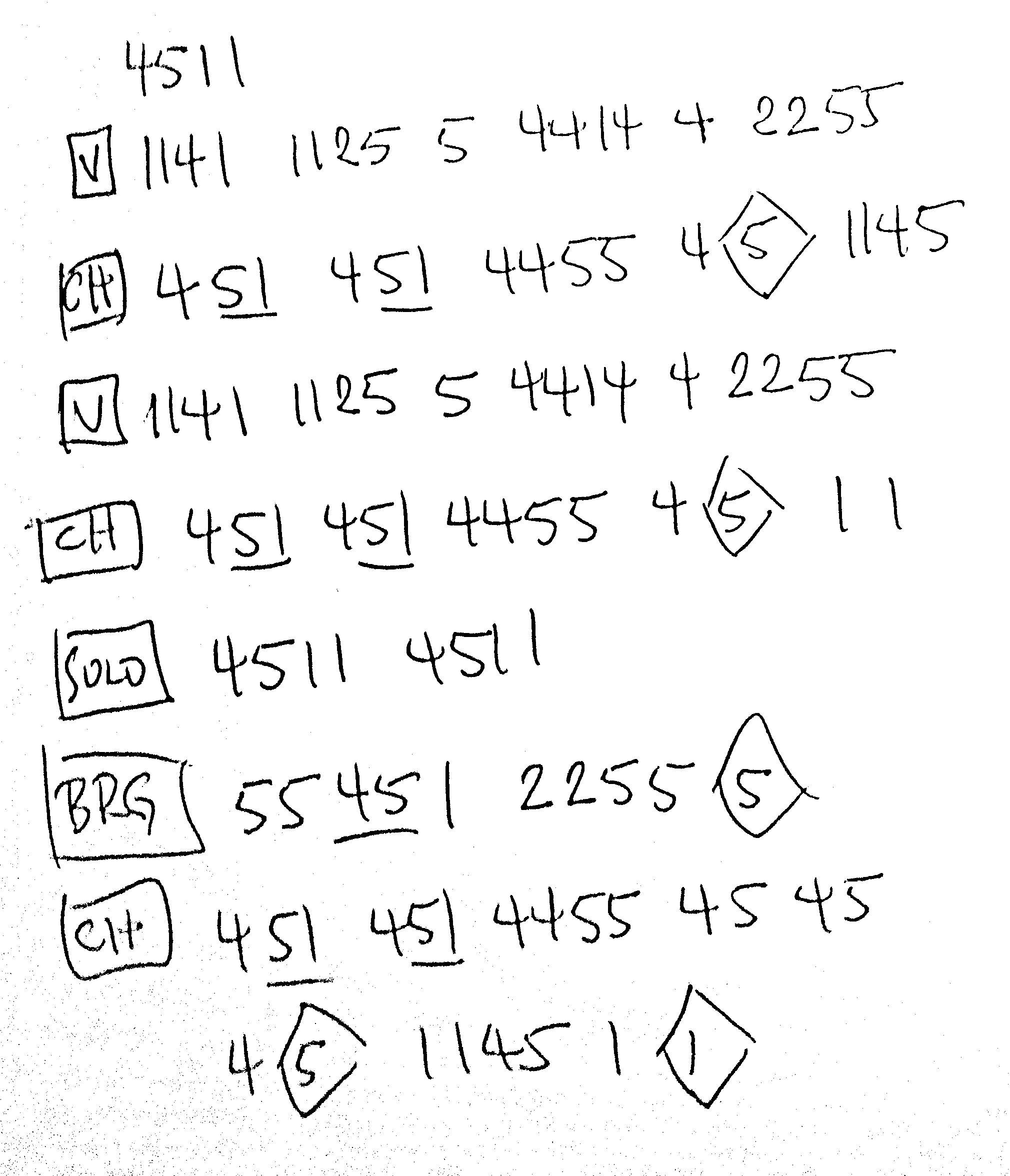
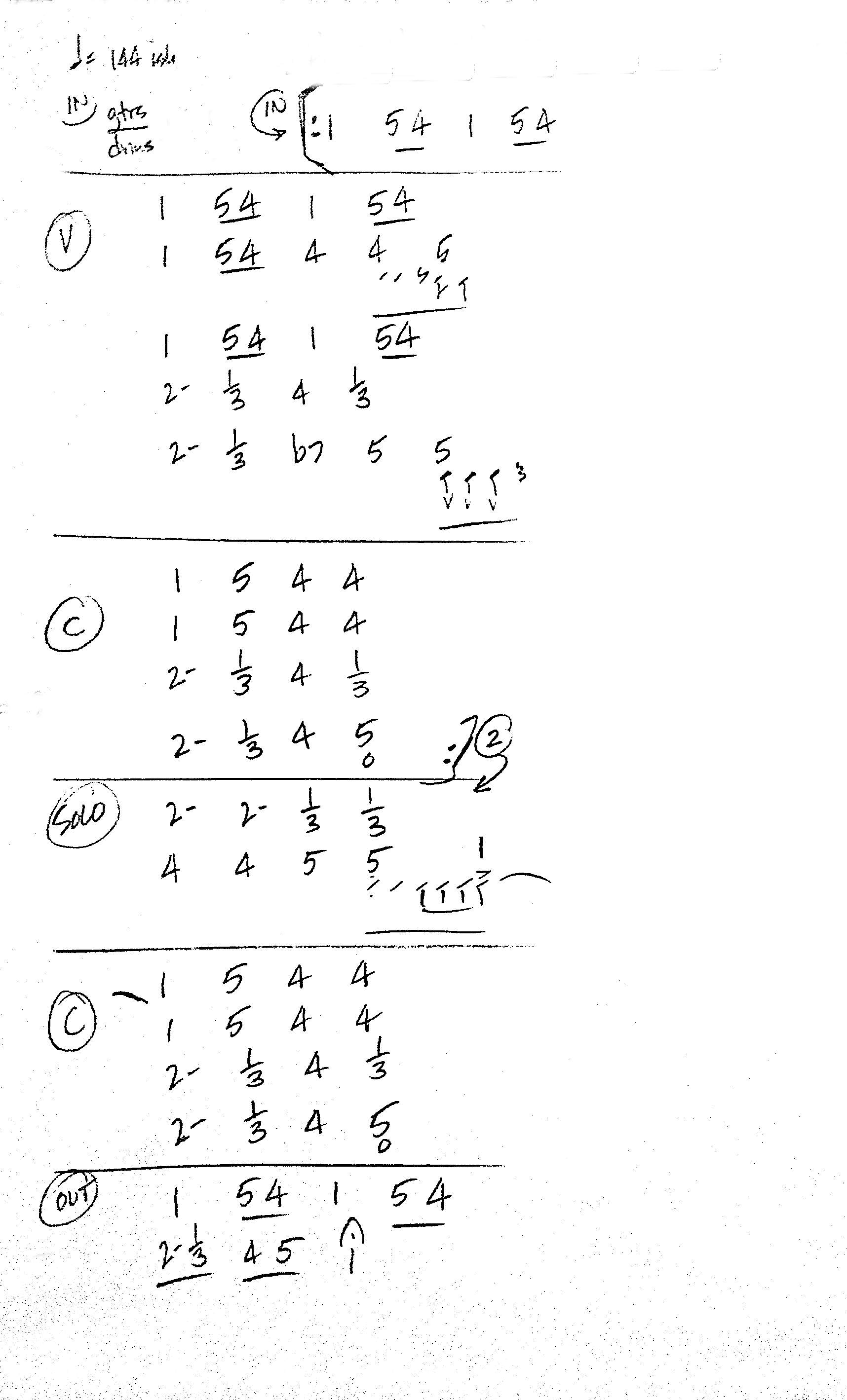
Here are two halfway decent examples -- the first pretty simple and the second a bit more complex, which outlines rhythm figures as well as slash chords
Last edited:

IME, those who like Nashville charts have no love (or even use) for chord charts. It is very much "a thing" in some circles, and while it's always being refined, I'm pretty sure it's not going away. The charts above are typical of those I've run into.Do iPad apps that will transpose charts on the fly make NNS less of a "thing"?
Last edited:

Yes and all the time. It's pretty common for members of a band to refer to chords by number or interval.
Both types (chords vs numbers) are useful. It's not unusual, during a session, that it's determined that the vocalist might sound better a half step up or down from how the song was originally sung.
A number chart is pretty handy when the "let's try it up a half step" suggestion is made. I've rewritten number charts for players more at ease seeing chords; not really much of an issue.
Charts (chords and numbers) also give everyone a common reference and starting point when a change or correction is made and incorporated into the arrangement.
A number chart is pretty handy when the "let's try it up a half step" suggestion is made. I've rewritten number charts for players more at ease seeing chords; not really much of an issue.
Charts (chords and numbers) also give everyone a common reference and starting point when a change or correction is made and incorporated into the arrangement.
Do iPad apps that will transpose charts on the fly make NNS less of a "thing"?
No. People here are stuck on that number system. If you're going to play in Nashville, you have to know it. Most singer/songwriters here don't even know what chords they're playing, and it's easier for them to look at a number chart. The need to transpose on the fly is due to singers having no idea that they can't sing something in a certain key, and need it lowered. As a band leader, that's much easier to do with the number system.


