This custom project was prompted by some really cool looking Aromatic Cedar Wishbasses on Ebay last fall. I loved the wood, but didn't want another fretless. When Steve Wishnevsky agreed to build me an unfinished neck and body, I saw this as an opportunity to get myself involved with making some sawdust.
The Wishenbacker: 4 string, 34" scale, fretted.
1 5/8" nut, 3/4" string spacing at the Badass II bridge
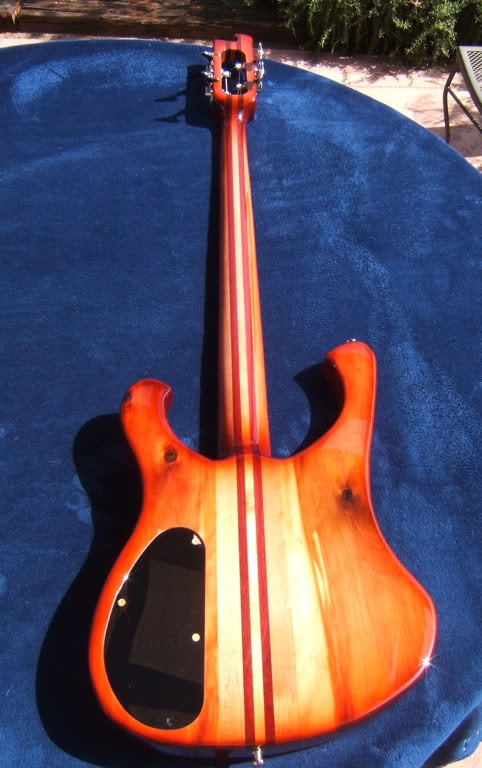
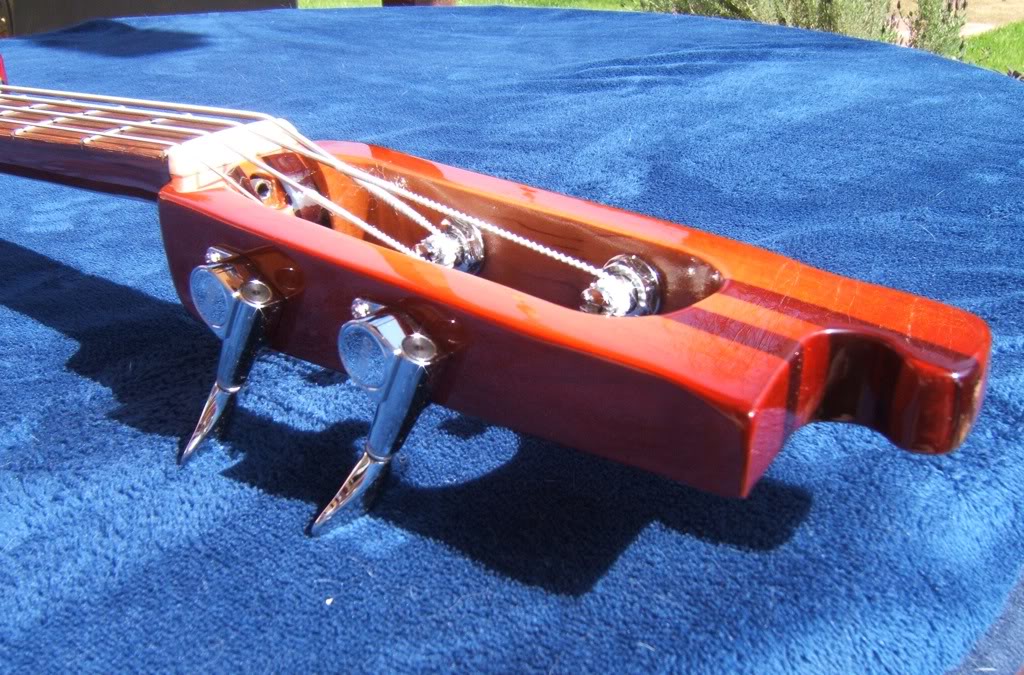
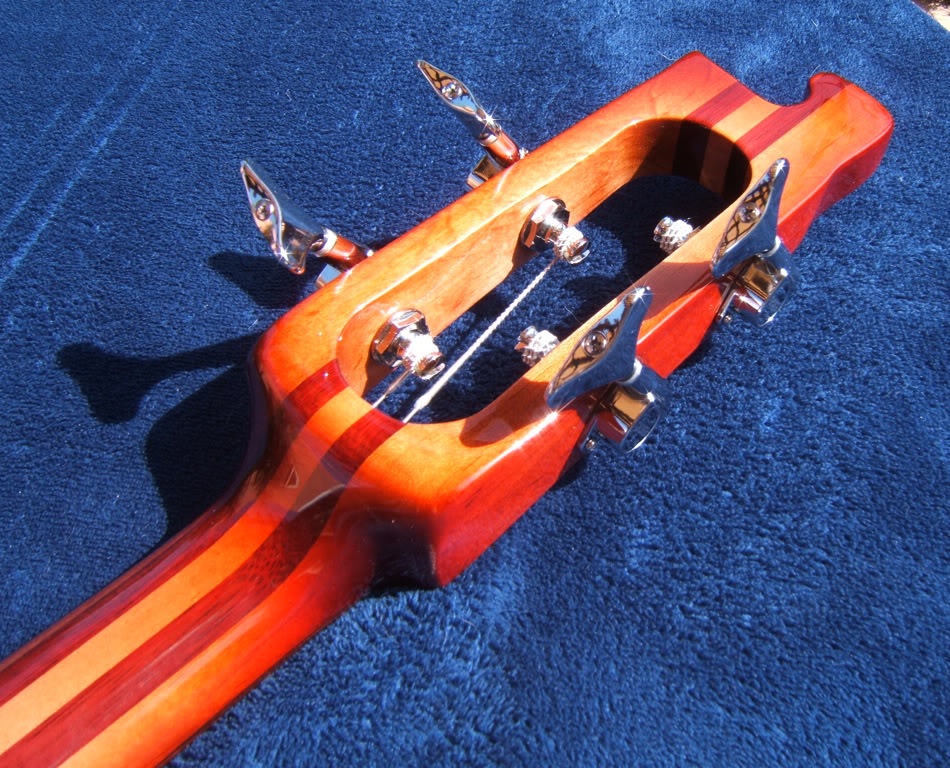
Neck through traditional Wishbass open headstock, maple and purpleheart neck, Cocobolo fingerboard from LMI, aromatic Cedar body wings, harvested locally in North Carolina.
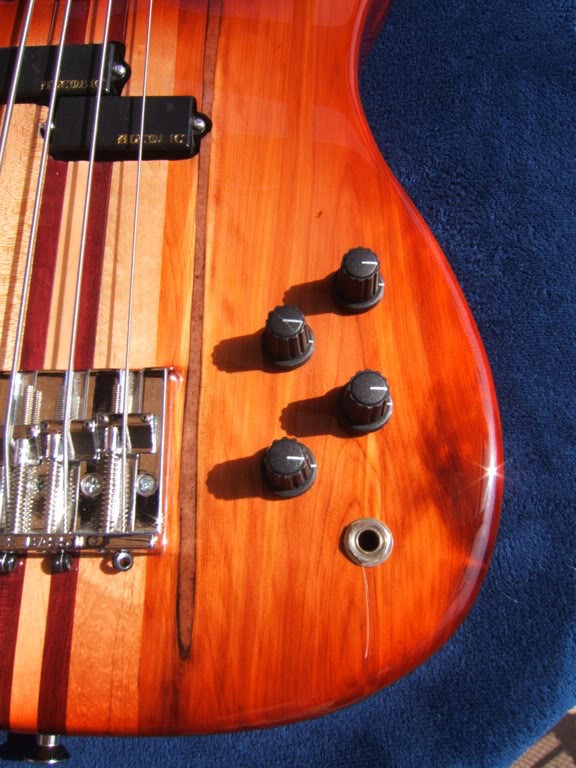
Grover chrome tuners, Dunlop straplocks, and an Alembic P Bass activator with East/West electronics, (Alembic filter and active Bass/Treble).
Topped with a light Cherryburst Poly finish from Pat Wilkins.
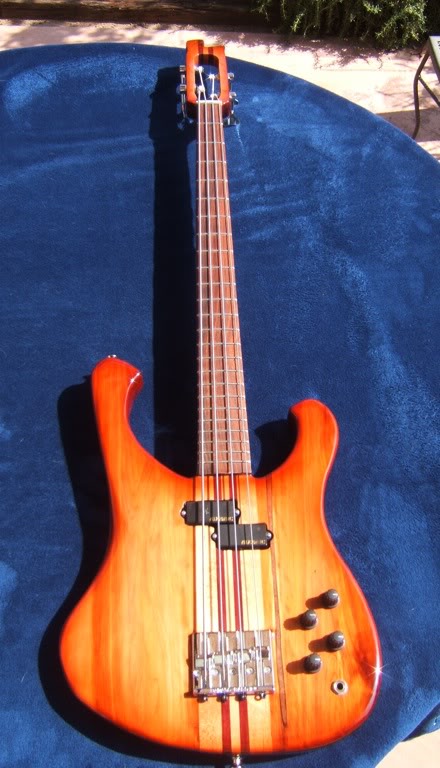
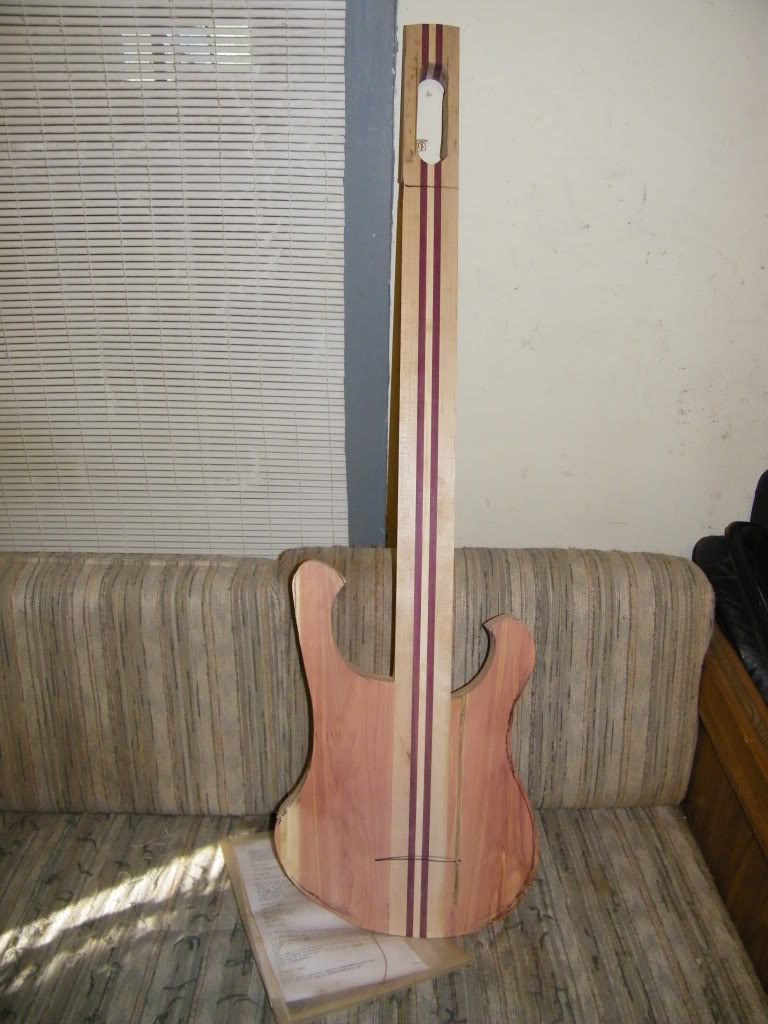
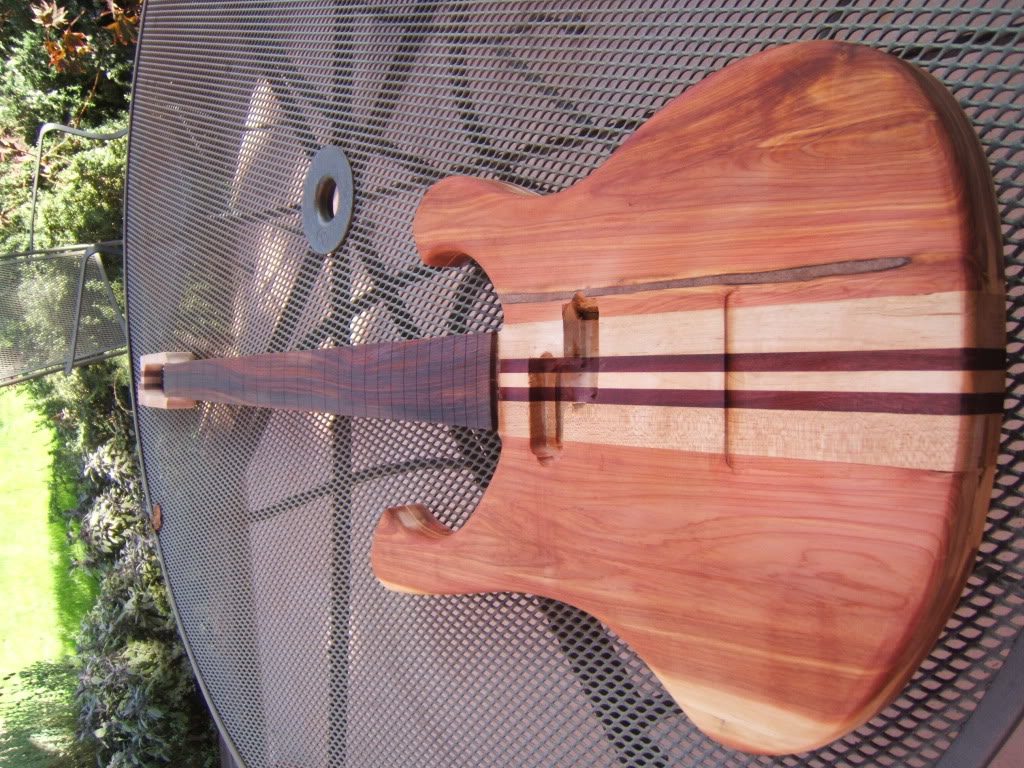
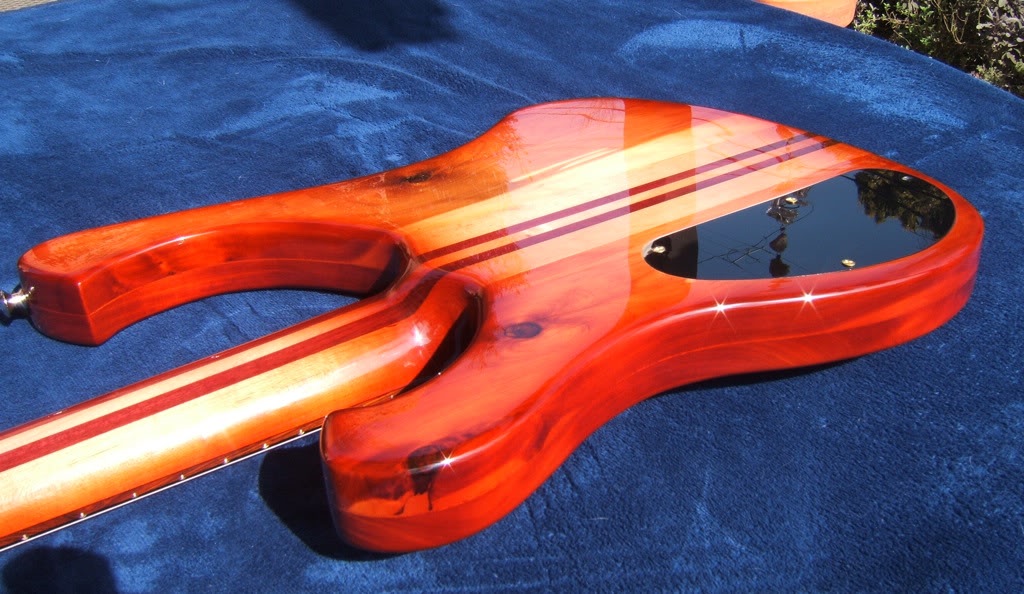
At my request, Steve made me this. That stripe, the length of the body, on the lower bout, next to the neck, is a bark incursion. Thanks Steve In later photos you can see how, after removing the soft bark, I filled it in with epoxy, mixed with a purpleheart/maple sawdust blend.
I started acquiring more tools, and set about shaping, smoothing, routing, rounding, and drilling. I made many errors, some near fatal (for the bass, not me) but managed to rebound from all of them. The only obvious mess that's left in the final product is the route for the pup. It was my first time using a template, that template gave it's life for the cause.
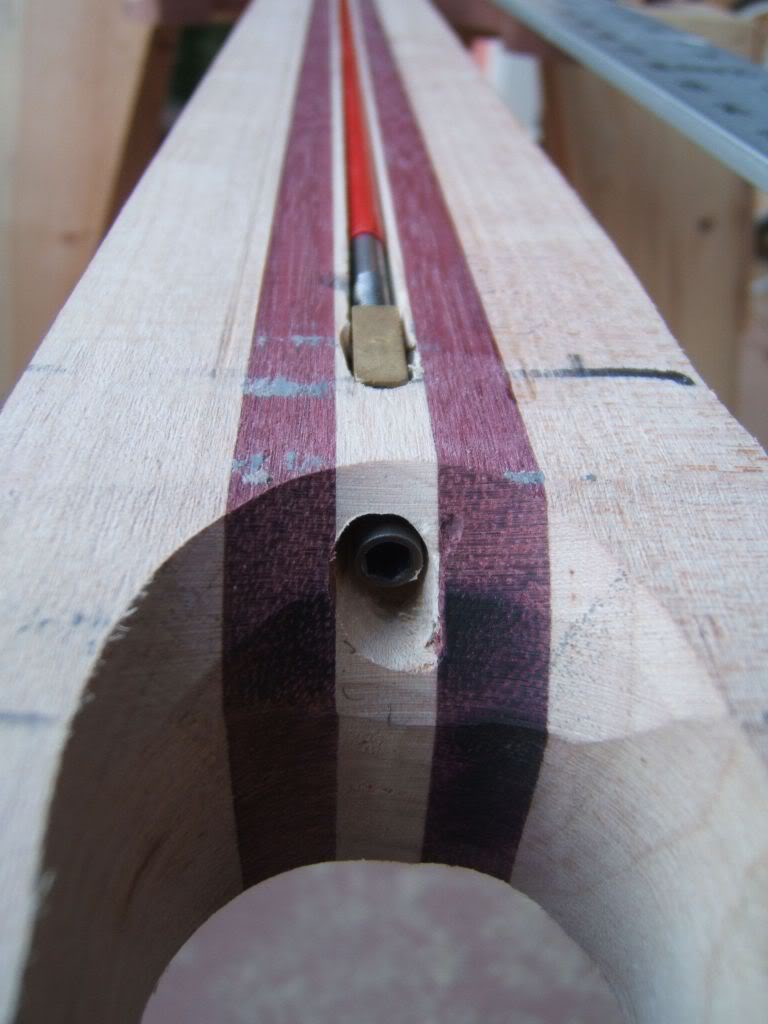
I installed a Stewmac dual action "hotrod" truss rod. I am one who embraces the Wishbass philosophy of no truss rod needed, but that only works when you build a nice beefy neck, as is Wish's tendency. I expected that this build would end up with a more traditional neck profile, subject to the pull of the strings, so I opted for a truss rod.
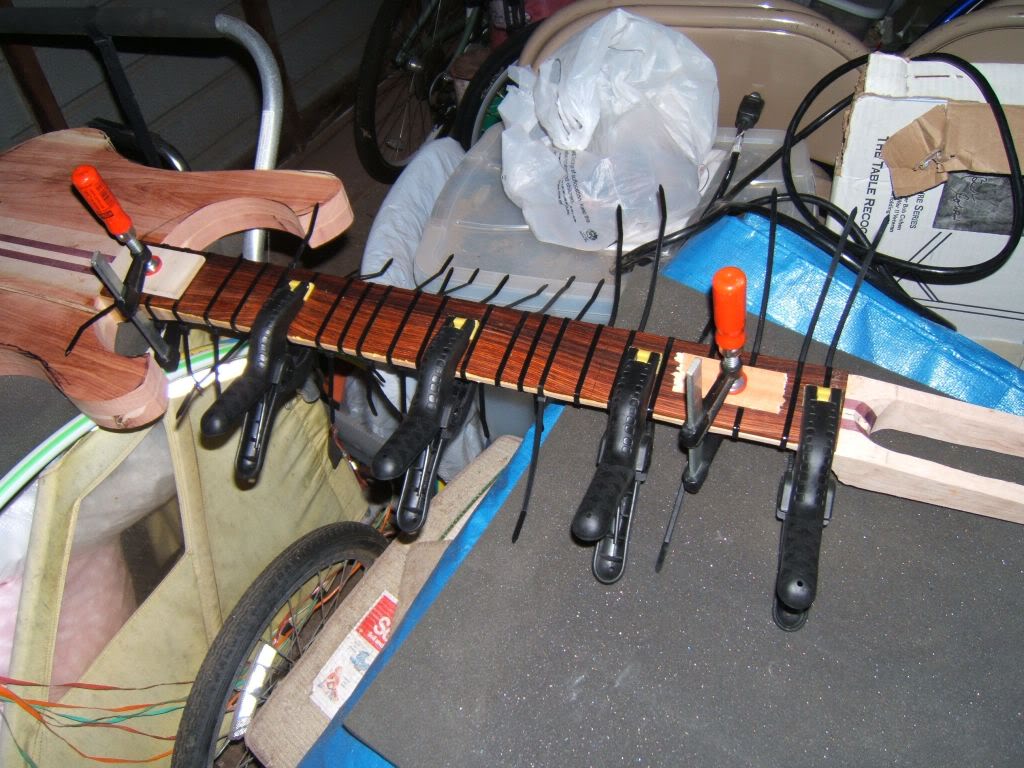
Then had LMI apply a 12" radius, and fret slots to a Cocobolo fretboard, which I attached,
Then I made lots of sawdust, routed the cavities, drilled the tuner holes, recessed the bridge, tapered and shaped the neck, arm relief, round edges, all the while suffering the intoxication of the aromatic Cedar. Cedar is one of those intense childhood smells for me.
Next to Fren Asken of askenguitars.com for frets and a bone nut.
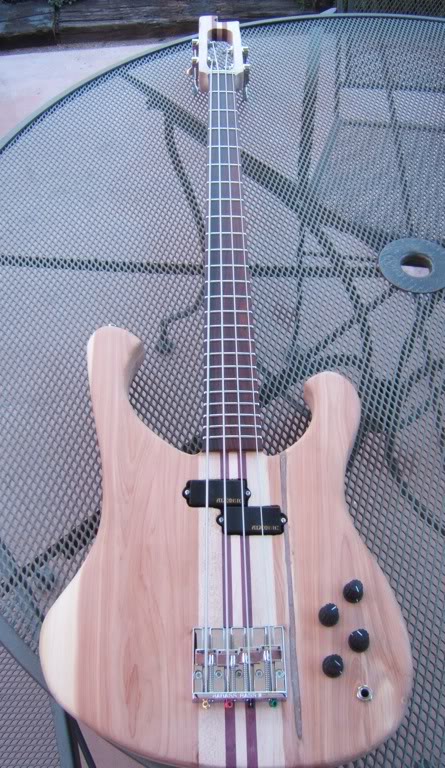
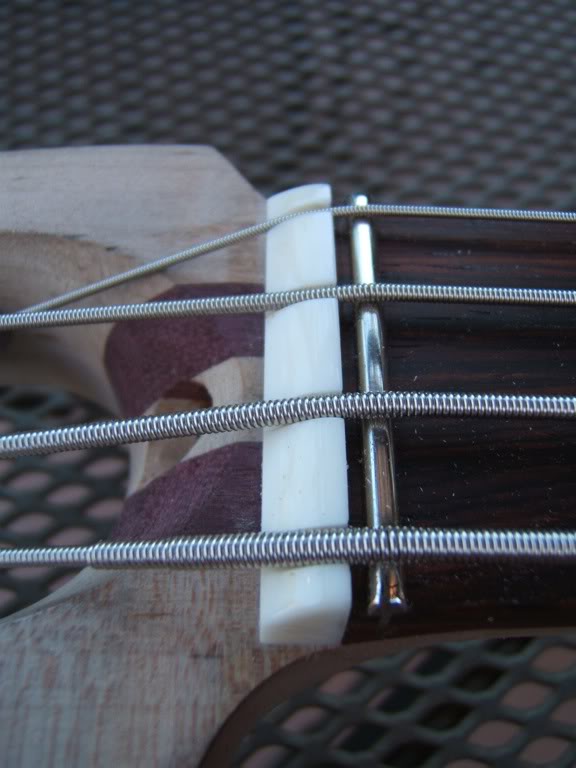
When it came back form Fren, I put it together and played it for about a week, and decided to slim down the neck profile even further.
Finally, after many recommendations, I left the bass with Mr. Pat Wilkins. I have had great success with hand rubbed Tung and Tru oil finishes. They look great, but do not offer much protection from dings. Working with the Cedar revealed how soft it was and I wanted the longer term protection that a Polyester coat would provide. Pat is a spectacular guy, and I'm more than pleased with the results.
I am so grateful to Steve Wishnevsky for agreeing to make me an unfinished block of a bass for me to have my way with;
To Fren Asken, who has made many of my instruments far superior under his touch;
To Pat Wilkins, my first interaction with him, and I would not hesitate to go back;
And to the awesome folks at Alembic. They repaired, upgraded, and tweaked my used electronics. They have repeatedly been helpful and nice, above and beyond the call, and always with respect to my used, third party acquisitions. Alembic tone rocks my world.
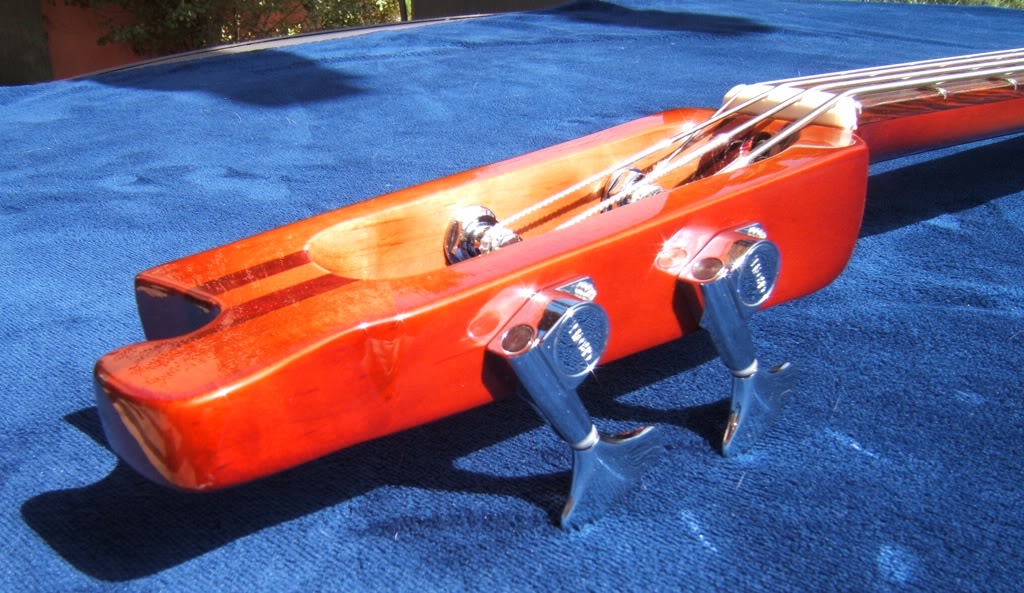

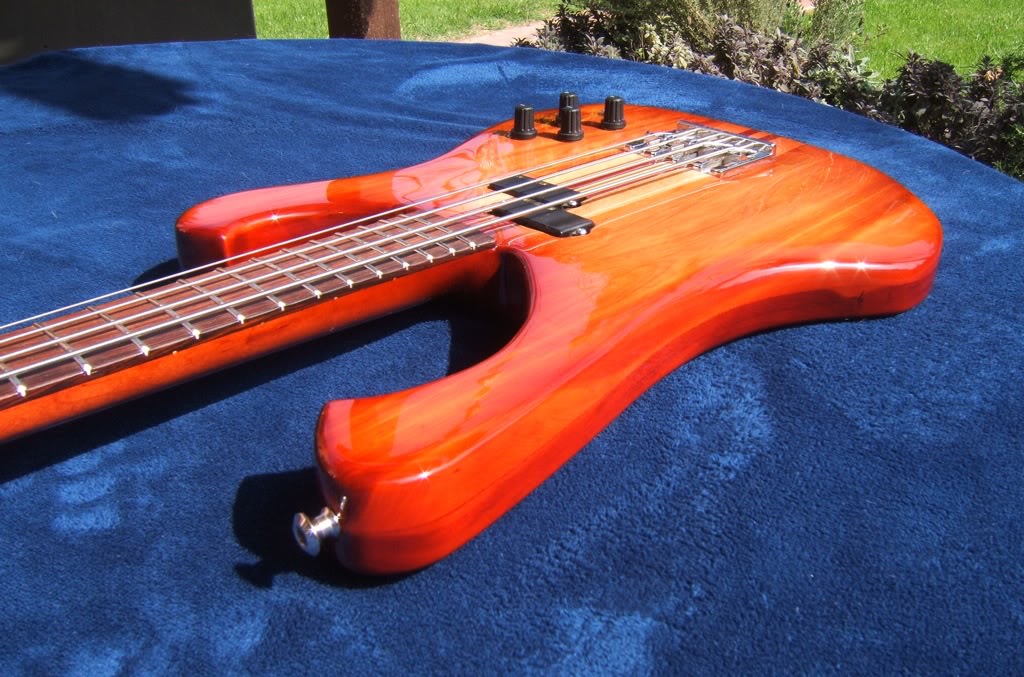
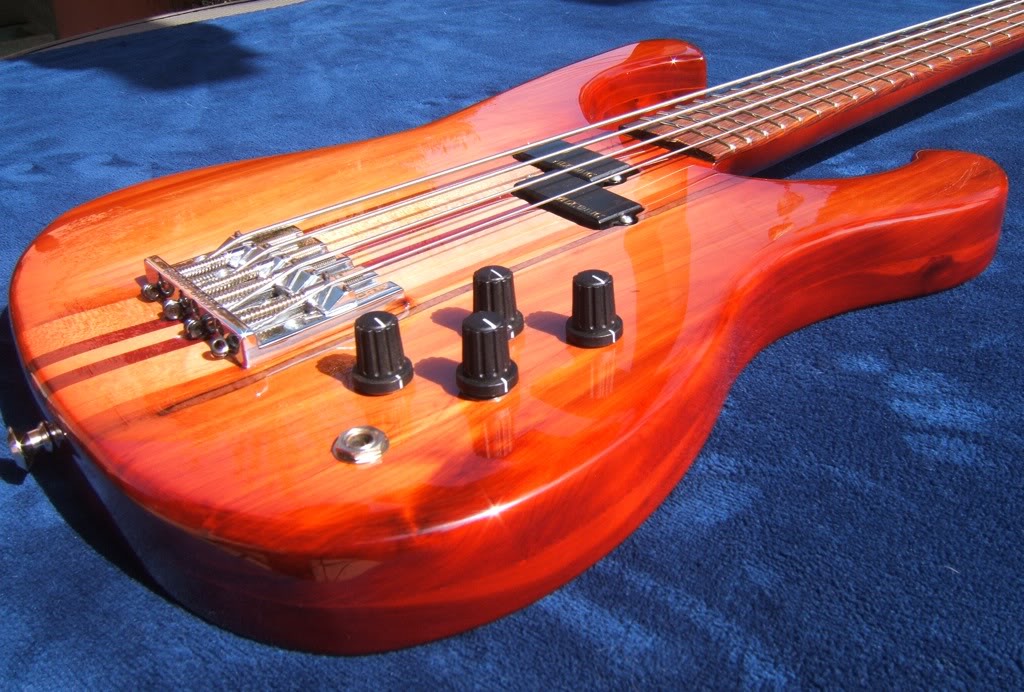
The Wishenbacker: 4 string, 34" scale, fretted.
1 5/8" nut, 3/4" string spacing at the Badass II bridge
Neck through traditional Wishbass open headstock, maple and purpleheart neck, Cocobolo fingerboard from LMI, aromatic Cedar body wings, harvested locally in North Carolina.
Grover chrome tuners, Dunlop straplocks, and an Alembic P Bass activator with East/West electronics, (Alembic filter and active Bass/Treble).
Topped with a light Cherryburst Poly finish from Pat Wilkins.
At my request, Steve made me this. That stripe, the length of the body, on the lower bout, next to the neck, is a bark incursion. Thanks Steve
In later photos you can see how, after removing the soft bark, I filled it in with epoxy, mixed with a purpleheart/maple sawdust blend.I started acquiring more tools, and set about shaping, smoothing, routing, rounding, and drilling. I made many errors, some near fatal (for the bass, not me) but managed to rebound from all of them. The only obvious mess that's left in the final product is the route for the pup. It was my first time using a template, that template gave it's life for the cause.
I installed a Stewmac dual action "hotrod" truss rod. I am one who embraces the Wishbass philosophy of no truss rod needed, but that only works when you build a nice beefy neck, as is Wish's tendency. I expected that this build would end up with a more traditional neck profile, subject to the pull of the strings, so I opted for a truss rod.
Then had LMI apply a 12" radius, and fret slots to a Cocobolo fretboard, which I attached,
Then I made lots of sawdust, routed the cavities, drilled the tuner holes, recessed the bridge, tapered and shaped the neck, arm relief, round edges, all the while suffering the intoxication of the aromatic Cedar. Cedar is one of those intense childhood smells for me.
Next to Fren Asken of askenguitars.com for frets and a bone nut.
When it came back form Fren, I put it together and played it for about a week, and decided to slim down the neck profile even further.
Finally, after many recommendations, I left the bass with Mr. Pat Wilkins. I have had great success with hand rubbed Tung and Tru oil finishes. They look great, but do not offer much protection from dings. Working with the Cedar revealed how soft it was and I wanted the longer term protection that a Polyester coat would provide. Pat is a spectacular guy, and I'm more than pleased with the results.
I am so grateful to Steve Wishnevsky for agreeing to make me an unfinished block of a bass for me to have my way with;
To Fren Asken, who has made many of my instruments far superior under his touch;
To Pat Wilkins, my first interaction with him, and I would not hesitate to go back;
And to the awesome folks at Alembic. They repaired, upgraded, and tweaked my used electronics. They have repeatedly been helpful and nice, above and beyond the call, and always with respect to my used, third party acquisitions. Alembic tone rocks my world.