• TalkBass has been independent since 1998. Add your voice.
    Create a free account to reply to discussions, view embedded media, and browse with fewer display ads.
    Join freeLog in
    Want zero display ads or expanded classifieds tools? Compare plans.

NCCGD! New Colossal Contrabaritone Guitar Day!

I love C Standard for doom metal thanks to Sleep (and Electric Wizard's first album, which is one of my favorites of theirs).
C-Standard always struck me as such an odd place to stop on the way down, with so many open strings tuned to sharps or flats. I always thought B-Standard made so much more sense: just a half step further down, but now you’ve effectively detuned by a whole string; big chords still work on guitar, and it makes it really easy to refer to notes by their actual pitch rather than position. Carcass, Crowbar, and Type O Negative have made a lot of hay in B-Standard for decades now, and they all went there before extreme detuning became de rigeur for heavy music. By the ‘00s, though, everyone seemed to settle at C-standard, and certainly many have made good use of it. I can see it making sense if you play with someone on keys, or maybe horns with all those sharps or flats, or if it suited the range of the vocalist(s); but it seems odd otherwise, unless you just really like the key of C ¯\_(ツ)_/¯

Of course a lot of doomsters go down to A now. It has the advantage of no sharps or flats on open strings at all, but I feel like big chords in the low positions on guitars start to become unusable. Even so, plenty of artists make it work well.
 
Last edited:
  • Like
Reactions: MrAB4003
Congrats with your new bass. Looks great.

Only don’t see why you should call it a contrabaritone guitar while it’s just a regular six string with just the highest two strings tuned down a half step.
Because it’s funny.
 
New strap …
IMG_0737.jpeg


… new strings …
IMG_0738.jpeg


… and a fresh setup.

The instrument arrived with a good-enough overall setup but exceptionally low action. I managed to clean up intonation, string spacing, and pickup height, and maintain that low action while dropping something like 40 pounds of tension on the neck switching out the .130/.105/.085/.065/.045/.032 D’Addario NYXLs for these .120/.100/.080/.060/.040/.030 SIT Fusion Wounds. I didn’t need to adjust the truss rod at all.

The change in strings made a night-and-day difference in sound, alleviating my few worries: this low B0 now rings out with the same clarity as the rest of the strings, and chugs mightily; and I can now achieve full-step bends on the high B2. These Fusion Wounds remind me a bit of Dunlop Super Brights, with zing and high end verging on crunchy; I do like them, but will probably try the more conventional nickel Power Wounds next time.
 
For @Gopherbassist and others contemplating the jump from four or five strings to six:

For me, going from one child to two felt like a bigger jump than going from no child to one. Similarly, the jump from four strings to five didn’t feel like a huge change, but going to six has (and again, if I didn’t tune it BEADF#B, I don’t think I would know what to do with that high string). I can get around on this thing pretty well, but it wasn’t like when I first grabbed a five string and immediately knew what to do with that additional string. The six-string neck still feels noticeably wide and shallow, and I do feel a bit of stretch in the wrist on my fretting hand from time to time. That might just be my experience, but there you have it.
 
How are the SITs? I'm curious about them, but never see them anywhere in person.
We had a music store here in Ashland, Oregon who stocked SITs, and my buddy in Nashville, Tennessee reports that Brian Barrett from the LowEnd shop loves them, so it sounds like you have a great excuse to drop into a music store next time you travel, as some stores do stock them. For science! 😆

I had not knowingly played SITs myself until I got to try a fresh set of Power Wound nickel roundwounds on @Isaac_James ’s’s’s new Rickenbacker last summer. He had mentioned them as a reasonably priced option for cobbling together custom sets from singles, and also that they had a consistently smooth feel while retaining plenty of high end. The former attribute appeals to me as someone playing weird instruments in weird tunings, and the second attribute appeals to me as someone attempting to transfer a number of flamenco guitar techniques reliant on fingernails to bass instruments. Between that and string sage @michael_t ’s consistent praise for SITs, it seemed like time to finally give them a try when I saw they offer packaged six-string sets in .120/.100/.080/.060/.040/.030.

I went with the Fusion Wounds since Isaac said they sounded especially angry 😆 and going from the standard gauge NYXLs to the custom light gauge Fusion Wounds was like night and day. I can see why many players like the NYXLs, especially when it comes to feel, but they don’t really do “angry” at all (as I had recently experienced when I tried a fresh set on my Ibanez ATK). The Fusion Wounds, especially with the Nordstrand Big Singles, feel friendly to the fingers and fingernails and absolutely angry at everything else. I consider passive tone knobs purely decorative, and pretty much only ever use onboard preamps to boost highs, but even I find myself backing off the highs a bit with these. They have almost the same kind of crunchy high end as fresh bronze roundwounds for acoustic bass guitars. I get a good “angry piano” sound from the neck pickup with a modest boost at 700hz on the onboard preamp, with a tiny boost to lows and a tiny cut to highs if I’m feeling particular.

I suspect the highs on the Fusion Wounds would sound too harsh for most players, and I will likely try the same gauge in the more conventional Power Wounds next, but I do like these quite a bit for my purposes. Anyone who wants a lot of zing should consider the Fusion Wounds.
 
They have almost the same kind of crunchy high end as fresh bronze roundwounds for acoustic bass guitars. I get a good “angry piano” sound from the neck pickup with a modest boost at 700hz on the onboard preamp, with a tiny boost to lows and a tiny cut to highs if I’m feeling particular.
This is not surprising as the unique feature of the Fusison Wound is the phosphor bronze that's "fused" to the core wire.

I did try the Fusion Wound Stainless once on the Yamaha BB435 I once owned, but I didn't find them anything special. I do like the regular Power Steels, though.
 
  • Like
Reactions: Riff Ranger
@Isaac_James ’s’s’s
Oh no, does this mean there's three of me? One is already a lot!

Anyone who wants a lot of zing should consider the Fusion Wounds.
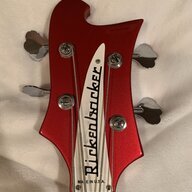
Real nice for the clanky Rick bass sound.

Your comment about them sounding like bronze acoustic bass strings is actually very justified - SIT says they have an underwrap of 92/8 phosphor bronze fused (hence the name) to the core wire before the outer wrap goes on.
 
  • Like
Reactions: Riff Ranger
This is not surprising as the unique feature of the Fusison Wound is the phosphor bronze that's "fused" to the core wire.

Your comment about them sounding like bronze acoustic bass strings is actually very justified - SIT says they have an underwrap of 92/8 phosphor bronze fused (hence the name) to the core wire before the outer wrap goes on.
I remember reading that before ordering them, but I didn’t expect a bit o’ bronze under the wraps to impart quite so much to the overall sound. It made for a fun surprise, and has me wondering how I’d like them on my acoustic bass guitar, as I don’t like how bronze strings lose their shine and make my fingers stink.

@michael_t you would think I’d be a stainless steel rounds player, but I’ve never really taken to them. The feel of the classic Rotosounds and DRs always put me off, and while I find I like Dunlop standard series stainless rounds just fine, I still prefer everything about the (shiny!) nickel exterior.
 
Oh no, does this mean there's three of me? One is already a lot!
This is standard for the possessive form of words ending with -z sounds. Obviously.

See also the standard for the plural form of words ending with -z sounds, e.g. I’m running out of room for all these Ibanezeseses.