• TalkBass has been independent since 1998. Add your voice.
    Create a free account to reply to discussions, view embedded media, and browse with fewer display ads.
    Join freeLog in
    Want zero display ads or expanded classifieds tools? Compare plans.

Double Bass Neck block isn't flat

I bought a bass with the top off that was previously worked on and it has a 1/8" step in the neck block as seen in the photo. My question is should I trim the block so that it's flat or should I carve a matching step in the top plate?

I've inlaid spruce all around the top plate on the inside because it was really chewed up and thin. So there's extra wood on the top to make the matching step at the neck block. Also, both sides of the block connecting to the ribs are flush to the block. So, it appears that the top plate also had the matching step in it before it was taken apart.
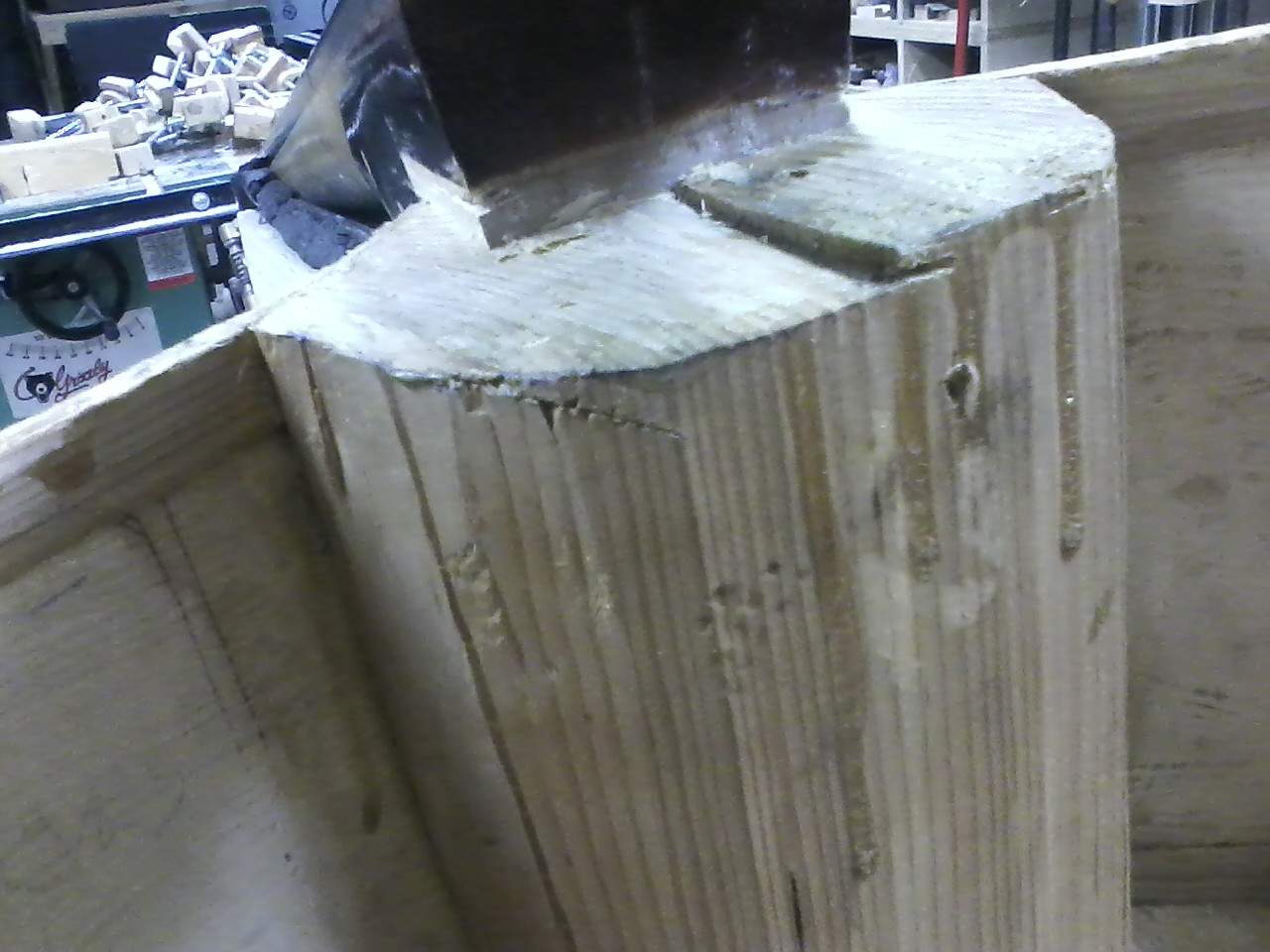

0510152330.jpg
 
Are those saw kerf marks on the top of the block where the last person cut the glue seam rather than steamed it off? Welcome to the world of taking on other people's abandoned projects. You could level off everything and add a shim, but I'd rather see you make up a new block instead of the add on disease...
 
Last edited:
  • Like
Reactions: SAlcott
Are those saw kerf marks on the top of the block where the last person cut the glue seam rather than steamed it off?

There's no glue seam, the step is all one piece. Even though a new block would be ideal, I'd rather not replace the whole block unless I have to because the last neck block I made in a situation like this was a real bear. And cutting a matching groove in the top plate sounds like a bad idea now, so I'm leaning toward just whittling it level. If it doesn't work out, I'll still be able to put a new block in. I'm a student at this and was glad to get this project bass.
 
  • Like
Reactions: SAlcott
You could level off everything and add a shim

Just wanted to make sure you saw the end part of James's proposed solution (and I realize that it's his second choice solution). You probably didn't mean this, but if you just "whittle it off" without replacing the missing wood you'd be adding a whole bunch of stress by deflecting the top to fit the newly shortened block.

You don't tell us much about the bass. There's always the cost/benefit calculation, meaning an $8k carved bass probably warrants a new block more than a $1500 ply bass.
 
  • Like
Reactions: SAlcott
I am not a luthier but I am a mechanical engineer and have done a fair amount of woodworking. Even to me the following is clear: If you choose not to replace the entire neck block, you need to make the upper surface of what is there dead flat. Then you need to add wood to that top surface and contour it to match properly the underside of the top. You should not make the underside of the top weird in an attempt to match the buggered-up block.
 
  • Like
Reactions: SAlcott
With a straight edge and chisel, you can carefully pair the neck block down until it is in the same plane as the rib/top joint. Depending on how much good surface area you get, you may or may not need to add shims. Make sure you resize the surface before gluing the top back on.
 
You probably didn't mean this, but if you just "whittle it off" without replacing the missing wood you'd be adding a whole bunch of stress by deflecting the top to fit the newly shortened block.

You don't tell us much about the bass. There's always the cost/benefit calculation, meaning an $8k carved bass probably warrants a new block more than a $1500 ply bass.

I get that the block has to be level with the ribs.... I don't have any info on this bass or a maker's tag in it. it's a solid flatback, gamba corners with some shattering in several sections of the ribs and top. Even repaired, it will be a fragile instrument. It appears to be hand made as there are hand tool marks on the inside of the ribs and the corner blocks are quite small and irregularly shaped. It might be an $8k bass if it wasn't so beat up.
 

Latest posts