• TalkBass has been independent since 1998. Add your voice.
    Create a free account to reply to discussions, view embedded media, and browse with fewer display ads.
    Join freeLog in
    Want zero display ads or expanded classifieds tools? Compare plans.

Double Bass Neck heel cello repair, wish me luck

Sep 10, 2019
756
1,648
Normally I'd post this in repairs, but since it's not an UB I'm putting it here in the off topic threads.

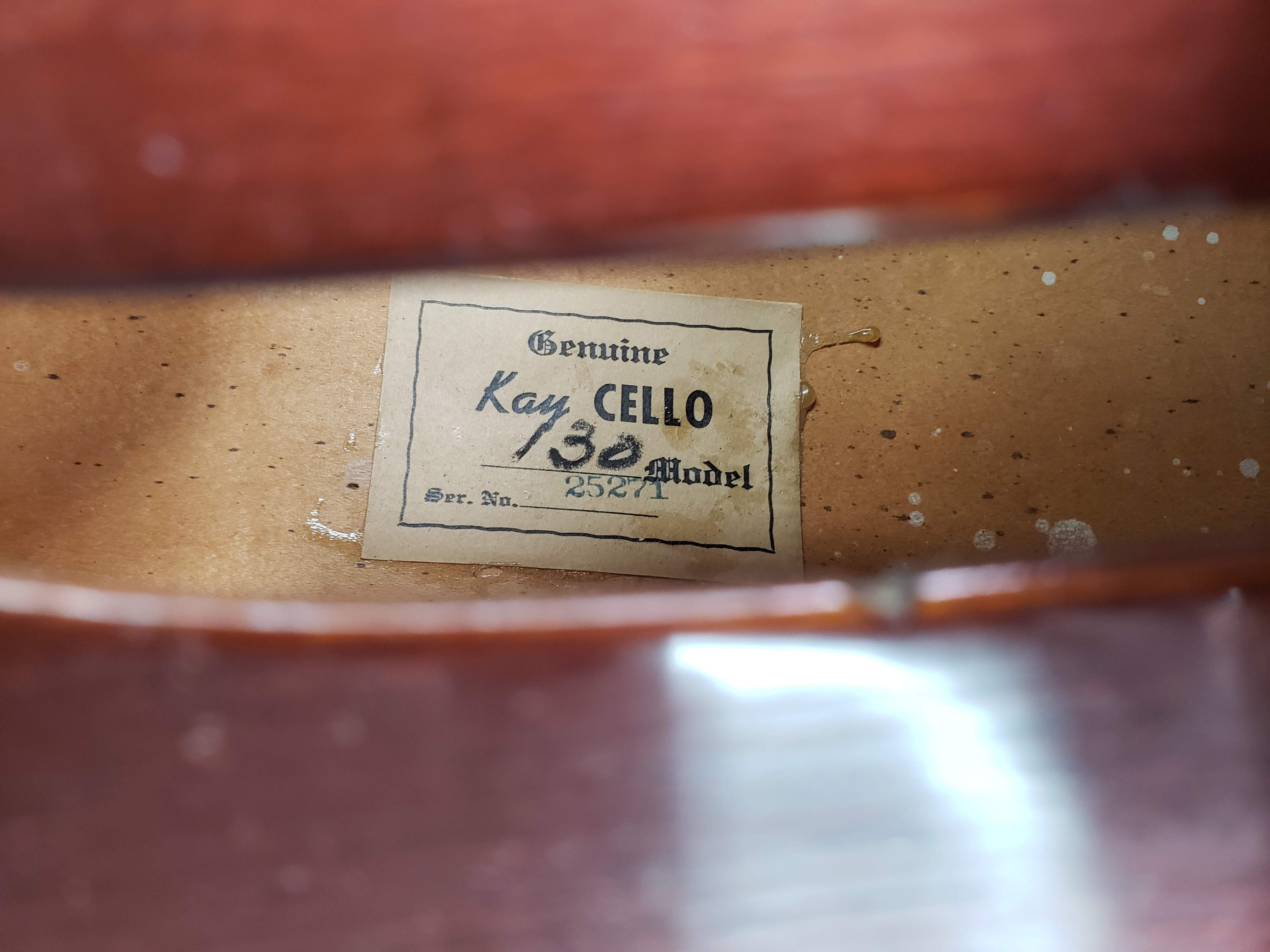
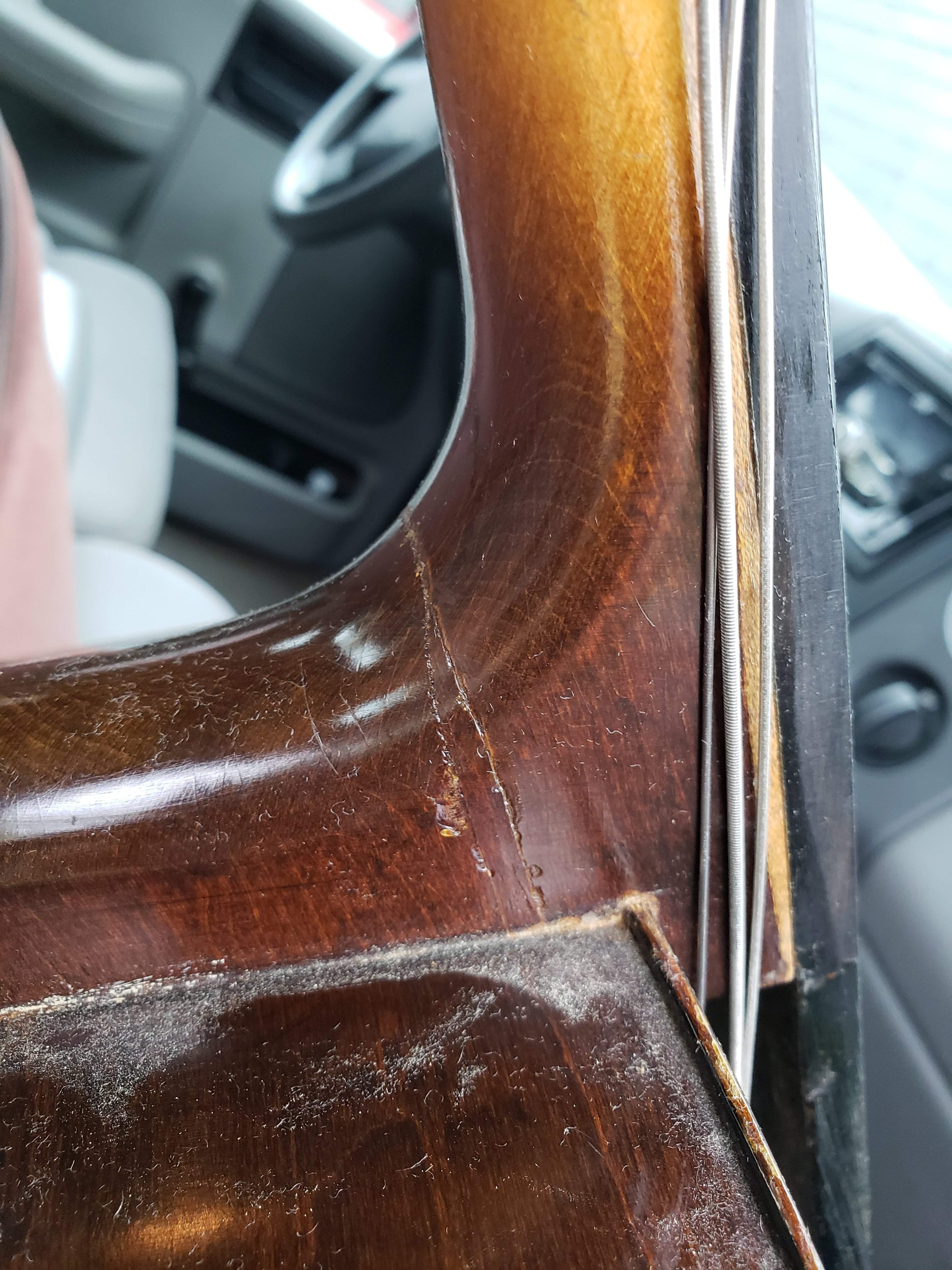
I wanted to learn a little cello for the band, and was keeping my eye out for something cheap, real cheap, I could string with 4ths strings. I scored this thing for $40 off craigslist, knowing I may have slit my own throat as, yes, it has a crack in the heel of the neck. I contacted Steven Ayers of Kaybass.com (u da man Steven), and he informed me it's actually a pretty rare Kay cello, so I figured it's worth fixing semi correctly at least. The issue is orchestral guys and my luthier buddies consider it not worthy of a real repair, since it's not what they consider a quality instrument. They all said drop a screw through the neck and plug the hole. But I think she deserves a better shot than that...

Soooooooo I'm going to undertake it myself. I've done some seam repairs on my bass, sound post and bridge setup, and I have a pretty good amount of general woodworking experience. And if I ruin it, bummer, $40 gone.

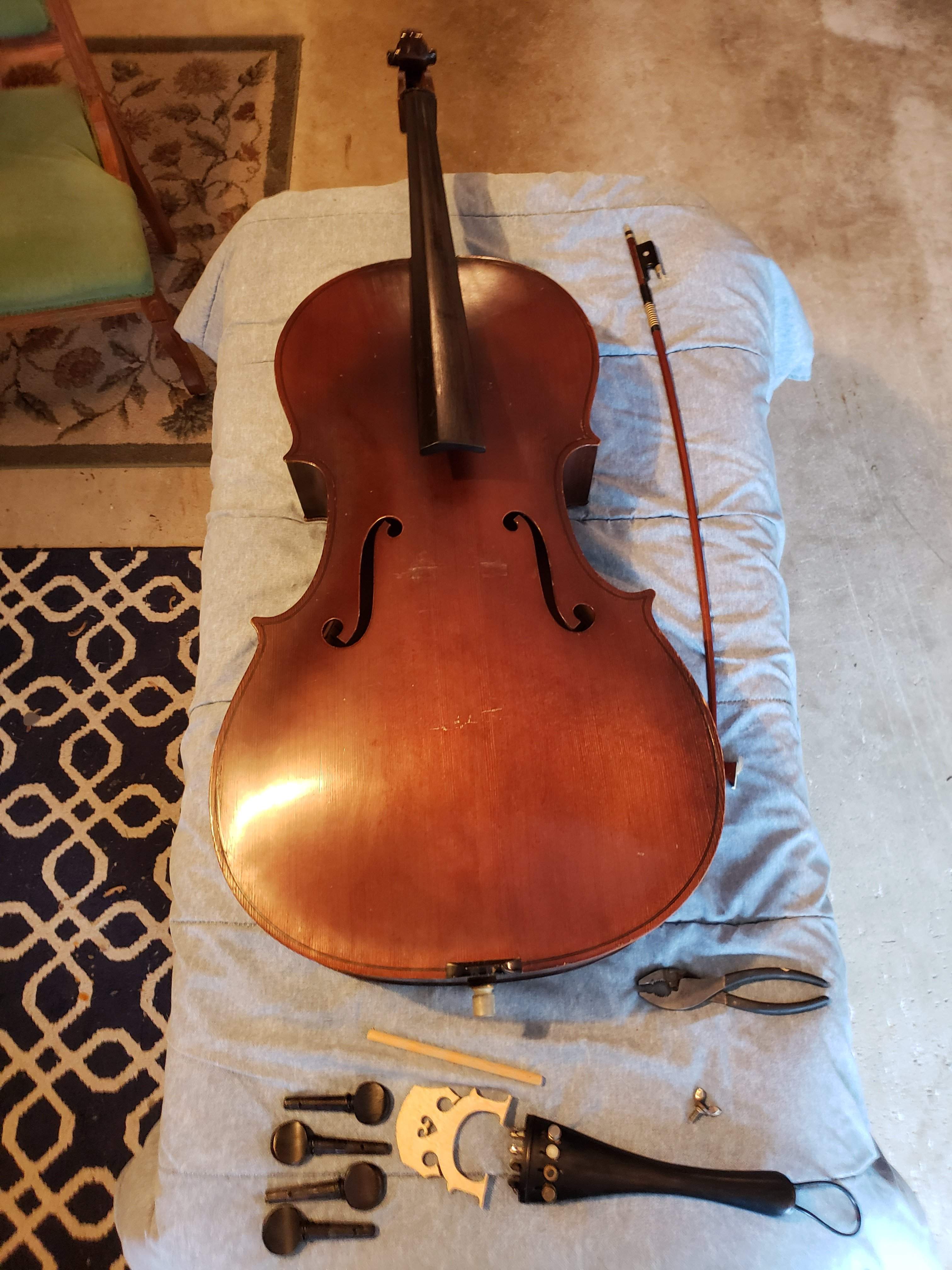
So here's the first post with some pics of it as I got it. It's in pretty amazing condition imho, considering it was built in 1951. I gave the neck a slight tug, and it doesn't want to finish the break, so I'm wondering if there's not maybe a screw in there already under the fingerboard? Regardless, that's step one, removing the fingerboard. I'll post more when I get that done.

Any tips are welcome folks..... Other than 'throw it away, it's a kay', etc.....lol.
20190929_161115.jpg
20190929_143652.jpg
20190929_143705.jpg
 
So I wanted to get the fingerboard off here because I just had a feeling it was a previous repair gone arwy, and kaboom. Pull it off and find this. Glad I didn't just try to drill into it like a few folks recommended. Now to poke around and see if I should tighten this or put a new one in.

Steven or anyone else, if you're listening, any input on this would be rad.... This screw/bolt looks pretty tiny to me for such a job.
20191001_180624.jpg
20191001_180248.jpg
 
  • Like
Reactions: Fretless55
Are you versed in hide glue yet? Good on ya for pulling the fingerboard and not just going straight through it like so many have on Kay basses.

Yessir, a little. I had to repair a blasted apart seam on my Eastman bass, and that was my first hide glue repair. I ordered tougher stuff for this repair though. I believe I used 192gm on the seam, and for the neck here I ordered some 315gm, but I'll probably use the 192 on the fingerboard.

I tell ya what, heating up hide glue from 1951 to pull this one apart smelled AWESOME in my garage.... Lol.
 
  • Like
Reactions: unbrokenchain
The repair was wobbly to the touch, the strings were off when I got the instrument.

I considered that, but it's not bolted from the back. It's threaded into the wood with a lone nut on top. The threads are extremely small, and so it would likely pull out again very quickly. Oddly they didn't glue it at all, just the threaded rod and one nut, so the wood surfaces to join are 100% clean and fit great, which should make this pretty easy I think.

I'm not positive how ill replace it yet, but either carbon rods or a much larger threaded stainless screw (this was recommended by a luthier friend of mine). A spline was also recommended by Steven, and is a better choice for long term, but I don't think I'm willing to go that far and pull the rest of the neck out.

I'm going to sleep on it until my glue arrives though.
 
Sounds like you've got a handle on it. There's some point of diminishing returns with the diameter of any hardware though, since it requires removal of wood. Also wondering if a wood dowel might even be better, since it would expand and contract at a rate more similar to the neck maple than steel. But in any case, glue in the joint should help! :laugh:
 
A wood dowel will only expand and contract in similar relation to the neck wood if it is turned on a lathe and the grain oriented the same as the neck wood. The more common approach of drilling a hole and slamming in a hardware store dowel orients the dowel wood 90 degrees to the neck wood. That cross graining actually does more damage as the two opposing woods basically rip each other apart over time. This is a very common approach that I see almost weekly a few years down the road when it has all failed...

Kudos to the old repair person who removed the fingerboard rather than drilling through it!
 
A wood dowel will only expand and contract in similar relation to the neck wood if it is turned on a lathe and the grain oriented the same as the neck wood. The more common approach of drilling a hole and slamming in a hardware store dowel orients the dowel wood 90 degrees to the neck wood. That cross graining actually does more damage as the two opposing woods basically rip each other apart over time. This is a very common approach that I see almost weekly a few years down the road when it has all failed...

Kudos to the old repair person who removed the fingerboard rather than drilling through it!


So what should I put in there in your opinion sir? I've read as many posts as I can about your work with such things. I also read Steven's entire jazz cello post. I'm kind of undecided on which route to take still.

Steven said the best repair is a spline, but I'm thinking if I go that far I may as well do a replacement neck.

I don't know. Still sleeping on the repair procedure....
 
I know that fasteners are frowned on over here, but I think this may be a situation where you could use a threaded insert and machine screw.

High end BG makers use this system to secure necks to bodies, such as Roscoe, etc.

This pic has the wrong screw head but it shows the concept. Naturally you would also glue the joint with HHG.

18E2E9B1-71DA-48D0-B77C-17E438142CCB.jpeg
 
I know that fasteners are frowned on over here, but I think this may be a situation where you could use a threaded insert and machine screw.

High end BG makers use this system to secure necks to bodies, such as Roscoe, etc.

This pic has the wrong screw head but it shows the concept. Naturally you would also glue the joint with HHG.

View attachment 3554352

I was actually considering something like that. These are short in comparison to a longer/large thread wood screw, which worries me. It may not be spreading the pull out enough throughout the heel of the instrument? I don't know.

I think unless I hear something that really sways my opinion, I'll hide glue the broken joint, then drill a pilot hole, dip the threads of a big fat stainless screw in hide glue, and run it in good and tight. Then if it needs more tlc a few years down the road I can just set a soldering pen on the screw and it should be able to be tightened up or backed out.

Still, I'm interested to hear what Steven or James think about this idea before I do it. So hopefully they chime in.

And the idiot part of me is still daydreaming about the spline idea and thinking "You already have half the neck out of the joint, why not take the rest out and do it right?", but man, that sounds like a lot more work. Here's what a spline would basically entail for those unfamiliar, I think this is what Steven meant anyway....
IMG_1912reduced.jpg
 
That looks like a winner to me, if you have access to the tools to pull it off well.

Sounds like a dare Chain!!!! Lol...... But is it triple dog??? Hmmmmmm.....

Edit: I read one of your posts in an old thread where a dude was working a broken heel on an UB, and glued it together with something from a caulk tube. A bunch of folks were trying to give him handy advice, and so for this thread I was going to post a pic of a bottle of titebond HG and say "Well my hide glue arrived!", just to get your attention, lol....

Also, above I meant dip the screw in epoxy before running it in, not hide glue. Still hoping for some chime in on that. The bass thread neck repair I reference here has been helpful in general thinking...
 
Last edited:
  • Like
Reactions: unbrokenchain
I agree that you got lucky with the previous repair, it's a very clean job for what it is. If the repairer had used two of those bolts rather than one, it might have remained stable a lot longer. I note that this was probably the second repair after the first failed.

I hope no one is mistaking me for an expert luthier. Those with more real-world experience are better sources on what's practical here. That said, I'm generally opposed to repair solutions involving metal parts, because I think they amount to shortcuts and dubious engineering in a musical instrument.

The simplicity of this classical straight mortise (as opposed to the dovetail joints in Kay basses) makes the spline approach pretty straightforward once the neck is off. It's an exacting one, but in the end it's a table-saw job, and you don't have to disturb the finish. When it's done you still have the crossed-grain stresses that James mentions above, but with the correct choice of material for the spline, I expect that, given the relative weakness of the flatsawn neck, you come out ahead on both the physical and acoustic engineering.
 
Sounds like a dare Chain!!!! Lol...... But is it triple dog??? Hmmmmmm.....

napoleon-dynamite-dance.jpg


If you're working only with a wood spline, I see no reason to use epoxy or anything other than granulated hide glue.

FWIW I just moved into a new (old) house, which necessitated me cleaning out my garage (chore.). I found a bottle of Titebond "hyde glew" (to quote Condino) behind a bunch of crap that's at least 7 years old. I left the pull cap open for whatever reason, so it'd been sitting open to the air for that long. The glue was still liquid inside, I kid you not.
 
  • Like
Reactions: 210superair
Lol, that's hilarious. I'm going to put canned heat on my lab speakers while I work now. 'I had no choice but to get down down down down.....'

I'm still not convinced I'm going to do the spline. I'll gander at what's left to pull out today after work and make a determination of how much PITA it would be to pull the rest out, as opposed to just dropping a wood screw in and being able to play the thing next week. I'm not sure if the instrument value is worth going as far as a spline, but at least it'd be a learning experience I guess. We'll see.

Thanks for the help guys, much appreciated.
 
Just to second Steven's most previous response, I'd encourage you to take advantage of the fact that you have a regular mortise/tenon neck joint and not the dovetail like a Kay bass... this should make things worlds easier both for removing the rest of the neck heel and setting it back in there without a ton of trial-and-error fitting and shims. Triple dog, dog! ;)
 
  • Like
Reactions: 210superair
UGGGHHHHHH. Yall are killin me, lol. I thought this was gonna be a quick easy fix, not a CORRECT one...

Okay, I'll spline it. I do have a table saw, I'll have to make some sort of jig so I don't screw up the slot I suppose. What kind of wood for the spline? Thickness ideas?

What do I do to get the rest of the neck out then? Drip alcohol down there? Or continue how I did the rest, thin hot knife?

You guys are awesome, but you already know that. And yeah Steven, I've watched your work on here. You definitely know enough to boss me around buddy... I welcome it.

Thanks again guys.