• TalkBass has been independent since 1998. Add your voice.
    Create a free account to reply to discussions, view embedded media, and browse with fewer display ads.
    Join freeLog in
    Want zero display ads or expanded classifieds tools? Compare plans.

Double Bass Need help fixing up a J Balaton half size double bass

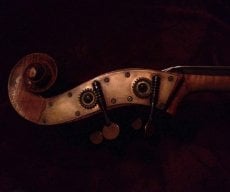
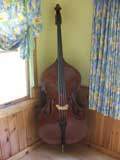
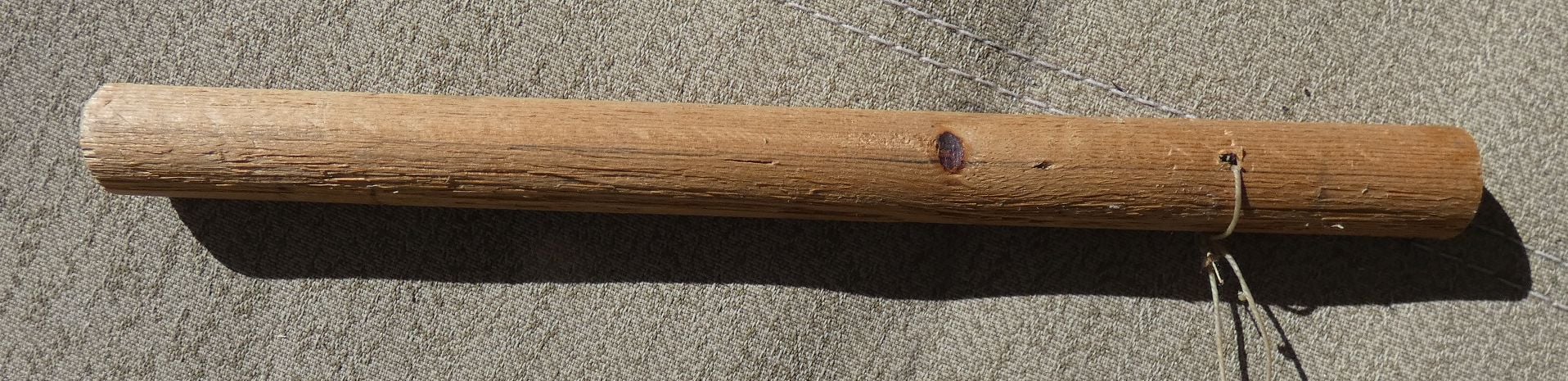
I've acquired a Hungarian J Balaton double bass that is a bit bigger than a half size (as far as I can figure out) double bass that I'd like to fix up to be playable and moderately OK looking. I've already put a new adjustable bridge on it but in the process I've dislodged a round dowel about 6" long that is rattling around in the body of the bass. (I've now fished it out through a sound hole). My guess is that it's the sound post between the top and the back of the bass (it shows no sign of ever being glued) and, if that is the case, how on earth do I get it back in place?
Also, does anyone have any info at all about these basses? There is a label inside saying it was rebuilt on 1/16/11 and the previous owner didn't have it rebuilt in 2011 so does that mean 1911?

Any help at all would be gratefully received.

Thanks - John
P1130779.JPG
P1130778.JPG
P1130778.JPG
 
Yes it is the sound post and they are typically not glued that I'm aware of. There is a specific tool that is typically used to set them in place.

You might have better luck on the double bass side. This was posted in bass guitars. You can ask the mods to move it or they might read this and move it.
 
Thanks for the tip about moving my post - I see that some efficient person has already moved it! I've also since discovered that there is a special tool for putting the soundpost in place so I guess I'll lash out on one of those.
 
discovered that there is a special tool for putting the soundpost in place so I guess I'll lash out on one of those.

Save yourself a lot of expletives by getting a mechanic's grab. I and others here use something like this to securely hold the post and maneuver it into rough position, and the setting tool to adjust it. The grab is also very useful for fishing the post out when it falls over the first eleventy times.

You will want to study up on soundpost setting and adjustment, there's a lot to know.
 
As an Amazon Associate, TalkBass may receive commissions from qualifying purchases made via links on this site.
Thanks, Steven. Now that sounds like a really good tool kit - the grab and the other gizmo. Time for a bit of internet shopping. Now to find out exactly where to put the bridge - should have noted that before the old one caved in. I guess with no frets, I've got a lot of scope. Or it that what those little nicks in the f-holes indicate?
 
Last edited:
So, the reason I asked is if the last rebuild date was really 1911 and if it had 3 strings, it could be a very early DB, as historically the oldest DBs had 3 strings. Yours could still be pretty old, but probably not that old.

The majority of DBs in use today have 4 strings, so you certainly won't be alone as a 4-string DB player. There are 5-string DBs out there and they aren't extremely rare, but they aren't in the majority.

You'll find there are a number of folks here in TB/DB who also play electric bass, and many have 5 or 6 strings. So you won't be alone here.
 
Historically the oldest basses could be found anywhere from three to five (or even six, if you consider the ones that started out as violone [violoni?] and got converted), with varying levels of popularity. They were still making three strings up to around world war one.
 
  • Like
Reactions: AGCurry
Now to find out exactly where to put the bridge - should have noted that before the old one caved in. I guess with no frets, I've got a lot of scope.

Okay, this says that you're starting at square one on setting up a DB, and the subsequent messages imply strongly that you have little experience playing one. Don't do anything yet. Get a book or two and study up. Explore the forums here. Ask questions and attend to the answers. There is a lot to know, and your EB experience will be more confusing than helpful. You can seriously screw up that instrument with hasty improvisations.
 
Historically the oldest basses could be found anywhere from three to five (or even six, if you consider the ones that started out as violone [violoni?] and got converted), with varying levels of popularity. They were still making three strings up to around world war one.

And they were using them after. I read an account at the LC's Folklife Center from a player in a south Louisiana string band who upgraded from cello to three-string DB. In 1928.
 
Interesting idea calling that an "upgrade". Not everyone would agree. :laugh:

It depends on context. We are not talking orchestras here, or even chamber ensembles, but early 20th century string bands, which in the main were dance bands. Volume was paramount, so almost any DB would be considered an upgrade over a cello.
 
You're right about my lack of experience with a DB. Although this one is a wreck, I'm treating it with respect if with lack of skill. No electric sander or chemical stripper is going near it though I do plan to refinish it - I'll be wandering around this group looking for tips that are not beyond my capabilities! As you can see from my profile picture, there are a number of whitish patches when the poor beat got rained on and I'd like to get rid of those ASAP. I'd considered doing a funky stain job but think I'll stick to some shade of natural wood instead.
 
You're right - I don't have much of a clue: I am mainly a classical guitarist. My instrument building / fixing has been limited to one classical guitar, built from bits of wood, a couple of cases, a bass amp, numerous guitars, two pianos (repaired innards) and various odds and sods. My cluelessness brought me here where I have been delighted by the constructive help I have received. For the record, I do plan to refinish this beast as best I can with the least amount of effort and expense, realising that it is a multivariate equation - could spray it yellow in 15 minutes or spend the next year dismantling it, removing every scrap of varnish and travelling to the Peruvian Andes to pick up the ideal finishing materials. Right now I plan to get that sound post back in place, get the pale water damaged patches fixed up and a decent natural-looking finish applied. My apologies if any questions I may ask on those subjects strike you as ignorant.
 

Latest posts