• TalkBass has been independent since 1998. Add your voice.
    Create a free account to reply to discussions, view embedded media, and browse with fewer display ads.
    Join freeLog in
    Want zero display ads or expanded classifieds tools? Compare plans.

Need Help Starting My New Bass Search

Hello. I'm not a super talented bass player, and I'm only going to be playing with friends in a blues and blues rock cover band locally. However, I'm ready to ditch the starter bass I have now which I really do not like and buy one that I love playing and inspires me with the way it feels. I posted once or twice a while ago and have received some advice that I'd like to build on. The best advice is that I need to hold and play basses until I find what I love. For that, I am going to make the two hour drive to the Fort Wayne Sweetwater megastore. However, I have learned a couple of things from my old bass that I don't like which your hive mind experience might help me show up armed with a starter list of basses to try first.

Here's my main two gripes:

First, and I don't know if it's due to my playing style (I use my fingers and don't slap), but I can't stand how much percussive noise is generated when I play. Rather than hearing the note being played, you hear the note and the noises from my fingers on the strings. If I mute with my right hand, there's a percussive sound I don't like and just alternating fingers playing lines is too noisy for me. I want more note and less right hand noise.

Second, the G string and to a lesser extent the D string sound flat and without sustain in the lower/mid fret area (like 4-9 or so). When playing octaves or switching up an octave during a song, it suddenly sounds weak and tinny (tin-like) and less audible.

I'm happy with another "starter" bass as long as I love it. I have money but don't want to spend a lot due to my skill level and how engaged I'll be. I know for sure that there are at least a handful of basses under $700 that I'll love so I'm hoping that between you all and the bass playing sales person I'll be able to find one of them. Also, is there a certain type of string that will help me achieve the sound I've described?

I first bought a classic vibe squier jazz bass off Marketplace. I didn't love it due to what I described above so traded it for the same line but a p bass. The percussive noise was better, but still noticeable and I wished I could be even less. My problem with issue #2 remained. I just sold it so I've burnt that bridge. I am going to buy a new bass.

Advice I've received in a past thread about basses:
  • Try the G&L lb-100
  • The Lakland skyline 44-64 was suggested but is pretty pricey
  • The Yamaha BBP34 was suggested but is pricey also
  • Graphite reinforced necks were suggested to reduce dead spots at least a little
  • Many used basses were suggested and best years discussed. I'm not sure how many used basses Sweetwater has, but if I'm going to go play a bunch of basses, I'm thinking most of them will be new
I don't care what brand or style it is as long as I like the sound and it's not too expensive. I'm happy to go used for sure. Hopefully reading over your responses will help me develop that list of where to start. Thanks so much!
 
I would suggest you bring your bass to a reputable tech and have it set up. Sounds like you've got some old strings and it needs a neck adjustment. You probably also want to work on your picking/plucking technique.

As for strings, best advice I can give is identify what you don't like about your current strings (other than they're tinny) and check the strings forum to see what strings fit your needs.
 
Try flats. Learning to lessen the hand noise takes time. Some of it is natural and round wound strings definitely make more noise than flats.
Some noise can be lessened by learning to lift fingers while muting with your pluck hand. And a lot more noise can be lessened by learning the fret board which happens over time. Keep working on that. If you are more comfortable with positions on the neck you can learn to minimize your need to move your hand in some cases. You always need to move some times. But you can learn to need to move positions less often.

There's no best bass. There's no best pickup or string.

Go try as many as you can. Use your friends as resources too. Don't just buy one based on TB GAS pushers (like me) because the right bass for you will make you strive to be a better player. And we all have different mitts. Good luck.
 
I agree that the issue probably lies more with setup and technique, as well as the choice of strings. Setup plays a huge part in the feel of a bass, so it's a good skill to learn in order to be able to make the most of whatever bass you end up with. Check out as many different basses in your price range as you can, and don't rule out another Squier because you didn't like the ones you had, they are generally good instruments for the money. Still there are lots of other good options too.
 
To me it sounds like your problems are more likely to be solved by strings, technique, or EQ than a new bass.
I’d try flats, continued lessons, and EQ on amps vs pedal before trading basses. I think you’re going to keep running into the same problems
I hear what you're saying and you're probably on to the truth more or less. I took my bass to GC to get looked at because of what I don't like about it. I thought he'd make sure it was set up correctly and I'd see what I thought after. However, he called me and said it needed a lot more work. I can't recall exactly how he phrased everything, but was saying he would have to pull all the frets off, dick around with the slots they sit in or mess with the frets themselves (can't remember) and then re-seat them so they don't fall out. He was saying he could easily pull most of them off with just his fingernail. Not sure if that's bad, but he certainly didn't say it just needed the rod and action adjusted. In my post about this, everyone shat on GC techs, but maybe he was right? I don't know.

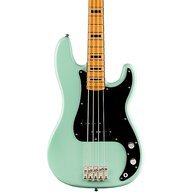
Long story short, I can sell the one I have anytime I want to family member for $250. I was thinking the only way I can be sure I have a good bass for the money I want to spend is to drive down to Sweetwater and have someone who understands bass quality help me zero in on one I like that's won the luck of the quality draw. Wonder what your thoughts on this are? Oh, and what would you say about this bass near me other than it's overpriced. It's a 2000/2001 MIM p bass (image inserted of the post): Log into Facebook
PBass.png
 
Last edited:
I agree that the issue probably lies more with setup and technique, as well as the choice of strings. Setup plays a huge part in the feel of a bass, so it's a good skill to learn in order to be able to make the most of whatever bass you end up with. Check out as many different basses in your price range as you can, and don't rule out another Squier because you didn't like the ones you had, they are generally good instruments for the money. Still there are lots of other good options too.
I replied to your sentiment in the above reply to Sharko. I wonder what your take on all that plus the FB PBass for sale near me right now.
 
  • Like
Reactions: ravelax
Don’t stay on a starter bass. Step up to a better instrument… you ‘ll enjoy it more, and likely won’t experience the same dead spots you do now. The click/finger noise will reduce with better technique and better EQ methods you’ll develop over time. If you don’t want to go all the way to flat-wounds, then half-wounds (pressure-wound, ground-wound, several names for them) are around halfway between, aren’t as bright as rounds, but aren’t as flat and bassy as flat wounds. I liken them to a broken-in, aging set of rounds (without all the finger gunk). Also, you can boil your strings to bring them back to playability without the gunk in them.
Anyway. Get yourself a new bass, a nicer bass that you are proud to play. Why not?
 
If you decide to keep "starter" bass, or any bass really, it's worth your while to learn how to do your own setups. It only take a few tools, most of which can be had for dirt cheap at Harbor Freight. You may have a capo laying around, otherwise also cheap on Amazon, or you can even make one using a pencil and some rubber bands. This 4-part YT series by John Caruthers has the TB Seal of Approval by a few of our resident pros. His numbers are conservative Fender standard, in practice you can probably sneak the relief and string action lower, but these are good starting points. When I first started playing, I had a bad habit of "keeping time" with my fingers on the strings instead of tapping my foot, you may be doing that inadvertently. If you do a setup yourself, or have a Pro do it, and the bass still can't be adjusted to play well due to trussrod issues, broken parts, etc., then go looking for a new bass. Your timing is impeccable, there are a LOT of extremely well made basses in the sub-$500 price range these days. If you really want new, go to your local GC, or wherever they have the best selection of basses, and try EVERYTHING. Ignore the name on the headstock and the price tag, at least for starters, figure out what feels and sounds good in YOUR hands. If you settle on something outside your budget, looks for it used, there's such a glut of instruments these days you can find almost anything used at a huge discount, including at GC. Pay attention to the strings too, heavy? Light? Rounds? Flats? And DON"T just get a P-Bass because everyone says that's all anyone needs, there's a whole world of basses out there, one of them has your name on it, and it may well be a P-Bass in the end.

Do this 4-part series in order, and you will have a decently set up bass. Anybody can do this, and you'll save yourself some money in the long run:


If you decide to keep "starter" bass, or any bass really, it's worth your while to learn how to do your own setups. It only take a few tools, most of which can be had for dirt cheap at Harbor Freight. You may have a capo laying around, otherwise also cheap on Amazon, or you can even make one using a pencil and some rubber bands. This 4-part YT series by John Caruthers has the TB Seal of Approval by a few of our resident pros. His numbers are conservative Fender standard, in practice you can probably sneak the relief and string action lower, but these are good starting points. When I first started playing, I had a bad habit of "keeping time" with my fingers on the strings instead of tapping my foot, you may be doing that inadvertently. If you do a setup yourself, or have a Pro do it, and the bass still can't be adjusted to play well due to trussrod issues, broken parts, etc., then go looking for a new bass. Your timing is impeccable, there are a LOT of extremely well made basses in the sub-$500 price range these days. If you really want new, go to your local GC, or wherever they have the best selection of basses, and try EVERYTHING. Ignore the name on the headstock and the price tag, at least for starters, figure out what feels and sounds good in YOUR hands. If you settle on something outside your budget, looks for it used, there's such a glut of instruments these days you can find almost anything used at a huge discount, including at GC. Pay attention to the strings too, heavy? Light? Rounds? Flats? And DON"T just get a P-Bass because everyone says that's all anyone needs, there's a whole world of basses out there, one of them has your name on it, and it may well be a P-Bass in the end.

Do this 4-part series in order, and you will have a decently set up bass. Anybody can do this, and you'll save yourself some money in the long run:


Okay. Awesome. Thanks so much for this go-to resource!
 
  • Like
Reactions: Gilmourisgod
Hello. I'm not a super talented bass player, and I'm only going to be playing with friends in a blues and blues rock cover band locally. However, I'm ready to ditch the starter bass I have now which I really do not like and buy one that I love playing and inspires me with the way it feels. I posted once or twice a while ago and have received some advice that I'd like to build on. The best advice is that I need to hold and play basses until I find what I love. For that, I am going to make the two hour drive to the Fort Wayne Sweetwater megastore. However, I have learned a couple of things from my old bass that I don't like which your hive mind experience might help me show up armed with a starter list of basses to try first.

Here's my main two gripes:

First, and I don't know if it's due to my playing style (I use my fingers and don't slap), but I can't stand how much percussive noise is generated when I play. Rather than hearing the note being played, you hear the note and the noises from my fingers on the strings. If I mute with my right hand, there's a percussive sound I don't like and just alternating fingers playing lines is too noisy for me. I want more note and less right hand noise.

Second, the G string and to a lesser extent the D string sound flat and without sustain in the lower/mid fret area (like 4-9 or so). When playing octaves or switching up an octave during a song, it suddenly sounds weak and tinny (tin-like) and less audible.

I'm happy with another "starter" bass as long as I love it. I have money but don't want to spend a lot due to my skill level and how engaged I'll be. I know for sure that there are at least a handful of basses under $700 that I'll love so I'm hoping that between you all and the bass playing sales person I'll be able to find one of them. Also, is there a certain type of string that will help me achieve the sound I've described?

I first bought a classic vibe squier jazz bass off Marketplace. I didn't love it due to what I described above so traded it for the same line but a p bass. The percussive noise was better, but still noticeable and I wished I could be even less. My problem with issue #2 remained. I just sold it so I've burnt that bridge. I am going to buy a new bass.

Advice I've received in a past thread about basses:
  • Try the G&L lb-100
  • The Lakland skyline 44-64 was suggested but is pretty pricey
  • The Yamaha BBP34 was suggested but is pricey also
  • Graphite reinforced necks were suggested to reduce dead spots at least a little
  • Many used basses were suggested and best years discussed. I'm not sure how many used basses Sweetwater has, but if I'm going to go play a bunch of basses, I'm thinking most of them will be new
I don't care what brand or style it is as long as I like the sound and it's not too expensive. I'm happy to go used for sure. Hopefully reading over your responses will help me develop that list of where to start. Thanks so much!
Before you spend money on yet another bass. Take a few lessons from a "qualified" teacher first. Also, have your basses been set up by a competent repair shop? You don't need an expensive bass to have a good sounding, well playing bass.
 
For $700 I think your best bet is to get some labella flats, a setup, and spend the rest on lessons.
Question about the setup, it looks like I can do that myself with the videos above, but I did bring my bass to GC for them to set it up earlier this year, and I was told it has bigger problems that just needing a setup. Given that I don't know how skilled and experienced he is, I'm at a loss for what to do now. If I did drive down to Fort Wayne Sweetwater, maybe I could bring it down there and have a real good tech look at it?
 
  • Like
Reactions: ajkula66
I would recommend a Fender Player Series Precision for your budget. To tame the percussive noise when you're playing turn the tone knob down on the bass itself and be conscious of how hard you are plucking the strings with your fingers. There are always exceptions (Geddy Lee, Flea, Les Claypool, etc.) but most bass players that play with their fingers and blend in with bands have a light touch. Most of the reggae players who carry those songs with their basslines are playing very lightly. If you are a pick player like Mike Dirnt or Duff McKagan you may want to add some of the percussive attack back in by turning the tone knob up again. It all depends on the music you are playing and the tone you are going for. Precision basses are extremely versatile which is why they are so revered and used.

When I play guitar I mostly keep the volume and tone knobs all the way up. When I'm playing bass I almost always utilize the tone knob to find the sweet spot between the clanky high end and the warm, robust bottom end for my personal playing dynamics.

I took my bass to GC to get looked at because of what I don't like about it. I thought he'd make sure it was set up correctly and I'd see what I thought after. However, he called me and said it needed a lot more work. I can't recall exactly how he phrased everything, but was saying he would have to pull all the frets off, dick around with the slots they sit in or mess with the frets themselves (can't remember) and then re-seat them so they don't fall out. He was saying he could easily pull most of them off with just his fingernail.
This sounds like a scam!
 
Before you spend money on yet another bass. Take a few lessons from a "qualified" teacher first. Also, have your basses been set up by a competent repair shop? You don't need an expensive bass to have a good sounding, well playing bass.
I live in Kalamazoo, MI so there's only one tech in town as far as I know at Guitar Center. He's already looked at my bass and says it's got bigger problems that just needing a set up. When I posted about this eight or nine months ago, GC techs were roundly shat on so now I don't really know what to do other than bring it with me on a trip to the Fort Wayne Sweetwater and have someone there look it over while I play other basses. Any thoughts or advice?
 
  • Like
Reactions: Stephen DeBoard
Question about the setup, it looks like I can do that myself with the videos above, but I did bring my bass to GC for them to set it up earlier this year, and I was told it has bigger problems that just needing a setup. Given that I don't know how skilled and experienced he is, I'm at a loss for what to do now. If I did drive down to Fort Wayne Sweetwater, maybe I could bring it down there and have a real good tech look at it?
You could yes, but I would do what some others have said and learn to do a setup. With practice, you can do setups in as little as 20 minutes. I like Dave’s World of Fun Stuff on youtube. Sweetwater could do it for you as well.

Not all techs are created equal. I am a guitar tech part time while my main gig is mostly construction. I’ve had a lot of customers say that they’d paid for a setup only for the instrument to not play super well. If your squier was made in the last 20 years, I doubt anything is super wrong with it. You should invest in lessons. Learn chords, chord tones, and various voicings/modes. All music is is chords and numbers, and to be relatively successful, even in a blues band, the bass player needs to be not only solid but immovable.
 
  • Like
Reactions: Davealicous

Latest posts