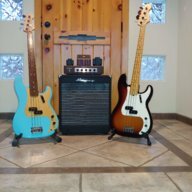
Quote: “windows, stones and no treatment at all.”
It’s worth reflecting that many of the most successful recordings ever made, were tracked in studios that had no treatment at all or at most, very basic treatment indeed.
One of the reasons historically that particular studio designer’s approaches to acoustical treatment, especially in control rooms and indeed why specific monitors were chosen. Had only a certain amount to do with acoustics per say, more to do with available budgets.
That the advent of widespread international travel, with artists, producers and recording engineers using a variety of studios in a given country or trekking from continent to continent, meant that forms of standardisation of production from location to location were highly desirable.
Facilitating the subjective preferred choices of artists and producers.
One reason studio live room’s with no or little in the way of acoustics worked well, is because that typically they featured what I would call a well-balanced, acoustical environment.
In other words, they were not too lively or too dead acoustically. Their environment did not impose any acoustic extremes onto the recordings made in them. As such they were readily adaptable if required.
There is a particular producer who owns his own facility whose approach I admire greatly. Because his studio features particular areas which are are lively and others that are dead. Other areas that can easily be adapted to suit specific requirements of the moment, and certain areas that are extremely lively or extremely dead.
In other words, he had maximised the versatility of his recording space. Whilst you might think well that's great for him but I don’t possess his resources, you might be pleasantly surprised what you can do in a room with hard surfaces to reduce liveliness with carpets on the floor and walls, gobo’s etc.
Even a Piano can be made to sound different simply by placing a carpet underneath. Even a Guitar can be made to sound, more lively by placing a 8x4 sheet of plywood down, placing the guitarists seat on one end and the mics boom on the same sheet.
These are just a couple of ideas, but they work. (Gordon Giltrap uses the latter). I am sure that with some time and thought it would be possible for everyone here to find ways of optimising the possibilities of employing versatility to their acoustic spaces, according to the needs of each particular recording.
Rather than their acoustics to a pre-determined goal of exacting measurement, fine though that aspiration might be, as is the typical mantra of enthusiasts.
My pals and I usually clap our hands in whatever acoustical space we enter. That usually tells us most of what we need to know.
I appreciate that some very knowledgeable folk may totally disagree.
I don’t mind people disagreeing, as long as they are mature enough to disagree without being disagreeable.
One person I was privileged to learn a great deal from, owned a very good studio nearby, a short drive from my home.
Sadly, he is no longer with us as he and his wife died tragically. But I am including a link explaining the acoustical approach in his studio.
It rather went totally against the perceived wisdom of the day, so in many senses, accords with some of the comments that might be questioned.
I hope it will enable those interested enough to read it, greater insight into this subject, and encourage them to maximise the best possible use of whatever facilities they have at their disposal.
The Mill Studio - Technical Details - Acoustics (themillrecordingstudio.com)
Especially note the importance of reverb tails.
Flatness of room response, and the typical expectations of the human ear and brain being met.
It belonged to the late Gus Dudgeon whose recordings will be familiar to you. If you view the photo gallery you will note the many windows and walls about the control room.
Gallery page (themillrecordingstudio.com)
I trust this will of assistance to you all and wish you every possible success in your recording endeavours.
Gus Dudgeon - Wikipedia
It’s worth reflecting that many of the most successful recordings ever made, were tracked in studios that had no treatment at all or at most, very basic treatment indeed.
One of the reasons historically that particular studio designer’s approaches to acoustical treatment, especially in control rooms and indeed why specific monitors were chosen. Had only a certain amount to do with acoustics per say, more to do with available budgets.
That the advent of widespread international travel, with artists, producers and recording engineers using a variety of studios in a given country or trekking from continent to continent, meant that forms of standardisation of production from location to location were highly desirable.
Facilitating the subjective preferred choices of artists and producers.
One reason studio live room’s with no or little in the way of acoustics worked well, is because that typically they featured what I would call a well-balanced, acoustical environment.
In other words, they were not too lively or too dead acoustically. Their environment did not impose any acoustic extremes onto the recordings made in them. As such they were readily adaptable if required.
There is a particular producer who owns his own facility whose approach I admire greatly. Because his studio features particular areas which are are lively and others that are dead. Other areas that can easily be adapted to suit specific requirements of the moment, and certain areas that are extremely lively or extremely dead.
In other words, he had maximised the versatility of his recording space. Whilst you might think well that's great for him but I don’t possess his resources, you might be pleasantly surprised what you can do in a room with hard surfaces to reduce liveliness with carpets on the floor and walls, gobo’s etc.
Even a Piano can be made to sound different simply by placing a carpet underneath. Even a Guitar can be made to sound, more lively by placing a 8x4 sheet of plywood down, placing the guitarists seat on one end and the mics boom on the same sheet.
These are just a couple of ideas, but they work. (Gordon Giltrap uses the latter). I am sure that with some time and thought it would be possible for everyone here to find ways of optimising the possibilities of employing versatility to their acoustic spaces, according to the needs of each particular recording.
Rather than their acoustics to a pre-determined goal of exacting measurement, fine though that aspiration might be, as is the typical mantra of enthusiasts.
My pals and I usually clap our hands in whatever acoustical space we enter. That usually tells us most of what we need to know.
I appreciate that some very knowledgeable folk may totally disagree.
I don’t mind people disagreeing, as long as they are mature enough to disagree without being disagreeable.
One person I was privileged to learn a great deal from, owned a very good studio nearby, a short drive from my home.
Sadly, he is no longer with us as he and his wife died tragically. But I am including a link explaining the acoustical approach in his studio.
It rather went totally against the perceived wisdom of the day, so in many senses, accords with some of the comments that might be questioned.
I hope it will enable those interested enough to read it, greater insight into this subject, and encourage them to maximise the best possible use of whatever facilities they have at their disposal.
The Mill Studio - Technical Details - Acoustics (themillrecordingstudio.com)
Especially note the importance of reverb tails.
Flatness of room response, and the typical expectations of the human ear and brain being met.
It belonged to the late Gus Dudgeon whose recordings will be familiar to you. If you view the photo gallery you will note the many windows and walls about the control room.
Gallery page (themillrecordingstudio.com)
I trust this will of assistance to you all and wish you every possible success in your recording endeavours.
Gus Dudgeon - Wikipedia
Last edited: