

Enjoy the benefits of a premium membership!
Upgrade Account
-
TalkBass has been independent since 1998. Add your voice.
Create a free account to reply to discussions, view embedded media, and browse with fewer display ads.
Join free Log in
Want zero display ads or expanded classifieds tools? Compare plans.
You are using an out of date browser. It may not display this or other websites correctly.
You should upgrade or use an alternative browser.
You should upgrade or use an alternative browser.
Nickel strings with less nickel?
- Thread starter trothwell
- Start date
More options
Who Replied?

One question that comes to mind is, can "nickel-plated steel" have the outer nickel plating in different thickness? It's possible, isn't it?
Sure, and I think I’ve heard of exactly that being so, but I don’t remember the details. Which strings, what’s the difference between them… I don’t remember.One question that comes to mind is, can "nickel-plated steel" have the outer nickel plating in different thickness? It's possible, isn't it?

The nickel layer applied during electroplating of the steel wire is very very very thin. Like comparing the thickness of a hair on ya head with a .145 gauge bass string. Don't know if any of the final nps wrap wire used by brands on their nps offerings departs from the weight percentage of nickel that leads to such a thin coating in the electroplating process


If it’s an allergy thing it doesn’t matter the thickness. What matters is you are in contact with nickel regardless. The entire outer wrap of the string is covered in it.
One of my minor pet peeves is that nickel-plated steel strings are often marketed as “Nickel” strings when they are not. Only pure nickel strings should be called nickel.
Perhaps more of a mild irritation. I noticed starting a couple of years ago or so that after I was playing with nickel strings, my hands would feel slightly itchy. Within maybe 15 minutes the irritation would stop, and it didn't happen at all with stainless steel strings. But also doesn't happen using strings with "lower" nickel content, like Alloy 52.If it’s an allergy thing it doesn’t matter the thickness. What matters is you are in contact with nickel regardless. The entire outer wrap of the string is covered in it.
I've just stayed away from nickel strings since then. But I got to thinking recently, I wonder, is it possible that, just like Alloy 52 doesn't seem to bother me, maybe only some nickel strings do, and some do not? I had used nickel strings happily for years, especially buying from GHS. Maybe somehow the GHS formula was gentler in this respect than whatever else I happened to use?
I'm maybe 47% tempted to buy another set of GHS nickel strings and just see what happens, but was curious if there was known to be any reason why some nickel strings would have less nickel than others.
I guess like ordering spam, spam, bacon and spam with less spam!
What I would like to see is for all manufacturers to be very precise and up front about whether their "nickel strings" are "nickel-plated steel" or "pure nickel".One of my minor pet peeves is that nickel-plated steel strings are often marketed as “Nickel” strings when they are not. Only pure nickel strings should be called nickel.
Also, something related to this is how people generally refer to "stainless steel strings". My minor pet peeve is "stainless steel strings" are often referred to as "steel". "Nickel vs. Steel"... When you think about it, both stainless steel and nickel-plated steel are "steel". That's why I've been in the habit of distinguishing the two by referring to them as either "nickel" or "stainless".
I know where you're coming from. Thanks for the clarification as to the reason for the question.Perhaps more of a mild irritation. I noticed starting a couple of years ago or so that after I was playing with nickel strings, my hands would feel slightly itchy. Within maybe 15 minutes the irritation would stop, and it didn't happen at all with stainless steel strings. But also doesn't happen using strings with "lower" nickel content, like Alloy 52.
I've just stayed away from nickel strings since then. But I got to thinking recently, I wonder, is it possible that, just like Alloy 52 doesn't seem to bother me, maybe only some nickel strings do, and some do not? I had used nickel strings happily for years, especially buying from GHS. Maybe somehow the GHS formula was gentler in this respect than whatever else I happened to use?
I'm maybe 47% tempted to buy another set of GHS nickel strings and just see what happens, but was curious if there was known to be any reason why some nickel strings would have less nickel than others.
I guess like ordering spam, spam, bacon and spam with less spam!
Here's another question in my mind... Is the nickel used for the outer plating itself for "nickel-plated steel" always pure? Or maybe it comes in different formulas, resulting in the differences in how you react to different brands? I have no idea how that works. Just asking the question...
Trying to think back for more details of exactly what I experienced, why, when. Two years ago, which is about when I first noticed the nickel sensitivity, would have been when I bought my short-lived Yamaha TRBX605. As I recall, I tried four string sets on that: Rotosound 66, GHS Super Steels, GHS Pressurewound, and the stock D'Addario XL strings. At that point in time, I would have already been using a combination of RS66 (steel), RS77 (monel), and Labella tapewound on my other basses, not out of nickel sensitivity, but just out of tone selection.
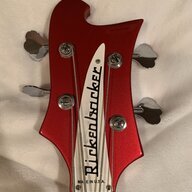
So it must have been the D'Addario strings that came on the Yamaha that triggered the initial nickel reaction. The last time before that, I think, that I had used nickel strings was about two years prior, when I was sampling strings for the Rickenbacker 4003, during which time I remember trying the stock nickel strings (supposedly, though perhaps not provably, made by D'Addario), along with GHS Balanced Nickels, DR Lo Rider Nickel, and Ernie Ball Slinky nickel. I do not remember noticing any adverse reaction at that time. Was it because those strings didn't bother me? Or because the nickel irritation was something that developed over the next few years?
I have subsequently also noticed irritation when, e.g., playing someone else's bass with J. Random Nickel strings on it, or even when handling a lot of (U.S.) coins, which strikes me as odd, because nickels are actually made of less nickel than Monel or Alloy 52.
Huh. Maybe this all does merit more specific research and experimentation than simply "avoid nickel strings"...
So it must have been the D'Addario strings that came on the Yamaha that triggered the initial nickel reaction. The last time before that, I think, that I had used nickel strings was about two years prior, when I was sampling strings for the Rickenbacker 4003, during which time I remember trying the stock nickel strings (supposedly, though perhaps not provably, made by D'Addario), along with GHS Balanced Nickels, DR Lo Rider Nickel, and Ernie Ball Slinky nickel. I do not remember noticing any adverse reaction at that time. Was it because those strings didn't bother me? Or because the nickel irritation was something that developed over the next few years?
I have subsequently also noticed irritation when, e.g., playing someone else's bass with J. Random Nickel strings on it, or even when handling a lot of (U.S.) coins, which strikes me as odd, because nickels are actually made of less nickel than Monel or Alloy 52.
Huh. Maybe this all does merit more specific research and experimentation than simply "avoid nickel strings"...
That might be the more interesting question, rather than "how much nickel", but rather, how pure is it? And if less than pure, then what else is in there?Here's another question in my mind... Is the nickel used for the outer plating itself for "nickel-plated steel" always pure? Or maybe it comes in different formulas, resulting in the differences in how you react to different brands? I have no idea how that works. Just asking the question...
It's past time to replace one of the Rotosound 66 sets I currently have in use. I am going to install a set of GHS Bass Boomers and see what happens. Will report back. Science!
Or, the Bassics, which are also nickel-plated steel.I am going to install a set of GHS Bass Boomers and see what happens.
So it must have been the D'Addario strings that came on the Yamaha that triggered the initial nickel reaction. The last time before that, I think, that I had used nickel strings was about two years prior, when I was sampling strings for the Rickenbacker 4003, during which time I remember trying the stock nickel strings (supposedly, though perhaps not provably, made by D'Addario), along with GHS Balanced Nickels, DR Lo Rider Nickel, and Ernie Ball Slinky nickel. I do not remember noticing any adverse reaction at that time. Was it because those strings didn't bother me? Or because the nickel irritation was something that developed over the next few years?
It is a bit odd that the nps strings triggered some kind of allergic response, but you mention Alloy 52 wrapped strings not doing so. Alloys with Nickel content like Alloy52 and Monel have more Nickel content than the proportion of nickel applied to steel wire during electroplating of nps strings. So if nps strings were causing allergic responses, alloy wrapped strings would have greater exposure. Perhaps it's gunk on the strings that does it. I give new strings a wipe over with a cloth and metho before stringing up. De gunks good
Last edited:
Certainly possible. Perhaps some factory assembly / polishing agent is the real culprit, not the nickel.It is a bit odd that the nps strings triggered some kind of allergic response, but you mention Alloy 52 wrapped strings not doing so. Alloys with Nickel content like Alloy52 and Monel have more Nickel content than the proportion of nickel applied to steel wire during electroplating of nps strings. So if nps strings were causing allergic responses, alloy wrapped strings would have greater exposure. Perhaps it's gunk on the strings that does it. I give new strings a wipe over with a cloth and metho before stringing up. De gunks good
This is your answer right here! You should switch to stainless steel strings that are not Rotosound 66s.Perhaps more of a mild irritation. I noticed starting a couple of years ago or so that after I was playing with nickel strings, my hands would feel slightly itchy. Within maybe 15 minutes the irritation would stop, and it didn't happen at all with stainless steel strings.
For rounds, I'd try D'Addario Pro Steels. For flats, I'd try D'Addario Chromes (for something brighter) or La Bella DTFs (for something darker).
Tapewounds might be another option if you like light gauge strings and don't downtune. La Bella's White Tapes are my favorites. But I switched to D'Addario Chromes because I started tuning to D Standard in 2023.

I’m not sure if this exact correlates but the brightest nickel steel strings I’ve seen have been Ken Smith burners and Dunlop super bright nickel. This could be due to having less nickel but I don’t know for sure.Do some “nickel” strings have less nickel?
I know that some blatant alloys, like Alloy 52, are partly nickel. But of the strings advertised as “nickel” or “nickel plated steel”, do some have less nickel content than others?
What’s odd about skin vs metal chemistry is that sometimes you can get away with certain strings because they aren’t reacting to your skin and sweat as bad. I played nickel strings when I first started playing and thought that them going very dead very fast and leaving big black stains on my hands and the strings was normal. I must have tried several brands but always the same results. However I learned about stainless steel and I made the switch. Steels for me can sit on a bass anywhere from a few months up to a year and still have something left to give at the end. I can play for hours and no black gets on my fingers. I don’t break out from them and they don’t cause any pain. As an alternative you might like DR black beauties. They are coated strings that sound good. Basically giving you almost a fresh nickel string sound but with a long lasting steel string and a long lasting coating. They are bright but not that bright and I think that coating helps produce a flatter response across the board so they work great with a wide variety of tones. The only Coates string I’d care to play on.That might be the more interesting question, rather than "how much nickel", but rather, how pure is it? And if less than pure, then what else is in there?
It's past time to replace one of the Rotosound 66 sets I currently have in use. I am going to install a set of GHS Bass Boomers and see what happens. Will report back. Science!
Yeah, if this week’s revisit to GHS Boomers doesn’t work out, I’ll stick with stainless (or tapes).This is your answer right here! You should switch to stainless steel strings that are not Rotosound 66s.
For rounds, I'd try D'Addario Pro Steels. For flats, I'd try D'Addario Chromes (for something brighter) or La Bella DTFs (for something darker).
Tapewounds might be another option if you like light gauge strings and don't downtune. La Bella's White Tapes are my favorites. But I switched to D'Addario Chromes because I started tuning to D Standard in 2023.

I hope everything works out for you one way or another OP.Yeah, if this week’s revisit to GHS Boomers doesn’t work out, I’ll stick with stainless (or tapes).


