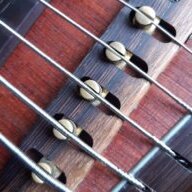
Definitely an advantage playing arco & pizz on a CR versus the NXT/WAV versions of the NS series. The blend versus the switch is a huge improvement as it actually varies the volume between vertical & horizontal string movement (and has pots inside for balancing full on volume).
I also used a volume pedal (Visual Volume from back in the day) when I had one one of the original CR basses with the switch. The pizz/arco blend control became a feature in later versions.
On my bass ~1-2p on the arco/pizz blend balances between the two pretty well. Well, that and better technique allows me to not use a volume pedal now when switching between arco & pizz - but it does take practice to keep consistent volume between the two even after they are balanced to your own playing pressures.
It’s really only after reading this thread that I’ve taken a hard listen to me playing both acoustic upright DIRECT and my NS to ‘try” to objectively put into words what exactly I seek in my sound. After reflecting on it a bit, it is those acoustic bass artifact sounds that I’m really looking for - not a “better” DB/EUB sound. Hence my own discovery that getting an IR system really won’t help to get me what I’m looking for.
Mike, I did have to laugh a bit when I read your “no body” comment. But it’s not just the body sound taps/artifacts that I’m missing (though I do miss that sound aspect too). And it’s not the muted strings thump either. It IS the other string sounds on the fingerboard as I play that the NS piezo doesn’t pick up and that I miss. I’ve often thought that a mic attached to the solid body might pick up those playing artifacts that I seek. Maybe a high gain contact mic mixed with the NS output...? Hmmm!
Now if I can get my EBS Dynaverb to quit acting up on me, I might just try the contact mic route.. I feel another rabbit hole research project coming my way...
John
I also used a volume pedal (Visual Volume from back in the day) when I had one one of the original CR basses with the switch. The pizz/arco blend control became a feature in later versions.
On my bass ~1-2p on the arco/pizz blend balances between the two pretty well. Well, that and better technique allows me to not use a volume pedal now when switching between arco & pizz - but it does take practice to keep consistent volume between the two even after they are balanced to your own playing pressures.
It’s really only after reading this thread that I’ve taken a hard listen to me playing both acoustic upright DIRECT and my NS to ‘try” to objectively put into words what exactly I seek in my sound. After reflecting on it a bit, it is those acoustic bass artifact sounds that I’m really looking for - not a “better” DB/EUB sound. Hence my own discovery that getting an IR system really won’t help to get me what I’m looking for.
Mike, I did have to laugh a bit when I read your “no body” comment.
But it’s not just the body sound taps/artifacts that I’m missing (though I do miss that sound aspect too). And it’s not the muted strings thump either. It IS the other string sounds on the fingerboard as I play that the NS piezo doesn’t pick up and that I miss. I’ve often thought that a mic attached to the solid body might pick up those playing artifacts that I seek. Maybe a high gain contact mic mixed with the NS output...? Hmmm!Now if I can get my EBS Dynaverb to quit acting up on me, I might just try the contact mic route.
. I feel another rabbit hole research project coming my way...John
Last edited: