

Enjoy the benefits of a premium membership!
Upgrade Account
-
TalkBass has been independent since 1998. Add your voice.
Create a free account to reply to discussions, view embedded media, and browse with fewer display ads.
Join free Log in
Want zero display ads or expanded classifieds tools? Compare plans.
You are using an out of date browser. It may not display this or other websites correctly.
You should upgrade or use an alternative browser.
You should upgrade or use an alternative browser.
OFFICIAL ASHDOWN CLUB
- Thread starter Presto2112
- Start date
More options
Who Replied?

View attachment 5181196
View attachment 5181197
added My Moog in to the setup and using my custom 810 to 215 cab. much prefered the sound from the second stack rather than the three side by side.
That looks pretty awesome. Is that the Moog minitaur? I almost picked one up a couple years ago. Pretty cool setup. I'd love to hear it!

That looks pretty awesome. Is that the Moog minitaur? I almost picked one up a couple years ago. Pretty cool setup. I'd love to hear it!
Yeh Moog Minitaur and a Roland Pk5

Just picked up an ABM 500 RC Evo (I?) recently. I’d been looking into Ashdown recently, but was worried they’d be too warm/vintage sounding. The bassist of Multicult uses one which intrigued me as she has a great tone, but she also uses pedals (I think a rat always on) so hard to tell how much of the tone is the amp.
Anyway, this one popped up at my local Music Go Round, so I gave it a spin and was surprised at its versatility and that it sounded great even at lower volumes. I’d also heard the term “wooly” associated with this brand, but that is not my experience as I would describe the tone I’m getting with this amp as punchy and articulate with a solid low end.
It sounds great with the button pushed in for the flat EQ, but I am currently enjoying the their EQ shape for an aggressive and powerful sound with the bass lowered to around 9 and the middle boosted to around 3. I was even able to ditch my EQ pedal as the graphic EQ is very useful and has similar frequencies to those I was boosting/cutting with the pedal. The clean/drive knob is also nice as you don’t have to crank the input to get a good bit of drive like with my GK MB Fusion.
All in all, I am over the moon with this head and I can’t believe a <$400 used amp would blow me away like this.
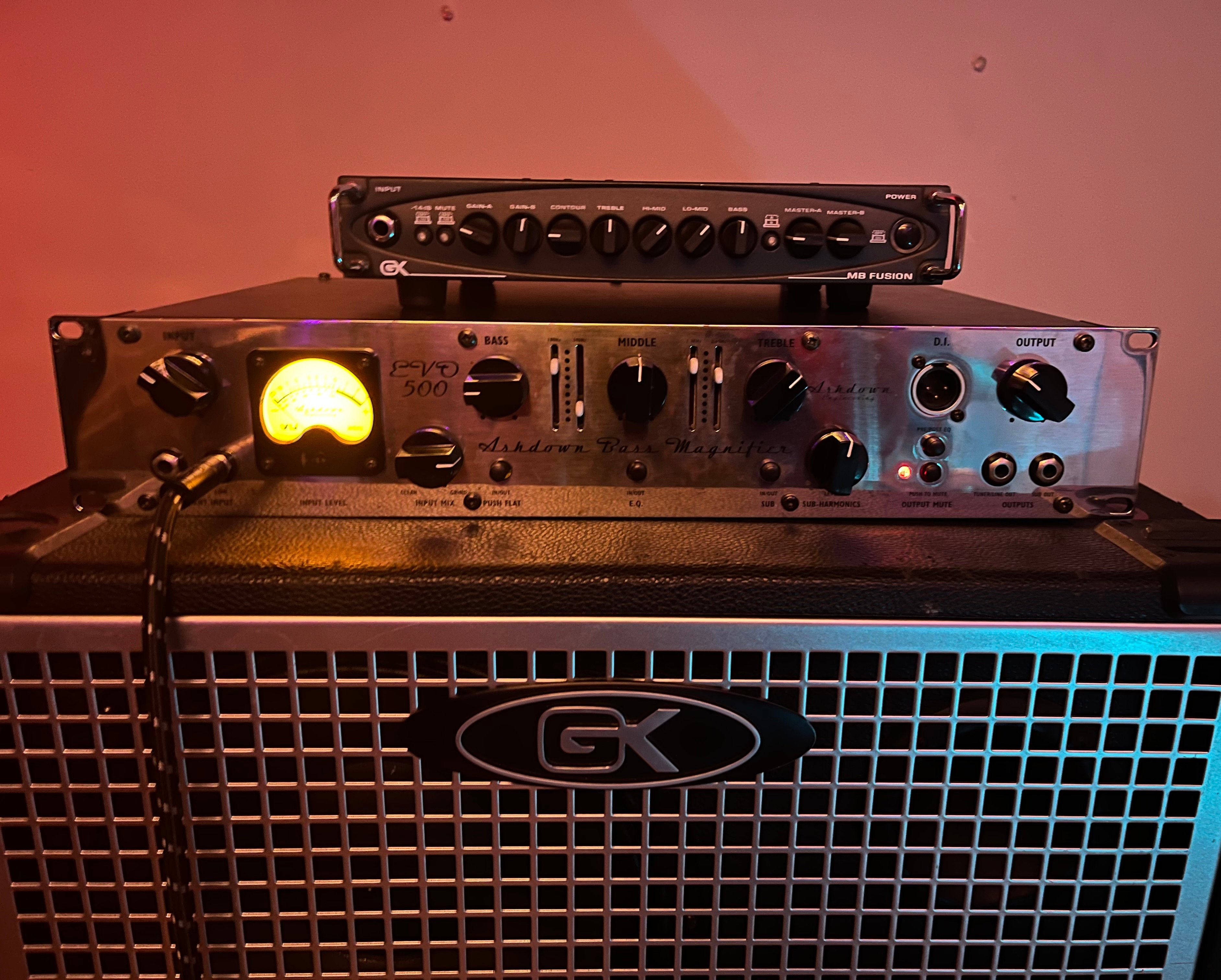
Anyway, this one popped up at my local Music Go Round, so I gave it a spin and was surprised at its versatility and that it sounded great even at lower volumes. I’d also heard the term “wooly” associated with this brand, but that is not my experience as I would describe the tone I’m getting with this amp as punchy and articulate with a solid low end.
It sounds great with the button pushed in for the flat EQ, but I am currently enjoying the their EQ shape for an aggressive and powerful sound with the bass lowered to around 9 and the middle boosted to around 3. I was even able to ditch my EQ pedal as the graphic EQ is very useful and has similar frequencies to those I was boosting/cutting with the pedal. The clean/drive knob is also nice as you don’t have to crank the input to get a good bit of drive like with my GK MB Fusion.
All in all, I am over the moon with this head and I can’t believe a <$400 used amp would blow me away like this.
Yeh Moog Minitaur and a Roland Pk5
Yes!! That's pretty awesome. Thank you.
thanks manYes!! That's pretty awesome. Thank you.

Just picked up an ABM 500 RC Evo (I?) recently. I’d been looking into Ashdown recently, but was worried they’d be too warm/vintage sounding. The bassist of Multicult uses one which intrigued me as she has a great tone, but she also uses pedals (I think a rat always on) so hard to tell how much of the tone is the amp.
Anyway, this one popped up at my local Music Go Round, so I gave it a spin and was surprised at its versatility and that it sounded great even at lower volumes. I’d also heard the term “wooly” associated with this brand, but that is not my experience as I would describe the tone I’m getting with this amp as punchy and articulate with a solid low end.
It sounds great with the button pushed in for the flat EQ, but I am currently enjoying the their EQ shape for an aggressive and powerful sound with the bass lowered to around 9 and the middle boosted to around 3. I was even able to ditch my EQ pedal as the graphic EQ is very useful and has similar frequencies to those I was boosting/cutting with the pedal. The clean/drive knob is also nice as you don’t have to crank the input to get a good bit of drive like with my GK MB Fusion.
All in all, I am over the moon with this head and I can’t believe a <$400 used amp would blow me away like this.
View attachment 5181773
Right on! Pretty much how my first impression was with mine. I think that may be an Evo II. I don't know the history that well but I think a lot of the RC (rack mount chassis) bodies ended up being 2's without the moniker. TBH, I don't know or recall the difference between 1's and 2's. I know 3 is where the compression was added and 4 added two more bands of EQ sliders.
Great find and I holy agree, steal for $400.

More than happy with my EVO 2 ABM. I copied James Lamenzo's EQ settings, flat setting, drop the two lower sliders and crank the two upper sliders, tweak the rotary knobs to taste.
Congratulations on your purchase!!!
The Silverface head is one of the nicest heads I have ever owned... I only sold it (to be replaced with an Ashdown Retroglide) as I'm an old fart no longer willing to lift a lot of heavy kit.
I got a chance to use this rig last night and it did not disappoint. The Shavo ABM 600 has so much headroom and low end slam, it really opened up the GK NeoIV 212 which tends to be tight and punchy. It’s a good match up which will definitely see more action.
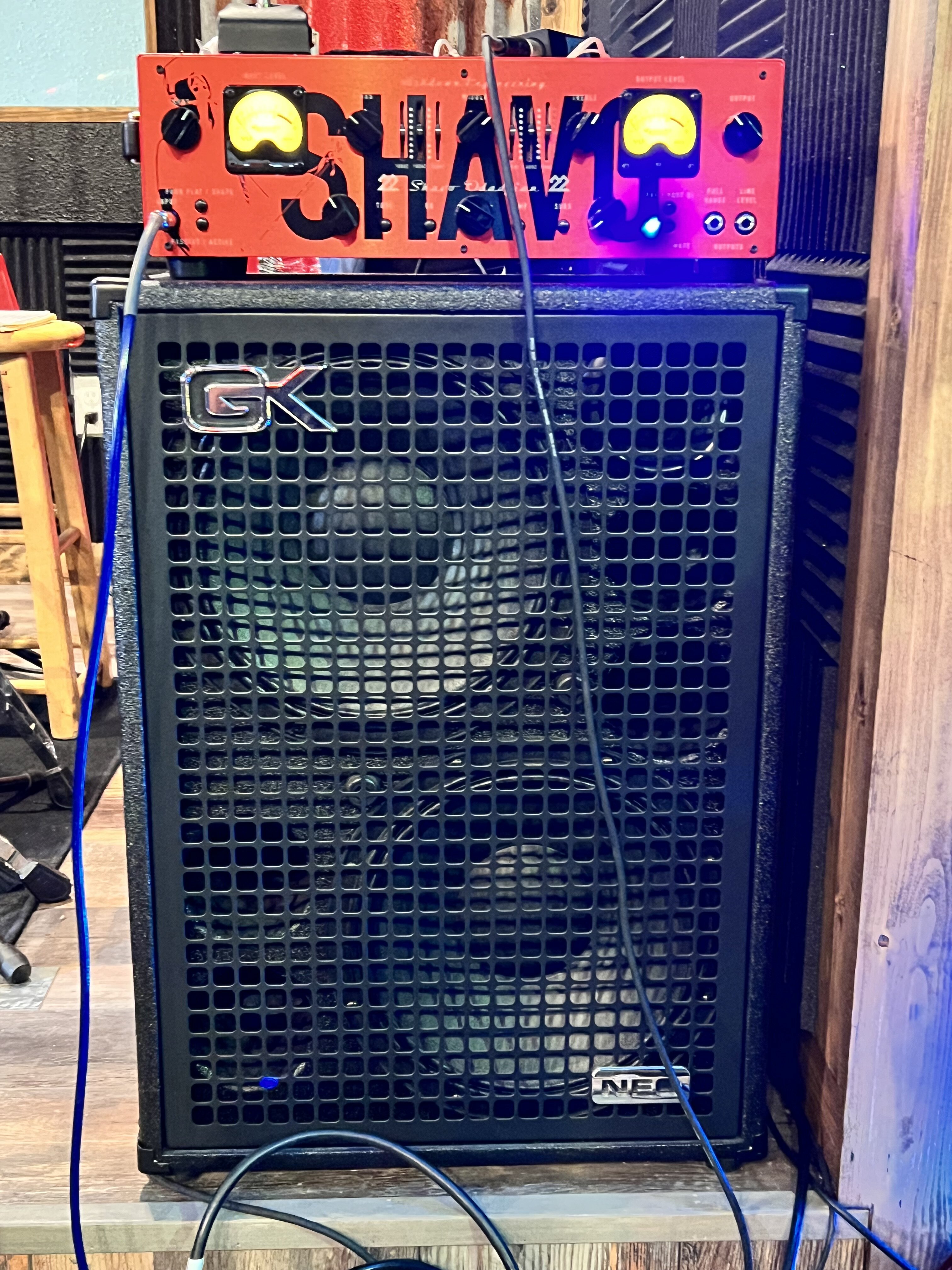
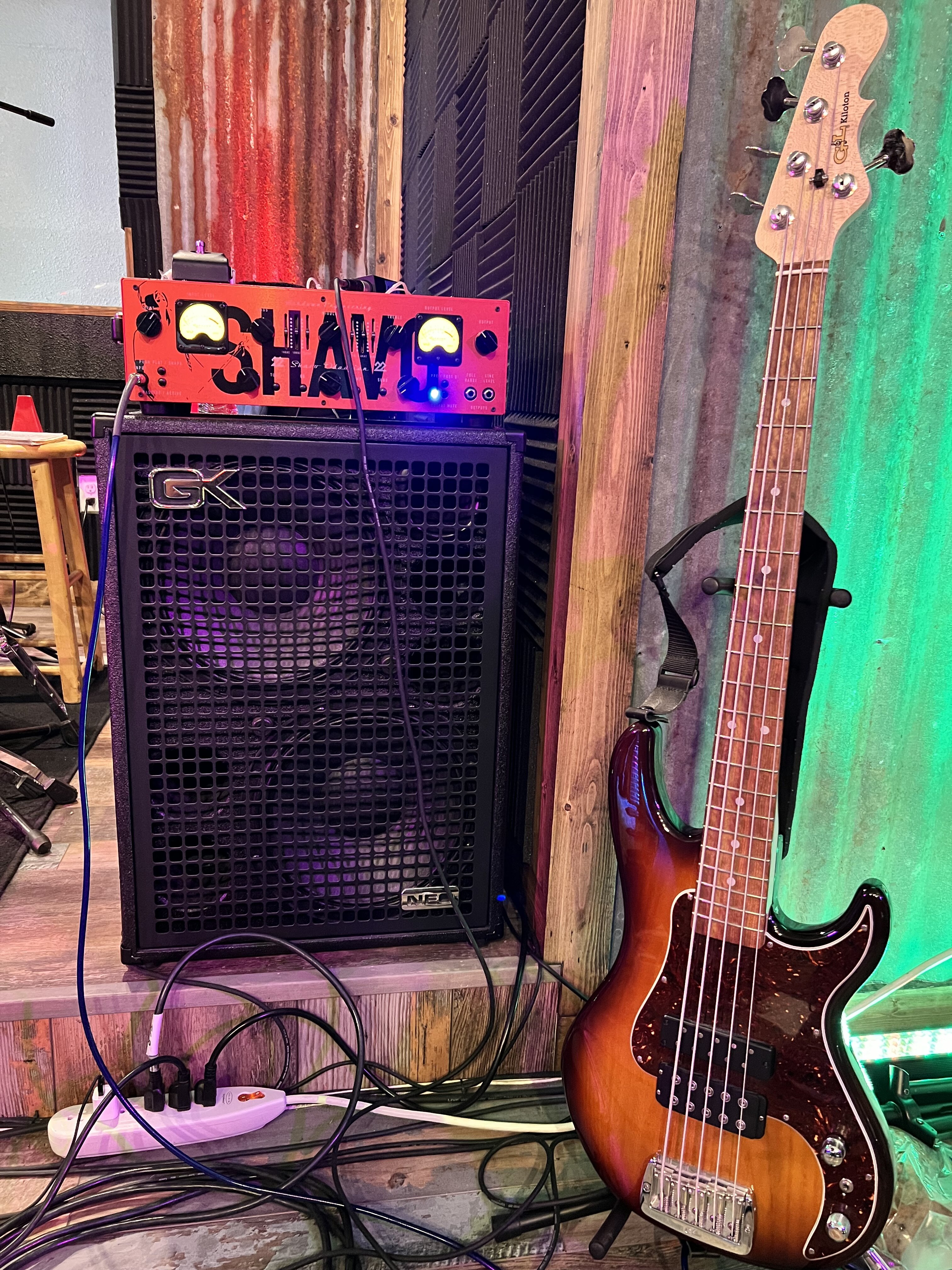
I got a chance to use this rig last night and it did not disappoint. The Shavo ABM 600 has so much headroom and low end slam, it really opened up the GK NeoIV 212 which tends to be tight and punchy. It’s a good match up which will definitely see more action.
View attachment 5199029 View attachment 5199030
It looks awesome too! That entire series of amps with that particular power amp section always seem to put out so much more than they are rated for. My ABM 900 has never been turned above level four!
I agree, that solid heavyweight slam is satisfying and really holds down the low end well.It looks awesome too! That entire series of amps with that particular power amp section always seem to put out so much more than they are rated for. My ABM 900 has never been turned above level four!

Sorta rambling post. Seriously considering picking up an ABM EVO III or IV.
So over the weekend I tried out an old ABM Evo III at rehearsal that the shop had lying around.
Wow - having a lead sled power section really DOES make a difference. I love my class D heads but there's a different vibe with the old-school stuff. Managed to get a really tight, clean response from it that I totally dug.
Anyway, halfway through the rehearsal the valve drive tube died (probably), so had to work with it off, and I noticed the bult in compressor was REALLY sucking out a lot of volume - from what I've read on the EVO III, this is what happens whenever the compressor is engaged, so it seems kinda useless. The subharmonic thing was fun to mess around with, I like octaver pedals so that might replace them?
So my questions are as follows:
1. Does the EVO IV version have a different drive flavour from the III?
2. Is the compressor better on the IV? Because if it kills the volume to that extent, it will be permanently off.
3. How does the subharmonic switch compare to a good octaver pedal in terms of tracking accuracy?
4. What other differences (apart from the extra 2 EQ bands) are there between the III and IV?
The shop (who's also the local Ashdown dealer) offered to sell me the EVO III (before the tube zonked out), but I'm wondering if I should just ask them to get me a IV in, since I liked the III so much but would maybe prefer a version with some of the kinks ironed out.
So over the weekend I tried out an old ABM Evo III at rehearsal that the shop had lying around.
Wow - having a lead sled power section really DOES make a difference. I love my class D heads but there's a different vibe with the old-school stuff. Managed to get a really tight, clean response from it that I totally dug.
Anyway, halfway through the rehearsal the valve drive tube died (probably), so had to work with it off, and I noticed the bult in compressor was REALLY sucking out a lot of volume - from what I've read on the EVO III, this is what happens whenever the compressor is engaged, so it seems kinda useless. The subharmonic thing was fun to mess around with, I like octaver pedals so that might replace them?
So my questions are as follows:
1. Does the EVO IV version have a different drive flavour from the III?
2. Is the compressor better on the IV? Because if it kills the volume to that extent, it will be permanently off.
3. How does the subharmonic switch compare to a good octaver pedal in terms of tracking accuracy?
4. What other differences (apart from the extra 2 EQ bands) are there between the III and IV?
The shop (who's also the local Ashdown dealer) offered to sell me the EVO III (before the tube zonked out), but I'm wondering if I should just ask them to get me a IV in, since I liked the III so much but would maybe prefer a version with some of the kinks ironed out.

The compressor is kinda tricky. I have to fiddle with gain and master volume and drive when I kick it on. I do like it and it does squish things in but I generally keep it off. I prefer a really light natural compression which the amp seems to do on its own anyways.
My experience was the same having the a/b vs D. I don't see myself going back to class D nless it's a GK.
*Mine is a iv
My experience was the same having the a/b vs D. I don't see myself going back to class D nless it's a GK.
*Mine is a iv
I like the compressor on the Shavo which is an EVO IV. I never turn it past noon and the sweet spot seems to be between 9:00 and 11:00. In this region it works as designed and there is no volume impact I’ve noticed. Tube overdrive, compressor, and sub harmonic knobs all have the potential to add too much so I’ve found they all work best in moderation. I’m not much of an octave user and don’t engage the sub harmonic feature so I can’t comment on tracking, but really like a bit of tube overdrive. The settings shown in the pic I posted sounded really good with the default Ashdown sound engaged. Quite pleased with this amp.
Sorta rambling post. Seriously considering picking up an ABM EVO III or IV.
So over the weekend I tried out an old ABM Evo III at rehearsal that the shop had lying around.
Wow - having a lead sled power section really DOES make a difference. I love my class D heads but there's a different vibe with the old-school stuff. Managed to get a really tight, clean response from it that I totally dug.
Anyway, halfway through the rehearsal the valve drive tube died (probably), so had to work with it off, and I noticed the bult in compressor was REALLY sucking out a lot of volume - from what I've read on the EVO III, this is what happens whenever the compressor is engaged, so it seems kinda useless. The subharmonic thing was fun to mess around with, I like octaver pedals so that might replace them?
So my questions are as follows:
1. Does the EVO IV version have a different drive flavour from the III?
2. Is the compressor better on the IV? Because if it kills the volume to that extent, it will be permanently off.
3. How does the subharmonic switch compare to a good octaver pedal in terms of tracking accuracy?
4. What other differences (apart from the extra 2 EQ bands) are there between the III and IV?
The shop (who's also the local Ashdown dealer) offered to sell me the EVO III (before the tube zonked out), but I'm wondering if I should just ask them to get me a IV in, since I liked the III so much but would maybe prefer a version with some of the kinks ironed out.
I'd echo a lot of these experiences, and add that a lot of the controls are surprisingly interactive with their response from one section to another.
1. I couldn't answer with high confidence. The one time I tried a IV in a shop it seemed the same as my III.
2. Couldn't tell ya, and I've only used it once live in a weird situation where the speakers of my cab were farting due to the pickup height on the new bass I was using and my heavy right hand (compressor stayed on the whole time), I just turned up volume for that gig. I know for sure it saved my cab and the amp probably too. I am not the most technological minded on electrical. I never use it besides messing around or as a reverse boost to quiet down.
3. Tracking accuracy is great, it's analog though and it will glitch with double stops and chords. It will also do the harmonic jumping mildly on some long held notes. It's meant as more of a tone thickener, hence cranked up it really only achieves a percievable 60 wet : 40 dry blend, maybe slightly more/slightly less. I love it and for the longest time I used it as my only octave.
4. TBH I couldn't tell you of any of the other differences. For price and sound, I haven't thought of replacing my abm 3 for anything besides my bta (all tube abm) for 10 years now. I have no reason for it.
As an aside, if your curious about the preamp tube, mines 10 years old and never changed. So I wouldn't be too concerned. Luckily it's also a cheaper 12ax7, so no big deal to replace and you can bypass it if it happens in a gig.
As for the interactiveness, what I've found is how the tube, comp, octaver, and pre/post levels go, they appear to be interactive with their response to each other and how the EQ is set. Especially the EQ. I really push a lot of the EQ points, I've found it's helped me sit in the mix better and gives a really good full/thickness to the tube distortion without fizziness. However, it requires the pre to be much lower, which makes the comp or disengaging the EQ a bit of volume drop. Also, the sub seems to like the harder push and mids (being analog, I'm wondering if similar effect to using neck pup and above 12th fret), but depending on your playing style and effects incoming can make it a little more unstable on long held notes (half/whole notes and longer).
Whew, my bad for the long winded reply!
I'd echo a lot of these experiences, and add that a lot of the controls are surprisingly interactive with their response from one section to another.
1. I couldn't answer with high confidence. The one time I tried a IV in a shop it seemed the same as my III.
2. Couldn't tell ya, and I've only used it once live in a weird situation where the speakers of my cab were farting due to the pickup height on the new bass I was using and my heavy right hand (compressor stayed on the whole time), I just turned up volume for that gig. I know for sure it saved my cab and the amp probably too. I am not the most technological minded on electrical. I never use it besides messing around or as a reverse boost to quiet down.
3. Tracking accuracy is great, it's analog though and it will glitch with double stops and chords. It will also do the harmonic jumping mildly on some long held notes. It's meant as more of a tone thickener, hence cranked up it really only achieves a percievable 60 wet : 40 dry blend, maybe slightly more/slightly less. I love it and for the longest time I used it as my only octave.
4. TBH I couldn't tell you of any of the other differences. For price and sound, I haven't thought of replacing my abm 3 for anything besides my bta (all tube abm) for 10 years now. I have no reason for it.
As an aside, if your curious about the preamp tube, mines 10 years old and never changed. So I wouldn't be too concerned. Luckily it's also a cheaper 12ax7, so no big deal to replace and you can bypass it if it happens in a gig.
As for the interactiveness, what I've found is how the tube, comp, octaver, and pre/post levels go, they appear to be interactive with their response to each other and how the EQ is set. Especially the EQ. I really push a lot of the EQ points, I've found it's helped me sit in the mix better and gives a really good full/thickness to the tube distortion without fizziness. However, it requires the pre to be much lower, which makes the comp or disengaging the EQ a bit of volume drop. Also, the sub seems to like the harder push and mids (being analog, I'm wondering if similar effect to using neck pup and above 12th fret), but depending on your playing style and effects incoming can make it a little more unstable on long held notes (half/whole notes and longer).
Whew, my bad for the long winded reply!
Thanks! That's all really very useful and helpful, I'm tempted to go pick it up today as we have rehearsal at that spot. I guess all the different features are closely connected and it needs a different mindset, but honestly I was just so taken aback with how... 'immediate' and open the sound was.
So I did it, I came home with a new-old stock ABM 500 EVOIII. Covered by full 5 year warranty!
First gig on Saturday, big outdoor deal. Will report back!
First gig on Saturday, big outdoor deal. Will report back!
So I did it, I came home with a new-old stock ABM 500 EVOIII. Covered by full 5 year warranty!
First gig on Saturday, big outdoor deal. Will report back!
Right on, enjoy the amp! I've been so satisfied personally with mine.


