
(Long ago) I started on a 66 P-bass, eventually adding a J-bass pickup, then pulling the frets and leaving her fretless. Then I picked up a 68-Jazz ($250) and playing that exclusively. ... I now play a 74-Jazz and a 2000-StingRay when I want a P-bass on steroids sound but, recently I put together, what I'm calling 'my poor mans 59'. It's got a very nice 73 P-bass neck, a aftermarket, light weight, 3-tone sunburst Alder body, gold anodized pick guard and nice fat sounding P-pickup. I didn't think much of the Pickup because I thought it was cheap aftermarket with magnets glued to the bottom, but once installed man was I surprised. ... The real test is to take it to a gig and see how she behaviours herself.

Enjoy the benefits of a premium membership!
Upgrade Account
-
TalkBass has been independent since 1998. Add your voice.
Create a free account to reply to discussions, view embedded media, and browse with fewer display ads.
Join free Log in
Want zero display ads or expanded classifieds tools? Compare plans.
You are using an out of date browser. It may not display this or other websites correctly.
You should upgrade or use an alternative browser.
You should upgrade or use an alternative browser.
Oh jeez not another P vs J thread!
- Thread starter billiam5billion
- Start date
More options
Who Replied?
Hear me out!
I saw someone mention in another thread that a Jazz-style configuration has more "tonal options" than a traditional Precision, split-coil does.
I'm not so sure. The jazz has more knobs, and more separate pickups, but I find that the onboard controls of a P create a huge swing in tone shapes, and that my P is much more responsive to amp eq and pedal chain than my J. Where did the idea of the jazz being more versatile than the p come from, do you believe it or not, and why?
I find that Stingray HH makes all these points moot.


- Jun 25, 2007
- 4,531
- 135
- 63
- Disclosures
- Artist:TC Electronic RH450 bass system (original test-pilot)

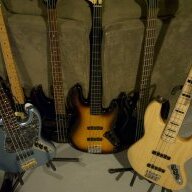
These pics can't be real. You're not allowed to like both. You have to make a choice. Talkbass law.

Late to the game here, has anyone mentioned Pino, tort and flats yet....just want to make sure those trends are covered too.
- Jun 25, 2007
- 4,531
- 135
- 63
- Disclosures
- Artist:TC Electronic RH450 bass system (original test-pilot)
and no knobs!These pics can't be real. You're not allowed to like both. You have to make a choice. Talkbass law.


why not a precision bass with dual precision pickups?
Just make a jazz bass with dual precision pickups. omg
Attachments



I prefer steel hammers for versatility. There are things you can do with a solid steel hammer that you just can't do with a wooden-handled hammer. On the other hand, for pure tone, you can't beat a hickory handle. Of course if you're an electrician you'll need a fiberglass handled hammer but that's just a niche application.

Sir, you have gone too far.

By definitionJazz basses do have more tonal options. It's inherent to the design. The amp and pedals and playing style can alter the sounds of any bass but the jazz has more tonal options on its own.
You'll always have more tonal options than with a single P pickupJust make a jazz bass with dual precision pickups. omg

Ric5
Inactive
- Jan 29, 2008
- 29,772
- 30,452
- Disclosures
- I like 5, 8, 10, and 12 string basses
And the influence of the colour of the scratch plate? Do we want to talk about it or not??Wait. Was this concluded by the op with the basses plugged into an amp or not?
I can't see you being all that serious here. Assuming you're on about passive, classic configs of each, you have a tone knob on both which just cuts highs. Then you have a volume per pickup. The ability to blend sounds from more than just ONE pickup makes MORE than just ONE sound. The end.Hear me out!
I saw someone mention in another thread that a Jazz-style configuration has more "tonal options" than a traditional Precision, split-coil does.
I'm not so sure. The jazz has more knobs, and more separate pickups, but I find that the onboard controls of a P create a huge swing in tone shapes, and that my P is much more responsive to amp eq and pedal chain than my J. Where did the idea of the jazz being more versatile than the p come from, do you believe it or not, and why?
Phew - thought it was going to have to be a 12-neck!Add 2 wiring harnesses worth one being active and the other being passive. Selector to toggle between. Win!

For me (IMVHO) I think the 'Aha!' moment came when I realized the J pickup configuration needed to be lopsided to really shine. Both pickups on full is kind of 'meh'. Neck pickup only is 'okay, I guess.'
Bridge pickup only is barky/burpy and delicious.
Neck 100% + Bridge 90% is ballsy and grindy.
Neck 90% + Bridge 100% is clean and punchy. And so on, and so forth.
Adjust to taste.
P basses do what they do beautifully. From low end thump with the tone rolled off, to pure growl with the tone all the way up. Plucking position and attack gives the versatility.
Both great configurations. The PJ seems to shine with both p'ups full on, but not the J.
Bridge pickup only is barky/burpy and delicious.
Neck 100% + Bridge 90% is ballsy and grindy.
Neck 90% + Bridge 100% is clean and punchy. And so on, and so forth.
Adjust to taste.
P basses do what they do beautifully. From low end thump with the tone rolled off, to pure growl with the tone all the way up. Plucking position and attack gives the versatility.
Both great configurations. The PJ seems to shine with both p'ups full on, but not the J.


