• TalkBass has been independent since 1998. Add your voice.
    Create a free account to reply to discussions, view embedded media, and browse with fewer display ads.
    Join freeLog in
    Want zero display ads or expanded classifieds tools? Compare plans.

Double Bass Old Wine in a New Bottle (rosin recycling tutorial)

Don Kasper

Gold Supporting Member
Dec 30, 2012
7,608
14,496
71
Los Angeles/Burbank, CA
I had 2 cakes of Nyman-Hartz that were getting small and difficult to handle.
So, I melted them and combined them into 1 "new" cake:
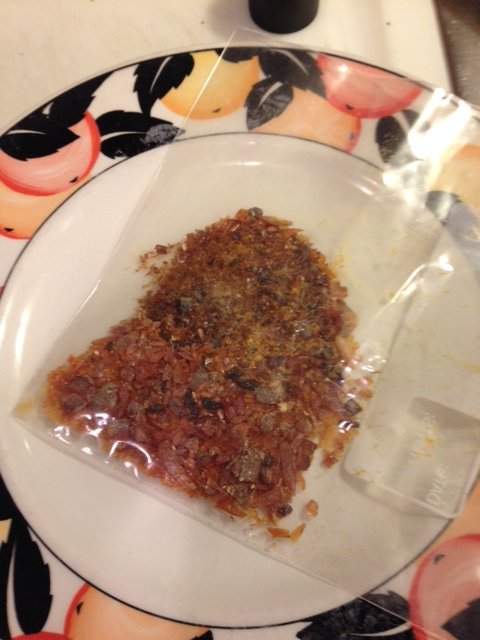
1. It helps to chill both cakes in the freezer for about 20 minutes - this helps them shatter into small pieces/powder.
2. Put into a freezer bag and use pliers or a small hammer to gently pulverize the cakes.
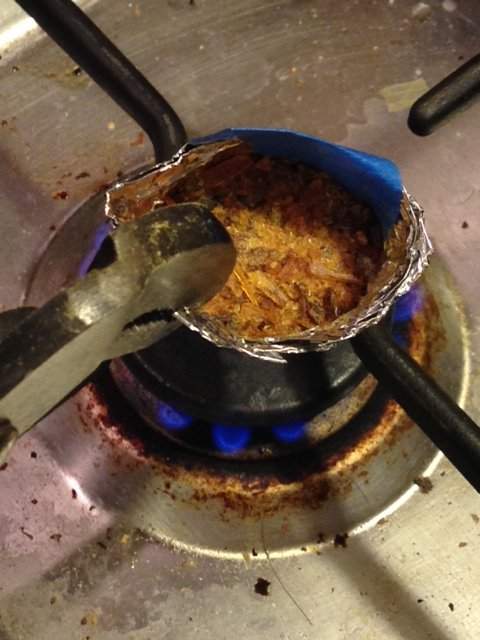
3. Fabricate a foil cup (4 layers - make sure it doesn't leak).
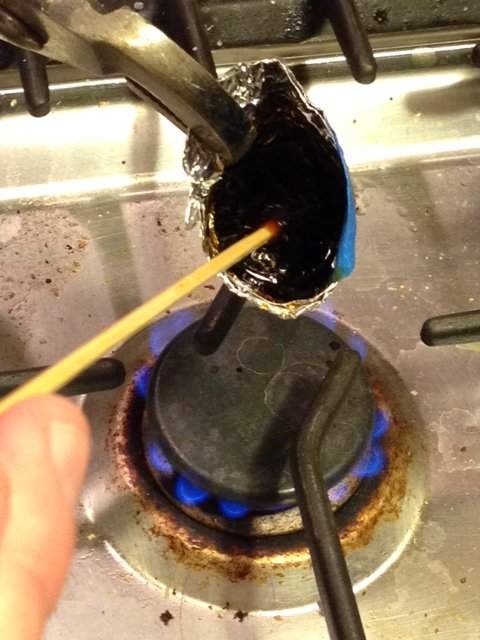
4. Cook over a low flame and melt into a thick syrup. (Use pliers to hold the foil cup.)
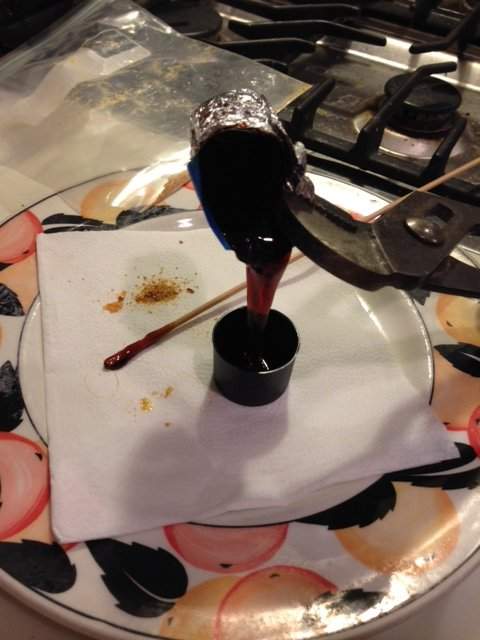
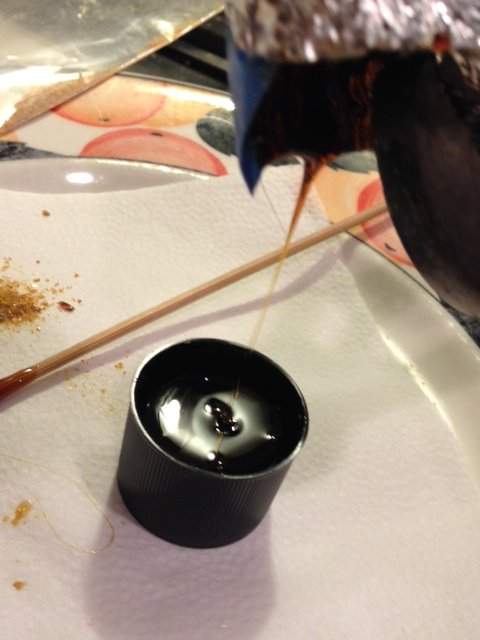
5/6. Pour into a small, plastic cup - this one is the top of an aerosol spray can.
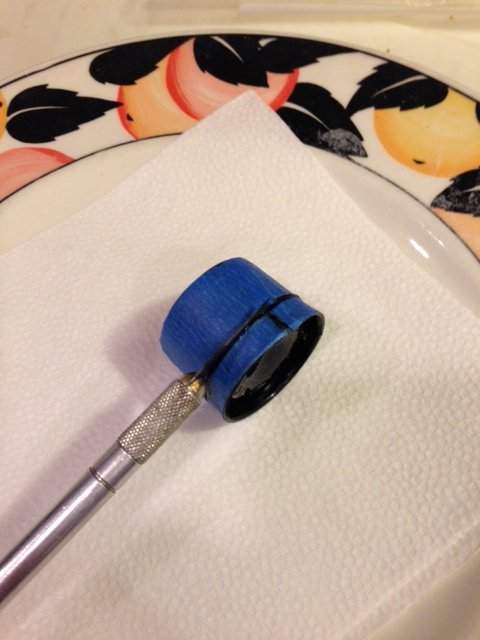
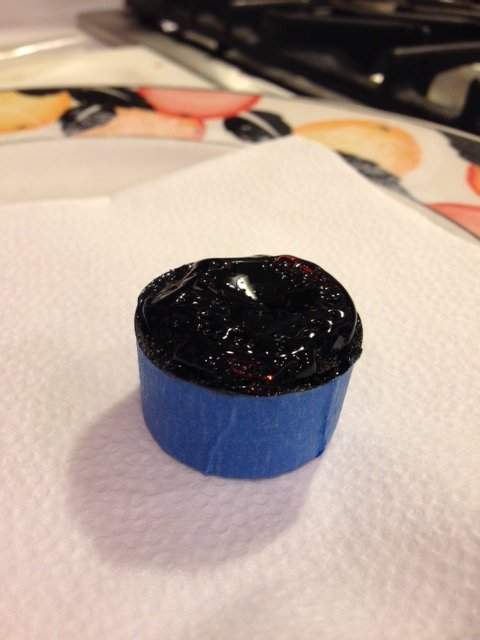
7. Wrap the outside of the cup with tape, and draw a line showing where to remove the plastic and expose the rosin. Use an Xacto knife, heated red-hot, to cut thru the line on the plastic cup - this is best done with the cake "chilled", as it will release from the plastic easier - better to flake off than stick, which can make a mess. Use small pliers to peel the plastic off in sections. If the edges are "sharp" or irregular, simply hold the cake over an open flame for a few seconds, and rotate - this will round off those edges.
Put back in the freezer for 5 minutes to stabilize the cake and help it return to room temperature.
8. Let it stabilize overnight, as the core may still be too soft.

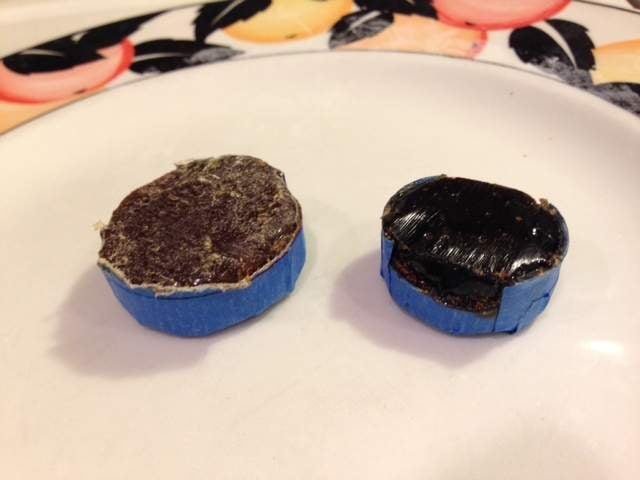
This recombined rosin always feels great - I have a theory that the top layer, (that is exposed to the air), dries out(?) and becomes "glassy", and difficult to apply.
I have NO Scientific Evidence to support this theory.
Thanks.
photo(92).JPG
photo(93).JPG
photo(94).JPG
photo(95).JPG
photo(96).JPG
photo(97).JPG
photo(102).JPG
photo(101).JPG
 
Last edited:
"Many don't realize that the cheapest and easiest way to maintain a good sound is to keep fresh rosin. Old rosin, gets 'powdery' and tends to sound scratchy after a while. What happens is that the natural properties (resins, wax and other related natural additives) start to break down and change. If you are serious about your arco playing and sound, don't be cheap about replacing your rosin once a year. There is some folklore and anecdotes about heating Pops in the microwave oven or melting down various rosins together on the stove! Rosin is cheap, keep fresh rosin!"

Something I read recently on the String Emporium website -- which is not meant to be a put down of your frugality - go for it!

Your repurposed rosin sure looks fresh.
 
I'm not quite sure how to follow this instruction. Do I whack them with the hammer slowly? Use a "soft" hammer? Whack them as hard as I can while apologizing? Can you elaborate please? I want to get this right! I wouldn't want "bruised" rosin!

Though the hammer be "hard", the touch is "controlled" and "well-placed" - one does not simply "pound" in clumsy anger, (like some crazed Neanderthal Dentist), but rather, one uses a slight forearm and wrist movement to cause the face of the hammer to land flat and parallel to the surface upon which the freezer bag is lying, (taking care to NOT damage or perforate the freezer bag!), whilst simultaneously reducing the lumpen masses to a fine, powdery mist, fit for Maestro Paganini himself!
Much like the stoppage of a Double Bass string, use only as much force as necessary. Anything more would be simply Barbaric, and (yes) may "bruise" the rosin, as any fool knows.
And Now, my Good Fellow...I must repair, posthaste, to My Room Of Practice.
(I fear the inhalation of fumes from yesterday's procedure may have adversely affected my faculties....I'm hearing everything a Octave lower.)
 
Though the hammer be "hard", the touch is "controlled" and "well-placed" - one does not simply "pound" in clumsy anger, (like some crazed Neanderthal Dentist), but rather, one uses a slight forearm and wrist movement to cause the face of the hammer to land flat and parallel to the surface upon which the freezer bag is lying, (taking care to NOT damage or perforate the freezer bag!), whilst simultaneously reducing the lumpen masses to a fine, powdery mist, fit for Maestro Paganini himself!
Much like the stoppage of a Double Bass string, use only as much force as necessary. Anything more would be simply Barbaric, and (yes) may "bruise" the rosin, as any fool knows.
And Now, my Good Fellow...I must repair, posthaste, to My Room Of Practice.
(I fear the inhalation of fumes from yesterday's procedure may have adversely affected my faculties....I'm hearing everything a Octave lower.)

Ah, I see. Like Rabbath, you've developed your own "school of rosin pounding" which will take years of dedicated study with a certified instructor before a neophyte should dare such feats in performance. The weight of the hammer, it's balance, the shape of the head, the shape of the handle, the material of the head, the material of the handle, the ratio of the weight and length of the hammer to the height and arm-length of the practitioner, the height of the counter, the strength of the counter, the proximity of the significant other (berating practitioners for smelling up the kitchen), the height of the swing, the perpendicularity of the swing to the counter; indeed, I can see why this is such a rarefied skill. And later, more advanced students, I presume, master the "counter-cross" maneuver and the French as well as the German hammer grip. And, of course, different rosin requires completely different technique! Where can I sign up?
 
  • Like
Reactions: damonsmith
Ah, I see. Like Rabbath, you've developed your own "school of rosin pounding" which will take years of dedicated study with a certified instructor before a neophyte should dare such feats in performance. The weight of the hammer, it's balance, the shape of the head, the shape of the handle, the material of the head, the material of the handle, the ratio of the weight and length of the hammer to the height and arm-length of the practitioner, the height of the counter, the strength of the counter, the proximity of the significant other (berating practitioners for smelling up the kitchen), the height of the swing, the perpendicularity of the swing to the counter; indeed, I can see why this is such a rarefied skill. And later, more advanced students, I presume, master the "counter-cross" maneuver and the French as well as the German hammer grip. And, of course, different rosin requires completely different technique! Where can I sign up?

It can't be taught. It can only be described...
 
  • Like
Reactions: Tom Lane
Here's the verdict - this hybrid cake of recycled rosin is noticeably better that either of the 2 contributing cakes were before the melting/mixing. I believe that this is related to the surface drying out and becoming hard - melting and mixing seems to make for an homogenized cake, one that is not yet crusty on the surface. (I may scrape off the top layer, about 1/16th of an inch, as it becomes crusty and/or less usable and/or deeply rutted - or I may just remelt it again, at some point.) Note the visible marks in the photo below where the hair actually "took" rosin off of the surface - this is a sign that product is being transferred to the hair AND you can see that it is being applied across the width of the hair.
In my teaching I've found that most students use "too little" rosin, and are shy about its application - I recommend applying from the Frog to the Middle (about 3 swipes), and an application from Tip to Middle (about 3 swipes, as well). Maybe more or less, to taste, but it should really "bite" into, and convey a connection to, the string, from Frog to Tip. IMHO.
The common technique (as I was taught) of applying from ONLY Frog to Tip can result in "too light" of an application in the Tip Half of the bow, as well as an excess on the Frog Half, IMHO. "Pushing" the bow into the rosin from Tip to Middle, seems to increase the amount applied there. I've taken this approach from every other string instrument (vln., vla., cello), that I've watched as they apply rosin. I've NEVER seen just a "Frog to Tip" application.
Thanks.
photo(103).JPG
 
Last edited:
I've had a few cakes melt on me unintentionally in the past. I left some Pops in the car on a summer day and it was basically liquid, played a few outdoor gigs with no shade etc. and it just sort of happens. I will say that more often than not, the rosin does seem to be better than it was before the melting experience, but not as good as a fresh cake. For softer rosins, I'm guessing the extra stuff they put in there to keep it soft eventually loses moisture and you just aren't going to get the same results. I'm not in the new cake of Pops every month camp, but I'm also not using the first cake I bought 10 years ago.
As for harder rosins, I think the melt would be much more successful. There aren't as many additives in there that you need to worry about, and I agree that the surface does get hard and dried out. I had a cake of violin rosin that was very old and hadn't been used much at all where I chipped away about 1/4" of it, and the "new" rosin underneath was significantly better than the old stuff that had dried above it. There are some bass rosins that would fit into that category as well, and although I'm not familiar with Nyman-Hartz, it could be one of them. I played Carlsson for a while years ago and seem to remember that chipping away the top of it when it hadn't been used in a while helped.
 
  • Like
Reactions: Tom Lane
I've had a few cakes melt on me unintentionally in the past. I left some Pops in the car on a summer day and it was basically liquid, played a few outdoor gigs with no shade etc. and it just sort of happens. I will say that more often than not, the rosin does seem to be better than it was before the melting experience, but not as good as a fresh cake. For softer rosins, I'm guessing the extra stuff they put in there to keep it soft eventually loses moisture and you just aren't going to get the same results. I'm not in the new cake of Pops every month camp, but I'm also not using the first cake I bought 10 years ago.
As for harder rosins, I think the melt would be much more successful. There aren't as many additives in there that you need to worry about, and I agree that the surface does get hard and dried out. I had a cake of violin rosin that was very old and hadn't been used much at all where I chipped away about 1/4" of it, and the "new" rosin underneath was significantly better than the old stuff that had dried above it. There are some bass rosins that would fit into that category as well, and although I'm not familiar with Nyman-Hartz, it could be one of them. I played Carlsson for a while years ago and seem to remember that chipping away the top of it when it hadn't been used in a while helped.

The first time I tried this melting/mixing, it was just an attempt to take a couple of very small cakes and combine them to make 1 cake of normal size for easier handling. I didn't expect that the melting/mixing process would enhance the performance. I don't think I'm imagining the overall improvement - I've reproduced this same positive result many times.
Also - I've heard that Carlsson and Nyman-Hartz are similar "recipes" - I've used Carlsson in the past, (liked it...), and currently use Nyman-H., exclusively.
Next, I'll be attempting a hybrid mix of an old cake of Pops ('99 vintage - I didn't use very much of it - it's been covered up), and a hardly-used cake of "Chicago Bass Rosin" from '98 - I must have been on another "Holy Grail" Crusade, back then... You know, Y2K and all.
I'll let you all know how this latest madness plays out.
Thanks.
 
I think this has been covered many times in the distant past but it was all buried from threads ~10 years ago. I did it once long ago and it was pretty simple. Take the rosin, use something like the bottom half of an aluminum can and put the old pieces innit. Prop the can on top of a candle flame and let it sit until it's all melted. Once molten, get some dixie cups and pour into the cups and let cool.

No fuss no muss.
 
  • Like
Reactions: Jeshua
I think this has been covered many times in the distant past but it was all buried from threads ~10 years ago. I did it once long ago and it was pretty simple. Take the rosin, use something like the bottom half of an aluminum can and put the old pieces innit. Prop the can on top of a candle flame and let it sit until it's all melted. Once molten, get some dixie cups and pour into the cups and let cool.

No fuss no muss.
That sounds too easy; can't you do something to make it more difficult?
 
  • Like
Reactions: Huy Nguyen
Due to a poor choice in rosin container (i.e. folded paper), I had to re-pour a cake and wanted to share my experience to supplement the information shared here.

IMG_20160608_121941.jpg


Melting container - rather than MacGyver one from aluminum foil, I reused a mini pie tin that I had saved from a fruit pie. It was the perfect size and had the added bonus of a rigid lip that was easy to grasp with pliers, making it easy to maneuver.

Rosin container - I used a ready made paper cup (à la Pops) that I got from a restaurant.

Melting - I skipped the freeze/smash cycle reasoning that the whole shebang would turn into liquid anyway so I threw the whole cake (paper included) into the tin and proceeded. If I were combining two cakes, it would be easy enough to stir and homogenize the resulting liquid. I initially tried a double boiler method (hence the coat hanger stand) but that didn't seem to generate enough heat so I placed in the tin into the oven at 400 degrees (it probably would've worked at lower temperature). 10 minutes later, the cake was liquid and the paper was floating on top. At that point, it was just a matter of removing the paper and pouring the liquid.
 
I skipped the freeze/smash cycle

I forgot to mention that the freezing allows for the top layer (usually dried out?) to be easily scraped off with an xacto knife. In my case, I made an attempt to remove the exposed top 1/4" layer of each OLD cake before pulverizing and dry-mixing.
Sorry.
Did you notice an improvement in the performance of the rosin, after cooking?
I'm curious.
 

Latest posts