The key is the raw wood being sufficiently dry whether kiln or time (or both) and allowed to acclimate where it is being worked on.
This is the "key".
Having seen splitting in person, I can tell you, it's pretty upsetting.
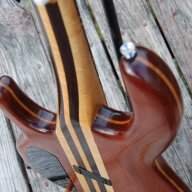
I use a LOT of Kauri pine. I've build 5 guitars using it. One bit of it came from a local timber yard. They told me, "it's ready to use". So I built this...
It was 2 piece body. All went well until I started applying primer. The timber wasn't properly dry and started splitting. I thought I had it under control and glued a bunch of the splits up before painting, but the longer the paint cured the more splits appeared. You can't see them in the pic and it's all stabilized now, but it was pretty heart breaking.
All the kauri I've used since then has been sitting on my shelf for at least 12 months acclimatizing or it's recycled sunday school pews (50 years old). Nearly ALL the pews I've seen there, made from wide slabs, were cupped to some extent... and they'd been properly finished when they were first made.
I'm not saying that you shouldn't use single slab bodies, but you better be pretty sure of 2 things before you start working the timber...
1. It really is DRY
2. The timber in question is NOT given to cupping in a single slab
There aren't many species that are included in No.2, so I advocate multi piece bodies. Besides that, sandwiched bodies mean you get to chamber the heck out of it, another great way to prevent cupping... and a bad back.