I lost a Dingwall Voodoo bass I was quite impressed with. I thought a Dingwall Afterburner 1.5 (an Afterburner I with electronics from an Afterburner II) would be a good stop gap until I could replace my Voodoo. A year later I find the Afterburner is an above average guitar but not nearly what I expected from a premier manufacturer. The bridge is a hardware store nightmare with five separate adjustment tools. The sound is adequate but not spectacular. I can coax what I want from the Afterburner but the Voodoo did naturally what I must now work to achieve. Please help me with any advice on how to get better response from the Afterburner.

Enjoy the benefits of a premium membership!
Upgrade Account
-
TalkBass has been independent since 1998. Add your voice.
Create a free account to reply to discussions, view embedded media, and browse with fewer display ads.
Join free Log in
Want zero display ads or expanded classifieds tools? Compare plans.
You are using an out of date browser. It may not display this or other websites correctly.
You should upgrade or use an alternative browser.
You should upgrade or use an alternative browser.
One thing is not like the other ...
- Thread starter wsmerwin@hotmai
- Start date
More options
Who Replied?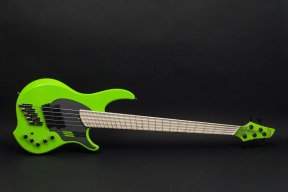
What pickups did your Voodoo have?
PS: The Afterburner bridge uses 2 wrenches. The same two as the Voodoo line.
PS: The Afterburner bridge uses 2 wrenches. The same two as the Voodoo line.
That's a real early one. Unless they were replaced they were Bartolinis. It's a long shot but we may have a used set in stock otherwise you could post on our forum to see if someone has a set they're not using.
So what you're saying is your two thousand dollar bass isn't the same as your five thousand dollar bass?
I (perhaps foolishly) expected my $3000.00 Afterburner to be a closer replica of the $5000.00 Voodoo because they are both made by the same company. If I was wrong to think so I stand corrected.
I don't remember Bartolinis (would they have a logo embossed on the pick up cover ?). I am very interested in the replacement pick ups and will contact Sheldon D. directly to take him up on his offer.
I don't remember Bartolinis (would they have a logo embossed on the pick up cover ?). I am very interested in the replacement pick ups and will contact Sheldon D. directly to take him up on his offer.
1051 was probably one of the first dozen made. Is it tone or feel you're not happy with? The original saddles were Kahlers and were a 17 mm spacing. This meant the neck was narrower at the heel too.

I am definitely not Sheldon Dingwall, but I own several many Dingwalls (nearly 30) so I can only speak of my experience (and I have played few more). There is a good reason why the two basses do not carry the same model name, as well as the same price (let alone the tone).
IME Dingwall basses offer models with different tonal versions of the trademark Dingwall playability, tone and ergonomics. I can achieve similar tones by using different Dingwalls, but I cannot achieve all the tones that one Dingwall bass offers me by using another Dingwall bass. That's why I use a specific Voodoo when I play Dub and Reggae, while I use a specific Prima Artist for my Fusion projects and the FRB Z3 for my Pop/Rock group (I am knit -picking here and I know). Still I can use most any Dingwall in most any project and still be happy (not feeling let down).
The Afterburner has different specs at several important design points compared with the Voodoo. I LOVE my Afterburners (I own 5 AB's so far, three of them are really one-offs) while I love my Voodoo's, but tonewise, I do not think that they share identical tonal ballparks (they do overlap though).
Pickups are one of the crucial parts of the tone chain, and Sheldon spec-ed Barts impart a specific tone. FD-3's (and FD-1's even more) offer a departure from that tone.
IME Dingwall basses offer models with different tonal versions of the trademark Dingwall playability, tone and ergonomics. I can achieve similar tones by using different Dingwalls, but I cannot achieve all the tones that one Dingwall bass offers me by using another Dingwall bass. That's why I use a specific Voodoo when I play Dub and Reggae, while I use a specific Prima Artist for my Fusion projects and the FRB Z3 for my Pop/Rock group (I am knit -picking here and I know). Still I can use most any Dingwall in most any project and still be happy (not feeling let down).
The Afterburner has different specs at several important design points compared with the Voodoo. I LOVE my Afterburners (I own 5 AB's so far, three of them are really one-offs) while I love my Voodoo's, but tonewise, I do not think that they share identical tonal ballparks (they do overlap though).
Pickups are one of the crucial parts of the tone chain, and Sheldon spec-ed Barts impart a specific tone. FD-3's (and FD-1's even more) offer a departure from that tone.
I'm not uncomfortable playing the Afterburner exactly. I'm not getting the tone I want so it feels "funny" ? I get used to almost hearing what I expect but when compared to the Voodoo, the Afterburner doesn't have the bell like quality or the cottony lower midrange growl (sorry if my description is vague). Even when my equipment was average the Voodoo spoke beautifully. The Afterburrner, not so much.
I understand what you mean, but you are comparing apples to oranges. I have used my AB-I, AB-II (old style) and AB-II in a heavy metal setting, but the Z3 or a Voodoo was fitting the setting better, in a different way. For some things the AB's fit the bill better than other models, in some other cases not so perfectly. Sheldon Dingwall is really very helpful and he can help you get closer to the desired tone. Still, I'd not be comparing an Afterburner with a Voodoo ;-)
To fullrangebass I can only say I thought of Dingwall as the purveyor of a sound. Right or wrong I thought Dingwall tried to reach a single goal through many paths, creating a rich and well defined tonal palate unique to their instruments. Frankly I expected the Afterburner to sound more like the Voodoo than it does. When I got the Voodoo I thought all Dingwalls would sound similarly great. It's frustrating to get close to the sound I hear but not quite reach it. Maybe Sheldon's suggestion of changing the pick ups to Bartolinis will help capture the sound I'm searching for.
I tried to replace my fretless lined Steinberger with a later model and found it lacking something as well. Is the lesson I should take from this that no two basses are alike ?
I tried to replace my fretless lined Steinberger with a later model and found it lacking something as well. Is the lesson I should take from this that no two basses are alike ?
I can see the value of the Afterburner, it's a good all around bass with a solid sound, useful in many situations. I didn't realize it at the time, but I was looking for something else.


