• TalkBass has been independent since 1998. Add your voice.
    Create a free account to reply to discussions, view embedded media, and browse with fewer display ads.
    Join freeLog in
    Want zero display ads or expanded classifieds tools? Compare plans.

Optima RB Flats - Whoa!!! (vs. LaBella LTF comparison)

Mike Vee

Inactive
Oct 8, 2012
3,718
8,234
Los Angeles
Optima 4440.L 45-100

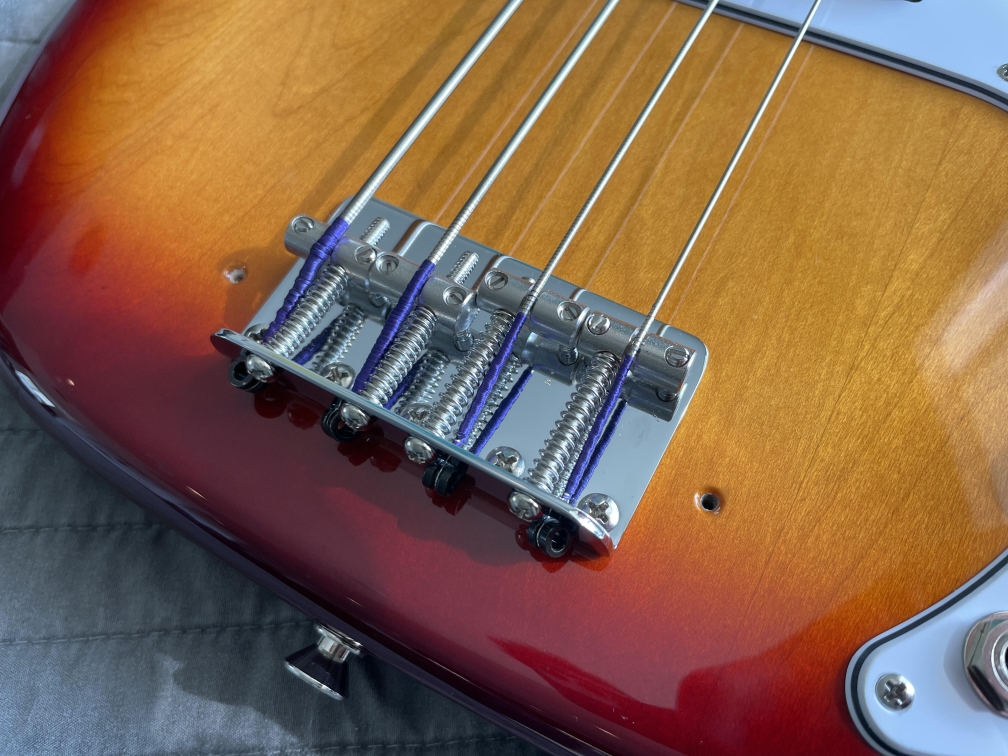
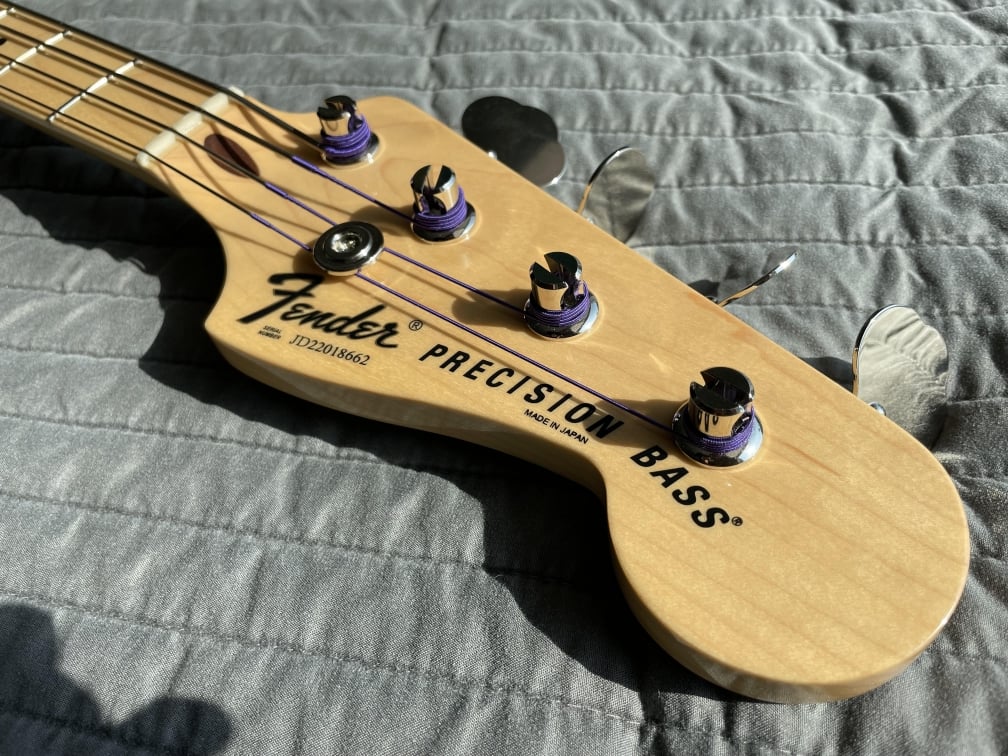
I just installed these on my P-bass with EMG Geezer pickups. I broke them in for about an hour, stretched them a bit, applied and wiped off a SUPER tiny bit of Eucerin cream for lubrication / speed... and WOW. These are absolutely amazing flats! I have tried pretty much every flat out there, and these are possibly the best, or at least in the top 3 for sure. They made this bass PERFECT after struggling with at least 6 other string choices.

I would describe their feel and tone like this:
65% Labella LTF
20% Dunlop Flatwound
15% GHS Precision Flats

The feel and sound very similar to LaBella LTF flats, but without that super twangy/thin feeling G string. The texture is different through, it's like nothing I've ever felt before. They are sort of subtly "ribbed" or even lumpy, but in a very soft way. It's a good thing.

They are slightly tighter than LTF, but not by much. The diameter feels a little thicker. They setup a little lower too, which makes sense since they are slightly more tight. I would say after TI, then LTF, these are next. They are not as tight as Fender 9050L. Very flexible and comfortable.

The E string is FATTTTTTT and punchy. Much fatter and thumpy than LTF, but not "dead" as I have read in some reviews. Very, fat, tons of fundamental but still a nice subtle grind, especially on the D and G. Still a good amount of mids like LaBella but a little different, but not much. ZERO metallic overtones or hollow, scooped sound like Chromes and Fenders (I dislike both of those strings and if you do too, these should be more up your alley.)

I've seen a lot of people comparing them to TIs but I would not agree. They are nothing like TIs even thought the construction and materials are the same. They do NOT fill the void for a thicker, higher tension TI flat, unfortunately, but are amazing in their own right.

(Only minor issue is VERY long silk at the bridge.)
1.jpg


2.jpg
 
Last edited:
Has anyone else tried these ?
Yes! These are the modern incarnation of the traditional Maxima flats that were used by Rickenbacker and others, even down to having a similar red box. If you want that dark, hollow, as big as it gets, tone, these are the strings. When I want that tone, I prefer these far and above either the TI's or the LTFs, even Pyramids, all of which to my fingers have similar tension. I have a used set sitting on my shelf waiting for the next application, gig, or recording session. Once they break in, they last a long time. How long? I got these here off the forum, and I believe I'm the third owner of the same set.
 
Thanks for the review. I'd give them a go if they would come in a standard 45-105 set.
As far as I can tell, Optima does not make 45-105 flats. I have their RB's on my '01 Rick 4003 (naturally :rolleyes:), and I have their 4099RL "Chromes" on my '88 Tokai TB48 Thunderbird. Brighter tone than the RBs, since they're not nickel, but... same gauges. The gauge choice is kind of puzzling - especially for the 4440RBs. The Maxima Flats that they're "copying" were - according to John Hall, the former CEO of RIC - 40-50-77-112s. I can only speculate that modern materials, and manufacturing techniques, convinced Optima that they didn't need the original Maxima gauges. I'd have to agree; the tone I remember from the '68 4001 that I learned to play on, is pretty much the tone I get from the RB's on my '01 4003. And, what difference there is, is almost certainly the difference between the '68's Horseshoe/toaster pickups, and my 4003's Hi-gains. And, if I can get the Maxima's 112 ga. tone from an RB 100 ga. E string? I'd say a 105 is pretty unnecessary...:whistle:
 
Since the wrap is pure nickel, it is more dense than the steel, whether stainless or chrome, of other strings' wrap. That means they play a little tighter than their 45-57-77-100 gauges would otherwise indicate.

I wonder how they would sound like compared to the Fender 9050M currently on a Pbass of mine.
And by the way, they're quite expensive.
 
As far as I can tell, Optima does not make 45-105 flats. I have their RB's on my '01 Rick 4003 (naturally :rolleyes:), and I have their 4099RL "Chromes" on my '88 Tokai TB48 Thunderbird. Brighter tone than the RBs, since they're not nickel, but... same gauges. The gauge choice is kind of puzzling - especially for the 4440RBs. The Maxima Flats that they're "copying" were - according to John Hall, the former CEO of RIC - 40-50-77-112s. I can only speculate that modern materials, and manufacturing techniques, convinced Optima that they didn't need the original Maxima gauges. I'd have to agree; the tone I remember from the '68 4001 that I learned to play on, is pretty much the tone I get from the RB's on my '01 4003. And, what difference there is, is almost certainly the difference between the '68's Horseshoe/toaster pickups, and my 4003's Hi-gains. And, if I can get the Maxima's 112 ga. tone from an RB 100 ga. E string? I'd say a 105 is pretty unnecessary...:whistle:

Yes, it makes sense. To be honest, I somehow can't get past the idea that a stringset has to be at least 45-65-85-105... :dead:
 
I wonder how they would sound like compared to the Fender 9050M currently on a Pbass of mine.
And by the way, they're quite expensive.

the fenderd will be a bit stiffer and brighter than the optimas. the optimas arevdarker and thumpier than the fenders. i would say the optimas are darker than la bella DTF but brighter than Pyramid Golds.
 
As far as I can tell, Optima does not make 45-105 flats.
[...]
I have their 4099RL "Chromes" on my '88 Tokai TB48 Thunderbird. Brighter tone than the RBs, since they're not nickel, but... same gauges.
Optima "Chrome" flatwounds are also chrome-nickel wound (as are their Chrome roundwounds):
E-Bass FLATWOUND STRINGS Satz, Long Scale
The main difference is their being hex-core vs. the round-core RB flats.

The gauge choice is kind of puzzling - especially for the 4440RBs. The Maxima Flats that they're "copying" were - according to John Hall, the former CEO of RIC - 40-50-77-112s. I can only speculate that modern materials, and manufacturing techniques, convinced Optima that they didn't need the original Maxima gauges. I'd have to agree; the tone I remember from the '68 4001 that I learned to play on, is pretty much the tone I get from the RB's on my '01 4003. And, what difference there is, is almost certainly the difference between the '68's Horseshoe/toaster pickups, and my 4003's Hi-gains. And, if I can get the Maxima's 112 ga. tone from an RB 100 ga. E string? I'd say a 105 is pretty unnecessary...:whistle:
AFAIK only the Rickenbacker 4445 set (nylon tapewound) had a .112" low E:
The Comprehensive List of Black Nylon Tapewound Strings!!!

The flatwound and roundwound sets were, according to the last post of this RickResource forum thread,
Original String Gauges - Rickresource Rickenbacker Forum
Code:
===============================================================
Year  Model              1      2      3      4      Wd.  Alloy
===============================================================
1957  Rickenbacker 4440  0.045  0.056  0.077  0.103  F    430
1979  Rickenbacker 4441  0.045  0.055  0.075  0.105  R    430
1984  Rickenbacker 111   0.045  0.055  0.075  0.105  R    NPS
1984  Rickenbacker 899   0.045  0.056  0.077  0.103  F    430
===============================================================
At .045 .057 .077 .100, the Optima RB 4440.L has one mil larger D and A strings, and a three mils thinner low E compared to the original, Maxima-made 4440 set.
 
Last edited:
Optima "Chrome" flatwounds are also chrome-nickel wound (as are their Chrome roundwounds):
E-Bass FLATWOUND STRINGS Satz, Long Scale
The main difference is their being hex-core vs. the round-core RB flats.


AFAIK only the Rickenbacker 4445 set (nylon tapewound) had a .112" low E:
The Comprehensive List of Black Nylon Tapewound Strings!!!

The flatwound and roundwound sets were, according to the last post of this RickResource forum thread,
Original String Gauges - Rickresource Rickenbacker Forum
Code:
===============================================================
Year  Model              1      2      3      4      Wd.  Alloy
===============================================================
1957  Rickenbacker 4440  0.045  0.056  0.077  0.103  F    430
1979  Rickenbacker 4441  0.045  0.055  0.075  0.105  R    430
1984  Rickenbacker 111   0.045  0.055  0.075  0.105  R    NPS
1984  Rickenbacker 899   0.045  0.056  0.077  0.103  F    430
===============================================================
At .045 .057 .077 .100, the Optima RB 4440.L has one mil larger D and A strings, and a three mils thinner low E compared to the original, Maxima-made 4440 set.

Well, then... I guess John Hall was mistaken. You would think, as the owner of RIC, and as someone who had all the records at his fingertips, he would know better. But... obviously not :rollno::rollno: And, I got his "quote" from the Rickresource Rickenbaker Forum, too...:cool:
 
I've purchased two sets of the Optima RB flats, the first three years ago when I installed them on my Ric 4003S. My initial thoughts were they felt and sounded as if they were designed for the Ric, and were just about perfect for me. I also preferred their higher tension compared to the TI flats that I was using on other basses at the time.

After a few months and several gigs, the now well-broken in Optimas lost their charm for me. I play finger style only (by physical necessity) and though they likely would've sounded good played with a pick, for me they were now just too dead. It reminded me of my experience with La Bella 760FLs - great initially, then a few gigs later...

I tried another set of Optima RBs on the Ric six months ago and for some reason even when fresh, they didn't have quite the charm of that first set; I moved them to my Jack Cassidy bass and they work fine enough there. They're very nice strings but at the US price (about $75), I'm done experimenting with them. Just my taste of course, but I find the much cheaper Fender 9050Ls work better on my Ric in terms of tone and longevity.
 
Well, then... I guess John Hall was mistaken. You would think, as the owner of RIC, and as someone who had all the records at his fingertips, he would know better. But... obviously not :rollno::rollno: And, I got his "quote" from the Rickresource Rickenbaker Forum, too...:cool:
I have found a place where Hall said that:
https://web.archive.org/web/2015092...kenbacker.com/forum/viewtopic.php?f=5&t=15631
^ (4th post)

However, I've also found some not so clear, yet barely so, visual sources to RR member henry_the_horse's claim (source links in this and this other post of theirs don't work anymore) -

https://rvb-img.reverb.com/image/up...upersize/v1518648659/d99gtugcabwiwpetghpx.jpg
^ (page 4 of the 1977 price list shows the item no. of each string in the 4440 set)

https://rvb-img.reverb.com/image/up...,t_large/v1518648651/w24mxxbaqs9rggmojnnc.jpg
Invalid Link Removed
^ (if you zoom in on page 3 of the same list - both images are equally bad, but it is at least clear that the gauge of string S4410, i.e. the low E, has an "0" as its second figure; the one that is a .111 is the S4511, = the low E of the nylon set, per page 4 linked to above; it accordingly has an "N" in the "type" column here)


This would seem to point to Hall having misremembered. I'm sorry I haven't got clearer sources.
 
  • Like
Reactions: GIBrat51
I have found a place where Hall said that:
https://web.archive.org/web/2015092...kenbacker.com/forum/viewtopic.php?f=5&t=15631
^ (4th post)

However, I've also found some not so clear, yet barely so, visual sources to RR member henry_the_horse's claim (source links in this and this other post of theirs don't work anymore) -

https://rvb-img.reverb.com/image/up...upersize/v1518648659/d99gtugcabwiwpetghpx.jpg
^ (page 4 of the 1977 price list shows the item no. of each string in the 4440 set)

https://rvb-img.reverb.com/image/up...,t_large/v1518648651/w24mxxbaqs9rggmojnnc.jpg
Invalid Link Removed
^ (if you zoom in on page 3 of the same list - both images are equally bad, but it is at least clear that the gauge of string S4410, i.e. the low E, has an "0" as its second figure; the one that is a .111 is the S4511, = the low E of the nylon set, per page 4 linked to above; it accordingly has an "N" in the "type" column here)


This would seem to point to Hall having misremembered. I'm sorry I haven't got clearer sources.
Well, I suppose we can forgive him. After all, even I can be mistaken...:smug: But, my point still stands; if a modern RB E string sounds like the old Maxima's heavier E string, then...why make it heavier?:eyebrow:
 
  • Like
Reactions: HaphAsSard