In the vintage restoration world, most of the time my ideal is to have the final out come be invisible; as though it never happened and everything is clean and appears original in workmanship, fit, finish, and setup. Some customers insist on keeping everything factory original specs, even with the known production flaws; the same guys that brag about driving vintage cars and keep the drum brakes ( not so great for stopping, but they do slow it down a bit....) or keeping a 40 hp stock motor in their volkswagon. Occasionally I get a fun customer who likes to spice up life a bit and a troubled old bass that is a good candidate for more; the outlaw restorations.
Among vintage plywood bass dorks, American Standards are at the top for their huge voice and funky vibe. Few folks like to admit that they also have a couple of issues. The 43 3/8" factory string length is a b!&@#, especially if you play fast jazz in B flat and F in first position all night with horn players, or if you are not a large person. The necks are nice and thick, unlike a skinny old Kay, but the American Standard necks tend to have a funky small dovetail that fails often. Most have an additional vertical walnut spline in the dovetail and some of them actually have a stacked heel rather than one piece of wood. They also have an E flat heel.
Fellow Talkbasser Max Johnson called me up a while back about a bass project for his touring rig. Remember this bass in the classifieds? Since it all started here on talkbass, I figured it would be appropriate to let folks see how the journey progresses with bringing it back to life.
SOLD - American Standard, # 064 1936
It was for sale for a year or so and almost every person I know around here looked into it, myself included. Max bought it. Touring constantly makes for some funny connections, in so getting the bass to my place it wound up in Nasheville and then on another tour bus to Black Mountain, and before I actually saw it I had the pleasure of hanging out with Tim O'brien, Peter Rowan, the Infamous String Dusters, Frank Sullivan & Dirty Kitchen, and Jim Lauderdale until late in the evening about five minutes down the road from my shop...and then the bass came out of the bus and got passed on to me.
Max and I had a few conversations and in a few weeks he came to Asheville with the Jeff Austin band and the Travelin' McCourys downtown at the New Mountain. I brought as many basses as I could fit in the back of my truck (plus a red spruce and Brazilian rosewood octave mandolin for the mando nerds) and we spent a while going over the various options for restorations, modifications, scroll grafts, new necks, removable necks, et cetera. I had already pulled the neck apart and prep'd the pegbox for a scroll graft. After a lot of nerdiness, Max wound up using the heavily damaged and restored beat to #@!! shop '47 Kay for the entire show. At normal acoustic volumes it is a little subdued, but at stage volume it is always my first choice.
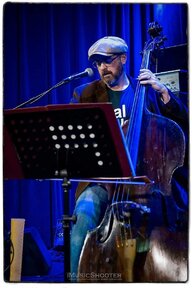
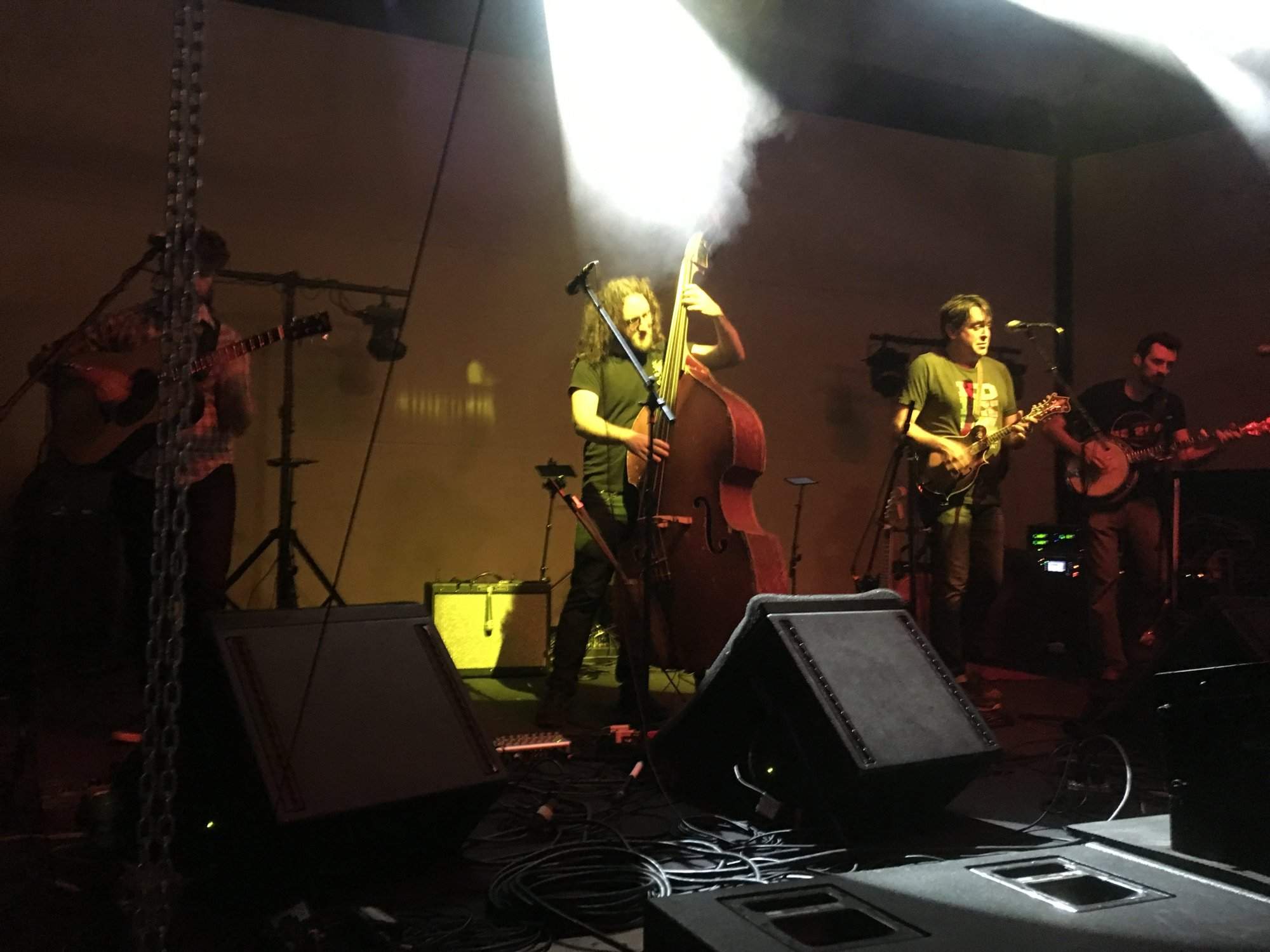
If any of you have not seen Max live, he kills it!!! 'Fantastic to see a high energy bass player hold steady note for note with the big guns and not back down once. He owned the room! The two bands combined for a third set they call the Grateful Ball for a full set of Grateful Dead covers. As an initial potential skeptic having seen many amazing (and a few that were honestly incomprehensibly dissonant noise for three hours...) shows back in the day outside under the west coast stars with Jerry and the 'Dead, I've gotta say that it was the best set of Dead tunes I have ever seen. Two world class bluegrass bands with a fantastic sound system taking standards to a whole new level with fantastic vocal harmonies and impeccably tasteful looooong jammed out solos and then reprised back to the harmonies.
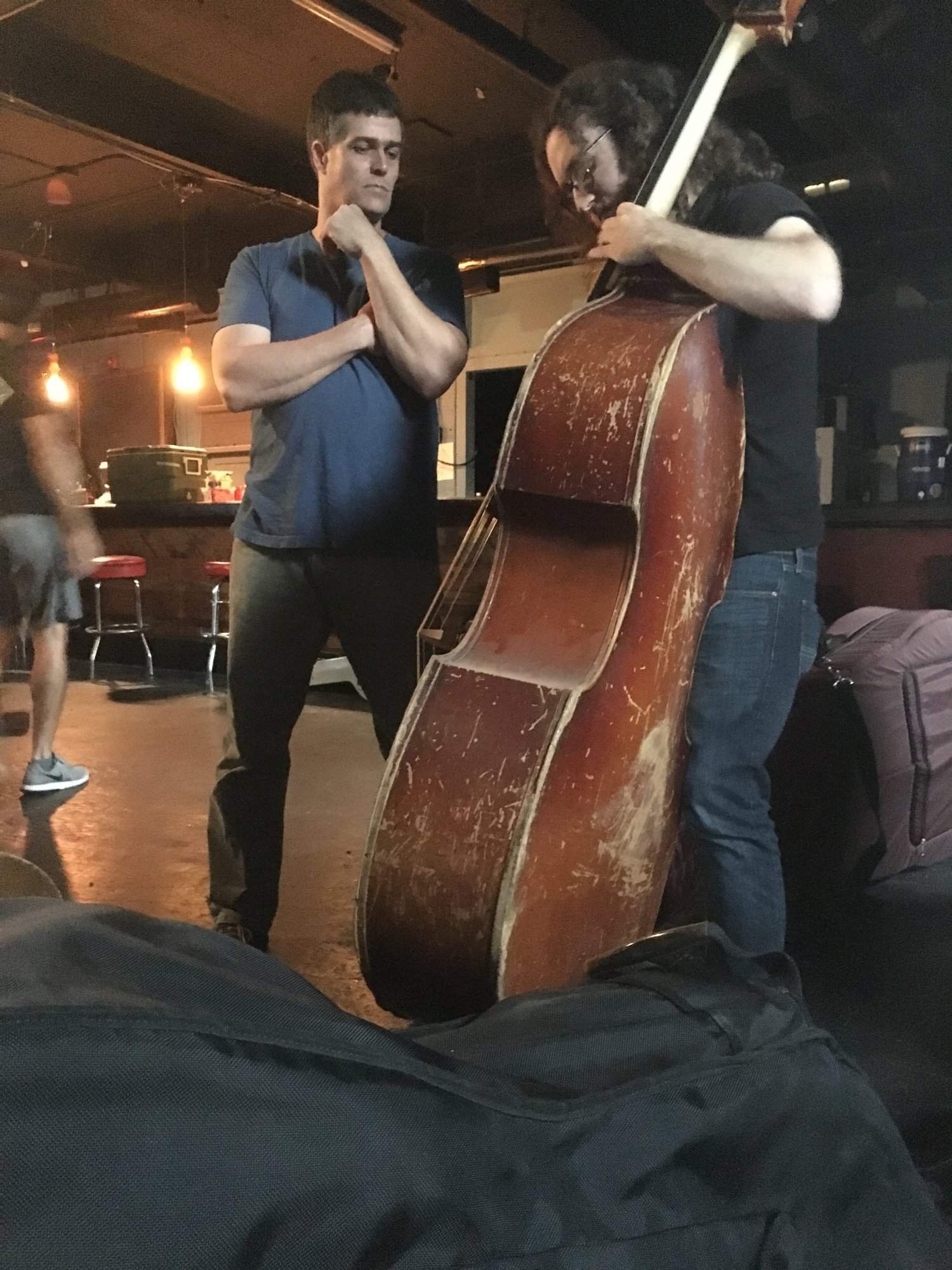
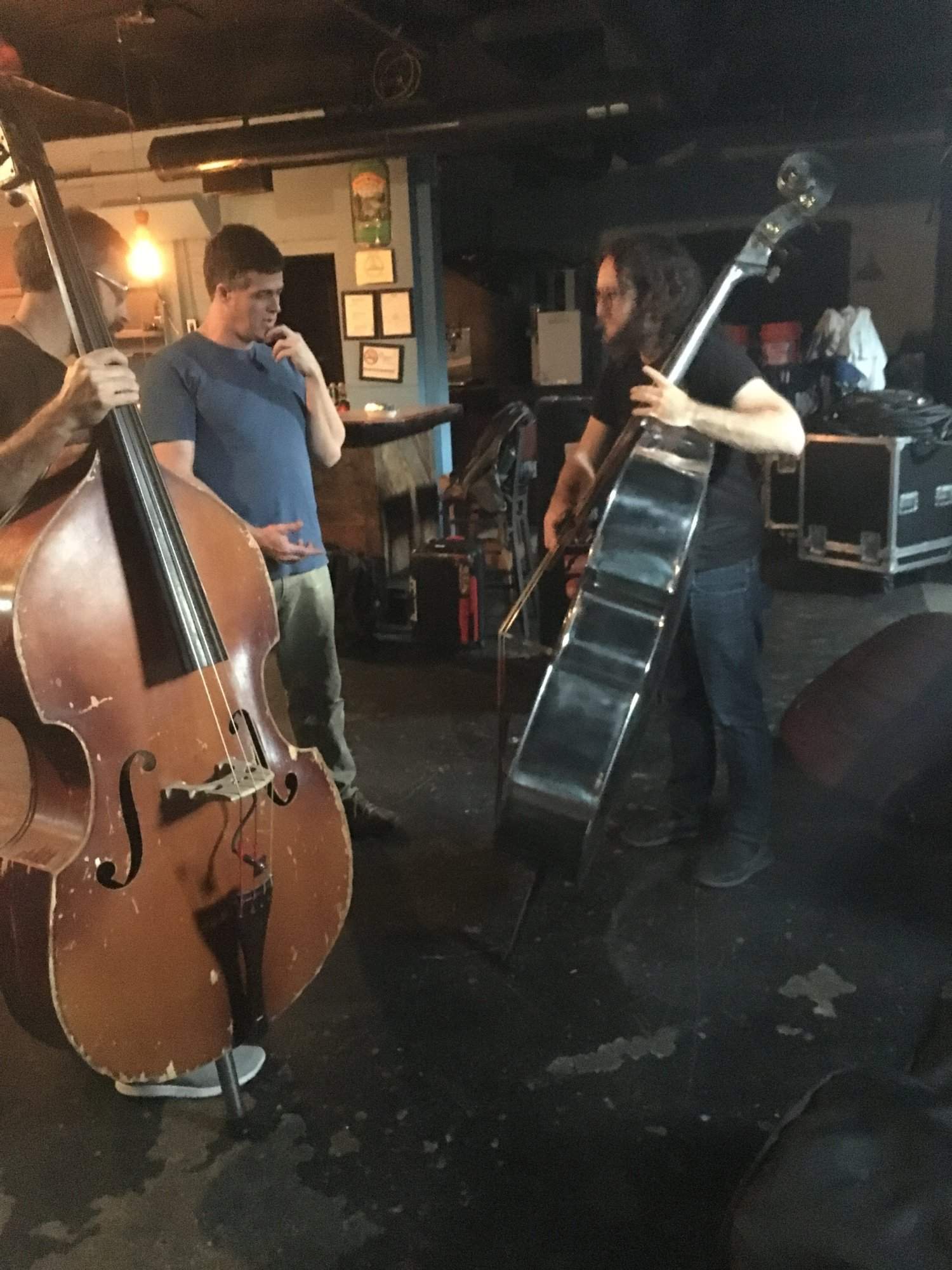
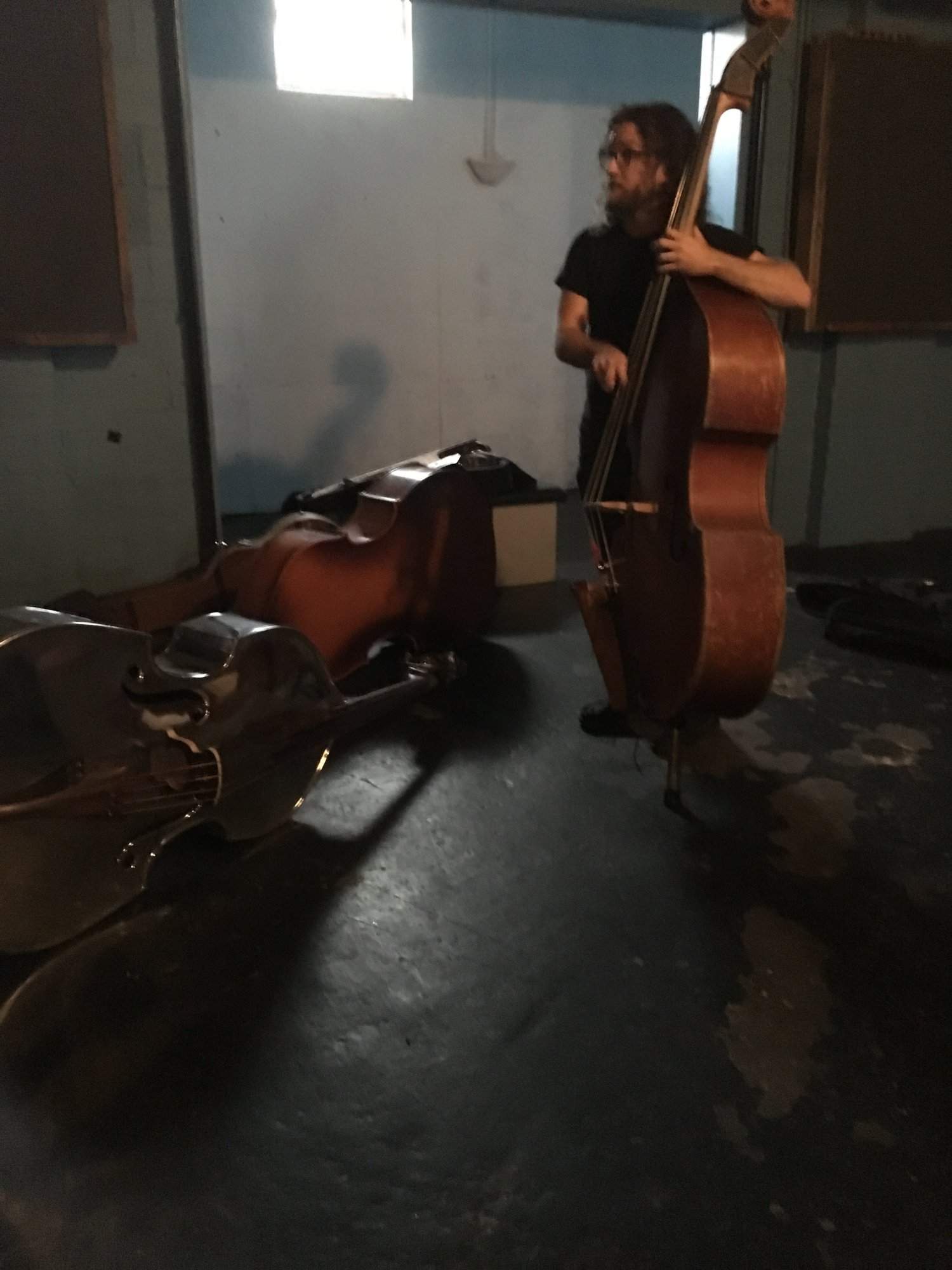
Here are a couple of shots of us and Alan Bartram with the backstage bass quiver sampling.
j.
www.kaybassrepair.com
facebook at Kay Bass Repair
Among vintage plywood bass dorks, American Standards are at the top for their huge voice and funky vibe. Few folks like to admit that they also have a couple of issues. The 43 3/8" factory string length is a b!&@#, especially if you play fast jazz in B flat and F in first position all night with horn players, or if you are not a large person. The necks are nice and thick, unlike a skinny old Kay, but the American Standard necks tend to have a funky small dovetail that fails often. Most have an additional vertical walnut spline in the dovetail and some of them actually have a stacked heel rather than one piece of wood. They also have an E flat heel.
Fellow Talkbasser Max Johnson called me up a while back about a bass project for his touring rig. Remember this bass in the classifieds? Since it all started here on talkbass, I figured it would be appropriate to let folks see how the journey progresses with bringing it back to life.
SOLD - American Standard, # 064 1936
It was for sale for a year or so and almost every person I know around here looked into it, myself included. Max bought it. Touring constantly makes for some funny connections, in so getting the bass to my place it wound up in Nasheville and then on another tour bus to Black Mountain, and before I actually saw it I had the pleasure of hanging out with Tim O'brien, Peter Rowan, the Infamous String Dusters, Frank Sullivan & Dirty Kitchen, and Jim Lauderdale until late in the evening about five minutes down the road from my shop...and then the bass came out of the bus and got passed on to me.
Max and I had a few conversations and in a few weeks he came to Asheville with the Jeff Austin band and the Travelin' McCourys downtown at the New Mountain. I brought as many basses as I could fit in the back of my truck (plus a red spruce and Brazilian rosewood octave mandolin for the mando nerds) and we spent a while going over the various options for restorations, modifications, scroll grafts, new necks, removable necks, et cetera. I had already pulled the neck apart and prep'd the pegbox for a scroll graft. After a lot of nerdiness, Max wound up using the heavily damaged and restored beat to #@!! shop '47 Kay for the entire show. At normal acoustic volumes it is a little subdued, but at stage volume it is always my first choice.
If any of you have not seen Max live, he kills it!!! 'Fantastic to see a high energy bass player hold steady note for note with the big guns and not back down once. He owned the room! The two bands combined for a third set they call the Grateful Ball for a full set of Grateful Dead covers. As an initial potential skeptic having seen many amazing (and a few that were honestly incomprehensibly dissonant noise for three hours...) shows back in the day outside under the west coast stars with Jerry and the 'Dead, I've gotta say that it was the best set of Dead tunes I have ever seen. Two world class bluegrass bands with a fantastic sound system taking standards to a whole new level with fantastic vocal harmonies and impeccably tasteful looooong jammed out solos and then reprised back to the harmonies.
Here are a couple of shots of us and Alan Bartram with the backstage bass quiver sampling.
j.
www.kaybassrepair.com
facebook at Kay Bass Repair
Last edited: