Ill admit, I'm pretty bad when it comes to figuring what frequencies I need to adjust to get the desired sound. Currently playing in a post metal/heavy band and running a Mesa subway d800 through darkglass 212, a sansamp, and a darkglass b3k for the overdrive. Clean (big and boomy sounding) cuts through the mix no problem but when I stomp the overdrive pedal you can't really tell a difference live, seems like its just getting lost when the guitars are running dirty too. I know this will be hard to answer without seeing the specific eq's I have but in general do I need more/less mids, highs, bass, different bass guitar maybe (playing a jazz bass)? Thanks.

Enjoy the benefits of a premium membership!
Upgrade Account
-
TalkBass has been independent since 1998. Add your voice.
Create a free account to reply to discussions, view embedded media, and browse with fewer display ads.
Join free Log in
Want zero display ads or expanded classifieds tools? Compare plans.
You are using an out of date browser. It may not display this or other websites correctly.
You should upgrade or use an alternative browser.
You should upgrade or use an alternative browser.
Overdrive not cutting through the mix
- Thread starter epic!
- Start date
More options
Who Replied?
Some ideas :
- Less mid scoop / more low mids
- More attack (boost high mids to emphasize this part of the spectrum)
- Compression (= more sound "density")
- More overdrive gain (you really have to push it to hear the difference in the overall mix)
- Last resort, more overall volume ? More wattage / speaker surface?

Sometimes it can be as simple as finding the right texture to cut through especially when competing with dual distorted guitarists, for that I find my [Invalid or Expired Link Removed] as the perfect tool for the job since it is a virtual tool box. Overdrive is great for blending in but when you want to stand apart or above another texture of dirt like distortion of even an extreme fuzz is a must, I usually go for an octave distortion or fuzz to get all that much more of an edge or add octave up from a pitch shifter. My other current favorite to annoy guitar players, I mean cut through, is my @johnk_10 Systech Overdrive that is really a Distortion with a unique tone circuit turbo boosted by @johnk_10

You are really adding to your sound more of the same stuff your guitarists are putting out: higher frequency harmonics. If your drummer is playing alot of cymbals then those are also adding to the harmonics cacophony. If you want to cut through (or rather sit in the mix) then the less overdriven sound might be the best option. Use od sparingly in the spots you can be heard.
Or turn up the volume.
Or turn up the volume.

My guess, the problem is masking, and ultimately your expectations. If the guitars are heavily distorted, it's going to cover up the bass distortion. The only way to get around this may be to play too loud and/or use a really nasty tone that cut's through the mayhem.
Something to keep in mind, what you hear on stage while playing is not necessarily what the audience hears at a distance from your amp. They way you sense your sound is different when you are playing verses listening. Also, as bass travels over distance it tends to get darker and more diffuse. How the sound changes is highly dependent on room acoustics.
If you are a pro, generally I think the audience's experience is more important. This means that frequently you don't get to hear exactly like you want.
If you want to cut through more, boost the mids and possibly the highs. You may need to strike a balance between hearing the distortion and sounding good/right. Most people don't like fizz.
I big problem with heavy distortion on bass is the lows can wash out and get lost. Parallel processing can be used for this. Essentially the signal path is broken into two. One side stays relatively clean and the other side can be as nasty as you want. Mix the two together to taste.
It can help the two signals blend better if you apply compression and maybe some light drive to the clean signal. The reason? Compression is a byproduct of distortion. If the level of compression on both signals is drastically different, it sounds more like the distortion is riding on top of the clean signal, rather than integrating with it.
On the distortion side, experiment with EQ, both before and after your distortion pedal. Applying EQ before the circuit produces a different effect than EQ'ing a signal that is already distorted. You may also want to apply an HPF before the distortion pedal. This will prevent the pedal from saturating at super low frequencies, which tends to create a lot of mud.
There are lot's of tricks you can try. However, they all require tweaking...you probably won't make much progress if you don't enjoy tweaking. In order to use heavy effects, you generally need to tweak them before every gig.
Something to keep in mind, what you hear on stage while playing is not necessarily what the audience hears at a distance from your amp. They way you sense your sound is different when you are playing verses listening. Also, as bass travels over distance it tends to get darker and more diffuse. How the sound changes is highly dependent on room acoustics.
If you are a pro, generally I think the audience's experience is more important. This means that frequently you don't get to hear exactly like you want.
If you want to cut through more, boost the mids and possibly the highs. You may need to strike a balance between hearing the distortion and sounding good/right. Most people don't like fizz.
I big problem with heavy distortion on bass is the lows can wash out and get lost. Parallel processing can be used for this. Essentially the signal path is broken into two. One side stays relatively clean and the other side can be as nasty as you want. Mix the two together to taste.
It can help the two signals blend better if you apply compression and maybe some light drive to the clean signal. The reason? Compression is a byproduct of distortion. If the level of compression on both signals is drastically different, it sounds more like the distortion is riding on top of the clean signal, rather than integrating with it.
On the distortion side, experiment with EQ, both before and after your distortion pedal. Applying EQ before the circuit produces a different effect than EQ'ing a signal that is already distorted. You may also want to apply an HPF before the distortion pedal. This will prevent the pedal from saturating at super low frequencies, which tends to create a lot of mud.
There are lot's of tricks you can try. However, they all require tweaking...you probably won't make much progress if you don't enjoy tweaking. In order to use heavy effects, you generally need to tweak them before every gig.

It's really interesting. Our sound lives in the mids. But the pleasing sounds involve the cutting of mids. My best advice is to strip everything back and work with the amp to get the tone you want. Then add pedals to your signal chain, noting your tendencies to boost or cut frequencies. As you get familiar, revisit those settings with the band. You'll likely find yourself running the mids higher than at home. You may also use more distortion at home and less in the mix.
Some ideas :
Sometimes playing with loud guitarists you have to adapt your technique tu cut through. See how Alex Webster or even Steve Harris play to get an idea : the attack and the clank help cutting. Good setup and technique, combined with adequate EQ, dirt and compression, and you really can't but cut through.
- Less mid scoop / more low mids
- More attack (boost high mids to emphasize this part of the spectrum)
- Compression (= more sound "density")
- More overdrive gain (you really have to push it to hear the difference in the overall mix)
- Last resort, more overall volume ? More wattage / speaker surface?
Haven’t messed around with a compression pedal before. Would I want more or less of it? Also where in the chain of pedals is the best place for one?

Overdrive on a bass in a loud rock mix can easily sound like it’s not audible. But that doesn’t mean it sounds bad. It often sounds great.
If you’re looking for a fuller dirty sound maybe try a fuzz or an octave fuzz.
If you’re looking for a fuller dirty sound maybe try a fuzz or an octave fuzz.
I had the same problem with the B3k. All scoop and fizz. Find a more mid-heavy OD pedal.

I've found that a clean boost or as a few of my fuzz pedals have clean blend is very helpful with this.

JeezyMcNuggles
Inactive
- Feb 23, 2018
- 14,723
- 20,970
- Disclosures
- I suck, but nobody really notices
Drive makes the bass dissappear. They call it "blending"Ill admit, I'm pretty bad when it comes to figuring what frequencies I need to adjust to get the desired sound. Currently playing in a post metal/heavy band and running a Mesa subway d800 through darkglass 212, a sansamp, and a darkglass b3k for the overdrive. Clean (big and boomy sounding) cuts through the mix no problem but when I stomp the overdrive pedal you can't really tell a difference live, seems like its just getting lost when the guitars are running dirty too. I know this will be hard to answer without seeing the specific eq's I have but in general do I need more/less mids, highs, bass, different bass guitar maybe (playing a jazz bass)? Thanks.
If you're playing the same thing the guitar is playing, you're just going to sound like a clicky guitar.
If you want to stand out, boost 500hz and 1.5khz.
If you want to sound "metal" flip the bright switch, and boost 2.5khz. Mid countour, and deep switch engaged.

Overdrive = mush. Less is better, use it to get an edge, a bite on the hard notes. I use compression first (and it took me a long time to really learn to get that thing settled!) What I do is low ratio, just 2:1 most times, sometimes less. Adjusting threshold and attack can help. I use them so I can get a VERY punchy sound, partly because I like it, partly because when playing alone it gets a percussive dynamic that helps make up for lack of a drummer.
Playing hard with passive tone up (and using presence control on an amp if you have that) can emphasise the raw sound of the strings, and cut through MUCH more effectively than overdrive alone. For one thing, too much overdrive makes a mockery of the best efforts at compression! It's partly why getting good control of compression took me so long. I was using too much overdrive for the first 10 YEARS or more! Lesson learned..
Playing hard with passive tone up (and using presence control on an amp if you have that) can emphasise the raw sound of the strings, and cut through MUCH more effectively than overdrive alone. For one thing, too much overdrive makes a mockery of the best efforts at compression! It's partly why getting good control of compression took me so long. I was using too much overdrive for the first 10 YEARS or more! Lesson learned..
If you want to stand out, boost 500hz and 1.5khz.
Agreed. I do similar. 400 Hz though for me, and boost at around 1.4K. Probably depends on the bass guitar used. I do another thing: cut around 280 Hz, give or take a bit depending on cabs used. The purpose being to take out the boxy low mid and convert it to an earthy grunt. Plenty of other things want that bit of spectrum so it does me little good to try to occupy it too.

Depending on how much drive you're using, you might be losing your transients. Transients can serve as cues to the listener's ear and their absence can cause a guitar or bass to be harder to pick out.

Ill admit, I'm pretty bad when it comes to figuring what frequencies I need to adjust to get the desired sound. Currently playing in a post metal/heavy band and running a Mesa subway d800 through darkglass 212, a sansamp, and a darkglass b3k for the overdrive. Clean (big and boomy sounding) cuts through the mix no problem but when I stomp the overdrive pedal you can't really tell a difference live, seems like its just getting lost when the guitars are running dirty too. I know this will be hard to answer without seeing the specific eq's I have but in general do I need more/less mids, highs, bass, different bass guitar maybe (playing a jazz bass)? Thanks.
You answered your own question. You cut through WITHOUT the dirt. So why do you even need it?
Overdrive = mush. Less is better, use it to get an edge, a bite on the hard notes. I use compression first (and it took me a long time to really learn to get that thing settled!) What I do is low ratio, just 2:1 most times, sometimes less. Adjusting threshold and attack can help. I use them so I can get a VERY punchy sound, partly because I like it, partly because when playing alone it gets a percussive dynamic that helps make up for lack of a drummer.
Playing hard with passive tone up (and using presence control on an amp if you have that) can emphasise the raw sound of the strings, and cut through MUCH more effectively than overdrive alone. For one thing, too much overdrive makes a mockery of the best efforts at compression! It's partly why getting good control of compression took me so long. I was using too much overdrive for the first 10 YEARS or more! Lesson learned..
What pedal are you using? I just ordered an Aguilar tlc compressor but have no idea how to set it up properly. Where do you set attack and threshold?
Last edited:


This!!
Big and boomy is great clean but isn't what you want with distorted tones. You want tight and focused which lives in the upper mid range/treble.
Hear me out: more treble.
Big and boomy is great clean but isn't what you want with distorted tones. You want tight and focused which lives in the upper mid range/treble.
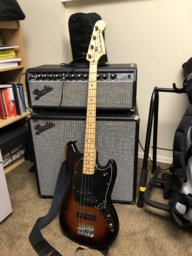
What kind of overdrive sounds do you like? Can you give some examples? Without knowing what kind of sound you’re looking for, it’s hard to say what to do. I personally am not a big fan of the B3K, but I like the vintage. I found boosting 1.5-2k helps to bring out some awesome percussive sounds, so if you like that pick driven sound, that might work for you.
And just in case you haven’t tried this, the sansamp always sounded waaaay too scooped for me (distorted or clean) with the blend 100%. Usually 50-25% was the sweet spot for me.
And just in case you haven’t tried this, the sansamp always sounded waaaay too scooped for me (distorted or clean) with the blend 100%. Usually 50-25% was the sweet spot for me.

More volume is what I was gonna say. When I'm setting my volumes, I have a bad habit of undershooting. Overdrive = compression, and if you set your OD to be the same volume as your lightest note, you're gonna drop out of the mix when you kick it on. Your overdrive should be at least as loud as your average volume.Some ideas :
Sometimes playing with loud guitarists you have to adapt your technique tu cut through. See how Alex Webster or even Steve Harris play to get an idea : the attack and the clank help cutting. Good setup and technique, combined with adequate EQ, dirt and compression, and you really can't but cut through.
- Less mid scoop / more low mids
- More attack (boost high mids to emphasize this part of the spectrum)
- Compression (= more sound "density")
- More overdrive gain (you really have to push it to hear the difference in the overall mix)
- Last resort, more overall volume ? More wattage / speaker surface?


