• TalkBass has been independent since 1998. Add your voice.
    Create a free account to reply to discussions, view embedded media, and browse with fewer display ads.
    Join freeLog in
    Want zero display ads or expanded classifieds tools? Compare plans.

Passive 5 string thoughts/advice

I think they put graphite in the US made 5 string necks. That helps a lot.

And strings are very important. Some low Bs are really bad, even on a great bass.

Yes sir, they do have graphite rods in the neck. That whole bass feels rock solid. Very even string tension.

The low B felt great with the stock Fender strings. I've since put a set of DR Fat Beams on (045-130...same gage as the stock strings) and they're working out quite well.
 
I agree with most of the above. A good B string depends on a few things:

1. A good stiff/resonant neck.
2. A tight neck pocket/joint.
3. A bridge pickup.

Good electronics help and strings do play a role in it as well.
 
A lot of that comes from the neck construction. One piece necks like you find on Fenders and MMs are too flexible, and that makes the low notes sound blurry.

Longer scale lengths help, but you can get a great low B on a 34" scale bass if it's made the right way. But sticking a low B on Fender style instruments doesn't always work well because they weren't deigned for it.

Got that right and that includes the 5 strings SOLD BY FENDER!
Well, I'll qualify it a bit. My 2002 Fender V deluxe has a very so-so B string (it's active of course), but somehow Fender got the word and they were all redesigned about 2008 and the late ones have excellent B strings.

I've got a ton of passive 5 and 6 string SX basses that have fine B strings. I always put threaded inserts for the neck joint on them. I wire them passive in a number of ways. These are wired volume with a rotary neck-series-parallel-bridge switch. And I also like vol/blend/tone where pulling the volume changes from parallel to series. And I"m also currently working on a bass that's vol/vol/tone with a dummy coil added to kill single coil hum.

Usually I don't like vol/vol because of the difficulty reducing your volume while keeping your pickup mix. And I don't like tone/tone because of the way they interact and become redundant when volumes are full up. But that said I can tell you that ANY of these passive arrangements can make great sounding and playing basses.

I must admit there is a certain "something" to a passive tone. But on the other hand when you play a gig through a DI with a passive bass you stand there feeling totally helpless like you've got no control over your tone! Which is my G&L L-2500s are my favorite. Passive AND active with tone controls that actually work passive.
 
I think it was Grover Jackson that had done some redesigning on the Fender necks at that time. I have played some nice Fender 5 strings, and some not so nice ones.

passive basses sound like they do because the capacitance of the cable along with the resistive load of the controls, lowers the resonant frequency of the pickups, and also flattens it out a little.

So as soon as you stick a buffer on the bass, you get a brighter tone. If the resonant frequency passive is 6k, it might go up to 10k when buffered. This is totally fixable of course, and is the idea behind the Z switches on the Audere preamps.

But you can change the the with any preamp by either adding some small value caps before the preamp or some resistance. In both cases they would go to ground.
 
Lakland uses graphite rods in both Skyline and US series 5-Strings.

Every bass should have graphite rods in the necks. You lose those annoying dead spots you find on a lot of one piece necks. Even just making the neck out of several pieces of wood makes it stiffer. People have this idea that a one piece neck sounds better, but it doesn't.

Steel bars also work, but they weigh more.

I really over-built the necks in my basses, but they have a great even tone, with a low B that sounds as good as the E. I have two double acting truss rods, graphite rods, and a 7 piece neck construction of quarter sawn maple and purpleheart. Then I use a laminated phenolic fingerboard. It's a very lively neck and all the notes are very even.
 
Do you lose any output with volume/blend vs. volume/volume?

Not with an N/M blend pot. The pickups are at full volume in the middle. I find the Bourns pots work very well.

Also, can you do a series/parralel switch with a volume/blend? I've been told you can't.

You can. Blend pots are just like two volume pots. So you just have to wire you switch to do the appropriate rewiring.
 
Play fender American standard 5 strings tuned down to A standard. I'm not sure what strings they come from the factory with but I developed a custom set of strings for myself. The B string (A for me) was a little floppy. I went with 130 on the low string and 110 on the second. Great tone and playability with stock pups.
 
So I'm going to be getting a new bass soon and am planning on doing some modding right away. The first thing I need to decide is if I want to go active or passive eq. The thing is, I've never owned a passive 5er and those I've played- only in music stores w/ poor set up- have sounded weak on the B. I know a lot of TBers prefer passive basses, but don't know their string arrangement. To be honest, I rarely tweak the eq on my bass, preferring to find my tone through my amp. Right now I'm looking at the V/V/T/T passive harness at BestBassGear or a Bartolini preamp; but I'm really leaning towards the passive for all the options it gives. I guess what I really want to know is: can a B sound good, even great, through a passive set up?
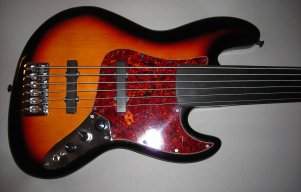
I had a 5 string Warwick Corvette $$. Best of both worlds.... You could play it active or passive. The only real tone control was pickup balance, but that worked as well as passive tone on a pbass.... Maybe even better.