Hey guys, long time no post.
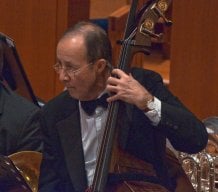
I have a question regarding different composers. Different composers definitely had a different idea of how everything should be played, technique wise, to get a different sound out. Aside from the compositional styles being different, the technique also makes a baroque piece different from a romantic piece. However, I recently had a lesson with Principal Bassist of the Los Angeles Philharmonic: Dennis Trembly. We were working on a Mendehlson Concerto for Violin and he was explaining to me how Mendehlson would have wanted each note to be played (in respect to the bass). He was saying how the bow strokes should be short, but ring out for its duration instead of having bowed the entire note for its full length and then abrubtly stopping. I thought this was great information and I felt like knowing different techniques for every composer would be something very useful and would definitely set myself apart from the other bassists I play with. So my question is, does anyone know the techniques for how other composers (Bach, Mozart, Anyone!!) would have wanted their music played in respect to the bass. Thanks!
I have a question regarding different composers. Different composers definitely had a different idea of how everything should be played, technique wise, to get a different sound out. Aside from the compositional styles being different, the technique also makes a baroque piece different from a romantic piece. However, I recently had a lesson with Principal Bassist of the Los Angeles Philharmonic: Dennis Trembly. We were working on a Mendehlson Concerto for Violin and he was explaining to me how Mendehlson would have wanted each note to be played (in respect to the bass). He was saying how the bow strokes should be short, but ring out for its duration instead of having bowed the entire note for its full length and then abrubtly stopping. I thought this was great information and I felt like knowing different techniques for every composer would be something very useful and would definitely set myself apart from the other bassists I play with. So my question is, does anyone know the techniques for how other composers (Bach, Mozart, Anyone!!) would have wanted their music played in respect to the bass. Thanks!