enodstpSor 26l29Pit9l6e032u7i01Jh418 23 M712 ca:2n558t2cl2ta ·
The Journey Most People Never See
Imagine trying to get from one small town to another — on the far side of the country. No map. No GPS. Just rough backroads, wrong turns, dead ends, and long stretches where you're completely alone. You don’t even know if you’ll make it. And the whole way, you're stopped by gatekeepers — people who tell you to turn around, that you don't belong on that road, that this route doesn’t exist.
> That’s what it feels like to be a visionary in the real world.
You’re not from a university lab. You're not backed by a government grant or a corporate marketing team. You’re just someone who sees the future a little earlier than everyone else — and it costs you.
The world doesn’t reward ideas when they’re new. It questions, doubts, and rejects them. It waits until someone else proves it first — or until the inventor is gone.
And here’s the hard truth behind it all:
> People don’t resist new ideas because they’re bad — they resist them because they’re uncomfortable.
A new idea means their old way might be obsolete.
A new invention might mean they didn’t see it first.
A new path forward might mean letting go of what they already understand — and that threatens people.
Most don’t even realize they’re doing it.
But it’s deep in the wiring: better the familiar lie than the unknown truth.
It’s always been like this.
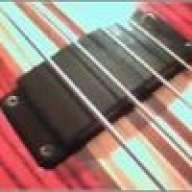
In 1967, I played fretless bass before most musicians even knew what it was. Nobody cared.
In 1980, I put subwoofers into concert sound. People told me it was pointless. Now it's standard across the industry.
In 1987, I created a tiny high-performance speaker — the AE-1. It sat in my studio for two years. Hundreds of people heard it. Nobody thought it was worth anything. Then it sold globally for decades and generated close to $190 million.
In 2002, I built bass amps using small speakers. I was told it would never work. Now they're used worldwide.
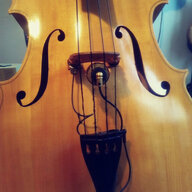
And today, I've invented new kinds of loudspeakers, a radically different drum microphone system, and instruments unlike anything else — and it's still a struggle to get anyone to listen.
Not because they don’t work. But because they weren’t built by a committee.
That’s the road. That’s the backwoods journey from one forgotten idea to another. Most never make it — not because they’re wrong, but because the world never gave them the chance to get there.
And it’s not just me.
Frank Whittle invented the jet engine and was ignored for years by his own government.
Alan Turing, who helped end WWII by breaking the Enigma code, was chemically castrated by the same country he saved.
Nikola Tesla died broke in a hotel room while others made fortunes off his brilliance.
Philo Farnsworth, who invented electronic television as a teenager, was buried in lawsuits and lost control of his invention.
James B. Lansing, who changed loudspeaker design forever and started two iconic audio companies — Altec Lansing and JBL — died by suicide, broke, overlooked by the very industry he helped build.
These weren’t dreamers. These were engineers, creators, and builders — punished not for being wrong, but for being right too early.
The system favors familiarity. It rewards safe bets, familiar names, and ideas that already fit the mold. If you’re just a neighbor, a musician, a “guy who builds gear” — nobody thinks you can possibly be sitting on something that changes everything.
They look at you and say, “Nah… he’s just like us.”
As if world-changing ideas can’t come from someone without a title or a team.
And just to put it in perspective — imagine someone invented a working time machine.
Not a theory, not a sketch. A real, functioning machine.
Do you think the world would line up to support it?
No. They’d ask:
“What institution are you with?”
“Where's your grant?”
“Is there peer review?”
“Why haven’t I heard of you before?”
And they’d dismiss it, delay it, or worse — try to bury it — just because it didn’t come from the “right kind of person.”
That’s the world we live in.
And still… some people keep building anyway.