• TalkBass has been independent since 1998. Add your voice.
    Create a free account to reply to discussions, view embedded media, and browse with fewer display ads.
    Join freeLog in
    Want zero display ads or expanded classifieds tools? Compare plans.

Please help me understand these ODD Multimeter readings (pickup impedance)

Hi everyone,

I just bought my first multimeter so I could read the impedance of my various pickups. Now I don't know if I'm doing something wrong, but the readings I'm getting are NOT what I expected!

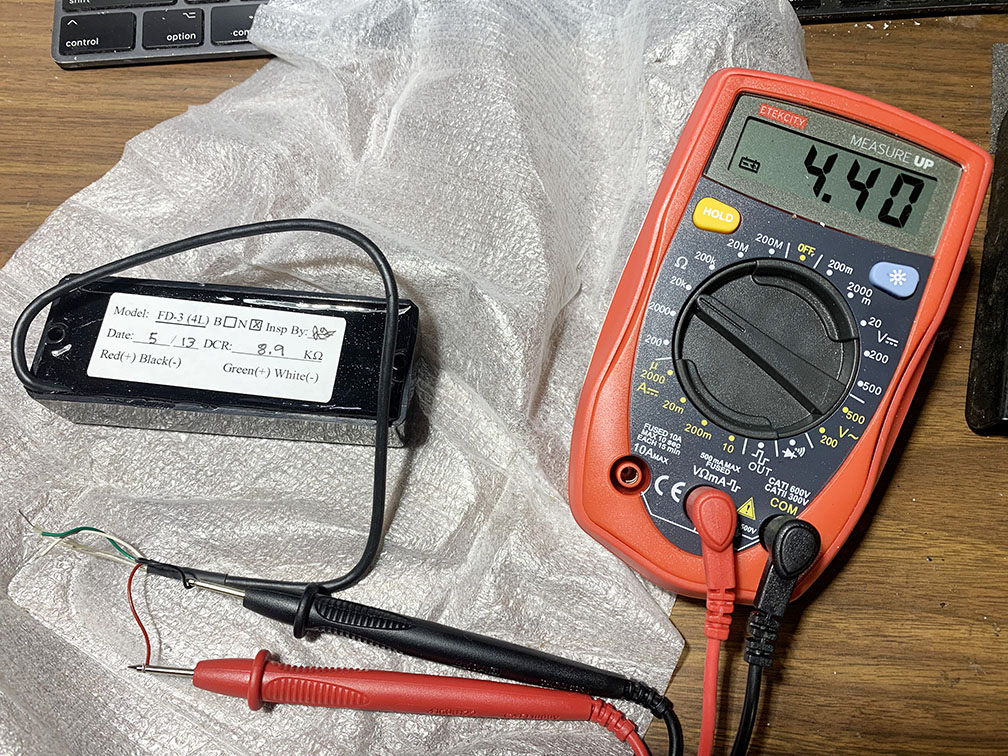
The first pickup is a Dingwall FD-3 (4L). It says right on the back of the pickup that the impedance is 8.9k, but my meter shows a reading of only 4.4!
zSDFOFD.jpg


I have a pair of the above pickups, and they both measure about the same.

---

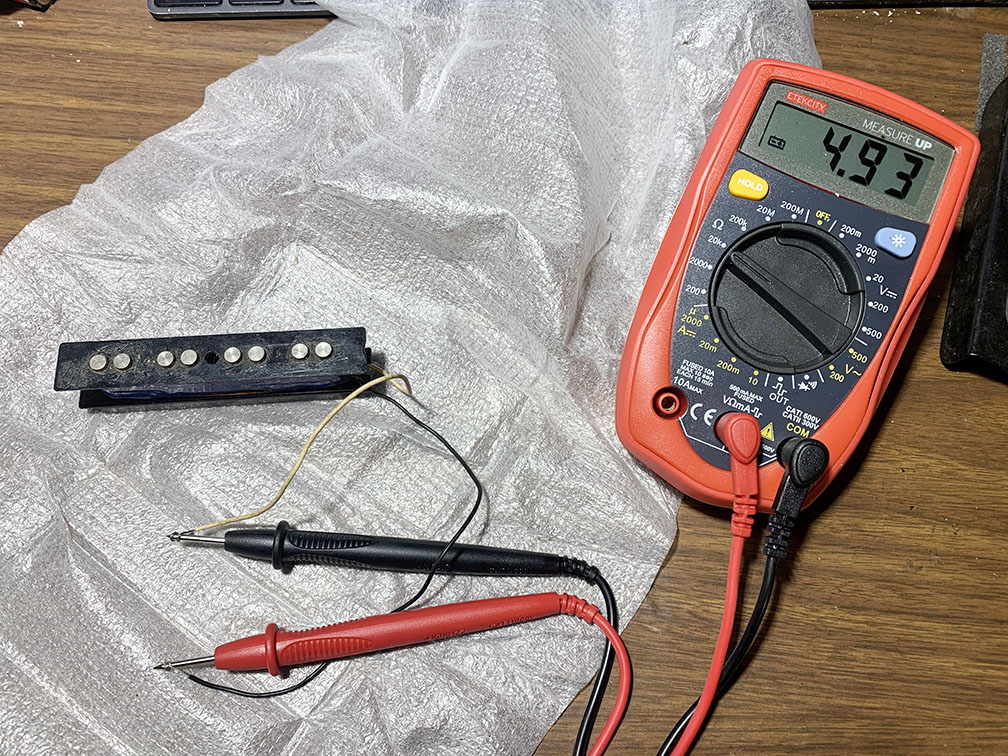
Next, we have a random pair of Fender Japan Jazz Bass pickups. Various TalkBass threads lead me to believe these pickups should measure in the region of 7.4k or so. Yet look at my multimeter reading!
0enaWgA.jpg


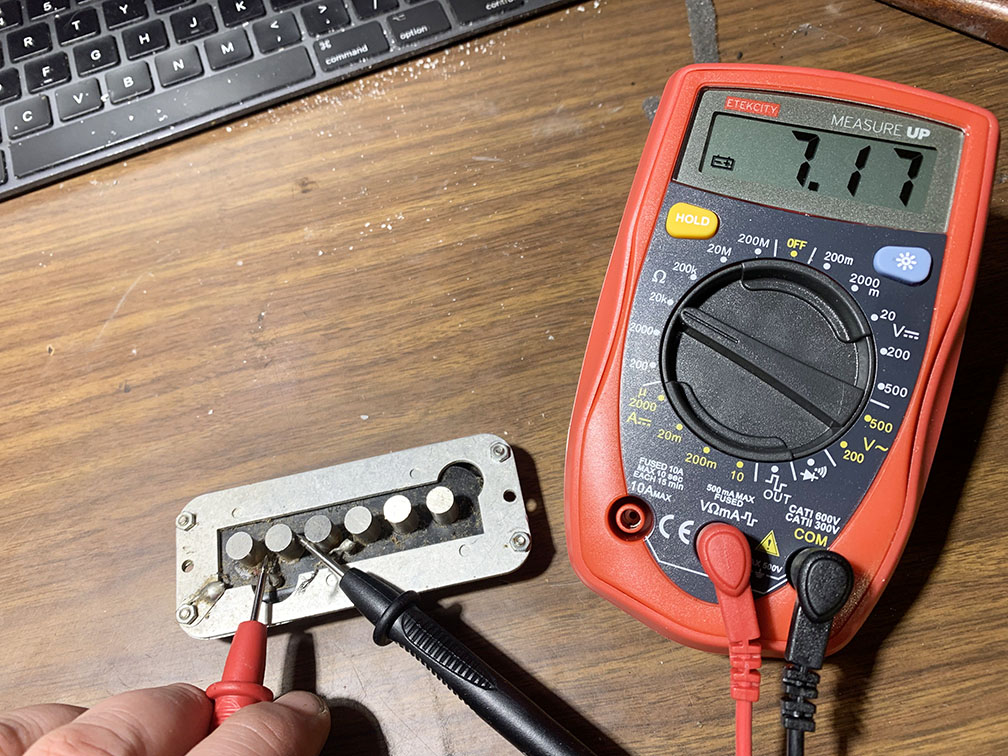
Next we have a Rickenbacker Bass Toaster pickup, which I bought directly from Rickenbacker.com.

Various posts on the Ric forums say this pickup should measure in between 7.5 to 13k, but my reading is a low 7.1!
Fg9piZq.jpg


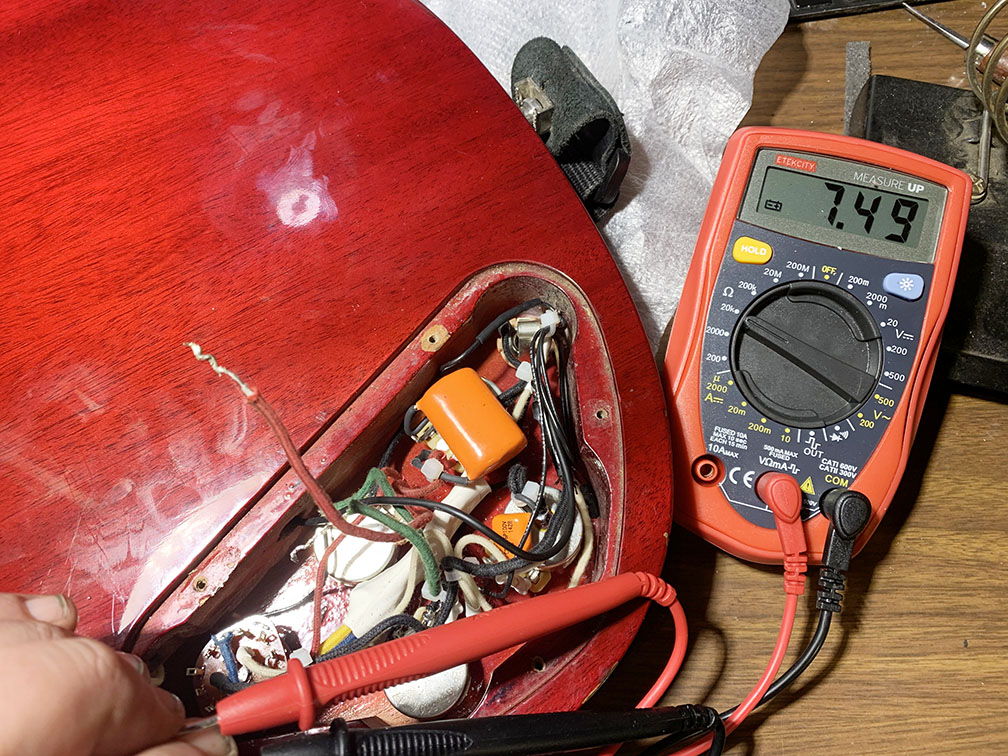
And now for the real kicker: I recently purchased an Orville EB-3 off eBay, and it came with a Curtis Novak mudbucker.

Now I don't know how Curtis Novak specs his mudbuckers, but a standard Gibson mudbucker should measure around 31k. But look how low mine registers!
dz8RJA5.jpg

I read the multimeter manual, watched a number of YouTube videos, and you can see my multimeter settings in the photos.

What am I doing wrong? Why are all my impedance readings SO MUCH LOWER than the specs that are usually given for these pickups???

Any advice you can offer this clueless multimeter user would be greatly appreciated!

PS: Please forgive all the kosher salt on my desk, I knocked the salt shaker over while taking these photos
 
Are you measuring resistance or impedance. They are not the same.

Yep, you’re actually measuring resistance. But that’s (mostly) academic.

For the Dingwall pickups, I’m seeing four leads, which means two coils, likely intended to be wired in series. You are only measuring one coil in the pic. Measure the other coil too, then add the measurements together.

The Novak might also be wired as parallel or single coil. Are there switches on that bass?
 
Well, I'm trying to measure impedance... but I don't think I'm doing a very good job of it!

But taking a standard mudbucker, for example... they're always rated at around 31k. That's what I'm trying to measure.
All the above. Especially about measuring only one coil of a two-coil pickup. And what you quoted for a mudbucker is also a DC resistance measurement.

Now, impedance: measuring impedance is not as straightforward as measuring DC resistance. There has to be an AC voltage component as it varies by frequency. Link:
Measuring Impedance (learnabout-electronics.org)
 
  • Like
Reactions: BlueTalon
I misspoke - I'm trying to measure resistance, not impedance!
:banghead:

For the Dingwall pickups, I’m seeing four leads, which means two coils, likely intended to be wired in series. You are only measuring one coil in the pic. Measure the other coil too, then add the measurements together.

The Novak might also be wired as parallel or single coil. Are there switches on that bass?
If I add the two measurements on the Dingwall together, then it reads pretty close to what it states on the pickup. 4.4 + 4.4 = 8.8. And the sticker on the pickup says 8.9.

As to the EB-3, it has a 4-way chickenhead switch. But I'm not sure it's wired correctly, which is part of why I bought the multimeter. For example, position 1 and position 4 sound pretty much identical.

As to the Novak pickup, it's a mystery unfortunately. He offers two version of his mudbucker, Vintage and Fat. When I asked the eBay seller which Novak pickup was in the bass, he said “Neither of those! I had him wind something special!"

When I asked him what special meant, he said "I have no idea. I don't know a thing about electronics! I just told him to make it sound good."

o_O
 
  • Like
Reactions: ctmullins
The first pickup is a Dingwall FD-3 (4L). It says right on the back of the pickup that the impedance is 8.9k, but my meter shows a reading of only 4.4!
First off, it's great you bought yourself a meter and are diving right in. Just my belief that anyone owning an instrument and wanting to do mods needs to buy a meter and start learning basic diagram and schematic stuff. Good on ya, mate.

So, with four colored wires (and 5th bare shield wire), that means a pair of wires for each of the two coils. The standard is connecting both coils in series (disregard parallel for now) to each other. Series means one coil will directly feed the next one.

You're reading the wires (red/black) for only one coil, as indicated by the label. That makes sense for the 4.4k reading you're getting. Connecting the 2 coils in series would give you 8.8k ohms. I think Dingwall just assumed the standard series coil connection would be used by the installer and posted the 8.9k reading on the label.

So, twist the Red and White wires together and take a reading across the Black and Green. Should give you very close the the labeled 8.9k.

Top part of this diagram shows what you have with all wires disconnected from each other. Bottom part of diagram shows how to connect the two coils together for a standard series coil connection. In the bottom diagram, disregard the shield wire for now when taking readings. I showed it where it'd go when pickup is finally installed.:
JjangoSchem01.jpg


Hope this explains why you're getting 4.4k, despite the 8.9k label. Just for info, readings can change a little from day to day as temperature changes can affect 'em.
 
Last edited:
You are measuring DC resistance. When I characterize pickups, there are 5 elements in the model I typically use - there is the DC resistance, the inductance, the interwinding capacitance, and a resistor and capacitor path that models eddy current losses. Although the DC resistance tells you something, it's not the most important parameter - the inductance and interwinding capacitance are much more important. If you have two pickups that you know are the same exact construction, except for the number of turns, you can make some guesses about the differences in the other parameters from the DC resistances you measure, but comparing DC resistances of different model pickups is like deciding what model of car to buy based on its weight alone - it tells you something, but not really that much.
 
Hi everyone,

I just bought my first multimeter so I could read the impedance of my various pickups. Now I don't know if I'm doing something wrong, but the readings I'm getting are NOT what I expected!

The first pickup is a Dingwall FD-3 (4L). It says right on the back of the pickup that the impedance is 8.9k, but my meter shows a reading of only 4.4!

zSDFOFD.jpg


I have a pair of the above pickups, and they both measure about the same.

---

Next, we have a random pair of Fender Japan Jazz Bass pickups. Various TalkBass threads lead me to believe these pickups should measure in the region of 7.4k or so. Yet look at my multimeter reading!

0enaWgA.jpg


Next we have a Rickenbacker Bass Toaster pickup, which I bought directly from Rickenbacker.com.

Various posts on the Ric forums say this pickup should measure in between 7.5 to 13k, but my reading is a low 7.1!

Fg9piZq.jpg


And now for the real kicker: I recently purchased an Orville EB-3 off eBay, and it came with a Curtis Novak mudbucker.

Now I don't know how Curtis Novak specs his mudbuckers, but a standard Gibson mudbucker should measure around 31k. But look how low mine registers!

dz8RJA5.jpg

I read the multimeter manual, watched a number of YouTube videos, and you can see my multimeter settings in the photos.

What am I doing wrong? Why are all my impedance readings SO MUCH LOWER than the specs that are usually given for these pickups???

Any advice you can offer this clueless multimeter user would be greatly appreciated!

PS: Please forgive all the kosher salt on my desk, I knocked the salt shaker over while taking these photos

Since you have your meter set to the 20k scale, that means you are reading up to 20,000 ohms.
So if you were to have a reading of 19.9 that would mean 19,900 or 19.9k.
Since you have a reading of 4.4 as one of your examples, that equates to 4.4k or 4,400 ohms.

You always set the Ohms scale to cover the range that you expect to see. If you don't get the expected reading, you will have to change to different range. This is typical of non auto-ranging meters. Some meters are auto-ranging and can select the right scale automatically. These usually only have one dial setting for each thing you are measuring be it resistance, current, or voltage, or what ever the meter is made for.

Auto-ranging meters are not necessarilly better, but may be more convenient. With a manual range setting, it just requires a little extra thought on your part. And that's not necessarily a bad thing either.

Enjoy learning all the things your new meter can do.
 
  • Like
Reactions: MikeTranch and fig
That battery symbol in the lower left corner of your meter is indicating a low battery. Your resistance readings are not correct. A low battery is going to indicate a low resistance as DC voltage and resistance are directly proportional in this case.

Most meters derive a precision voltage or current source from the battery voltage. That precision value will be independent of the battery voltage. It might misbehave if the battery voltage is very low, but it will certainly not vary the output proportional to battery voltage. Well, unless it is a SUPER cheap garbage meter. I doubt such a poor meter would bother with a low battery indicator. Definitely worth getting a fresh battery in and checking though. I have seen meters do weird things when the low batt indicator is on.