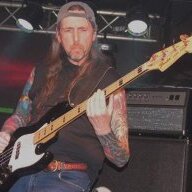
I've been doing the rockschool exams one at a time for the past 4 years (started at grade 1 through to 6 where I am now) and I owe my successes down to a good music teacher. A good music teacher will be able to point out all of the small mistakes that otherwise you may not be able to tell, believe me, there is more than most people care to admit. It will be vital that you practise your butt off, as all of the examiners in the Rockschool company only give marks if they deserve it - I have heard Trinity Guildhall are more lenient to the students than Rockschool (don't quote me, just what I've heard).
And as far as training for the listening tests, as long as you play notes from the right scale with sort of the right timings, you will get most of the marks

So best thing to do, get the book now, and practise like hell until you can find a teacher, even if they charge quite a bit, because at the end of the day it helps for getting on the course.
Also, I know that for the university course I am looking at doing (BMus at Newcastle University) a necessity for any of the performing modules is that you have grade 8 in at least 1 instrument, so it's not just for UCAS points.
Finally, good luck! And if you are going to be entering into a Uni course for music with your bass playing, I'm sure you'll be fine with your exam, especially as a pass is like 60/100 marks
Dan
Great Post Danny and wish you well in your endevours.
Unfortunately it is about UCAS points, the points system is to show Universities the validity of any educational merit so they do not dismiss potential students because they cannot quantify there previous education as the correct foundation for the course.
Now any one can get certificates or qualifications that look good but in real terms of academic value are not worth the paper they are written on.
What happens is the student without the right foundation takes a place, so denies a student with the correct though lesser impressive qualifications a place. So when the work rate over whelms the under qualified, though qualified on paper, student they quit or fail, so it is a double loss.
Music education takes many forms and quiet a few disciplines, but for someone looking to make it a career sight reading is top priority.
Now why this is so is because you play what is put in front of you whether you like the part or not, whether you agree with the part or not, you just play it. Within this you can comment on whether the part is correct, or of you feel the composer, producer, MD is open to it make suggestions, but you have to be able to see what you consider is wrong in the first place to make your suggestions worthwhile.
Get this wrong the first few times and your phone will not ring, because there are plenty of players who will read what is put in front of them.
Players that sight read make extra money while studying because they are low maintenance on time and effort.
From an education point of view you can be turned on to resourses, ideas, studies, etc by a teacher saying "read chapters 18-21, study the accompanying notation and we will talk about any questions or Queries you have about it". Now it goes without saying if your foundation in sight reading is slow then you will take longer to read the accompanying notation.....if it takes you days to read what others can read in hours, then you will quickly lag behind...and you will become overwhelmed with the workload.
Now that is just one example of many potential scenario's that an incomplete foundation can lead to.
Yes I know there are many options for music education and what is available, but my advice to all thinking about such a move is go to the "Ask a pro" and talk to the Berkeley Faculty about what is best foundation courses and qualifications to make the most of a University education.....In any country.

 ) and the next Rockschool examination is about 5 months away from the time of writing this.