• TalkBass has been independent since 1998. Add your voice.
    Create a free account to reply to discussions, view embedded media, and browse with fewer display ads.
    Join freeLog in
    Want zero display ads or expanded classifieds tools? Compare plans.

Double Bass Practicing with a drummer

Hey all! Long time lurker, first time poster.

I’m lucky to be friends with a number of drummers who have free time and are open to practicing with me one on one (in addition to when we play with other instruments). Beyond just playing tunes with me taking the head (which is already great), any recommendations for exercises we could work on together? I’m thinking about things like playing polyrhythms together.

Happy practicing!
 
I spent around 8 months doing twice weekly practice with a drummer. He was an accomplished player and I was just coming off a ten year break from music. It was arguably the best thing that could have happened to me at the time. We went on to play together in a few bands and it was always a great time.
 
Both good suggestions thus far. One more: practice playing on-top-off, behind, and ahead of the beat. If you haven't practiced it before, it can be tough not to follow the player that's deviating, but IMO, each produces a different time-feel that can be appropriate in the right context. I find it a useful skill to have developed.
 
practice playing on-top-off, behind, and ahead of the beat.
No! I would strongly caution against these types of abstract time explorations (also known as "Rushing/Dragging/Rushing Like a MF"), UNTIL you and the drummist can play 4/4 walking "time" and BOTH feel comfortable with, maintain a consistant tempo, (No rushing/No dragging!) and viscerally feel each other's placement of the quarter note pulse (over the course of, say, 4 minutes) WITHOUT a metronome/click track of any kind.
Playing with another live human being, (or beings) and finding comfort & clarity in each other's timefeel/concept is the real-world goal for a rhythm section member(s).
Developing this skill will minimize the post-gig parking lot "airing of grievances" that will inevitably occur. (It is part of the learning process.)
And... it is absolutely critical to establish a working dialog (going both ways) with the drummist (off the stand, just between you 2) about how the "feel" felt. This is what metronome "CosPlay" is not capable of exploring.
IMFO, of course. 1,2,3,4....etc.
Thanks.
Just To Be Clear - You and the drummist should use a metronome (but not constantly...) in your individual practice, but limit the metronomics when playing together.
IMFO, which costs $0.03, of course.
Thanks.
 
Last edited:
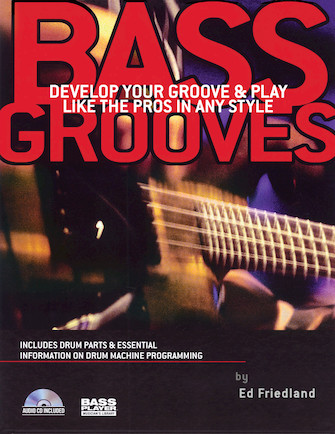
I once had a book with instructions on how bass and drum lines are constructed in a given style. Descriptions were extremely thorough and enlightning, including accents and dynamics. You might choose a rhythm, study it a bit, and try to create a groove in a given style together. I think it's this book; there are more of similar books of course, but Ed Friedland is always a good choice :-)
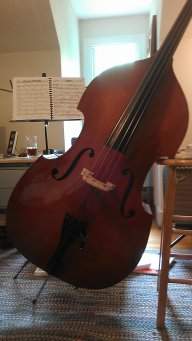
bass.jpg

 
Just by the by, it would be nice to have a little more info on background - where you're located (generally, what part of the country/world), how long you've been playing, how long you've been playing this music (we are in Jazz Technique), etc. Because there's things we all do in daily practice no matter where we are, there's things we did when we were first getting into this music, etc.

I do tend to disrecommend the computer generated "play alongs"; personally I've found that having that much information to lean on (rhythm section chugging along playing the changes and form no matter WHAT you play on top of that) coddles a bit too much. If you can communicate your melodic line AND the time AND the harmony (as you hear) with no other accompaniment than a metronome (in individual improvisational practice as per Don), you'll be able to clearly direct the musicians you're playing with in real time. The Aebersold play alongs are a little better in that those are recordings of actual musicians playing actual music accompanying a soloist (who isn't recorded) in real time. But there are a few of those recordings that the time ain't so great (the Bird one comes to mind...).

When you get together with your drummer friend, record yourselves playing and give it a couple of days before you listen to the recording. If you get together twice a week, for example, before you start playing, listen to the previous session's recording with a couple of things in mind:
1. FEELING - does it swing? Does it sound like you're playing TOGETHER or is someone (or everyone) in their own little world ? Is music being made or are you having moments where you both are playing the same tune in the same time stream but you aren't communicating to each other how you each are hearing the tune?
2. TIME - get a metronome out and find your bpm marking for the track and get the click going and listen. CAVEAT: Time breathes. We are human beings and our hearts don't beat precisely in metronomic time, they accelerate when we inhale and slow down when we exhale. So the idea is NOT that you stay precisely ON the click. But if you start out playing at half note=126 bpm, you should end up playing within one or two metronome markings of that time stream ASIDE: I don't have the study in memory and it was done with pitch not time, but it turns out that humans can't hear a difference tuning that is higher or lower than (if I remember correctly) 5 cents. I would have to imagine that it's similar for time stream.
Anyway, if you get OFF the click, just stop the nome and then start it back up ON the beat to see if you've moved around.

As far as other suggestions, if there are tunes that you both are super familiar with, start doing them at different tempos - up tunes as ballads, as waltzes, and vice versa. Then do them at the tempo you usually call them in, but in different keys. See how putting familiar things in an unfamiliar setting affects your time feel.
 
I recently got together with a couple of music professor friends to do some of what is being discussed(drummer and pianist). Disclaimer: they are both PhDs and I have no academic credentials and haven't been to music school but do some private teaching at a couple of local colleges. My takeaway from this session and others I've done like this is that I really am not good at trying to play time that I don't feel. As soon as we tried anything "artificial" like purposely playing in front of or behind the beat I felt uncomfortable and wanted to stop. Playing with the click can sometimes be like this depending on the other players. I've done enough commercial recording over the years to play with the click but it's never been my favorite. What I like is to play with drummers and others who have a similar or workable time feel, whether they're people I play with frequently or especially somebody new that I "click" with right away. We as bass players have to be flexible timewise in many situations but it's great when things naturally fall into place.