My first suggestion... there's a whole lot of rule of thumb guesses about optimum input impedances for piezo-ceramic pickups. After say 30 years of woring with such devices (including a few of my own commercial designs), there is a whole range of impedances that are suitable, as well as the associated trade-offs between noise, RFI, underdamped response (ringing) and impedance.
The output impedance of a piezo is inversely proportional to total crystal area, and each crystal geometry has a particular impedance profile.
With the vey small crystals, the kind that you might find on a flute pickup, or a violin bridge pick-up, somewhere between 1M and 5M might be a good choice. For bass guitar, acoustic guitar, harp, etc, the crystals are larger (in part to more accurately pick up the longer wavelength and associated harmonics and in part the physical/mechanical needs). These larger crystals operate more accurately with a lower impedance, from about 300k - 1M and with much less noise and less ringing.
With 95% of the piezo's used for bass pick-ups, we have found the sweet spot to be in the 500k-1M range and tested this out with a pretty large sample of pro players. The Shuttles are a little bit >500k, the Streamliner is ~1M, both are well within the range of most bass pickups. The benefit of staying away from the really high input impedances is mostly reduced noise, reduced tendency for RFI pick-up, lower tribo-electric noise from interconnect cable, and a more controlled (electronic) damping of the pick-up which reduces ringing (much like lowering the Q of an electronic filter).
When comparing to a passive DI which typically has an input impedance that falls with frequency, typically around 20-50k, this is indeed way too low for accurate reproduction. So, let's be sure we understand what the real problem is and the more accurate numbers involved.
Hope this helps.




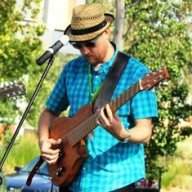

 The Realist to a lesser extent but all the bridge/wing pickups do pick up that finger contact noise.
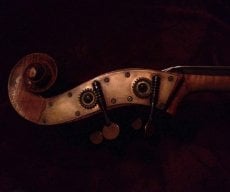
 Bass Max --> Countryman --> house system. Done. Time to get a beer.


