

Enjoy the benefits of a premium membership!
Upgrade Account
-
TalkBass has been independent since 1998. Add your voice.
Create a free account to reply to discussions, view embedded media, and browse with fewer display ads.
Join free Log in
Want zero display ads or expanded classifieds tools? Compare plans.
You are using an out of date browser. It may not display this or other websites correctly.
You should upgrade or use an alternative browser.
You should upgrade or use an alternative browser.
Pre Fender SWR's
- Thread starter Eric Swaim
- Start date
More options
Who Replied?

I mainly use my Redface 350 and a Goliath Jr 3.My buddy has a post fender workingman 4004 that sounds ok but I don't see alot of post fender SWR stuff around Albany

I had one exactly like the one in the pic. It sounded fine but not amazing. I have owned lots of amps. It was somewhere in the middle tone wise. It was durable enough. It got really hot.
My swr sm400 user manual says their amps feel hotter because their a
shells conduct heat away from the guts faster because they used aluminum. Science. So, the heat one feels is a good thing; other amps trapped more of their heat. SWR was pioneering with that.
I like my swr, its a fine head, as most over a few hundred bucks are. I use my markbass and carvin, though since they are much smaller and lighter.



I have a mo' bass and a goliath III+son of bertha and couldn't be happier (maybe with a megoliath...)
Think I've found the tone I really like.
In my area Hartke and Markbass (followed by Ampeg and Trace Elliot) are predominant, but sometimes there are also some old redhead or black beauty, or goliath jr.
Think I've found the tone I really like.
In my area Hartke and Markbass (followed by Ampeg and Trace Elliot) are predominant, but sometimes there are also some old redhead or black beauty, or goliath jr.
Damn. Singing and playing a fretless simultaneous. Jealousy!
If you think that is cool check out her singing and playing DB in harmony
I saw her live about 3 yrs ago and it was meh - she's always been good but now it's at another level

Never used any of their amps, but I did just pick up a Goliath SR 610 that KILLS.
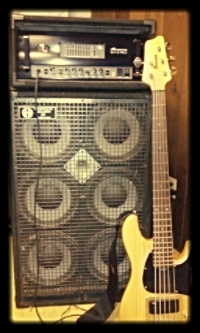

View attachment 644033
I have been playing SWR amplifiers since my friend Mark Childers sold me one back in 1993 (SM400). The SWR amps have always been great up until Fender bought the company and took the quality out of the amps. So here is my question: Do the local guys in your area still use the older SWR or have they moved on to the smaller and mostly imported amps??
I have owned many different amp from SWR and other companies, but I always come back to SWR.
I see them a lot in pawn shops but not very much on stages. In fact I can't think of a single time I've seen anyone using one. In my experience with them (limited of course) they were very heavy, didn't throw very well, overly clean with very little character and generally were not all that great.
Thanks for this input!!! Everytime I see people claiming Fender killed SWR makes me laugh. They didn't kill them. Simply bought a company that was already drowning. What company is going to buy another one to kill it???!! It 's just complete non-sense!
I've owned both pre abd post fender SWR stuff, and it is just exactly the same! That is the simple truth. End of story.
Well they did kind of kill Genz-Benz.

Damn. Singing and playing a fretless simultaneous. Jealousy!
AND looking fabulous

Perfectly happy with mine . . . purchasing a third tomorrow.


I had a very early SM-400 (so early it didn't even have a proper serial to identify the year) and I gigged that sucker hard for 12 years. It had a few minor issues along the way that I was able to have fixed at the original SWR factory in Sun Valley. About 5 years ago though it started acting up and I was quoted about $400 to fix by a very reputable amp repair company I trust. It was a long list of things - my amp had taken a dive during load in one night. At that point I got a GB Shuttle 6 for about that much and haven't looked back.

I own an SWR Goliath Junior 2X10 cabinet that I power with either a GK head or a Peavey ProBass 500 head. I no longer take the Goliath to gigs because it is much heavier than a Seismic 2X10 that i use. The seismic sounds every bit as good as the SWR Goliath Junior.
In terms of quality, to claim that Fender reduced the quality, you'd have to point to specific items like higher return rates, poorer sound quality than previously (which is a subjective animal, and hard to prove, in my view), shorter useful life, or an increase in cosmetic defects. People tend to be vary vague about what they mean by quality...
I once asked someone why a drum set was considered "good quality" and the only thing he could say was "the materials they use". But then, couldn't point to specific materials that fell into the low quality/high quality categories.
In terms of quality, to claim that Fender reduced the quality, you'd have to point to specific items like higher return rates, poorer sound quality than previously (which is a subjective animal, and hard to prove, in my view), shorter useful life, or an increase in cosmetic defects. People tend to be vary vague about what they mean by quality...
I once asked someone why a drum set was considered "good quality" and the only thing he could say was "the materials they use". But then, couldn't point to specific materials that fell into the low quality/high quality categories.

My swr sm400 user manual says their amps feel hotter because their a
shells conduct heat away from the guts faster because they used aluminum. Science. So, the heat one feels is a good thing; other amps trapped more of their heat. SWR was pioneering with that.
I like my swr, its a fine head, as most over a few hundred bucks are. I use my markbass and carvin, though since they are much smaller and lighter.
No need to completely destroy your faith in ad copy, but let me at least debunk one point. Using the amp chassis as a heatsink is much older than SWR as a cheaper/effective way than expensive finned heatsinks long before Rabe even worked with the design team at Acoustic Control Corp.
Four words:Every time a company buys out another company, they find ways of doing things cheaper to make more profits (nothing wrong with that it's business). I do not know of a single company that has been bought by another company that ever improved the product, it always goes down hill. Tobias, Ampeg, Eden, SWR, Trace Elliot, just to name a few.
Ernie Ball Music Man.
Back in the day I was rocking an SWR Studio 220 through an PA power amp into a pre-Fender SWR Megoliath. It was a pretty good tone for that time and though it was admittedly fairly neutral it let the sound of my bass cone through accurately. However I sold them off once I started playing exclusively at churches (where I was DI'ed in no matter what) and now that I've left the church gigs behind I'm all about the all-tube sound. Great amps for that time in my playing career but I wouldn't go back to them now as my tastes have changed.
The manual didn't say they were pioneers, that was my apparently ignorant word. Manual only explained why one shouldn't be alarmed by the heat and that aluminum wasnt common in amps. By the way, I read it only two months ago after owning it used for 22 years so, rest assured, no ad copy trickery worked on me. Who's Rabe? Nevermind.No need to completely destroy your faith in ad copy, but let me at least debunk one point. Using the amp chassis as a heatsink is much older than SWR as a cheaper/effective way than expensive finned heatsinks long before Rabe even worked with the design team at Acoustic Control Corp.


