

Enjoy the benefits of a premium membership!
Upgrade Account
-
TalkBass has been independent since 1998. Add your voice.
Create a free account to reply to discussions, view embedded media, and browse with fewer display ads.
Join free Log in
Want zero display ads or expanded classifieds tools? Compare plans.
You are using an out of date browser. It may not display this or other websites correctly.
You should upgrade or use an alternative browser.
You should upgrade or use an alternative browser.
Pre + Pre + Pre??
- Thread starter bearhart74
- Start date
More options
Who Replied?

s0c9
Supporting Member
You’re over thinking it…if the instrument has a preamp, you have a pre amp pedal and the amp has a preamp why need all three and how do you prevent boosting a freq with one pre and cutting it with another? Why not just go from bass pre to power amp to cab?
None of those preamps are line level… but yeah, your preamp pedal EQ boost can be countered by the EQ on the amp… DI from amp should normally be PRE, so stage EQ/Vol adjustments don’t impact FOH.

You don’t need a preamp on your instrument or pedal to make a bass work with a bass amp.
You may want to do so when going straight in a mixing desk or into a plain power amp, but both those will have preamps of a sort to ensure signal goes from instrument level to whatever level the rest of device needs.
The external preamps will help shape your tone in ways that a mixer or power amp might not be able to.
You may want to do so when going straight in a mixing desk or into a plain power amp, but both those will have preamps of a sort to ensure signal goes from instrument level to whatever level the rest of device needs.
The external preamps will help shape your tone in ways that a mixer or power amp might not be able to.
Because the EQ on each rarely matches. Sometimes boosting on one and cutting on another yields an overall response that is desired.
For example, boosting "bass" on a device while using a sharp HPF you can get a bump where you want it and not where you don't.
For example, boosting "bass" on a device while using a sharp HPF you can get a bump where you want it and not where you don't.
Also, most preamps have different EQ points, even slightly. It seems redundant, but can be usefull to have more than one preamp.
Because the EQ on each rarely matches. Sometimes boosting on one and cutting on another yields an overall response that is desired.
For example, boosting "bass" on a device while using a sharp HPF you can get a bump where you want it and not where you don't.
Yupp, that's it.
Sometimes a boost and a cut that overlap in a certain area but do not in another will yield a result that neither preamp can provide by itself.
To take it up a notch, we're talking about multiple preamp pedals here.
With an active bass and an amp, that's pre + pre + pre +pre.

Why indeed.
My bass has no preamp.
I don't use a preamp pedal.
I plug into my SVT.
My bass has no preamp.
I don't use a preamp pedal.
I plug into my SVT.

Why indeed.
My bass has no preamp.
I don't use a preamp pedal.
I plug into my SVT.
You forgot a line….
“The end.”…


You can buy an amp with no controls. You could even get a bass with no EQ at all. I say go for it.

OP isn't wrong. All those are signal processing devices, each does their own thing with maybe some overlap.
But it's hot harmful. If you like the way it sounds at the end, it's good.
But it's hot harmful. If you like the way it sounds at the end, it's good.

Convenience and options. The real answer is found deeper down if you're willing to study tone stacks and all sorts of audio circuits, cab and speaker responses. It doesn't even end with the cab. The space and surrounding objects affect things a lot too.
It's not that simple bruh! Though, it can be, if you're satisfied enough.
It's not that simple bruh! Though, it can be, if you're satisfied enough.

I don't use preamps on the bass, pedal, and amp simultaneously all that often, but when I do it usually looks something like this:
(1) Establish settings on the amp that sound good with any basses and pedals I will be using for the gig or project, which I generally will not touch once set unless something goes wrong;
(2) Adjust settings on the preamp on one or more basses if needed to accommodate for differences between basses. For example, one of my main basses has much more pronounced upper midrange and treble whereas the other is more bass heavy, so I sometimes find that minor EQ adjustments to one or both might make them sound better at the same amp and pedal settings;
(3) Use the preamp pedal mostly situationally, such as if I want a different sound to kick on for specific parts of individual songs. It is rare that I would use a preamp or EQ pedal "always on" unless I had an issue with a particular frequency range that wasn't addressed by the bass or amp EQs, or perhaps if I were using a passive bass that needed some EQ adjustment when used with a rig set up for my active basses.
(1) Establish settings on the amp that sound good with any basses and pedals I will be using for the gig or project, which I generally will not touch once set unless something goes wrong;
(2) Adjust settings on the preamp on one or more basses if needed to accommodate for differences between basses. For example, one of my main basses has much more pronounced upper midrange and treble whereas the other is more bass heavy, so I sometimes find that minor EQ adjustments to one or both might make them sound better at the same amp and pedal settings;
(3) Use the preamp pedal mostly situationally, such as if I want a different sound to kick on for specific parts of individual songs. It is rare that I would use a preamp or EQ pedal "always on" unless I had an issue with a particular frequency range that wasn't addressed by the bass or amp EQs, or perhaps if I were using a passive bass that needed some EQ adjustment when used with a rig set up for my active basses.
Ran an active bass into a preamp into an amp for years and everything was just fine. Then I joined TB and found out about all these rules about what I was supposed to be doing and not doing. I have ignored just about everyone of them and so far so good, I am still alive, playing better than ever and playing more than ever. There are folks around here who have good advice, it's not too hard to figure out who they are. If many people are arguing with them, then they most likely know about what they are talking.

I like the color and little dirt my M80 pedal adds to my tone. I cant get that from any of my amps. My stingray has a preamp but that helps give me that Stingray tone and most people run built in preamps into an amp... I know it seems redundant but at the end of the day its all about tone and some people are happy with a p bass into an SVT and some people want some extra's. In a world where we all did stuff that makes sense on paper we would all just own nice P.A. systems and just run a preamp into it.

JeezyMcNuggles
Inactive
- Feb 23, 2018
- 14,723
- 20,970
- Disclosures
- I suck, but nobody really notices
You don't need it. Nobody does. People are still going to do whatever they want to.if the instrument has a preamp, you have a pre amp pedal and the amp has a preamp why need all three and how do you prevent boosting a freq with one pre and cutting it with another? Why not just go from bass pre to power amp to cab?
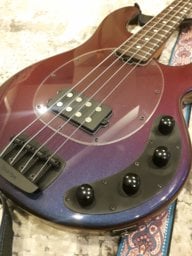
I usually run an active bass into my pedalboard which has a Darkglass vintage ultra preamp and then into a Mesa TT-800 so I definitely have a few options for adjusting my tone. I usually get my bass to how I want it to sound using the preamp on my StingRay and then I don't really touch it much after that. The preamp pedal is mostly just used to shape the sound of the overdrive when I kick that on, otherwise, the preamp is off when playing clean. Then I just adjust the sound on the amp to suit the room. I have a pretty consistent sound that I'm going for so I don't make many adjustments, and when I do they are very slight adjustments.

You basically want to do all your EQing in one place to avoid overlaps and cancellations. Or so I think anyway. Just be aware this is my own personal opinion based on my experiences over the years with my own gear. So not one everyone will agree with me on this since a lot depends on your own equipment.
If you're playing an active bass you have two choices:
Alternatively, if the outboard preamp has enough output to drive the amp's effects return, I'd suggest just going straight to the amp's power stage and bypass the amp's built-in preamp so it's out of the equation.
If the outoard preamp is used for special situations only - like as a solo boost, or for slap passages, etc. - then you'dl EQ the pedal for that and just punch it in as needed. In the meantime, your amp or bass would handle the normal EQ settings. But if you need multiple EQ settings for various passages, and need to change them quickly when performing, then it'd make more sense to invest in a programmable EQ unit like the SA EQ2, BOSS EQ-200, or similar rather than use a preamp
If you're playing an active bass you have two choices:
- Use the EQ on the amplifier to set your core tone and use the EQ on the active bass to do minor tweaks or adjust for the specifics of the room you're playing. This is usually the most convenient way to do it.
- Do the opposite. Do your main EQ on the active bass and do your final tweaking on the amp. Less convenient,. But if the preamp on the bass has a signature sound you identify with as "my sound" then this is your only option.
Alternatively, if the outboard preamp has enough output to drive the amp's effects return, I'd suggest just going straight to the amp's power stage and bypass the amp's built-in preamp so it's out of the equation.
If the outoard preamp is used for special situations only - like as a solo boost, or for slap passages, etc. - then you'dl EQ the pedal for that and just punch it in as needed. In the meantime, your amp or bass would handle the normal EQ settings. But if you need multiple EQ settings for various passages, and need to change them quickly when performing, then it'd make more sense to invest in a programmable EQ unit like the SA EQ2, BOSS EQ-200, or similar rather than use a preamp
Last edited:

Alternatively, if the outboard preamp has enough output to drive the amp's effects return, I'd suggest just going straight to the amp's power stage and bypass the amp's built-in preamp so it's out of the equation.
This is the only way I do it anymore if a pedalboard is involved. I could not believe the clarity I got once I started going from the Noble DI into my Mesa's effects return.


