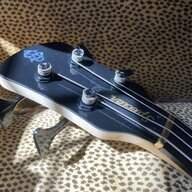
What makes a "cheap" instrument a winner with me?
I need a good, working bridge. Something that's not just adjustable, but that has a smooth string angle so that the strings don't break too easily. I used to swap out the bridges of my basses with Schaller roller bridges.
I also think the fret ends and the fingerboard edge is vital to a good feel. Make sure they are smooth and rolled off, that gives that slightly "worn-in" feeling.
Proper fretwork! I hate basses where the frets aren't levelled properly.
Satin finish on the neck.
Good sounding pickups, PJ configuration always looks and sounds sweet. And if you get a 3+2 Precision pickup in the neck position, I think that's the visually most pleasing But most importantly, get pickups that doesn't have to be swapped out and replaced by something decent by the buyer.
Do 21 frets, so you end on the E (not Eb) on the G-string and slightly alter the lower horn to give easy access to the last couple frets.
Balance... if necessary, prolong the upper horn to achieve good balance.
A tight neck route, and maybe use a 5 or 6 screw joint with inserts rather than neck plate.
Use a hybrid string spacing scheme (something in between Jazz and P, maybe 17.5 or 18 mm), but don't jump to 35" for tight B-string... in my experience, it's the build quality as much as the scale length that gives the tight B-string. And for a vintage instrument, people will be wanting their 34".
And do a proper setup before shipping. There's nothing quite as turn-offy as picking a poorly adjusted bass out of the box before playing it the first time
I think most of my points above could be achieved within the price point. I've played basses that came close, but they all lack that tiny little attention to the critical detail. Usually I can get most basses to play sweet for me with a couple hours of tender loving care... but I just don't understand why they don't spend that energy themselves before shipping them out.
I need a good, working bridge. Something that's not just adjustable, but that has a smooth string angle so that the strings don't break too easily. I used to swap out the bridges of my basses with Schaller roller bridges.
I also think the fret ends and the fingerboard edge is vital to a good feel. Make sure they are smooth and rolled off, that gives that slightly "worn-in" feeling.
Proper fretwork! I hate basses where the frets aren't levelled properly.
Satin finish on the neck.
Good sounding pickups, PJ configuration always looks and sounds sweet. And if you get a 3+2 Precision pickup in the neck position, I think that's the visually most pleasing
But most importantly, get pickups that doesn't have to be swapped out and replaced by something decent by the buyer.Do 21 frets, so you end on the E (not Eb) on the G-string and slightly alter the lower horn to give easy access to the last couple frets.
Balance... if necessary, prolong the upper horn to achieve good balance.
A tight neck route, and maybe use a 5 or 6 screw joint with inserts rather than neck plate.
Use a hybrid string spacing scheme (something in between Jazz and P, maybe 17.5 or 18 mm), but don't jump to 35" for tight B-string... in my experience, it's the build quality as much as the scale length that gives the tight B-string. And for a vintage instrument, people will be wanting their 34".
And do a proper setup before shipping. There's nothing quite as turn-offy as picking a poorly adjusted bass out of the box before playing it the first time
I think most of my points above could be achieved within the price point. I've played basses that came close, but they all lack that tiny little attention to the critical detail. Usually I can get most basses to play sweet for me with a couple hours of tender loving care... but I just don't understand why they don't spend that energy themselves before shipping them out.