• TalkBass has been independent since 1998. Add your voice.
    Create a free account to reply to discussions, view embedded media, and browse with fewer display ads.
    Join freeLog in
    Want zero display ads or expanded classifieds tools? Compare plans.

Pure nickel = lower output? (EB-0 mudbucker taming)

May 29, 2017
1,315
1,376
Oregon
I have a pretty specific question. Do pure nickel wrap strings have lower output (volume) necessarily vs steel, nickel plated, or nickel/iron strings?

It seems so, probably due to less magnetic attraction. Less iron in the string.

I’ve found that Rotosound Jazz Flats (monel = nickel copper alloy) are lower output than stainless flats. Also Pyramid Gold flats that apparently have a pure nickel wrap are lower output.

The only other pure nickel wrap strings I know of are Thomastik flats, Fender has long scale pure nickel rounds, and GHS has pure N “balanced nickels” round wound strings. Any others?

DR “pure blues” nickels are actually nickel/iron wrap. Roto Ultramag alloy 52 strings are nickel iron and they advertise as particularly high output!

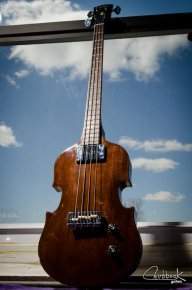
Context is my 1969 EB-0. It came with Ernie Ball nps rounds, 45-105. Very hot pickups, lotsa output. Which is bad as the bass tones can get this overwhelming bloom of bassiness that covers everything up, particularly on certain notes. Mudbuckers! (Fun bass anyways!) It helps a lot to just turn the volume knob on the bass to maybe six so it’s commensurate with my passive Jazz bass. I’m thinking though pure nickel wrap strings would be great, especially if with more mid content as there is a scoop as well as a lot of bass to the pickups. I’m trying the Roto Jazz first, but maybe some pure nickel rounds later.
 
Yes, as a general rule, "pure nickel" tends to have a slightly lower output.

Nickel-iron (= Alloy 52) is very different from pure nickel in the sense it's more magnetically active and higher in output.

DR uses the fancy marketing term "Quantum Nickel" for the Pure Blues BASS string, but does not specify what type of alloy it is. NOTE: DR Pure Blues GUITAR string is in fact "pure nickel".

Roto Jazz 77 MONEL alloy is nickel-copper.
 
DR “pure blues” nickels are actually nickel/iron wrap

Where did you get this information? I’ve heard they’re a different nickel-plated steel formulation (more like a 4% playing over the industry standard 8%). Which makes more sense, because PB are the same price as Sunbeams, and if they were nickel-iron they’d have to be more (nickel-iron as a raw wire is over twice the cost of nps).
 
  • Like
Reactions: rzero and Root 5
Where did you get this information? I’ve heard they’re a different nickel-plated steel formulation (more like a 4% playing over the industry standard 8%). Which makes more sense, because PB are the same price as Sunbeams, and if they were nickel-iron they’d have to be more (nickel-iron as a raw wire is over twice the cost of nps).

Hmmm, not sure. From their website:

“Quantum Nickel. DR's new alloy combines the smooth feel of pure nickel with the punch and brightness of stainless steel.“

It sounds like nickel iron alloy but they don’t spell it out. They tend to be priced a little high.
 
Hmmm, not sure. From their website:

“Quantum Nickel. DR's new alloy combines the smooth feel of pure nickel with the punch and brightness of stainless steel.“

It sounds like nickel iron alloy but they don’t spell it out. They tend to be priced a little high.

yeah, that’s totally not nickel-iron. If it WAS, they’d say it, as Alloy 52 is very well known in the music world.

It’s a different type of nickel-plated steel.
 
  • Like
Reactions: Root 5
Your EB-0 is going to sound like an EB-0 no matter what strings are on there. A string with less magnetism isn’t going to change the character of a pickup with a bazillion turns of wire in it. Indeed I have nickel Iron strings, Brite Flats, on both my vintage Gibsons. I think they actually benefit the bass. They have even output and help the E string sound more punchy. The magnetic field even needs some extra support in mudbuckers. This is why you’ll find some owners placing Allen keys under the pickup covers to help even out string response.
 
A more effective way to get a more open, wider-range sound is to remove the second "treble kill" capacitor from the circuit. If I remember correctly, it has an .01 value and is soldered to the volume pot (no need to touch the regular capacitor on the tone control, which is I think .023 or something like that). Removing the .01 cap opens up the sound of the bass and allows you to produce very usable tones like this:
 
I have a pretty specific question. Do pure nickel wrap strings have lower output (volume) necessarily vs steel, nickel plated, or nickel/iron strings?

It seems so, probably due to less magnetic attraction. Less iron in the string.

I’ve found that Rotosound Jazz Flats (monel = nickel copper alloy) are lower output than stainless flats. Also Pyramid Gold flats that apparently have a pure nickel wrap are lower output.

The only other pure nickel wrap strings I know of are Thomastik flats, Fender has long scale pure nickel rounds, and GHS has pure N “balanced nickels” round wound strings. Any others?

DR “pure blues” nickels are actually nickel/iron wrap. Roto Ultramag alloy 52 strings are nickel iron and they advertise as particularly high output!

Context is my 1969 EB-0. It came with Ernie Ball nps rounds, 45-105. Very hot pickups, lotsa output. Which is bad as the bass tones can get this overwhelming bloom of bassiness that covers everything up, particularly on certain notes. Mudbuckers! (Fun bass anyways!) It helps a lot to just turn the volume knob on the bass to maybe six so it’s commensurate with my passive Jazz bass. I’m thinking though pure nickel wrap strings would be great, especially if with more mid content as there is a scoop as well as a lot of bass to the pickups. I’m trying the Roto Jazz first, but maybe some pure nickel rounds later.

I play pure nickel strings as well as stainless steel and alloy 52. In my opinion the volume loss using pure nickel is so negligible that it really isn’t worth talking about. Play ‘em and enjoy them!
You asked about available PN strings:
Optima Chrome flats
Optima RB flats (round core)
Pyramid Gold flats
Pyramid Superior Quality round wounds
DR Jonas Hellborg signature set
Fender 7150 round wounds
Sonotone Vintage Series rounds
GHS Balanced Nickels round wounds.
What am I missing? ;-)
 
Update.

I put on the short scale Rotosound Jazz flats. The lower output tames the bass bloom just a bit. But these being flats there is even less upper content. All low bass HUMM. Do I want? Hmmmm. 50 Hz. The strings are a little too light and loose for me, which is a surprise as the roto 77 tend to be high tension for their gauge.

Also, the E string is weird. It doesn’t tune quite right as the note varies, going sharp, then flat. It may be a bad string, a function of the light gauge .090 E, or that the tails are too long for the bridge. The ball to the E saddle is only half inch!

D65E3FCA-33C8-473C-AB68-99722B681E77.jpeg
 
Anyone have a suggestion for a better string?

I see Gibson has flat wound strings that may have a shorter tail.

I like the idea of the GHS pure nickel roundwounds too. Somewhat bright tone, low output, and nickel should go easy on the old frets.
Maybe some ground or pressure wounds would be good and go easy on the frets too.

As you can see I’m going through a string angst period.
 
A more effective way to get a more open, wider-range sound is to remove the second "treble kill" capacitor from the circuit. If I remember correctly, it has an .01 value and is soldered to the volume pot (no need to touch the regular capacitor on the tone control, which is I think .023 or something like that). Removing the .01 cap opens up the sound of the bass and allows you to produce very usable tones like this:


This is great. I like the sound that is more similar to the unplugged acoustic sound. Sounds like flats for sure, maybe LaBellas. As is, I have almost only low bass tone like maybe a tuba synthesizer. It does seem like there is a strong low pass filter built in to the EB-0.

Anyone have a more in-depth description about the capacitor removal and rewiring? I’ve got a solder iron but don’t want to mess up.
 
This is great. I like the sound that is more similar to the unplugged acoustic sound. Sounds like flats for sure, maybe LaBellas. As is, I have almost only low bass tone like maybe a tuba synthesizer. It does seem like there is a strong low pass filter built in to the EB-0.

Anyone have a more in-depth description about the capacitor removal and rewiring? I’ve got a solder iron but don’t want to mess up.

eb-o.circuit.png

The one I did it on had a circuit like this--just disconnect the .01 cap from the volume pot. It's so easy to do, even I could do it, and you will notice the difference immediately. What you will hear is something more like the "mudbucker's" natural voice, which is much wider range, with more top end, than people assume.
 
As for strings, if you like flats, I would recommend Fender flats, especially the lighter (45-100) set. They are long scale strings but are flexible enough to be wound around the tuner shafts if you do it carefully. Fender actually include these as stock on the short scale JMJ Mustang bass. These strings are pretty evenly balanced in sound and feel, get tuning stability in just a day or so, and have just a bit of bite/growl and good note definition to them--noticeably less "thumpy" than Labellas, GHS, and other more "traditional" flats (see YouTube videos of the JMJ Mustang to get a good idea of the sound). Dunlop flats are also more "articulate" than the traditional ones. A little smoother feeling than Fenders and slightly less "stiff", but they can lose the initial bite/growl quite quickly.